Notes for owners · Industry playbooks
What Facebook can do for dental marketing
Facebook dental marketing reaches the patients who are not yet searching for a dentist. It is right for aligners and smile design, wrong for a toothache.
The GullySales team · Updated 15 Sept 2026 · 7 min read
Rules for this trade differ by state and professional body, and they change. Check the current position with your own council or adviser before you act on anything here.
On this page
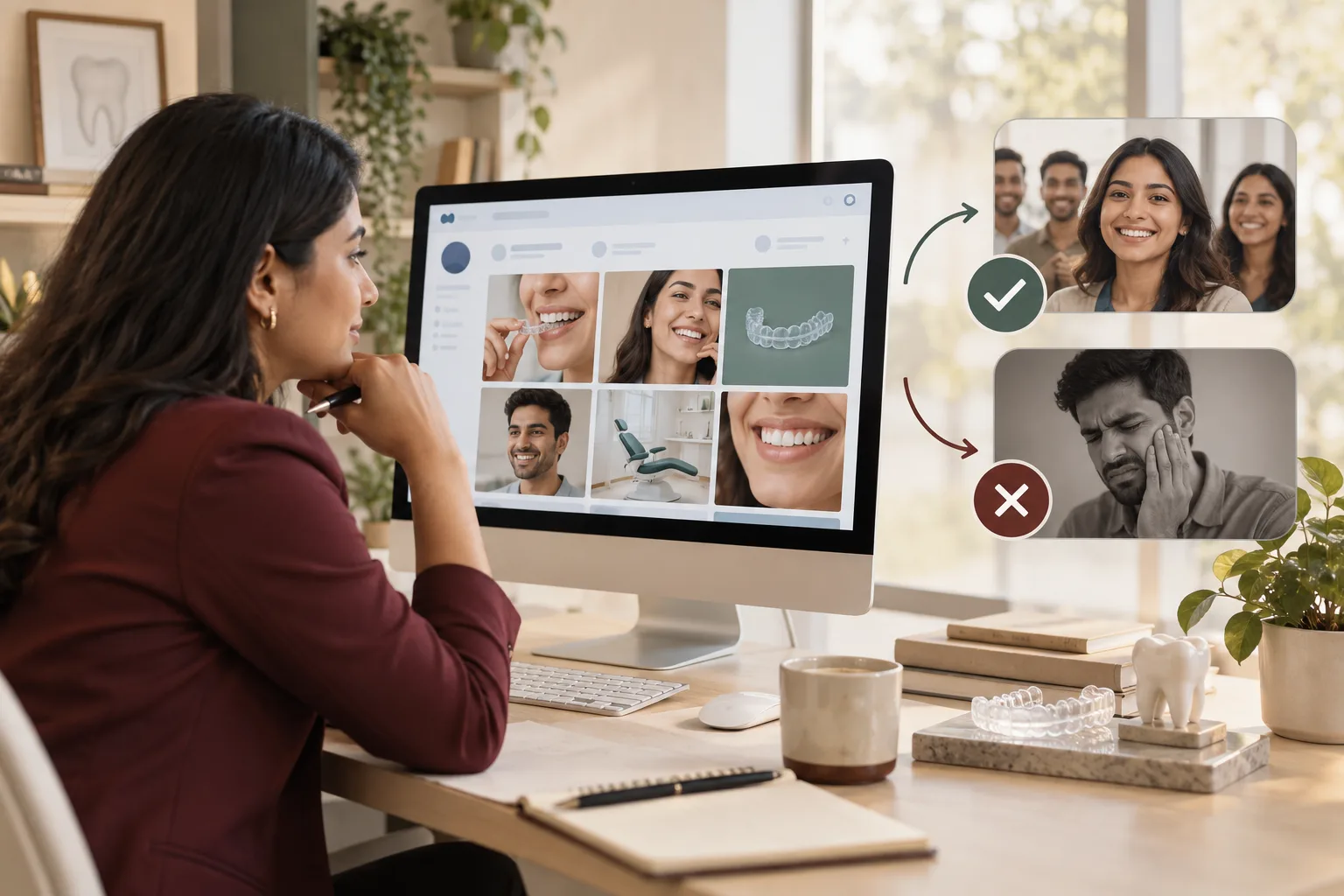
Facebook and Instagram reach patients who were not looking for a dentist. That makes them the right channel for treatments a patient has to be persuaded into, such as clear aligners, smile design and veneers. It also works for an implant on a tooth they have lived without for years, and braces for a child whose parent has been meaning to act. It makes them the wrong channel for toothache, extractions and root canals, where the patient searches on Google and calls within the hour. Get that split right and the channel works. Ignore it and you will spend a year blaming lead quality.
Match the treatment to the moment
Dental treatment demand has two moments, and each has a channel.
The first is the problem moment. A molar cracks, a filling falls out, a wisdom tooth swells. The patient searches, compares two clinics on reviews and distance, and books with whoever answers. Facebook cannot reach that patient, because they are not scrolling.
The second is the dormant moment. A woman has been photographing herself from one side for three years. A man has a gap from a tooth lost in college. A father has noticed his daughter's crowding at every parent meeting. None of them is searching, all of them will stop at an image that shows what is possible. That is the audience Meta reaches, and no other channel reaches it as cheaply.
The treatments in that second group share three features: the patient can postpone them indefinitely, the decision is visual, and the fee is large enough to need a conversation. Aligners, veneers, smile design, implants, dentures and paediatric orthodontics all qualify.
What to actually run
| Treatment | Placement | Creative that works | The offer |
|---|---|---|---|
| Clear aligners | Instagram Reels and Stories, Facebook feed | Consented case videos, the scanner in use, duration stated | Consultation with a scan, fee band, EMI mentioned |
| Smile design, veneers | Instagram feed, Facebook feed | Consented before and after, the dentist explaining the process | Consultation with a digital preview |
| Implants | Facebook feed, audiences 40 plus | The dentist explaining a single missing tooth, healing time | Consultation and X-ray, fee band per implant |
| Braces for children | Facebook feed, parent audiences | A short explanation of the right age, the review schedule | Free assessment, duration and visit count |
| Dentures | Facebook feed, audiences 55 plus | A patient eating normally, with consent | Home or clinic consultation, fitting timeline |
| Full mouth rehabilitation | Facebook feed, retargeting only | The dentist explaining the stages | A planning consultation, staged cost |
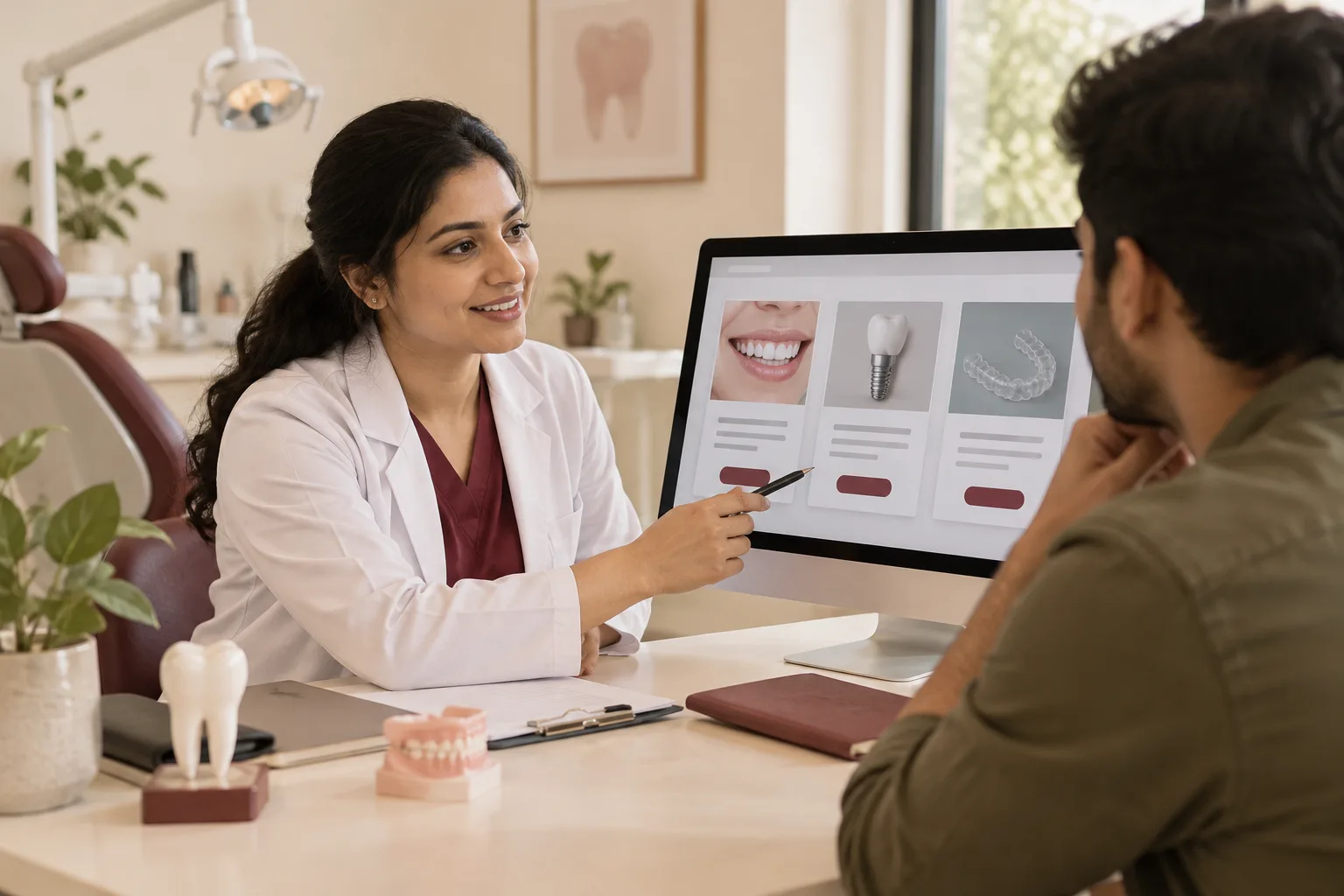
Note the last column. The offer on Meta is never "book a root canal". It is a consultation with a clear description of what happens in it, what it costs, and how long it takes. Patients respond to a low-commitment first step, then decide.
The three things that decide whether it works
Speed of reply. A Meta enquiry is warm for minutes, not days. The patient was mid-scroll, filled a form on impulse, and has now gone back to the feed. Call in five minutes and you are still in that moment. Call the next morning and you are a stranger. If nobody at the clinic can call within the hour while the ads run, do not run the ads.
An honest fee band. Dental fees on Meta are the whole conversation. A clinic that says "consultation ₹300, aligners from ₹75,000 depending on the number of trays" gets fewer enquiries and more consultations. A clinic that says "affordable treatment, call now" gets many enquiries from people who leave the moment a number is mentioned. Those illustrative figures are examples of structure, not a price list.
Follow-up. Paid social enquiries need three or four contacts across a fortnight: the call, a WhatsApp message explaining the treatment, and a photograph of a comparable case with consent. Then one more call. Most clinics call once, mark the patient as not interested, and conclude the channel is poor.
Content between the campaigns
Ads reach new patients. The page itself reassures the ones who check you afterwards, which is nearly all of them.
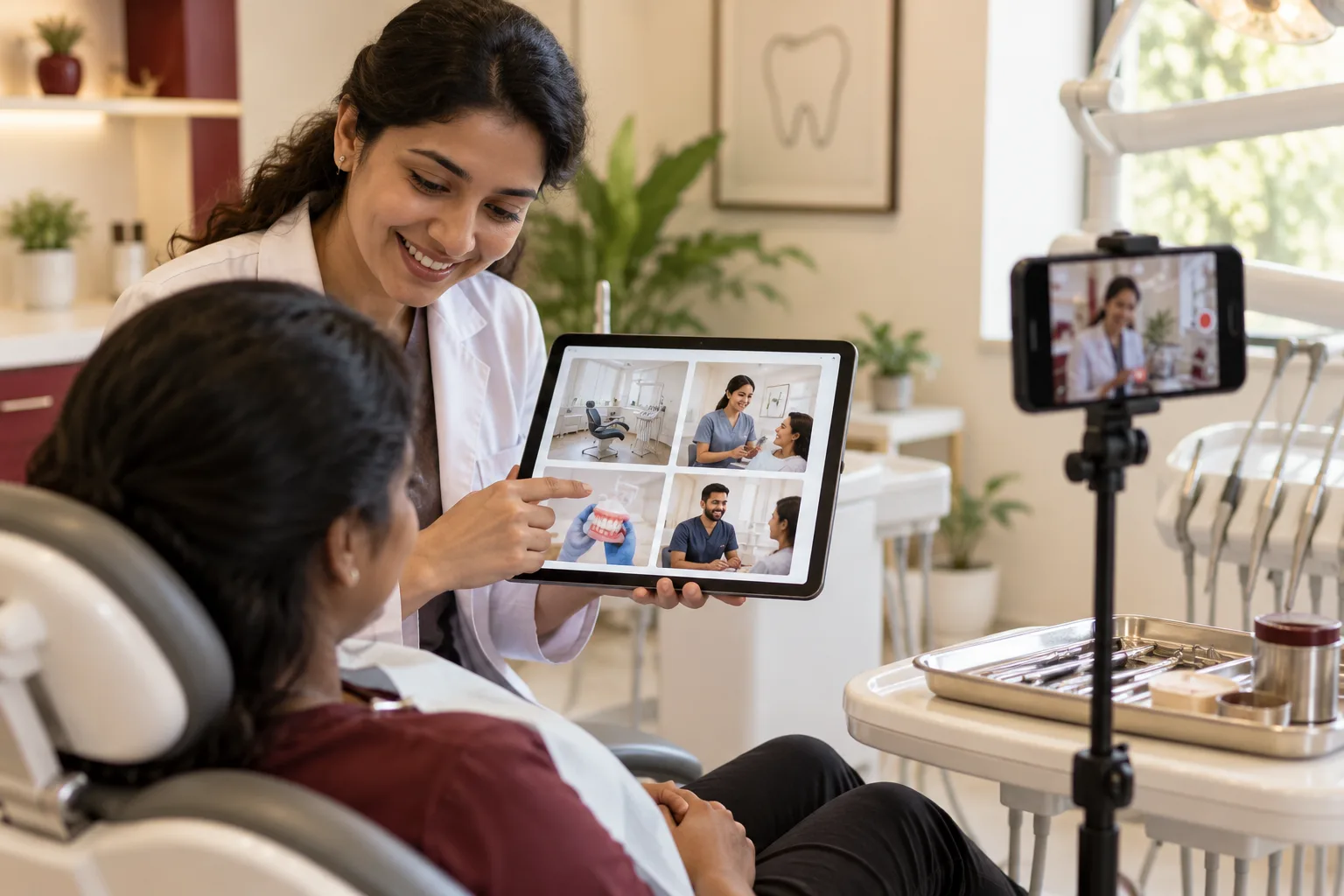
A dental page needs recent activity, real faces and the inside of the clinic. The formats that work: a dentist answering one question in forty seconds, a short clip of the sterilisation process, and glimpses of the team. Add a patient's consented result, a note about a new machine, and practical posts such as what to do when a crown comes loose at night. Skip the stock images of perfect teeth and the greeting posts for every festival, which teach the algorithm nothing about who your patients are.
Turn on messaging only if somebody reads it during clinic hours. A page with unanswered messages showing a response time of three days tells every visitor something you do not want said.
A worked example
Take a clinic in HSR Layout, Bengaluru, with an in-house orthodontist and a strong aligner practice. For example, the clinic puts ₹15,000 a month into one campaign for clear aligners, an illustrative figure rather than a quotation, targeting adults between 22 and 40 within six kilometres.
The creative is not a discount. It is a thirty-second video of the orthodontist explaining how many months treatment takes and what the trays feel like in the first week. It also states the fee band and the reason it varies. The landing destination is a page for clear aligners that repeats those three answers and shows two consented cases. The front desk calls every enquiry within fifteen minutes during clinic hours and sends a WhatsApp message with the treatment outline immediately after.
What to watch is the number of consultations attended and the number that converted to a scan, not the count of form fills. A clinic measuring form fills will double the budget and get more form fills. A clinic measuring scans will fix the follow-up instead, which is cheaper and works.
What to measure
Enquiries by campaign and treatment. Time to first call. Consultations booked, and of those, consultations attended, because the gap between the two is where most social spend is lost. Cost per attended consultation, which is the only cost figure worth discussing. Treatment value accepted by campaign. And the share of enquiries within your catchment area, which tells you whether the targeting radius is right.
What to do next
Choose the one treatment in your clinic with the highest value and the slowest decision. Usually that is aligners or implants. Write down its fee band, its duration and how many visits it takes. Then record the dentist explaining those three things in forty seconds, on a phone. Run it behind a small budget for eight weeks, with one rule: every enquiry is called within fifteen minutes. If you want help picking the treatment, writing the offer and fixing the follow-up, tell us what you need.
Industries