Every channel, none of them well
A little SEO, a little Instagram, a little Google Ads, an email a quarter — and no enquiries that can be traced to any of it.
Digital marketing for manufacturing units is not a list of channels; it is deciding which two or three of them actually reach a purchase team, running those properly, and measuring what each one brought in. Most businesses run five channels badly. We would rather run two well and report what they earned.

Where it usually goes wrong
A little SEO, a little Instagram, a little Google Ads, an email a quarter — and no enquiries that can be traced to any of it.
The monthly report is full of green arrows: posts published, impressions, clicks. It does not say how many customers arrived, or from where.
Instagram because everyone is on it, not because a purchase team decides there. The channel follows the customer, not the trend.
What we would do
The order here is about money: the two or three channels are chosen and the counting is put in place before any of it is spent, because with five channels running and nothing measured no one in the business can say which two are earning their keep.

Where a purchase team actually looks and decides, what you can afford to do well, and what to leave alone — written down.

Search, ads, social and email working together on one offer, to one audience, with one conversion path.
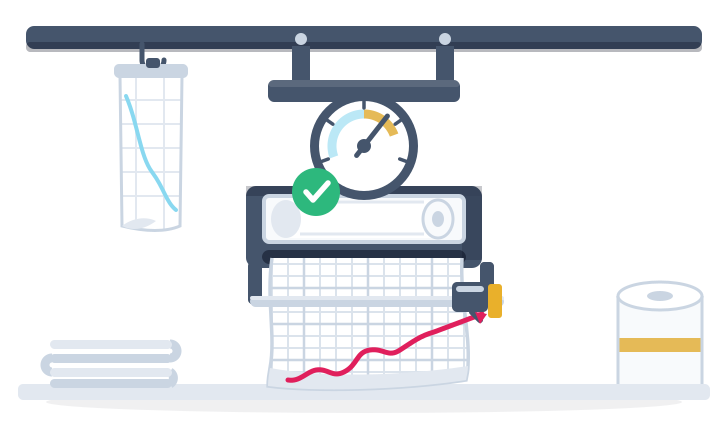
Enquiries and orders by channel, against a baseline recorded first. The report that decides where the next rupee goes.

The channels bring the enquiry; the reply time and the follow-up decide whether it becomes an order. Fixed together.
What we usually find is spend spread thin across five channels with none of them counted, so nobody can tell you what an enquiry costs. Stopping the ones no one in the room can defend usually pays for the rest of the work. We do not publish a price; we scope the work in the free audit and put the fee in writing, split into our time, your media spend and production, before anything begins.
A baseline is recorded first, so a report can say what changed rather than describe activity. If something is not earning, we say so and stop it.
We are a small team in Nagarbhavi, Bengaluru. Clients include Chord Road Hospital, SB Engineering, NewCom Logistics, Kerur Pain Clinic and Natural Gases, across healthcare, manufacturing, logistics and services.
More for manufacturing units
When twenty buyers make up the market, marketing is a list with a plan for each name.
Enquiries this month, at a cost per lead you can see, switched off when it stops earning.
Plain answers to the questions a purchase team asks before they enquire, published where they search.
Being written about, and being ready when something goes wrong.
Qualified enquiries every week, from a purchase team, at a cost you can see — and answered before they go cold.
Who you are for, what you promise, and which two channels will carry it — decided before any spend.
The one a purchase team uses when deciding — which for most manufacturing units is search and Maps first, then whichever social platform they actually decide on. We find out before we spend, and we would rather run two channels well than five badly.
Enough to learn something in a month, then scale what worked. There is no right percentage. We split the fee into our time, your media spend and production, so you can see which is which.
Yes, but not the kind most agencies sell. A purchase engineer does not follow you on Instagram; they search, check your site, and send an RFQ. Being findable, credible and fast to answer is the whole of it — and most manufacturing units are none of the three online.
There is no price list. A single clinic and an exporter are different orders of work, and a range wide enough to cover both tells you nothing. We scope it in the free audit and put the fee in writing before anything begins.
Talk to us
A short note is enough. We will come back with a straight answer about whether we can help, usually within one working day.