Notes for owners · Industry playbooks
How devotees choose a temple to visit, book a seva or give to
A devotee picks a temple in three stages: the occasion, the options, then the trust check. What each stage needs from your temple office.
The GullySales team · Updated 28 Nov 2026 · 7 min read
On this page
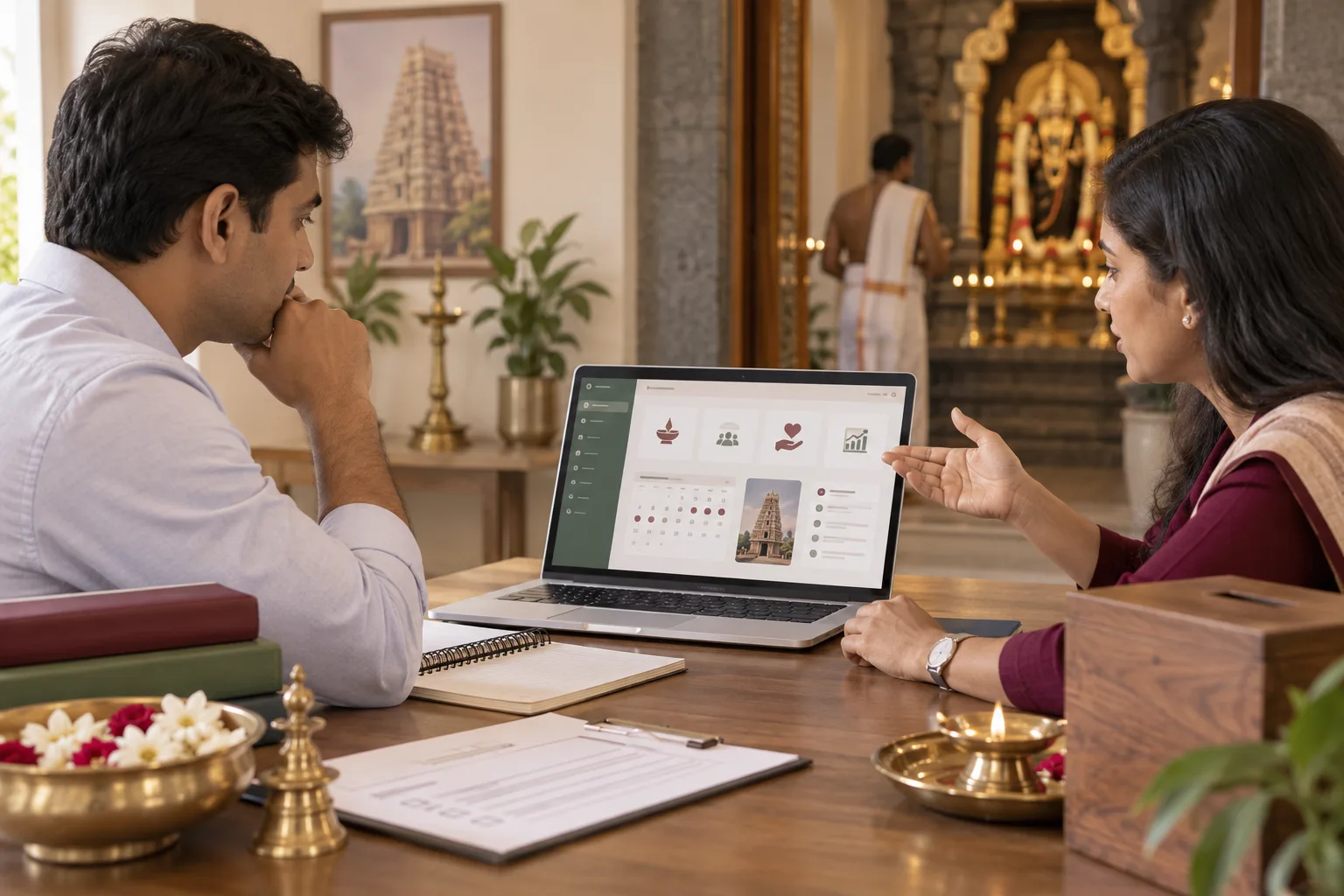
A devotee chooses a temple in three steps. First there is an occasion: a vow, a family event, a festival or a suggestion from the family priest. Then they weigh the temples and other ways of marking it. Last, they check that the temple they lean towards is open when they can come, offers the seva they need, and takes the booking without trouble. Your temple gains or loses the devotee at that last check, and it happens on a phone screen before anyone reaches your gate.
Stage 1: the occasion starts the search
Nobody wakes up wanting to compare temples. Something happens first. A child's first tonsure is due. A daughter's wedding date is fixed and the family wants a kalyanotsavam beforehand. A parent's death anniversary falls next month and the family wants an annadana in that name. Someone has made a promise to the deity during an illness and now wants to keep it.
The words they type follow the occasion, not your noticeboard. They search for the deity name and the town, for "Rahu Ketu pooja timings", for "kalyana mantapa near me with dates", or for the festival name and the year. A family abroad searches for the temple name and "online archana". Write down the exact questions your office hears on the phone for one week. Those sentences belong on your page as headings, in the devotee's words.
The occasion also sets the deadline. A tonsure follows the family's calendar. A wedding follows the muhurtham. A festival seva has one date and no second chance. When the date is close, the devotee picks the first temple that answers clearly.
Festivals work the other way round. For Vaikunta Ekadashi, Shivaratri or your own car festival, the date comes first and the family plans around it. They want to know which day the special darshan opens, whether a seva on that day is booked in advance, and how long the queue was last year. A temple that publishes this weeks ahead gets the planned visits. A temple that posts it the night before gets only the families who live nearby.
Stage 2: this temple, another temple, or a pooja at home
Your temple is rarely the only choice. The devotee is quietly comparing several routes, and some of them involve no temple at all.
| Option | Why a family picks it | What it lacks | When your temple wins |
|---|---|---|---|
| The neighbourhood temple | Close, familiar, no travel | May not offer the specific seva | Your seva list shows you perform it, with the cost |
| The famous shrine far away | The deity's reputation, a family tradition | Travel, crowds, hard to book | You show the timings and a way to book from home |
| A pooja at home with a purohit | Convenient for elders, flexible timing | No darshan, no temple prasada | The family wants the sanctum, and you make it easy |
| A seva booking app listing several temples | One screen, one payment | The family is unsure the offering reaches the temple | Your own page books directly and sends a receipt from the trust |
| Postponing to the next festival | No decision needed now | The vow or anniversary passes | You remind the family the date is near, with their consent |
Two of these routes deserve honesty. A pooja at home is right for some families, and a temple page that pretends otherwise sounds like a shop. And a large shrine will always draw pilgrims your temple will not. Your job is to be the clear, easy answer for the devotees whose occasion fits what your temple already does.
Stage 3: how the devotee picks, and who else has a say
Once two or three temples remain, the devotee checks small things. Are today's darshan timings right on Google Maps? Is the seva performed on the date they need? What does it cost, and what is included: the archana, the prasada, the name read out with the gotra and nakshatra? Can they pay without calling? Will they get a receipt, and will it carry the trust's 80G details if the trust holds that registration?
Then other people weigh in.
- The family priest or the astrologer who suggested the seva decides which deity and which ritual. If your page names the seva the way they do, the family trusts it.
- The elder of the family decides whether the temple is "proper" for the occasion. They listen to relatives more than to any page.
- The family member abroad pays. They need a booking that works across time zones and a confirmation they can forward to the parents who will attend.
- For a wedding hall, the person fixing the muhurtham needs to know the date is free before the invitation goes to print.
A booking that satisfies only one of these people is not finished. If the confirmation reaches the son in Dubai but the parents in Mysuru have nothing to show at the seva counter, the family remembers the awkward morning, not the pooja.
What a devotee reads as a warning sign
Some signals make a family drop your temple from the list without telling you.
- Maps shows the old timings, and a cousin arrived after the doors closed last year.
- The seva list has no costs, so the family assumes it will be awkward to ask.
- The only booking route is a phone number answered during office hours, while the family abroad is asleep.
- The festival calendar for the coming brahmotsavam is not online, so the family cannot plan leave.
- The donation page asks for money but says nothing about where it goes or what receipt follows.
None of these are about devotion. They are about whether the temple office has its information in order. A family reads that as care.
What the temple should change first
Start with the facts devotees check before they leave home. That means the darshan timings on your Google Business Profile, the festival dates for the coming year, and one page listing every seva with its day, its cost and what it includes. The trust approves each word, and the chief priest checks every line about a ritual.
Then give the devotee one way to book that does not depend on the office phone. A simple form or a booking page, checked by one named person at the temple office each morning, with a printed list for the priests, changes nothing at the sanctum. The temples page lists the other problems temple trusts describe to us, and the website design and development service covers how a seva page and booking route are built.
Money from devotees living abroad needs care. Whether the trust can accept an offering from a foreign national, as against an Indian citizen living overseas, is a question for your auditor and the rules your trust is registered under. Settle that before any overseas giving page goes live.
If you want the occasions, the seva list and the booking route set out for your temple, tell us what you need.
Put the reading to work
Try this with your own records.
List the pages that support a buying decision and the actions visitors must complete. Keep examples of failed forms, unclear product information, and questions your team answers repeatedly.
How to review the result
Complete a real enquiry journey on a phone and a laptop. Check that the confirmation appears, the enquiry reaches the right person, and tracking records the action once.
Related services
Industries