E-commerce · Safety & PPE
Safety glasses that fog or slip get pushed up onto the forehead, and the order was wasted.
Eye protection is chosen for the task and rejected for comfort. A spectacle that scratches in a week, a goggle that mists in a hot shop, or a frame that will not sit over a worker's own glasses is left in a pocket. The safety officer who bought it hears the complaint at the next toolbox talk.
Scope, fee, reporting and term are agreed in writing after we have read your brief and spoken to you.
In one paragraph
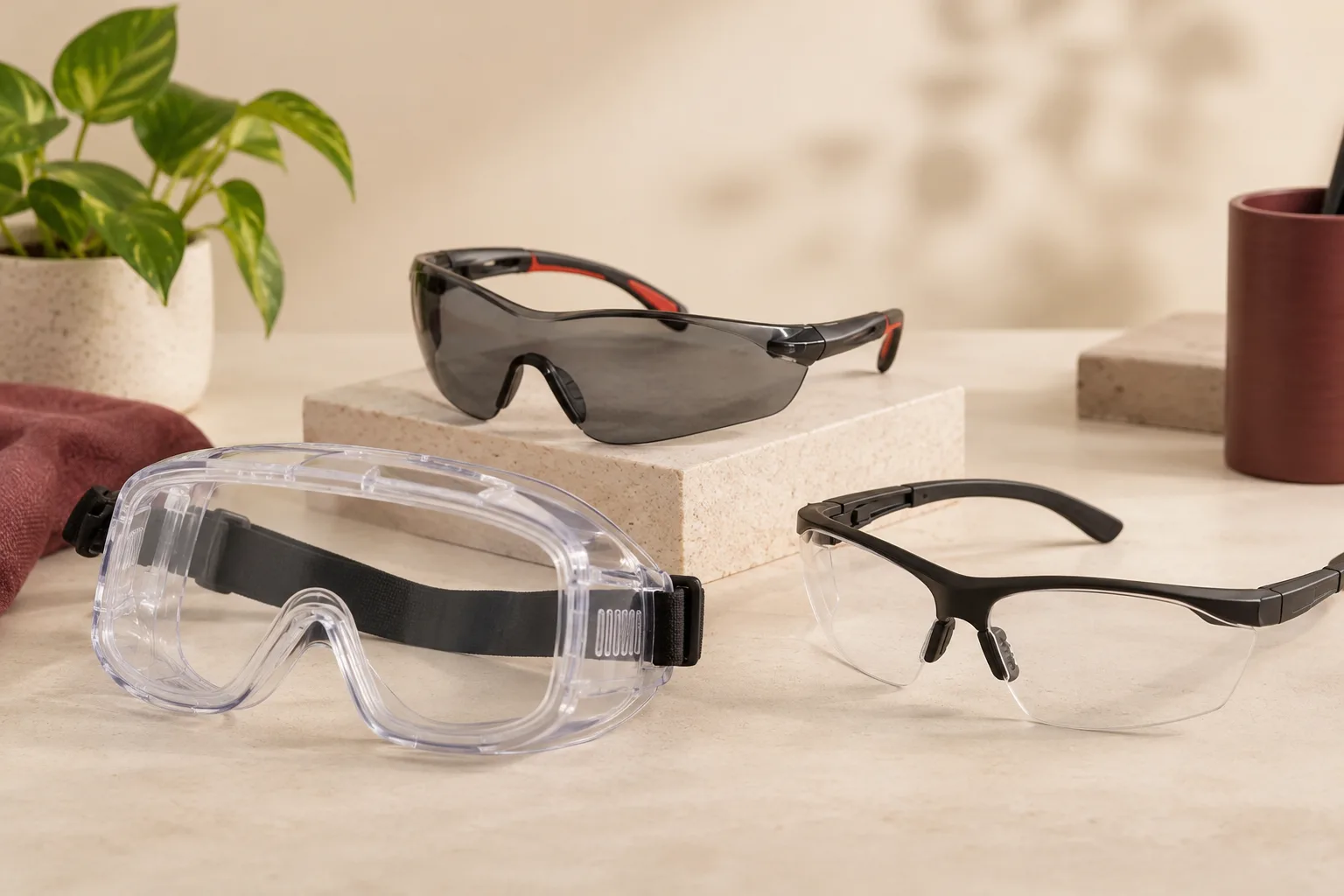
Eye protection e-commerce is the selling of safety spectacles, goggles, face shields and welding helmets to workshops, plants, laboratories and construction sites. GullySales builds pages by lens, fit and task, and runs the sample and reorder that keep a plant's stores stocked with a model its workers will wear.
That is why this category is bought by trial. Buyers want a few pieces of each model, a worker's opinion, and a supplier who will take back the one that did not work.
Last updated 7 Oct 2026. Product, labelling and advertising rules for safety & ppe differ by product and change. We describe them in general terms, so check the current position with your own adviser or the regulator before you publish a claim.
Who it is for
This is written for you if you sell eye protection online.
- Distributors of safety spectacles, goggles and face shields for plants and workshops
- Importers of welding helmets, auto-darkening filters and welding goggles
- Suppliers who sell eye wash stations and laboratory eyewear to institutions
- Dealers who offer prescription safety eyewear through a partner optician
Not for
It is not the right fit if.
- Sellers who cannot name the maker or provide the maker's data on lens and frame. Buyers will not approve an unnamed lens.
- Anyone who wants to claim a lens stops a particular hazard without documents. That is the maker's statement, and the buyer's adviser decides.
How buyers choose
What decides the sale of eye protection.
Lens type and the work
Clear, tinted and shaded lenses, anti-scratch and anti-fog coatings, and the ones for grinding versus welding versus chemical splash. The buyer searches by the work, and the page matches lens to task as the maker describes it.
Fit, weight and wearing with other items
Workers wear eye protection with helmets, ear defenders, masks and sometimes their own glasses. Buyers ask whether the frame sits over spectacles and whether it clashes with a respirator.
Welding shades and auto-darkening
A welding buyer compares fixed shade lenses with auto-darkening filters, the shade range, the reaction time stated by the maker and the battery. A welder will try a helmet before the buyer signs.
Replacement lenses and spares
A buyer asks whether lenses, straps and filter plates can be bought separately. A model whose spares vanish after the first order is dropped.
Where sales are lost
What usually goes wrong when you sell eye protection online.
In the words sellers use on the first call.
“Workers say the glasses fog and push them up”
Fogging in a hot, humid shop is the commonest complaint. A trial in the actual area with a worker's comment, before a bulk order, finds the model that works.
“Buyers cannot tell our spectacles from a cheap pair”
Without the maker's data and a photograph of the lens marking, two pairs look the same. Showing the marking and the lens description lets the careful buyer see the difference.
“Welding helmet orders come with a demo request”
A helmet is tried on a bench with a torch. Pages should offer a demonstration or a trial loan, and the follow-up should happen while the welder remembers it.
“Eye protection is a minor line and the plant buys it with gloves”
A buyer ordering gloves may add spectacles on the same call. Showing them on the same order sheet raises the basket.
The scope
The work we would propose for eye protection.
Measured on qualified enquiries, quotation requests, follow-up, orders won and repeat orders. Anything here that needs a platform or tool we have not used with you is confirmed with you before it goes in the scope.
- Pages by lens and taskPages for spectacles, goggles, face shields and welding helmets by lens type, coating, frame and use, as the maker describes them.
- A trial and demonstration requestA request for sample pieces or a helmet demonstration that records the work, the number of wearers and whether they wear their own glasses.
- Worker feedback and follow-upA short feedback form for a few workers on fit, fog and clarity, collected on a call after the trial, then used to settle the order.
- Spares and lens reordersA record of which models each plant uses, with reminders for lenses, straps and filter plates.
Combined order sheet with other PPE
An order sheet that puts spectacles beside gloves, footwear and masks so the safety desk can place one order from one supplier.
What we do
What you get for eye protection.
Each deliverable and what it is there to change.
An eye protection chooser by task
A page that leads from grinding, welding, spraying or laboratory work to the models in your range. It gets an unsure buyer to a shortlist.
A trial feedback sheet
Fit, fog, clarity and comfort noted by the workers who tried each model. The safety officer can show it to the purchase head.
A welding helmet comparison table
Shade range, viewing area, weight and battery for each helmet in one table, with the maker's figures cited.
A spares and replacement list
Lenses, plates and straps matched to each model, so a reorder is the right part.
How the result is measured
- Qualified enquiries
- Quotation requests
- Trial and demonstration requests
- Follow-up on each quotation
- Orders won
- Repeat orders and spares orders
Recorded as a baseline before work starts, so every later report has an honest comparison.
How it works
From your first message to the first piece of work.
No open-ended retainer. Every step gives you something in writing.
First
Your brief
You tell us what you need in a few short steps: your business, what you want, where enquiries come from and how they are handled.
After the brief
A conversation and a written scope
We read it, then talk with whoever handles your enquiries. If you want our help, the scope, the fee and the reporting come in writing, and nothing starts before you have read them.
Before work starts
Baseline recorded
The numbers this work is meant to move, such as enquiries, quotations, orders, visits or renewals, written down so every later report has an honest comparison.
After the baseline
The first fix goes live
The fix we agreed to start with is put in place and measured against the baseline, whether that is a reply, a follow-up, a page, a listing or the handover between marketing and sales.
As agreed
Report against the baseline
What moved, what did not, and what changes next, in plain words. How often you get it is set in writing before work starts.
At renewal
Renew on the numbers
The term ends and you decide whether to continue from the results. The length is agreed in writing before anything starts.
What we need from you
What to have ready before we talk.
None of it has to be tidy. We read what you have.
- Your range with lens, coating, frame type and the maker's data
- Welding helmets you can demonstrate, and where
- Spares you hold for each model
- A list of current plants and workshops with what each uses
- Photographs of the lens marking on your best sellers
Selling in India and abroad
Selling eye protection beyond your own market.
Where you sell decides sizes, units, seasons and returns. We work from Bengaluru and have no overseas office, so for a new country we start from your own sales and the platforms you already use.
Marking and approval are local
A buyer overseas follows their own market's rules on what a lens must be marked with. The page should show the maker's marking and leave the local requirement to the buyer.
Breakage and light parts
Spectacles are light but easily scratched in a carton. Packing and the claim terms are agreed with your forwarder before a foreign order is invited.
FAQ
Questions about selling eye protection online.
Not here? More answers, or ask on WhatsApp.
How do I stop workers rejecting the safety glasses I supply?
Can I state that a lens meets a standard?
Is it worth stocking prescription safety glasses?
How much does it cost?
How long is the contract?
How soon will we see results?
Who will actually do the work?
What do you need from us?
More in Safety & PPE
Sellers of eye protection also need
Also selling from a shop, a workshop or a warehouse? See the page for fire safety companies and industrial suppliers and distributors.
This page is part of the e-commerce section. The D2C brands page covers the arithmetic of acquisition cost and the second order for any brand.
Why us
Why owners pick GullySales over an agency.
Marketing and sales, as one job
Most agencies stop at the enquiry. We also fix what happens after it: the reply, the follow-up, the quote and the CRM.
The person on the first call does the work
No account managers in between. You are never handed to someone you have not met.
A baseline before anything starts
Your numbers are written down on day one, so every later report compares against something honest.
The fee in writing, split three ways
Our time, your media spend and production on separate lines. You always see what goes to us.
No guarantees we cannot keep
The term is agreed in writing and never a default twelve months. We never promise a ranking or a lead count, because nobody controls those.
One office, and we say so
Nagarbhavi, Bengaluru. We work across India by call and WhatsApp and travel when a session needs to be in person.
#257, 3rd floor, Sri Nanjundeshwara Complex, Nagarbhavi 8th Block, Outer Ring Road. How we work.
Engagement options
Ways to work with us.
Pick the size of commitment that fits. Every option starts with your brief and a conversation.
Option 1
The conversation on its own
A call after you send your brief. It says honestly whether you need outside help, and many fixes are ones your own team can make.
Option 2
One fix, scoped
Start with the fix that matters most, such as reply time or follow-up. The fee is in writing before anything starts.
Option 3
An ongoing programme
We run the work, report against the baseline, and you renew on the numbers. The term and the reporting are agreed in writing first.
Option 4
Guidance for your own team or agency
We plan, brief and check the work of your in-house team or current agency, instead of replacing them.
Your brief
Tell us what you need, and we will read it before we call.
Eight short steps about your business, what you want and who decides. Most questions are a tap, and you can skip any you would rather answer on the call.
Your next practical step
Tell us what you are trying to grow, and we will read it before we call.
Eight short steps, mostly taps. Skip anything you would rather answer on the call.