Medical supplies distributors · Lead generation
Find the hospital that is about to buy before it asks three distributors for rates.
Lead generation for a medical supplies distributor means finding the hospitals, clinics, labs and chemists in your territory that have a requirement coming, and reaching their purchase contact before a rival does. GullySales builds the target list, the screening for marketplace enquiries and the record of which approaches turned into orders.
Scope, fee, reporting and term are agreed in writing after we have read your brief and spoken to you.
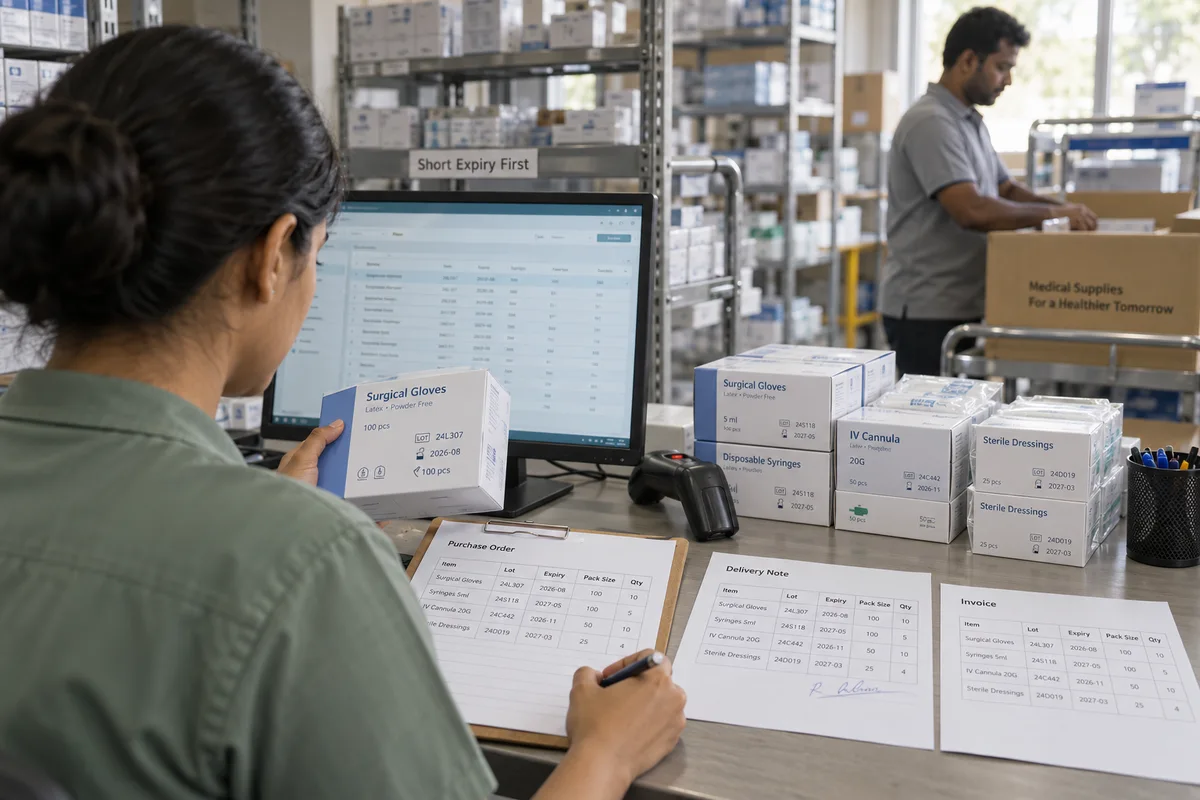
What lead generation means
Lead generation is the combined work of every channel that brings in a new enquiry, whether from search, adverts, referrals or a stall at an exhibition. GullySales runs these channels together and reports the number of enquiries each one produced, not the activity behind it.
Also for medical supplies distributors
- CRM for medical supplies distributors
- Follow-up systems for medical supplies distributors
- SEO for medical supplies distributors
- WhatsApp marketing for medical supplies distributors
- Email marketing for medical supplies distributors
- Sales process for medical supplies distributors
- Sales management for medical supplies distributors
- Referral marketing for medical supplies distributors
Sales and marketing for medical supplies distributors, the overview.
Last updated 6 Oct 2026. Rules for this trade differ by state and professional body, and they change. We describe restrictions in general terms, so check the current position with your own council or adviser before you publish anything.
For medical supplies distributors
Where it usually goes wrong, and what we would do.
“The real enquiry arrives in a pile of small ones”
A requirement list from a hospital store lands beside a student's thermometer query and a rival's rate fishing. All three get the same slow reply, and the hospital moves on.
“New set-ups can be found before they buy”
A nursing home registered, a clinic board going up, a lab taking a new floor. Each buys its whole opening list from the first distributor who reaches the owner.
“Your best leads sit in your own godown register”
Items customers asked for and you did not stock, and old accounts that stopped ordering, are demand you have already seen. Most distributors never record either.
What we do
What we deliver for medical supplies distributors.
Every deliverable, what it covers for you, and the result it is there to produce. Nothing here is an extra.
A list of institutions by buyer type
Hospitals, nursing homes, labs, dental and eye centres, colleges and chemists in your districts, with the purchase contact, what each buys and who supplies it now.
Result: Outreach starts from named buyers, not a directory dump.
A new set-up watch
A routine for spotting new clinics, nursing homes and labs through local news, doctors' associations, medical complexes under construction and your own reps, logged as they appear.
Result: You approach the doctor while the supplier list is still blank.
Screening questions for marketplace enquiries
A short script for IndiaMART, TradeIndia and JustDial enquiries covering buyer type, items, quantity, delivery town and who approves the purchase.
Result: The sales team spends its day on institutions, not single-piece buyers.
A demonstration and trial order plan
For equipment, a demo or a loan unit with a date to review. For consumables, a sample pack and a small first order, with what you will show the store at the end.
Result: The first order becomes the reason for the second.
A log of items asked for and not stocked
Every request you could not meet recorded with the buyer and the quantity, then read against your next purchase from the principal.
Result: Stocking decisions follow real demand.
Leads traced to source and to order value
Each enquiry carrying its source, and the order it became, set against the starting baseline.
Result: You know which source brings hospitals, not only calls.
How the result is measured
- Enquiries generated
- Cost per enquiry
- Enquiries by source
Recorded as a baseline before work starts, so every later report has an honest comparison.
Where enquiries come from
A medical supplies distributor hears about demand from hospital stores, marketplaces and doctors, and each source needs the buyer and the items written down first.
- Purchase manager's call or WhatsApp list
- Record the institution, the items with quantities, the delivery date and who signs the order. Reply with stock position first and rates after, and note the day you promised a call.
- IndiaMART or TradeIndia enquiry
- Ring once and ask the buyer type, items and delivery town. If it is one piece for personal use, answer politely and close it. Mark the source either way.
- Walk-in at your godown or showroom
- A chemist, a clinic assistant or a family hiring equipment. Take the name and number, the item and the date it is needed, and log it before the person has left.
- Doctor or biomedical engineer's reference
- Note who sent the person and what they need. Thank the referrer in plain words. Never pay or gift for the introduction, and record the source for your own count.
- Tender or rate contract notice
- Record the notice number, closing date, eligibility clauses and documents asked. Decide bid or no-bid against your licences and stock before anyone starts the paperwork.
- Manufacturer's area manager passing a lead
- Record the hospital, the product and who at the principal sent it. Reply the same day and tell the manager what happened, so the next lead comes to you.
Who it is for
This is written for these medical supplies distributors.
- General consumables and disposables distributors
- Surgical and OT supply distributors
- Hospital equipment dealers selling beds, monitors, suction and oxygen systems
- Home healthcare suppliers selling or renting wheelchairs, beds and concentrators
- Diagnostic kit and reagent distributors serving labs
- Orthopaedic support, brace and rehabilitation product suppliers
- Single-brand authorised distributors covering a district
- Sub-stockists supplying chemists and surgical stores
Not for
It is not the right fit if.
- You cannot tell a thermometer enquiry from a hospital tender today, and no one is free to screen the pile.
- Your stock does not cover the items hospitals ask for most, so more leads would meet a stock-out.
- The principal's team already quotes the large hospitals in your area direct, so outreach there would add friction.
How it works
How the lead generation work runs
The work itself, in order. How an engagement starts, from your brief to a written scope, is set out on our method page.
- 1
Understand your capacity
We ask how many enquiries your team can answer well, who answers after hours, and what a good enquiry looks like. Without this, the system fills a funnel nobody is watching.
- 2
Audit current sources
We read your call log, WhatsApp chats, enquiry sheet and platform dashboards. The baseline is recorded: enquiries by source, reply time, conversion and cost per order.
- 3
Strategise the channel mix
Search and maps are chosen for people ready to buy, ads for people who are not yet looking, and content and referrals for trust.
- 4
Implement capture and follow-up
Pages, forms, tags, the lead record and the first-reply message are built and tested end to end. We submit test enquiries ourselves before any media money is spent.
- 5
Measure and optimise
Enquiries are traced to source and judged by what became orders, not by volume alone. Channels that fill the sheet with poor enquiries are cut back. How often you are reported to is agreed in writing.
Where this fits
Three pieces of sales work, in this order.
This work sits inside sales process design, at stage 1, prospecting and lead generation. The audit comes before it, and sales management keeps it running.
Step 1
Sales audit
Find where deals are being lost and what to fix first.
Start here if you cannot say where orders are lost.
Step 2 · you are here
Sales process design
One written way to sell, from first enquiry to repeat order.
Start here if every salesperson sells differently.
Step 3
Sales management
A target, a review routine and someone who owns the number.
Start here if the team has targets and no routine.
FAQ
Questions owners ask before they call.
Not here? More answers, or ask on WhatsApp.
Should we buy a database of doctors and hospital purchase contacts?
Two of our reps are chasing the same hospital. How do we stop it?
What counts as a qualified enquiry for us?
Do medical conferences and camps bring buyers?
How much does it cost?
How long is the contract?
How soon will we see results?
Who will actually do the work?
What do you need from us?
From the blog
Further reading for medical supplies distributors.
 6 min read · 6 Oct 2026What healthcare buyers check before they choose youA patient, a referring doctor and a hospital purchase team each check something different before choosing a provider. This post lists what each one looks at and where a clinic, lab or supplier loses them.
 6 min read · 6 Oct 2026How trade buyers pick a dealer when the brands matchWhen every counter in town carries the same brands, trade buyers choose on stock, delivery, paperwork and returns. This post sets out how contractors, electricians, plumbers and purchase managers compare dealers.
 5 min read · 6 Oct 2026How medical supplies distributors answer a requirement listA hospital store sends a long list of items and wants rates. This post sets out what to do with that list, who to ask, what to send back and how to follow up.
More for medical supplies distributors
Everything else we would do for you.
Closest to this: leads and follow-up
Also for medical supplies distributors
Or start from the overview: sales and marketing for medical supplies distributors.
Your next practical step
Tell us what you are trying to grow, and we will read it before we call.
Eight short steps, mostly taps. Skip anything you would rather answer on the call.