Orthopaedic clinics · Video marketing
Film what the surgery week involves, and leave the before-and-after out.
Video marketing for an orthopaedic clinic is short films that answer a patient's practical questions, such as what happens on admission day or how to get out of bed after a hip replacement. GullySales plans and edits the videos with your surgeon and physiotherapist, and keeps them free of outcome claims and of patients filmed without consent.
Scope, fee, reporting and term are agreed in writing after we have read your brief and spoken to you.

What video marketing means
Video marketing is using short videos, such as a product demonstration or a customer walkthrough, to explain your business on social media, your website and Google listings. GullySales scripts, shoots and edits these videos around the questions buyers ask before they visit or call.
Also for orthopaedic clinics
- Content marketing for orthopaedic clinics
- Social media marketing for orthopaedic clinics
- Explainer and product demonstration videos for orthopaedic clinics
- SEO for orthopaedic clinics
- Local SEO for orthopaedic clinics
- PPC advertising for orthopaedic clinics
- Reputation management for orthopaedic clinics
- Review generation for orthopaedic clinics
Sales and marketing for orthopaedic clinics, the overview.
Last updated 14 Nov 2026. Rules for this trade differ by state and professional body, and they change. We describe restrictions in general terms, so check the current position with your own council or adviser before you publish anything.
For orthopaedic clinics
Where it usually goes wrong, and what we would do.
“A walking-patient clip is a result claim”
A clip of a patient climbing stairs soon after surgery tells the viewer this will happen to you. Rules on doctors' advertising and testimonials restrict that, and they vary between councils.
“Theatre footage frightens the people deciding”
A drill on bone gets views and loses the elderly patient who was already scared. A plastic joint model or an animation explains the same thing.
“The surgeon talks too fast and too technically on camera”
A long talk on implant designs loses a family that wanted to know about the hospital stay. One question per video, answered in plain words, holds them.
What we do
What we deliver for orthopaedic clinics.
The work available for this need. We agree the deliverables and responsibilities for your engagement in writing.
A video list from the OPD's most asked questions
Questions such as how long in hospital and when can I drive, each matched to a short video with the surgeon or physio answering.
Result: Every video answers something a family asks.
Explainers with models or animation
A plastic knee model or a licensed animation to show what is replaced or repaired, in place of footage from theatre.
Result: The procedure is clear without frightening anyone.
A physiotherapist's after-surgery series
Getting out of bed, using a walker and managing a step, filmed in your own physio room for your patients to follow at home.
Result: Patients repeat the exercises the way they were taught.
A walk-through of the clinic and its access
Parking, the ramp, the lift, the X-ray room and the waiting area, filmed in one take for families bringing an elderly parent.
Result: A family knows the clinic is easy to reach on crutches.
Consent forms for anyone on camera
Written consent from any patient or staff member who appears, kept on file with what the video may be used for.
Result: No patient appears without having agreed to it.
Videos placed where patients look
On the procedure pages, the Business Profile, YouTube and WhatsApp, each with one action: send your report or book a consultation.
Result: Every view has a next step.
How the result is measured
- Views
- Watch time
- Enquiries traced to video
Recorded as a baseline before work starts, so every later report has an honest comparison.
Videos worth making
Videos an orthopaedic clinic can make, and the one action each should lead to.
- The surgeon on one question
- One question per video, such as whether a meniscus tear can settle without surgery, answered in plain words and kept short. Put it on the matching page with a button to send the MRI.
- What admission day looks like
- Film the route from the hospital front desk to the ward, the checks before surgery and where the family waits. Families of elderly patients worry about this more than the operation.
- After-surgery exercises from your physio
- Your physiotherapist shows bed exercises and walker use in your own physio room. Share it with your patients on WhatsApp after discharge, not as an advert.
- A patient's story, only with written consent
- If a patient wants to speak about the clinic, take written consent and keep to the experience of care, not the result. Rules on testimonials vary by council, so ask yours first.
- The clinic and how to reach it
- A walk from the parking to the consulting room, showing the ramp, the lift and the X-ray room. Add it to the Maps profile alongside the directions.
- What not to film
- No theatre footage of bone work, no before-and-after X-rays of identifiable patients, and no clip that promises walking by a given day. Leave out anyone who has not signed consent.
Who it is for
This is written for these orthopaedic clinics.
- Single-surgeon OPD clinics that operate at partner hospitals
- Joint replacement centres
- Sports injury and arthroscopy clinics
- Spine clinics
- Fracture and trauma clinics on highways and ring roads
- Paediatric orthopaedic practices
- Orthopaedic nursing homes and day-care surgery units
- Multi-surgeon bone and joint groups with branches
Before you decide
When this may not be the right fit.
- You have no written consent from anyone who would appear on camera, and filming without it exposes the clinic.
- The surgeon is unwilling to speak in plain language, and a technical talk loses the family that is watching.
- You want recovery clips of walking patients, which read as a promise of result.
Before you decide
Agree the work. Know how to judge it.
Video marketing for orthopaedic clinics: use these checks to prepare, choose the scope, and review what changes.
Bring the right evidence
Identify the product, process, or buyer question the images or film must explain. Gather reference material and confirm permission for people, premises, and client work that may appear.
Make the scope clear
Agree the shot list, formats, usage rights, and approval stages before production. Separate filming or photography from editing, animation, and later adaptations.
Check the work in use
Check the finished asset in the place it will be used: a mobile page, presentation, advert, or product listing. Look at crop, captions, sound, and whether the important detail remains clear.
Know when to change course
Do not present an illustration or generated scene as evidence of client work. If a claim needs a real product demonstration, obtain that evidence before using the asset to support it.
These are discussion points, not a fixed package. GullySales confirms the deliverables, responsibilities, fee, and term in writing after reading your brief and speaking with you.
Before we start
What to have ready before the work starts.
The records, access and decisions this work needs from orthopaedic clinics. Anything missing is noted in the written scope, with who will supply it.
- A quiet hour in the consulting room
- Filming needs the room without patients, phones and the sound of the next token being called. Pick an hour when the OPD is closed. If the room is never free, we film in a spare room and say so on the page.
- The clinic's bone models and charts
- Models, charts and any animation licence the clinic holds make an explanation visible. Bring them out and confirm they belong to the clinic. Without them we use drawings that we make, which are clear but have no physical presence.
- Signed consent from anyone on camera
- Staff and patients who appear must sign before shooting, and the form should say where the film will be shown. Missing consent means the person is not in the shot. This also rules out any film of a patient walking after surgery.
- The physiotherapist for the exercise films
- After-surgery exercises are shown by the physiotherapist who teaches them, with the surgeon's approval of the list. Confirm their time for a shoot. Without them, we film only the surgeon's explanation and leave the rehabilitation series for later.
How it works
How the video marketing work runs
The work itself, in order. How an engagement starts, from your brief to a written scope, is set out on our method page.
- 1
Pick the questions patients ask first
We take the questions from the front desk's notes and the surgeon's own list: what happens on admission day, how long a cast stays on, how to get out of bed after a hip replacement. You choose the first handful. Each film answers one question and ends with how to book.
- 2
Write a script the surgeon can say naturally
We write short scripts from the surgeon's own recorded answer, in plain speech and slow sentences. The surgeon reads it aloud and changes words that do not feel natural. Any line that sounds like a result or a comparison with other clinics is taken out before filming.
- 3
Prepare the room, the models and the consents
Before shooting, the clinic tidies the consulting room, the bone models and anything with patient names. Anyone who appears on camera, staff or patient, signs a consent form we supply and your adviser reviews. A patient who does not wish to be seen is never filmed, whatever the shot needs.
- 4
Film in the clinic and cut with the surgeon
We shoot in the consulting room and the physiotherapy area on a day that suits the OPD, then show the surgeon the first cut. Errors in the medicine or the models are corrected before captions are added. You decide which version of each film is approved for release.
- 5
Place the films and read what they bring
The films go onto the procedure pages, the Maps listing and a WhatsApp reply the desk can send, each placed where its viewer will be, whether a relative abroad or a patient at the counter. We compare enquiries that mention a film with the figures kept from before. The desk tells us which question patients still ask after watching, and that becomes the next film.
Where this fits
Three pieces of sales work, in this order.
This work sits inside sales process design, at stage 0, foundation. The audit comes before it, and sales management keeps it running.
Step 1
Sales audit
Find where deals are being lost and what to fix first.
Start here if you cannot say where orders are lost.
Step 2 · you are here
Sales process design
One written way to sell, from first enquiry to repeat order.
Start here if every salesperson sells differently.
Step 3
Sales management
A target, a review routine and someone who owns the number.
Start here if the team has targets and no routine.
FAQ
Questions owners ask before they call.
Not here? More answers, or ask on WhatsApp.
Can we shoot these on a phone?
Should the videos be in English or the local language?
What consent do we need before filming a patient?
Can we use a film song as background music?
Can we shoot these on a phone ourselves?
Which film should come first?
How much does it cost?
How long is the contract?
How soon will we see results?
Who will actually do the work?
From the blog
Further reading for orthopaedic clinics.
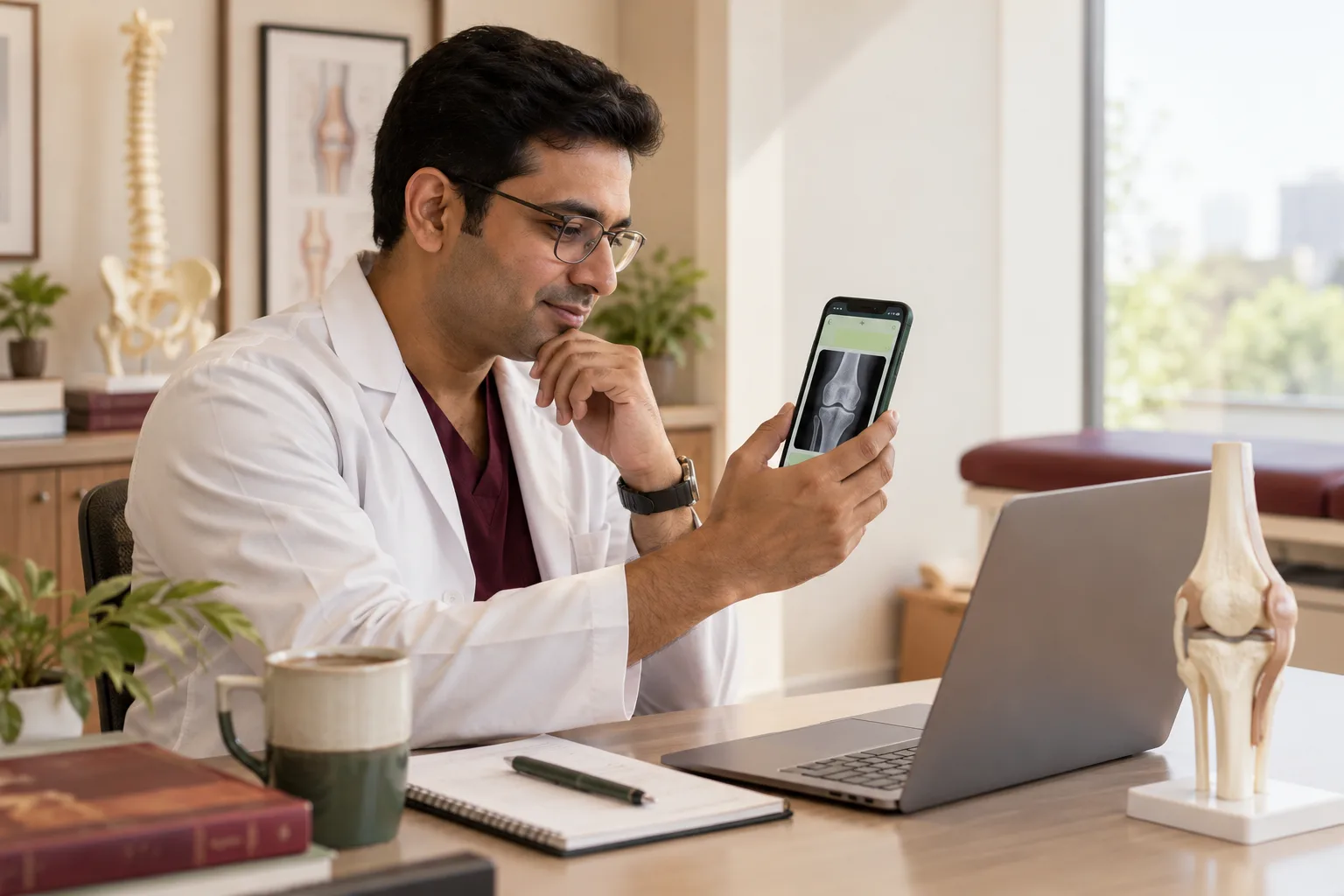 6 min read · 6 Oct 2026What orthopaedic clinics should do with an X-ray sent on WhatsAppPatients send the X-ray before they call. A reply routine for the orthopaedic clinic that books a consultation without diagnosing over chat.
 6 min read · 6 Oct 2026What healthcare buyers check before they choose youA patient, a referring doctor and a hospital purchase team each check different things before choosing a provider. See what each looks at.
More for orthopaedic clinics
Related work to consider.
Closest to this: content and social
Also for orthopaedic clinics
Or start from the overview: sales and marketing for orthopaedic clinics.
Your next practical step
Tell us what you are trying to grow, and we will read it before we call.
Eight short steps, mostly taps. Skip anything you would rather answer on the call.