Orthopaedic equipment suppliers · Lead generation
Turn a discharge note into an order placed with your shop, not the one next door.
Lead generation for an orthopaedic equipment supplier means being named at the moment a family holds a doctor's list of braces, walkers and aids. GullySales works on the referral routine, the product pages and the enquiry record that bring those families to you.
Scope, fee, reporting and term are agreed in writing after we have read your brief and spoken to you.
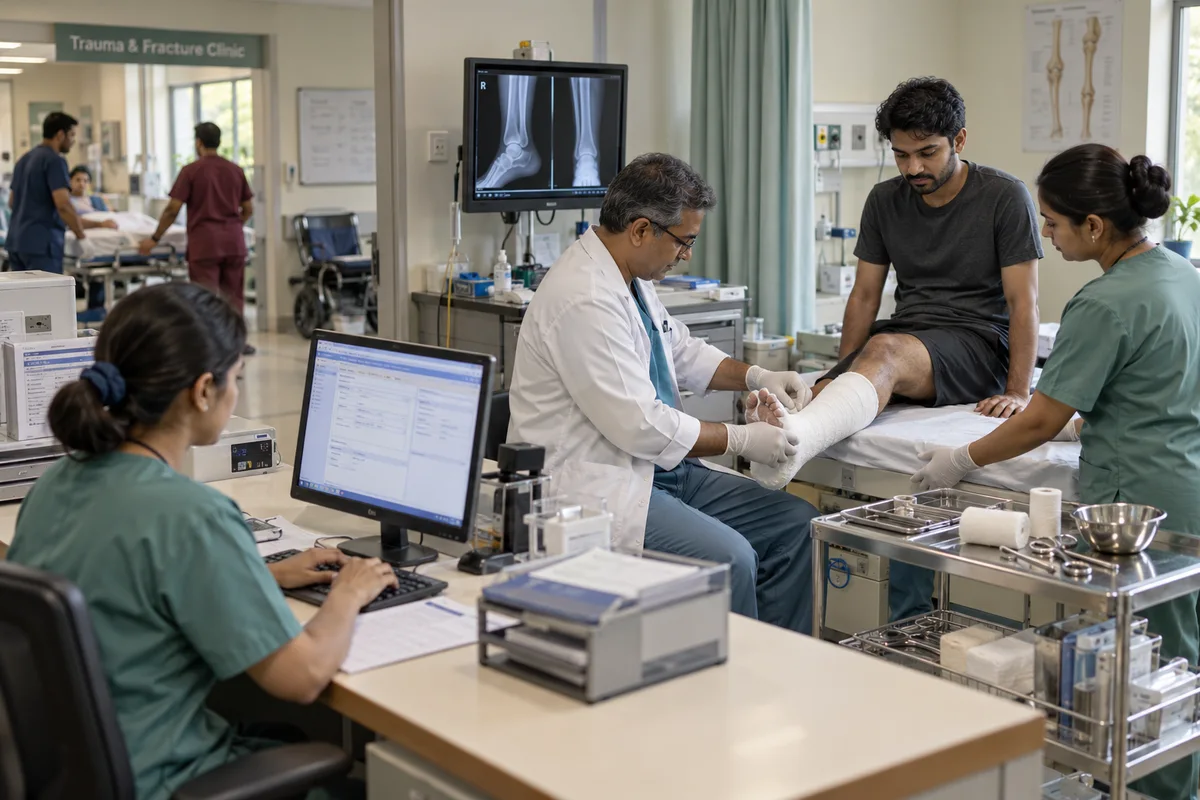
What lead generation means
Lead generation is the combined work of every channel that brings in a new enquiry, whether from search, adverts, referrals or a stall at an exhibition. GullySales runs these channels together and reports the number of enquiries each one produced, not the activity behind it.
Also for orthopaedic equipment suppliers
- CRM for orthopaedic equipment suppliers
- Follow-up systems for orthopaedic suppliers
- SEO for orthopaedic equipment suppliers
- Local SEO for orthopaedic equipment suppliers
- Social media marketing for orthopaedic suppliers
- Content marketing for orthopaedic suppliers
- Buyer personas for orthopaedic equipment suppliers
- WhatsApp marketing for orthopaedic suppliers
Sales and marketing for orthopaedic equipment suppliers, the overview.
Plan the next part of the work
Last updated 21 Nov 2026. Rules for this trade differ by state and professional body, and they change. We describe restrictions in general terms, so check the current position with your own council or adviser before you publish anything.
For orthopaedic equipment suppliers
Where it usually goes wrong, and what we would do.
“The list arrives before the shop is chosen”
A surgeon or physiotherapist writes the items, and the family then picks a shop. If your name is not on the sheet at the discharge desk or the therapy centre, the enquiry never reaches your counter, however well the shelves are stocked.
“A search for an item is a search for help choosing”
A daughter typing a folding walker for an elderly parent wants to know about height, weight and weight limits. A catalogue with prices gives the daughter nothing to decide with, so the call goes to the shop that explained it.
“Walk-ins are leads that nobody wrote down”
A customer who comes in with a note, buys one item and leaves is a lead for the rest of the list. Without a record of what the note named, the other items go to whichever shop is next on the road.
“Clinics and centres are repeat buyers, not one-off sales”
A physiotherapy centre that sends patients to you every week is worth more than a single walk-in. It needs a named contact, a stock list and a routine, or the habit goes to the supplier who rings first.
What we do
What we deliver for orthopaedic equipment suppliers.
The work available for this need. We agree the deliverables and responsibilities for your engagement in writing.
Referral sheet for surgeons and therapists
A single page with the range you stock, the fitting you offer, home delivery and how to reach the counter.
Result: A sheet a front desk can keep and hand over.
Discharge basket page
A page listing the items named after joint replacement or fracture surgery, with an order form that takes the whole list.
Result: A family can send the full list in one go.
Enquiry record at the counter
A simple register noting who sent the customer, what the note named and what was bought.
Result: You can see which source brought which order.
Product choice pages
Plain pages for braces, supports, walkers, crutches and wheelchairs that explain size and fit, without promising any recovery.
Result: A searching family finds help before the call.
Clinic supply conversation
A visit script and stock list for physiotherapy centres and clinics, with nothing offered for recommending you.
Result: Each centre knows what you stock and whom to ask for.
How the result is measured
- Relevant enquiries by source
- Duplicate and unsuitable enquiries
- Time to the first response
- Accepted enquiries reaching an agreed next step
Recorded as a baseline before work starts, so every later report has an honest comparison.
What to capture or send
What the counter records when a family arrives with a discharge note.
- The list on the note
- Copy the items named, such as a walker, a knee brace or crutches, and note the sizes if given. The shop can then pick stock before the family returns.
- Who is buying and who will use it
- Record whether the buyer is the patient, an adult child or a ward attendant, and a contact for the delivery. The person holding the note may not be the one paying.
- The surgeon, therapist or hospital that sent them
- Log the referrer by name. The shop can thank them, and the register shows which doctors send customers who buy instead of walking on to the next counter.
- Walk-in who left without buying
- Write a line on what was asked for and why the person left, such as a size out of stock. A walk-in nobody writes down is a lead lost twice.
- Rental or purchase
- Mark whether the family wants to hire or buy a bed or wheelchair, and the date needed. It routes the enquiry to the right record and avoids a second call.
Who it is for
This is written for these orthopaedic equipment suppliers.
- Orthopaedic and surgical goods shops in hospital areas
- Suppliers of braces, belts and supports to patients and clinics
- Mobility aid suppliers selling walkers, crutches and wheelchairs
- Home care and rental suppliers for hospital beds and traction sets
- Rehabilitation equipment suppliers for physiotherapy centres
- Distributors of orthopaedic aids to chemists and surgical stores
- Suppliers who tie up with orthopaedic clinics and hospital discharge desks
- Online sellers of orthopaedic supports with local delivery
Before you decide
When this may not be the right fit.
- The shop does not stock a range at present, and attracting more enquiries would send families to a competitor.
- Nobody at the counter writes enquiries down, so extra leads would be lost as the walk-ins are now.
- You hope to pay doctors for sending patients, which professional ethics rules forbid.
Before you decide
Agree the work. Know how to judge it.
Lead generation for orthopaedic equipment suppliers: use these checks to prepare, choose the scope, and review what changes.
Bring the right evidence
Define the organisations or buyers you can serve and the reasons they would consider a conversation. Bring examples of accepted and rejected prospects so the selection rule is visible.
Make the scope clear
Agree the research sources, contact approach, qualification rules, and handover. Clarify which meetings count as accepted and what happens to replies that are not ready to buy.
Check the work in use
Review why a prospect was selected and what was learned from the response. Count held, relevant conversations separately from contacts found, messages sent, or meetings booked.
Know when to change course
If the same objection appears repeatedly, adjust the offer or buyer group before increasing outreach. Respect a request to stop contact and keep the exclusion in the record.
These are discussion points, not a fixed package. GullySales confirms the deliverables, responsibilities, fee, and term in writing after reading your brief and speaking with you.
Before we start
What to have ready before the work starts.
The records, access and decisions this work needs from orthopaedic equipment suppliers. Anything missing is noted in the written scope, with who will supply it.
- A stock list with sizes actually on the shelf
- A sheet showing each group of items, the sizes held and what is ordered on request. A family comparing shops wants to know whether the item is available today. If the list does not exist, the counter prepares a rough one first, and pages describe the range only in general terms.
- The names of surgeons and therapists who send customers
- Even a short list helps: the surgeons, physiotherapists, hospital desks and chemists whose slips arrive at the counter. We build the referral sheet around them. If you cannot name any, the plan begins with a month of asking each customer who suggested the shop.
- A number the counter answers during shop hours
- One phone line, ideally with WhatsApp, answered by a named person. Enquiries that ring out go to the next shop. If the counter is single-handed, say so, and we plan messages around the hours when the person can reply.
- The owner's decision on delivery and returns
- Whether you deliver, to which areas, and whether an unfitting brace may be exchanged. These are the questions a distant relative asks first. Where the owner has not decided, our wording stays silent on them and enquiries stall at the question.
How it works
How the lead generation work runs
The work itself, in order. How an engagement starts, from your brief to a written scope, is set out on our method page.
- 1
Count what the shop can stock and fit
We begin at the counter with the owner and the senior salesperson, listing the braces, walkers, crutches and rental items that are held on the shelf and the ones that are ordered on request. We also note who can fit a knee brace properly and who cannot. Enquiries for items you cannot supply or fit only create disappointment, so you decide which groups to grow.
- 2
Write down where buyers heard of the shop
For the last stretch of billing we ask the counter to recall how each customer arrived: a surgeon's slip, a physiotherapist's word, a hospital discharge desk, a search on the phone, or a walk-in from the street. The sheet becomes the baseline. You confirm it is fair, because every later figure is compared with it.
- 3
Draft the sheet a surgeon hands to a family
We write a one-page list of items a surgeon or therapist can give a family, with your shop's name, address, hours and a number that is answered. You check each item against what you hold. The surgeon or therapist decides whether to use it, and we do not ask for any payment or favour in return.
- 4
Send a test enquiry through the counter
We act as a daughter in another city who holds a discharge note and wants a walker, a belt and a commode delivered, and send the request by call and by message. You and the counter see where it stalls: no one answers, the price is unclear, the stock is not known. Fixes are made before real enquiries are invited.
- 5
Read the sources and decide what to feed
After enquiries begin, we compare sources against the baseline and look at which ones turned into sales or rentals. The counter tells us which customers asked for a different brand and which left without buying. You decide which source to feed, which to leave, and whether a clinic supply conversation is worth starting.
Where this fits
Three pieces of sales work, in this order.
This work sits inside sales process design, at stage 1, prospecting and lead generation. The audit comes before it, and sales management keeps it running.
Step 1
Sales audit
Find where deals are being lost and what to fix first.
Start here if you cannot say where orders are lost.
Step 2 · you are here
Sales process design
One written way to sell, from first enquiry to repeat order.
Start here if every salesperson sells differently.
Step 3
Sales management
A target, a review routine and someone who owns the number.
Start here if the team has targets and no routine.
FAQ
Questions owners ask before they call.
Not here? More answers, or ask on WhatsApp.
Can GullySales promise us a number of enquiries?
Do we pay doctors for sending patients?
May we promise that an item will treat the patient's condition?
What if the discharge note names a brand we do not stock?
Should we approach clinics and physiotherapy centres as well as families?
How do we handle an enquiry that arrives as a photograph of a doctor's note?
How long is the contract?
How soon will we see results?
Who will actually do the work?
What do you need from us?
More for orthopaedic equipment suppliers
Related work to consider.
Closest to this: leads and follow-up
Also for orthopaedic equipment suppliers
Or start from the overview: sales and marketing for orthopaedic equipment suppliers.
Your next practical step
Tell us what you are trying to grow, and we will read it before we call.
Eight short steps, mostly taps. Skip anything you would rather answer on the call.