Commercial cleaning companies · Local SEO
Show up on the map when a builder or restaurant owner searches nearby.
Local SEO for a commercial cleaning company is how your listing appears in the map results when a buyer searches for cleaning near a site. GullySales works on the profile, the service areas and the reviews, and promises no position.
Scope, fee, reporting and term are agreed in writing after we have read your brief and spoken to you.
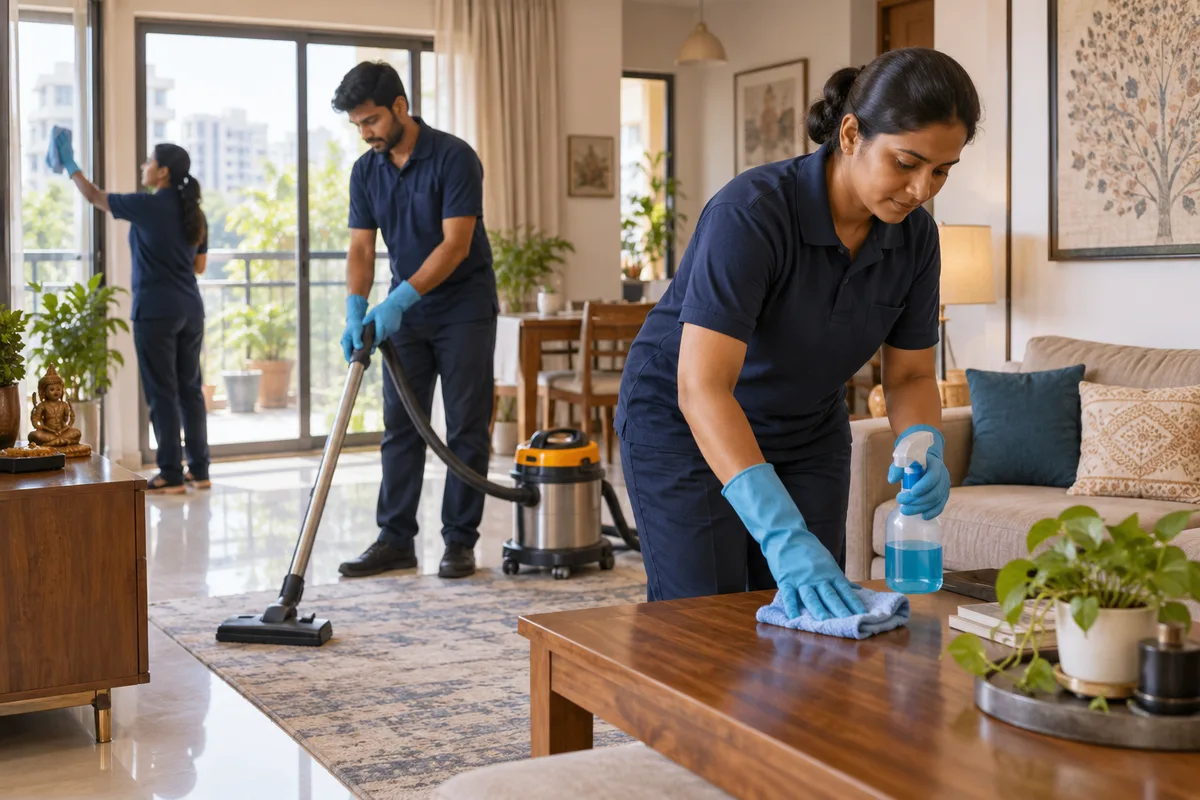
What local SEO means
Local SEO is the work of making your business show up for searches that name your town or locality, such as a service plus an area name. GullySales sets up locality pages, local citations and map listings so nearby customers find you before a competitor across town.
Also for commercial cleaning companies
- SEO for commercial cleaning companies
- Website for commercial cleaning companies
- Lead generation for commercial cleaning companies
- Social media marketing for commercial cleaning companies
- Content marketing for commercial cleaning companies
- Buyer personas for commercial cleaning companies
- CRM for commercial cleaning companies
- Follow-up systems for commercial cleaning companies
Sales and marketing for commercial cleaning companies, the overview.
Last updated 14 Nov 2026.
For commercial cleaning companies
Where it usually goes wrong, and what we would do.
“Your office is not the customer's site”
A commercial cleaner goes to the buyer. The profile has to be set as a service-area business with the places you work, otherwise the listing treats the godown address as the place you serve and misses the site across town.
“Jobs are described by the machine and the surface”
A profile that says cleaning services tells the buyer nothing. Listing floor scrubbing, glass facade cleaning and post-construction cleaning as named services puts the searcher's own words on your listing.
“Reviews from businesses read differently”
A facility head reading a review looks for the type of site and the type of job. A review saying a showroom floor was machine-polished carries more than a star rating alone, so the ask should prompt for the job.
“Photographs on the listing prove the crew turned up”
Pictures of a crew with machines on a real floor, plus before and after pairs, answer whether the firm does the work or sells it on. Staged stock images do the opposite.
What we do
What we deliver for commercial cleaning companies.
The work available for this need. We agree the deliverables and responsibilities for your engagement in writing.
A service-area profile set up correctly
The areas you work in, the named services and the opening hours, entered and verified.
Result: The listing shows the areas you serve and the jobs you do.
A review request for completed jobs
A short message with the profile link, sent to the site contact after handover, suggesting they name the job.
Result: New reviews mention the kind of site and the work done.
Replies to every review
A written reply that names the job and handles any complaint plainly.
Result: A reader sees each review answered.
Photographs added by job type
Crew, machine and before and after pairs uploaded in a routine, with the client's permission where a site is identifiable.
Result: The profile shows work on real floors.
Profile questions answered in advance
The questions buyers ask, such as machines, crew and exclusions, answered on the profile.
Result: A buyer finds the answer without calling.
Call and direction counts taken from the profile
The profile's own counts of calls and website visits noted before the work and read again later.
Result: You can compare the profile's activity against the starting figures.
How the result is measured
- Map pack ranking
- Local search visibility
- Enquiries by locality
Recorded as a baseline before work starts, so every later report has an honest comparison.
Searches your buyers type
Maps searches name the job, so list the jobs.
- cleaning services near me
- The service-area profile with the listed areas, the main job types and photographs of the crew at work.
- floor scrubbing machine service
- A profile service entry that names machine scrubbing and polishing, so a facility head can tell what you do.
- post construction cleaning near me
- A service entry and a profile post with a finished handover, shown only with the builder's agreement.
- restaurant deep cleaning service
- An entry for kitchen deep cleaning and a question answered in advance about inspections and night work.
- commercial cleaning reviews
- Reviews that name the site type and the job, requested from the project manager rather than the person on the floor.
Who it is for
This is written for these commercial cleaning companies.
- Post-construction and handover cleaning contractors
- Mechanised floor scrubbing and polishing specialists
- Glass facade and window cleaning firms
- Carpet, upholstery and sofa shampoo services for offices
- Showroom, restaurant and kitchen deep-cleaning teams
- Hospital and clinic deep-cleaning contractors
- Warehouse and factory floor cleaning companies
- Sanitisation and disinfection service providers
Before you decide
When this may not be the right fit.
- Your only address is a godown you do not want shown, and you have not yet set the profile to serve by area.
- You have no photographs that the clients have agreed to share, so the listing would show stock images.
- You list cities where you have no crew, and callers from there would be turned away.
Before you decide
Agree the work. Know how to judge it.
Local SEO for commercial cleaning companies: use these checks to prepare, choose the scope, and review what changes.
Bring the right evidence
Confirm the real business address, service area, contact details, and who controls the business listings. Keep examples of calls that came from the wrong location or asked for a service you do not provide.
Make the scope clear
Choose the locations you actually serve and the information each needs. Agree who approves listing changes, responds to enquiries, and keeps opening hours accurate.
Check the work in use
Check the journey from a local search to a call or enquiry on a phone. The address, service area, and description should agree across your website and listings.
Know when to change course
Do not create an office claim for a place where you only serve customers remotely. Clear service coverage is more useful than a misleading local presence.
These are discussion points, not a fixed package. GullySales confirms the deliverables, responsibilities, fee, and term in writing after reading your brief and speaking with you.
Before we start
What to have ready before the work starts.
The records, access and decisions this work needs from commercial cleaning companies. Anything missing is noted in the written scope, with who will supply it.
- Proof of the business address
- An electricity bill, rent agreement or registration paper showing the address and the business name. Verification of the map listing may ask for it or for a video of the premises. Any of these will do if the name matches what you show. Without a matching paper, verification stalls and the listing may stay hidden, or be flagged for review by the platform.
- The list of areas you serve
- A written list of the localities, business parks and towns your crews can reach. The profile's service areas follow it, and the map reads them as a promise. If it is left vague, enquiries come from places you cannot serve, which wastes calls and may bring a poor review from a buyer you had to refuse after a long conversation.
- Photographs from recent jobs
- Around twenty phone photographs of floors, glass and kitchens before and after, taken in daylight, showing the machine at work if possible. The profile depends on them. Where the crew has none, we agree a simple photograph routine for the next jobs and publish a smaller set first, because stock images of cleaning would undo the proof.
- Names of clients willing to review
- A short list of site managers, restaurant owners or facility heads who have said they are happy with the work and would write a review. The owner or supervisor who knows them must make the ask. Without such names the profile shows few reviews, and no review is ever bought, written or edited by us on anyone's behalf.
- The phone number that will be answered
- A number picked up during working hours by someone who can give a rough idea of the job and ask for a site visit. The profile sends calls to it. If the number is switched off on site or rings a driver, missed calls pass to the buyer's next search result, which belongs to a competitor.
How it works
How the local SEO work runs
The work itself, in order. How an engagement starts, from your brief to a written scope, is set out on our method page.
- 1
Decide which yard or office is listed
We start by asking where your crews and machines are based and where customers can actually find you. You choose whether the godown, the office or a service-area-only listing is right for the business. What exists afterwards is a written decision on the address shown, the areas served and the name used, each matching your papers so that the map has nothing to doubt.
- 2
Claim the listing and match the facts
We help you claim or recover the Maps profile and compare the name, phone number, hours and address against your invoices and visiting card. You sign off each fact. Differences between what the listing says and what your letterhead says are corrected first, because they confuse buyers and make the map less willing to show you to anyone nearby.
- 3
Check what a nearby search shows today
We search the way a builder or restaurant owner would, from a few areas you serve, and record which firms appear, how they describe their work and what their photographs show. You see the results with us. We also note your own calls and direction requests from the profile, as the starting figures for the later reading.
- 4
Fill the profile with jobs and photographs
We add each job type as a service, write the description from your crew's own words and upload photographs of machines on real floors. You approve every image and strike any that show a client's name board. The profile then reads as a working cleaning firm with a visible method, not just a name beside a phone number.
- 5
Plan review requests after handovers
We agree with you which clients to ask for a review, such as the site manager or facility head who watched the work, and how to ask, with a short message sent at handover. You write nothing false and offer nothing in return for a review. A note records who was asked and who replied, so no one is asked twice.
- 6
Read profile calls against the starting figures
After the profile has been live for a while, we compare calls, direction requests and messages from the listing with the figures noted at the start. You tell us which of those calls became site measurements. We decide together whether to widen the service areas, add photographs or change the job descriptions on the profile.
Where this fits
Three pieces of sales work, in this order.
This work sits inside sales process design, at stage 1, prospecting and lead generation. The audit comes before it, and sales management keeps it running.
Step 1
Sales audit
Find where deals are being lost and what to fix first.
Start here if you cannot say where orders are lost.
Step 2 · you are here
Sales process design
One written way to sell, from first enquiry to repeat order.
Start here if every salesperson sells differently.
Step 3
Sales management
A target, a review routine and someone who owns the number.
Start here if the team has targets and no routine.
FAQ
Questions owners ask before they call.
Not here? More answers, or ask on WhatsApp.
We work from a godown. Should we show the address?
Can we list every city we have ever worked in?
How do we respond to a rival's fake review?
Who should we ask for a review after a handover job?
Should the listing show our godown address or only our service areas?
Can the map listing show our rate per square foot?
How much does it cost?
How long is the contract?
How soon will we see results?
Who will actually do the work?
More for commercial cleaning companies
Related work to consider.
Closest to this: search and visibility
Also for commercial cleaning companies
Or start from the overview: sales and marketing for commercial cleaning companies.
Your next practical step
Tell us what you are trying to grow, and we will read it before we call.
Eight short steps, mostly taps. Skip anything you would rather answer on the call.