Commercial pest management companies · Follow up systems
Chase the proposal that went to the purchase desk with something other than a reminder.
A follow-up system for a commercial pest management company is the set of steps that carries an enquiry, a survey and a proposal through to a decision. GullySales works on who follows up, what each message adds and how a lost quote is reopened at the next audit or renewal.
Scope, fee, reporting and term are agreed in writing after we have read your brief and spoken to you.
What follow up systems means
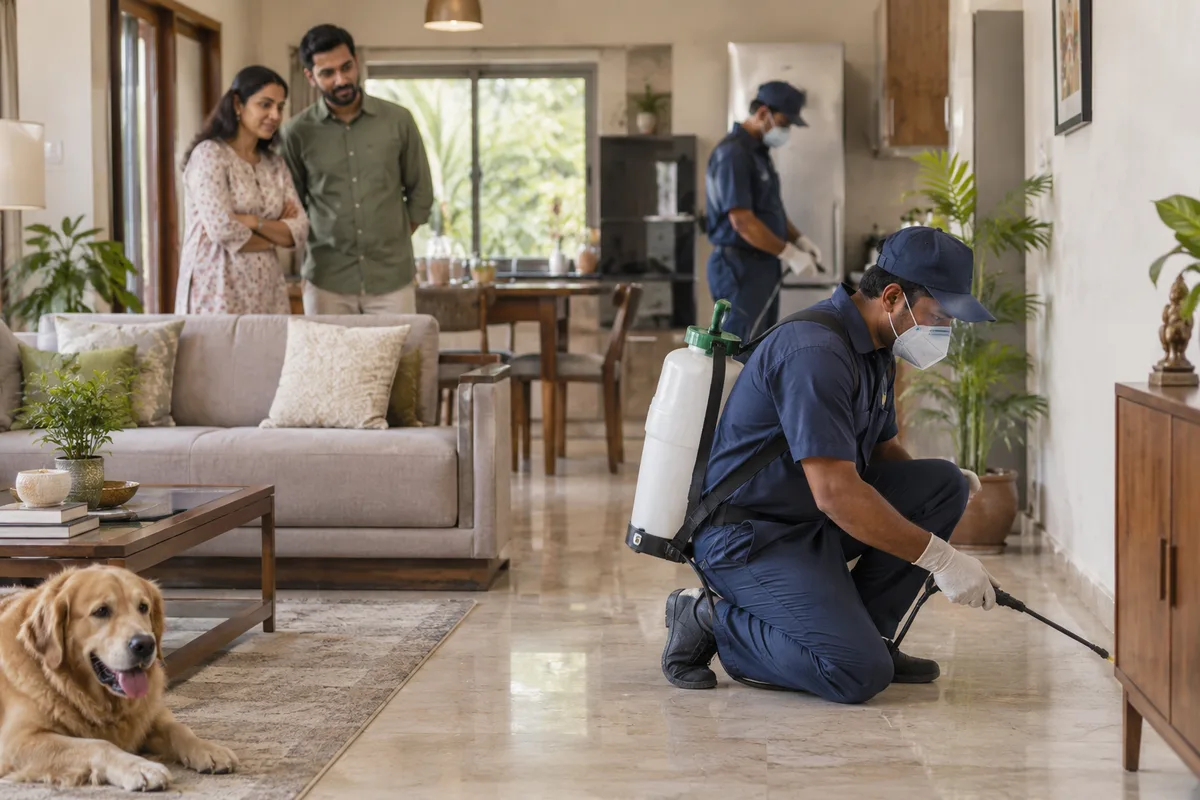
A follow-up system is the set routine for calling, messaging or emailing an enquiry more than once, since most buyers do not decide on the first conversation. GullySales sets the number and timing of follow-ups so an undecided buyer keeps hearing from you until they decide either way.
Also for commercial pest management companies
- Lead generation for commercial pest management
- CRM for commercial pest management
- SEO for commercial pest management
- Local SEO for commercial pest management
- Social media marketing for commercial pest management
- Content marketing for commercial pest management
- Buyer personas for commercial pest management
- WhatsApp marketing for commercial pest management
Sales and marketing for commercial pest management companies, the overview.
Last updated 14 Nov 2026.
For commercial pest management companies
Where it usually goes wrong, and what we would do.
“The proposal goes quiet after the survey”
A buyer who liked the survey may need weeks of internal approvals. A follow-up that only asks for an update gets ignored. One that sends a short finding, a clarification on scope or a sample record gives the buyer something to forward.
“Each role needs a different follow-up”
The quality head wants to hear about records, and the purchase desk wants to hear about scope. A single message sent to both does neither job. The system sends the right note to the right person.
“Lost bids are not dead”
A buyer who chose a cheaper vendor meets a gap at the next audit. A planned note before the renewal date, with the record you would have kept, reopens the conversation without pressure.
“Silence after a first sample is a signal”
If a prospect received the sample report and never replied, the next step is a question about their audit date, not a repeat of the offer. The system tells the salesperson what to ask.
What we do
What we deliver for commercial pest management companies.
The work available for this need. We agree the deliverables and responsibilities for your engagement in writing.
A written follow-up path
Steps from first enquiry to survey, proposal, negotiation and start, each with an owner.
Result: Everyone knows who acts at each stage.
Message templates by role
Notes for the quality head, purchase desk, plant head and facility firm, each adding a useful fact.
Result: Each message carries something new.
Reminders in the CRM
Tasks set against each open proposal and each renewal date.
Result: No open proposal sits without a next step.
A lost-bid reopening note
A short message tied to the buyer's next audit or renewal, drawn from your records.
Result: Lost bids have a planned return.
A stalled-deal review
A look at proposals with no reply, with a decision to chase, pause or close.
Result: Stalled deals are decided, not forgotten.
Tracking of replies
Which messages drew a reply, from which role.
Result: You learn which follow-up works for which buyer.
How the result is measured
- Follow-up completion rate
- Average number of follow-ups before close
- Enquiries closed after repeat follow-up
Recorded as a baseline before work starts, so every later report has an honest comparison.
What to capture or send
Give each role something new to read.
- Survey done, proposal sent
- A note to the quality head pointing to the findings page, with a question about the audit date. It carries content, not a nudge.
- Purchase desk quiet
- A message with a one-page scope comparison, so the desk can place your figure against another vendor's.
- Sample report sent, no reply
- One question asking whether the report format fits what their auditor asks for, sent to the quality head.
- Bid lost on rate
- A note kept in the record and a call set before the next audit or renewal, referring to what the survey found.
- Contract renewal near
- A call to the account contact before the date, using the service record as the opening.
Who it is for
This is written for these commercial pest management companies.
- Pest management firms for food factories and bakeries
- Restaurant, cloud kitchen and hotel pest control contractors
- Warehouse and cold storage pest management specialists
- Hospital and pharmacy pest control vendors
- Office, mall and retail pest management firms
- Hostel, school and institution pest control contractors
- Integrated pest management consultants
- Fumigation and termite specialists for commercial buildings
Before you decide
When this may not be the right fit.
- You send proposals with no survey behind them, so there is nothing new to say when you follow up.
- No one is free to take the call when a quality head replies to a message.
- The sales person and the technician both follow up the same account and neither knows what the other said.
Before you decide
Agree the work. Know how to judge it.
Follow-up systems for commercial pest management: use these checks to prepare, choose the scope, and review what changes.
Bring the right evidence
Trace recent enquiries from arrival to the last recorded action. Include a won enquiry, an unsuitable one, and one that went quiet, with personal details removed for the initial discussion.
Make the scope clear
Agree who accepts each enquiry, what makes it qualified, and how ownership changes. Include a rule for missed replies and a clear reason for closing an enquiry.
Check the work in use
Pick an enquiry at random and ask the team to find its owner, latest conversation, and next action. Check that the record agrees with what actually happened.
Know when to change course
If no one has capacity to respond, assign that responsibility before buying more leads. Automation can support the owner, but it cannot replace an unresolved handover.
These are discussion points, not a fixed package. GullySales confirms the deliverables, responsibilities, fee, and term in writing after reading your brief and speaking with you.
Before we start
What to have ready before the work starts.
The records, access and decisions this work needs from commercial pest management companies. Anything missing is noted in the written scope, with who will supply it.
- Every open proposal with its date
- List the proposals now out with buyers, each with the date it was sent, the stage reached and the name of the person who handled it. Without dates we cannot tell which proposals have gone silent, and the follow-up path would be run on guesswork. Approximate dates are accepted if they are marked as such.
- The survey notes behind each proposal
- Bring the notes or reports from the survey for each open proposal, with anything the buyer said on site. A message that refers to a real finding or a real worry gets a reply, while a general one does not. If notes are missing, the messages stay general and are weaker, and we say so in the plan.
- Contact names for each role
- For every open proposal, name the quality head, the purchase desk and the plant or facility head, as far as you know them. A follow-up sent to the wrong role is wasted, and a proposal can sit with one person while another decides. Where only one name is known, we add the others at the next call.
- A rule on who follows up
- Decide whether sales, the technician or a coordinator makes each contact, and who may speak about price. Buyers answer the person they met at the survey. Without a rule, a technician may promise something the sales head has not priced, and the buyer hears two different offers from the same firm.
- The reasons you were given for lost bids
- Write down what you were told, or believe, about each lost bid, even if it is only the buyer's silence. These reasons shape the reopening note. If they are unknown, we begin with one plain question to each buyer, record the replies and use them in place of guesses.
How it works
How the follow up systems work runs
The work itself, in order. How an engagement starts, from your brief to a written scope, is set out on our method page.
- 1
List every proposal that went quiet
We open the proposals of recent months and mark which received no answer after the survey, which went to the purchase desk and which were lost without a reason. You tell us who handled each. This list is the baseline and the first batch of follow-up, and it shows where in the path silence begins.
- 2
Write the path for each role
With your sales head, we write what follows the enquiry, the survey, the proposal and the purchase desk, and who follows up. A quality head, a purchase desk and a plant head get different contacts. You remove any step the team will not do, so the path matches how the firm really works.
- 3
Give every message something to add
Each message carries a fact the reader can use: a point from the survey, a sample record, a note on a finding at a similar site. You rewrite lines that read as chasing. The message to the purchase desk compares scope clearly, and the one to the quality head points to the record.
- 4
Set reminders and the lost-bid note
We place reminders in the CRM against each proposal, assigned to a named person, and write the note used to reopen a lost bid when an audit or renewal comes around. You test both on three real proposals. A reminder that nobody answers is traced to its owner.
- 5
Run the path on the quiet proposals
The team uses the path on the list made at the start while we watch the replies and record what buyers say. You adjust any wording that gets a cold answer. A buyer who says silence means no is asked one question about why.
- 6
Compare replies with the starting list
We read how many quiet proposals drew a reply, were closed or were reopened, using the CRM and not memory. You decide what to keep. We claim no contract won, only what changed in the stages.
Where this fits
Three pieces of sales work, in this order.
This work sits inside sales process design, at stage 2, qualification. The audit comes before it, and sales management keeps it running.
Step 1
Sales audit
Find where deals are being lost and what to fix first.
Start here if you cannot say where orders are lost.
Step 2 · you are here
Sales process design
One written way to sell, from first enquiry to repeat order.
Start here if every salesperson sells differently.
Step 3
Sales management
A target, a review routine and someone who owns the number.
Start here if the team has targets and no routine.
FAQ
Questions owners ask before they call.
Not here? More answers, or ask on WhatsApp.
How many follow-ups are too many?
Who should follow up, sales or the technician?
Can follow-up be automated?
Should the technician follow up on a proposal?
Should we reopen a bid we lost?
Should a follow-up mention the buyer's audit date?
How much does it cost?
How long is the contract?
How soon will we see results?
Who will actually do the work?
More for commercial pest management companies
Related work to consider.
Closest to this: leads and follow-up
Also for commercial pest management companies
Or start from the overview: sales and marketing for commercial pest management companies.
Your next practical step
Tell us what you are trying to grow, and we will read it before we call.
Eight short steps, mostly taps. Skip anything you would rather answer on the call.