Water and fire damage restoration companies · Truck and commercial vehicle dealer lead-to-booking programme
Check the fit before choosing truck and commercial vehicle dealer lead-to-booking programme.
This programme is for commercial-vehicle dealerships handling operator enquiries, vehicle requirements, and booking handovers. Running a transport fleet alone does not make it a dealership programme.
Scope, fee, reporting and term are agreed in writing after we have read your brief and spoken to you.
Specialist scope
Confirm the operating model before applying this service to water and fire damage restoration companies.
This programme is for commercial-vehicle dealerships handling operator enquiries, vehicle requirements, and booking handovers. Running a transport fleet alone does not make it a dealership programme.
Your team approves the scope and any commitments to buyers. GullySales does not assume authority over pricing, staffing, or delivery promises unless a specific responsibility is agreed in writing.
Consider the underlying work instead.
The context for Water and fire damage restoration companies
Start with the decisions in your own enquiry records.
Trace a real enquiry across the people and systems involved. Record missing information, duplicate work, and the decision that is still waiting for an owner.
How people choose in this industry
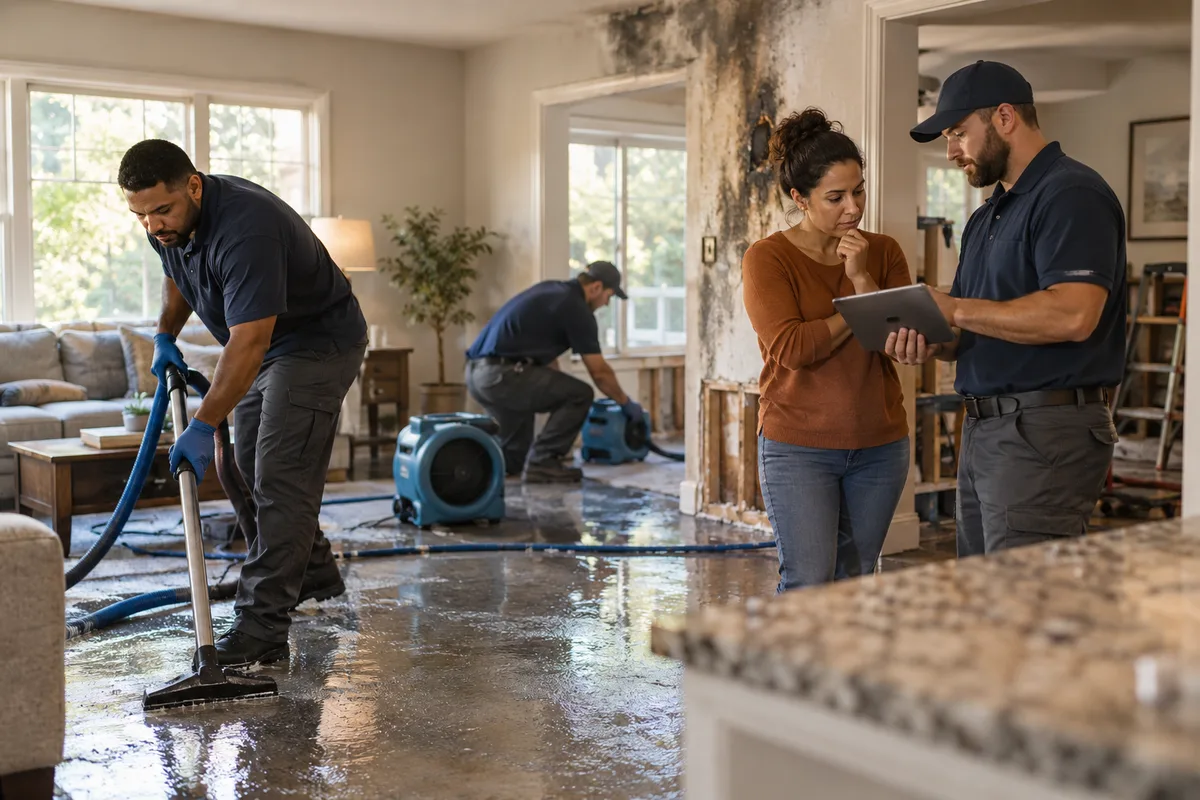
In an emergency almost nobody compares companies. A homeowner with water crossing the hallway searches for water damage restoration near them and calls the first result that says a crew is coming. Paid search and the map pack matter more here than anything you write. The search happens once, and the decision takes a minute.
The steadier work is referred. Plumbers, roofers, insurance agents and apartment maintenance leads all get asked who to call. For example, a plumber in Tulsa who finds three burst pipes in a freeze week decides on the spot which restoration company gets all three. Carrier and third-party administrator programmes send work too, on their own terms and their own cycle-time rules.
The rebuild is decided separately, and the decision sits with other people. The adjuster has to agree the scope. The homeowner has to want you in the house for another three months, and somebody has to ask. Companies that ask while the drying equipment is still running win far more of it than companies that post a letter afterwards.
The decision before implementation
Define the process and access permissions before changing software settings or adding automation.
Existing industry priorities to review
- Emergency water extraction and structural drying
- Frozen and burst pipe response
- Fire and smoke damage cleanup
- Mould inspection and remediation
- Storm and flood response
These describe the industry's wider priorities. The written scope identifies which this service will address.
Why the scope is different
Use a service whose responsibilities match your operation.
The specialist programme has its own team, records, and approval requirements. Its name does not establish that the same engagement applies in another industry.
- Truck, bus, tipper and light commercial vehicle dealerships selling to transport operators, contractors and fleet owners
- Dealer principals who see enquiries come in but cannot say which ones reached a finance file
- Dealerships where the showroom, the finance desk and the workshop each hold part of a buyer's story
- Sales managers whose team keeps buyer details in personal phones and notebooks
- Dealerships selling trailers, bodies and attachments alongside the chassis
FAQ
Questions owners ask before they call.
Not here? More answers, or ask on WhatsApp.
How is truck and commercial vehicle dealer lead-to-booking programme scoped for water and fire damage restoration companies?
What should we confirm before considering this service?
What if this programme does not fit our operation?
Continue your review
Compare the service scope and the related work.
The scope, responsibilities, fee, reporting frequency, and term are agreed in writing after the requirements brief and conversation. Tell us what you need.
Your brief
Tell us what you need, and we will read it before we call.
Eight short steps about your business, what you want and who decides. Most questions are a tap, and you can skip any you would rather answer on the call.