Washing machine repair services · Content marketing
Explain the fault honestly and the customer already trusts the person who fixes it.
Content marketing for a washing machine repair service is writing and filming explanations that help an owner understand the fault before the technician arrives. GullySales works on what to explain, how to write it in plain words and where each piece sends the reader.
Scope, fee, reporting and term are agreed in writing after we have read your brief and spoken to you.
What content marketing means
Content marketing is writing articles, guides and pages that answer the questions buyers search before they are ready to enquire. This makes your business visible and trusted before the first call. GullySales plans this content from the first conversation onward, choosing topics that match real search demand rather than guesses.
Also for washing machine repair services
- Social media marketing for washing machine repair
- Lead generation for washing machine repair
- SEO for washing machine repair
- Local SEO for washing machine repair
- Buyer personas for washing machine repair
- CRM for washing machine repair
- Follow-up systems for washing machine repair
- WhatsApp marketing for washing machine repair
Sales and marketing for washing machine repair services, the overview.
Last updated 14 Nov 2026.
For washing machine repair services
Where it usually goes wrong, and what we would do.
“Honest advice is the product the customer cannot judge”
A customer cannot tell whether a drum bearing needs replacing. A guide that explains symptoms and when replacing the machine makes more sense shows the business as one that tells the truth.
“Hard water and low pressure repeat the same fault”
A building with hard water sees inlet valves and heating elements fail again. Content that explains this saves the business from being blamed for a repeat fault and gives the customer something useful to act on.
“A guide is also a briefing for the technician”
Writing the page forces the team to agree on what a symptom means. That agreement then shapes the phone triage, the quote and the explanation at the door.
What we do
What we deliver for washing machine repair services.
The work available for this need. We agree the deliverables and responsibilities for your engagement in writing.
A topic list from technician notes
A list of subjects taken from the faults your team sees most, grouped by machine type and brand.
Result: Your writing follows what technicians meet on visits.
Repair-or-replace guides
Plain pages explaining how an owner can weigh a repair against a new machine, with questions to ask the technician.
Result: A customer can read the page before the technician arrives.
Short videos for the first check
Clips showing the safe checks an owner can make, such as the drain filter and the door latch, ending with when to stop and call.
Result: Each clip ends with the same booking route.
A care guide for hard-water buildings
A page on what hard water and low pressure do to a machine and what the owner can do about them.
Result: Past customers can be sent a link in place of a long explanation.
Sharing plan for each piece
A list of where each piece is shared: your site, WhatsApp, building groups and the Maps profile.
Result: Each piece has a place to be shared and a person responsible.
How the result is measured
- Pages published
- Organic traffic
- Enquiries from content pages
Recorded as a baseline before work starts, so every later report has an honest comparison.
Posts and pieces to plan
The guides a washing machine owner reads, and the proof each one needs.
- What this error code means
- A guide by brand and code, written from the technicians' notes. Needs a photograph of the display from a real job.
- Repair or replace the machine
- A plain page on when a repair makes sense and when the machine is past it, with an invitation for a technician to look.
- Hard water and repeat faults
- A guide on scale in the heater and inlet valve, with advice for buildings that share one water source.
- First checks before you call
- A short safe-checks list: power, door, drain filter cover. It states clearly what the customer must not open.
- Top-load versus front-load faults
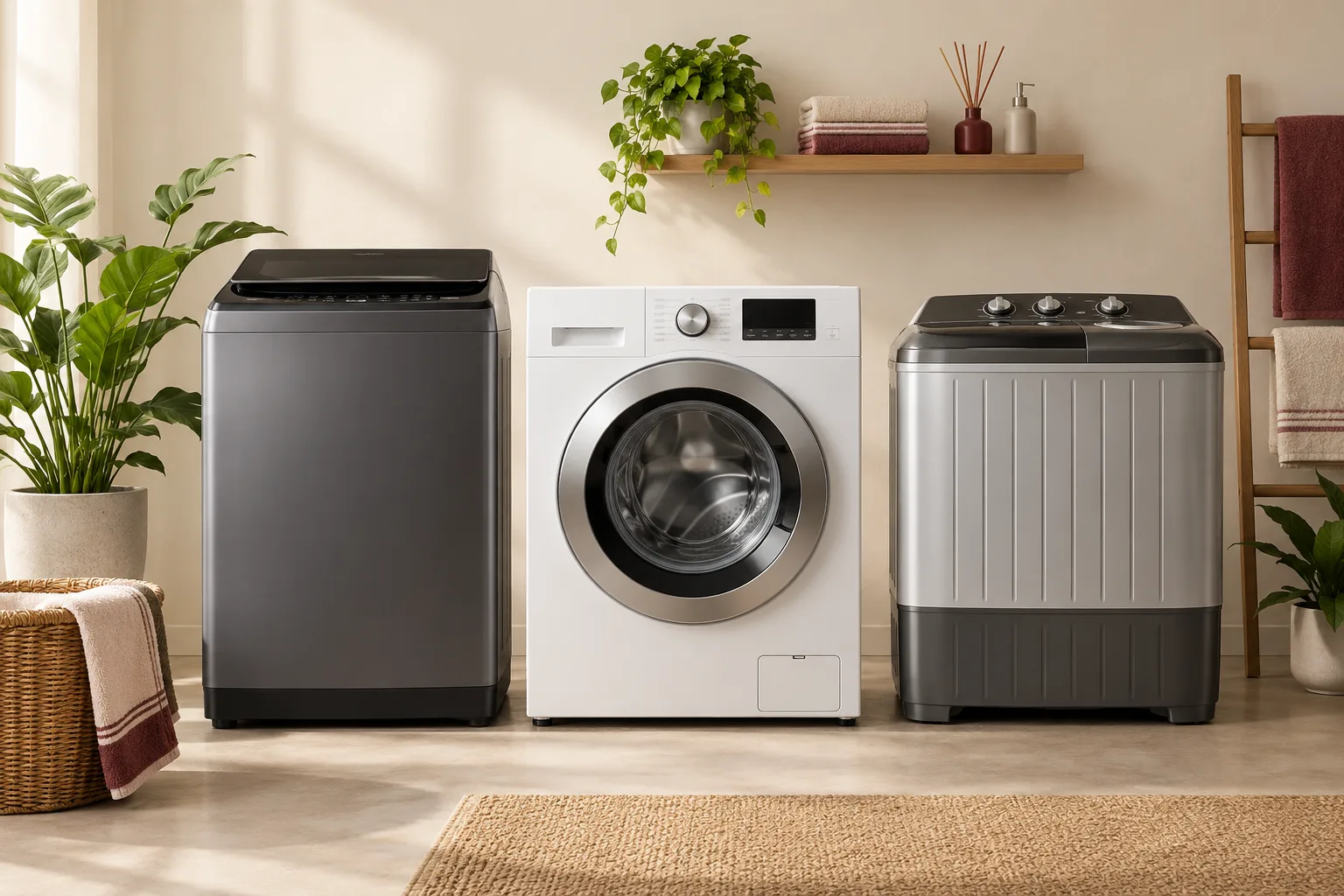
- A comparison naming the faults each machine shows, so the owner reads the right page first.
- Looking after a machine in a rented flat
- A care note for tenants and PG managers on loading, filter cleaning and who to call.
Who it is for
This is written for these washing machine repair services.
- Technicians who specialise in front-load machines of imported and premium brands
- Top-load and semi-automatic repairers serving middle-income households
- Multi-appliance repair firms with a washing machine desk
- Authorised service partners who take out-of-warranty calls
- Small teams working inside a single group of apartment complexes
- Repair businesses that also sell reconditioned machines
- Shops serving hostels, PGs and rental flats with several machines
- Laundrettes and dry-cleaners who need their commercial machines kept running
Before you decide
When this may not be the right fit.
- Your technicians have not written down the faults they see, so the guides would be copied from other sites.
- Nobody can check safety advice, and a wrong step on a live machine could hurt the customer.
- The booking route is not ready, so a reader would finish a guide and have nowhere to go.
Before you decide
Agree the work. Know how to judge it.
Content marketing for washing machine repair: use these checks to prepare, choose the scope, and review what changes.
Bring the right evidence
Bring questions from sales calls and examples of objections that delay a decision. Choose a subject expert who can check the substance, and identify evidence that can be published.
Make the scope clear
Agree the reader, buying question, format, and distribution route for each piece. Set the approval process and distinguish new research from rewriting material you already have.
Check the work in use
Ask a colleague to use the draft in a real buyer conversation. It should answer the question, support its claims, and make the next step clear without requiring a sales pitch to explain it.
Know when to change course
If the same unanswered question appears in several articles, improve the strongest page before commissioning another. More words are not a substitute for missing evidence.
These are discussion points, not a fixed package. GullySales confirms the deliverables, responsibilities, fee, and term in writing after reading your brief and speaking with you.
Before we start
What to have ready before the work starts.
The records, access and decisions this work needs from washing machine repair services. Anything missing is noted in the written scope, with who will supply it.
- Technician notes on repeat faults
- Guides are built from what technicians actually found. A page of notes per brand is enough. Without notes, the guides become general advice that any site could carry. Note which faults came back after a repair, because those make the best repair-or-replace guides.
- A rule on safety advice
- Decide which checks a customer may do, such as cleaning the filter, and which must wait for a technician. Put it in writing. Where no rule exists, we publish no instruction beyond switching off and calling you. Include the brands where the manufacturer asks for authorised service.
- Typical price ranges you will quote
- Say whether the guides may mention parts and prices. If yes, you provide the figures and own them. If you prefer not to, the guides explain only what drives the cost. Add whether a visit charge is taken if the customer declines the repair.
- A local water and pressure note
- Which buildings have hard water or weak supply is knowledge your technicians hold. A short note by locality lets the care guide be specific. Without it, we write the guide without area claims. Name the buildings with a known problem, such as a shared water tank.
- A reviewer who has the final say
- One person must approve each guide before it goes out. Name them. Without a reviewer, nothing is published.
How it works
How the content marketing work runs
The work itself, in order. How an engagement starts, from your brief to a written scope, is set out on our method page.
- 1
Mine technician notes for questions customers ask
We start by sitting with your technicians and reading their job notes for the questions customers ask at the door: is it worth repairing, why is the drum noisy, what does this code mean. You tell us which answers are safe to publish. The list of questions becomes the topic list. We keep the technician's own phrases for the fault, because customers search with the same words and not with the manual's.
- 2
Choose the first guides by buyer worry
We sort the questions by what worries the buyer the heaviest, commonly repair against replacement, and you pick the first few guides. Anything that touches electrical safety is marked for extra care. The order is agreed so that one guide does not repeat another.
- 3
Write each guide in a technician's voice
A draft is written from the technician's own explanation, in plain words, and returned to that technician for correction. You decide the line between helpful advice and a risky instruction. Anything that asks a customer to open the machine is removed. Each draft is read aloud once to a technician who was not involved, to check that an ordinary customer would follow it.
- 4
Check hard-water and pressure advice locally
Before a care guide is published, a technician who works in those buildings reads it for hard water, low pressure and local plumbing. You confirm what applies in your areas. A guide that does not match your localities is revised or dropped. Where a guide mentions a part, the technician confirms that the part named is what the brand really uses.
- 5
Add the booking route and share it
Each finished guide ends with the way to book and the photo to send. We give you a short note for sharing in building groups and with past customers. You decide who sends it, since a guide shared by a trusted technician is read more readily. Videos are filmed upright on a phone, with the technician's hands and the machine in view and no customer in frame.
- 6
Read which guides led to a repair call
We compare the calls and photo enquiries that mention a guide with the figures recorded earlier. You tell us which guides customers quoted. We then decide together which guide to extend, which to merge and which to retire. A guide that earned no calls may still be kept if technicians use it to brief a customer before a visit.
Where this fits
Three pieces of sales work, in this order.
This work sits inside sales process design, at stage 0, foundation. The audit comes before it, and sales management keeps it running.
Step 1
Sales audit
Find where deals are being lost and what to fix first.
Start here if you cannot say where orders are lost.
Step 2 · you are here
Sales process design
One written way to sell, from first enquiry to repeat order.
Start here if every salesperson sells differently.
Step 3
Sales management
A target, a review routine and someone who owns the number.
Start here if the team has targets and no routine.
FAQ
Questions owners ask before they call.
Not here? More answers, or ask on WhatsApp.
How do we avoid giving unsafe advice?
Who should write the pages?
Can a guide cover hard water if our area differs?
Should content mention parts and prices?
How many guides does a small repairer need?
Can we reuse the same guide on the website and on social media?
How long is the contract?
How soon will we see results?
Who will actually do the work?
What do you need from us?
More for washing machine repair services
Related work to consider.
Closest to this: content and social
Also for washing machine repair services
Or start from the overview: sales and marketing for washing machine repair services.
Your next practical step
Tell us what you are trying to grow, and we will read it before we call.
Eight short steps, mostly taps. Skip anything you would rather answer on the call.