Paragliding and aerial adventure operators · Local SEO
Show up on the map when a visitor searches for flying near the take-off point.
Local SEO for an aerial adventure operator is the work of getting a correct Google listing so that visitors near the flying site, and those planning from home, find the right operator and its meeting point. GullySales fixes the profile, the location details and the way reviews are handled.
Scope, fee, reporting and term are agreed in writing after we have read your brief and spoken to you.
What local SEO means
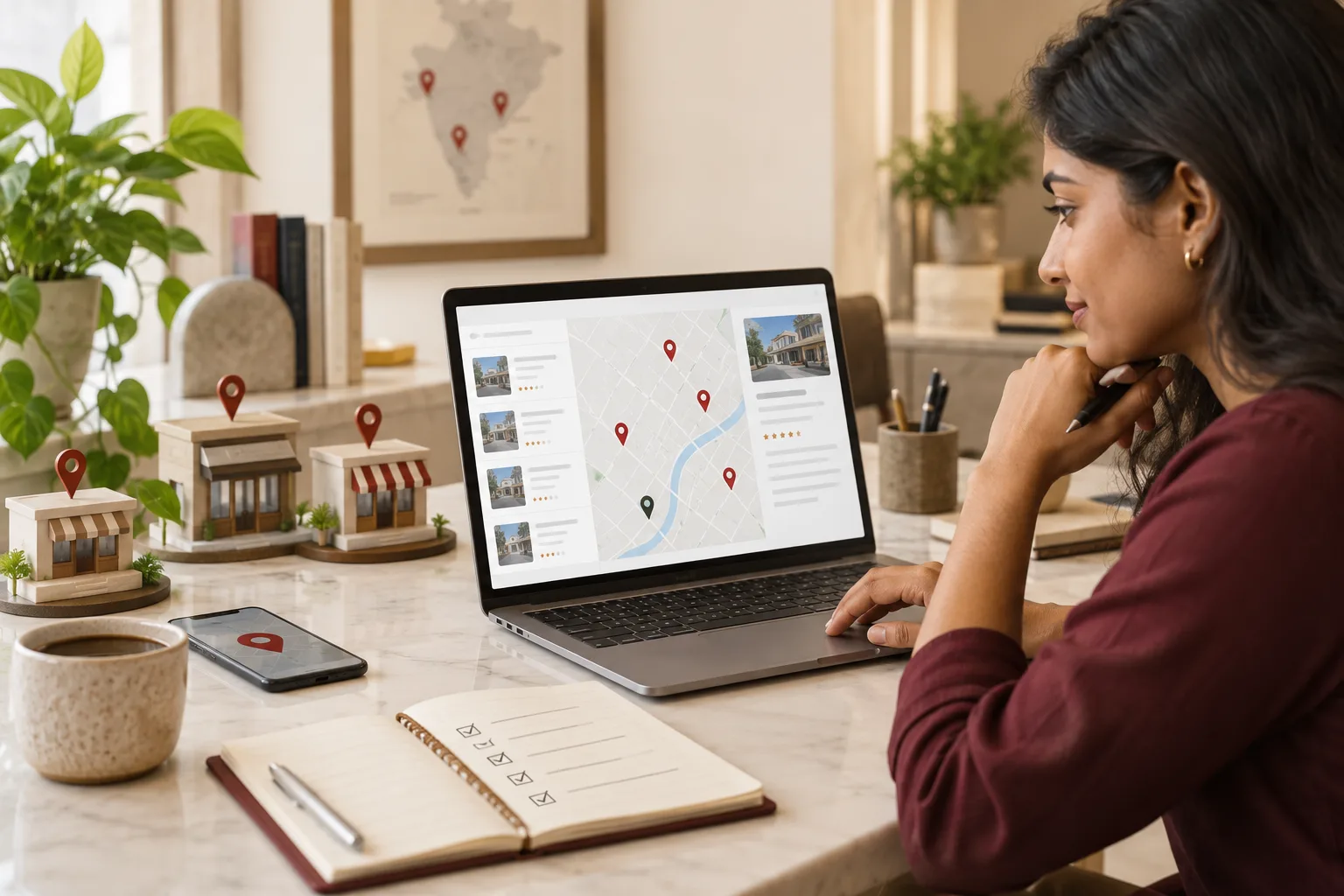
Local SEO is the work of making your business show up for searches that name your town or locality, such as a service plus an area name. GullySales sets up locality pages, local citations and map listings so nearby customers find you before a competitor across town.
Also for paragliding and aerial adventure operators
- SEO for paragliding and aerial adventure operators
- Website for paragliding and aerial adventure operators
- Lead generation for paragliding and aerial adventure operators
- Social media marketing for paragliding and aerial adventure operators
- Content marketing for paragliding and aerial adventure operators
- Buyer persona for paragliding and aerial adventure operators
- CRM for paragliding and aerial adventure operators
- Follow-up systems for paragliding and aerial adventure operators
Sales and marketing for paragliding and aerial adventure operators, the overview.
Last updated 14 Nov 2026. Rules for this trade differ by state and professional body, and they change. We describe restrictions in general terms, so check the current position with your own council or adviser before you publish anything.
For paragliding and aerial adventure operators
Where it usually goes wrong, and what we would do.
“The pin points to the road, not to the meeting point”
A map pin that lands at a village junction sends a group up the wrong lane. A landmark and a photograph of the meeting board fix this.
“Several operators share a name or a stretch of road”
Names are similar and listings are mixed up. A visitor books with one operator and turns up at another.
“The season changes the profile and nobody updates it”
A listing that shows an off-season closure through the main flying months, or no hours at all, loses the visitor who checks before travelling.
What we do
What we deliver for paragliding and aerial adventure operators.
The work available for this need. We agree the deliverables and responsibilities for your engagement in writing.
A Google Business Profile set up for the activity
The correct business type, services listed by activity, seasonal hours, a meeting-point note and photographs of the field, the board and the equipment store.
Result: A visitor sees the right operator at the right place.
Name, address and phone matched everywhere
The same details on the profile, website, Tripadvisor and travel listings, with duplicate or old entries cleared.
Result: Search does not split your reputation across several entries.
A meeting-point description with landmarks
A route that names the junction, the board, parking and the pick-up time, kept the same on the profile and the booking confirmation.
Result: Groups find the meeting point on the first try.
A reply routine for reviews
Standard ways to reply to praise, to a complaint about a cancelled slot and to a question about the activity, written as the operator and without discussing a flyer's personal details.
Result: Visitors see an operator who answers in public with care.
Seasonal updates for the profile
A short list of what to change on the listing at the start and end of the flying season, and in a closure.
Result: The listing stays true through the year.
How the result is measured
- Map pack ranking
- Local search visibility
- Enquiries by locality
Recorded as a baseline before work starts, so every later report has an honest comparison.
What Google weighs here
How a nearby or travelling visitor decides between operators on the map.
- Relevance: the activity named in the profile
- Pick the business type that matches your main activity and list tandem flights, courses, ziplines or groups as services so the profile matches the visitor's search.
- Distance and the pin
- Visitors near Bir or Kamshet see the closest operators first. Place the pin at the meeting point, not at the highway, and describe how to reach it.
- Prominence: reviews and replies
- Reviews from visitors who flew count. Reply in a calm tone to complaints about weather and do not offer anything in exchange for a rating.
- Seasonal hours
- Set the hours for the flying season and mark closures. A listing that says closed in peak weeks sends the visitor to another operator.
- Travel and local directories
- Tripadvisor, JustDial and tourism listings each carry an entry. Keep the same name, address and phone on each and remove duplicates.
Who it is for
This is written for these paragliding and aerial adventure operators.
- Tandem paragliding operators at flying sites such as Bir Billing, Kamshet, Panchgani and Solang near Manali
- Paragliding schools and pilot course providers that train beginners
- Zipline, sky-cycle and aerial adventure parks inside resorts and hill-station properties
- Hot-air balloon and paramotor operators at tourist destinations
- Parasailing and water-based aerial sports operators on the coast and at lakes
- Bungee and gorge swing operators near Rishikesh and other hill towns
- Adventure camps that add an aerial activity to a trekking or camping package
- Photo and video add-on providers that work with flight operators
- Aerial adventure activities sold through resorts and tour operators on a partner basis
Before you decide
When this may not be the right fit.
- You do not have a fixed meeting point or an office that visitors can find, so a map listing would send them to a place you do not use.
- You have not settled which activities you will offer this season, so the listing would describe services you do not run.
Before you decide
Agree the work. Know how to judge it.
Local SEO for paragliding and aerial adventure operators: use these checks to prepare, choose the scope, and review what changes.
Bring the right evidence
Confirm the real business address, service area, contact details, and who controls the business listings. Keep examples of calls that came from the wrong location or asked for a service you do not provide.
Make the scope clear
Choose the locations you actually serve and the information each needs. Agree who approves listing changes, responds to enquiries, and keeps opening hours accurate.
Check the work in use
Check the journey from a local search to a call or enquiry on a phone. The address, service area, and description should agree across your website and listings.
Know when to change course
Do not create an office claim for a place where you only serve customers remotely. Clear service coverage is more useful than a misleading local presence.
These are discussion points, not a fixed package. GullySales confirms the deliverables, responsibilities, fee, and term in writing after reading your brief and speaking with you.
Before we start
What to have ready before the work starts.
The records, access and decisions this work needs from paragliding and aerial adventure operators. Anything missing is noted in the written scope, with who will supply it.
- Owner login for the Google listing
- The Google account that owns the listing, or the steps to claim it if no one does. Updates cannot be made without it. If an earlier vendor holds it, we begin with the ownership request and the remaining work waits.
- A photograph of the actual meeting point
- A recent picture of the place visitors gather, showing the board, the gate or the landmark. It tells a stranger they have arrived. Without it, the directions rely on words alone and the first-time visitor is more likely to be lost.
- Your flying hours for each season
- The times the take-off is open in each season, and the days you do not fly. Wrong hours send visitors to a closed field. If hours change with the wind, we agree a standing line and a way to post a day's update. If the closing days vary, we word a standing line you can live with.
- Names of every operator who shares your road
- The other operators with similar names near you, as far as you know them. We use them to check for mix-ups on the map. If you do not know, we search the area and bring you the list to confirm.
- A decision on the one phone number
- A single number that is answered during flying hours, chosen by you. The listing shows it, and visitors call it from the road. If you cannot choose, we show the WhatsApp number and say when it is answered.
How it works
How the local SEO work runs
The work itself, in order. How an engagement starts, from your brief to a written scope, is set out on our method page.
- 1
Stand at the meeting point with a phone
We ask someone to stand where visitors really gather, whether it is the roadside stop, the hotel lobby or the take-off gate, and record what a stranger would see. We then open the current map pin on a phone and compare. The gap between the pin and the place is the first thing we fix.
- 2
Claim the listing in the owner's name
You prove ownership of the Google listing, or we help create it under your own account. We check for duplicate listings made by drivers, portals or an earlier agency, and for other operators using the same name. Owner access is recorded, so nobody else controls your listing later.
- 3
Agree the name, hours and activity wording
We write down the exact operator name, the activities, the flying hours as they change with season, and the phone line that is answered. You approve each line. The same wording is then used on the website and social pages so the details match everywhere.
- 4
Write the meeting-point directions with landmarks
We draft directions in the words a driver or a visitor uses: the bend, the tea stall, the board at the gate. You correct them from your knowledge of the road. The text goes on the listing and on a short page, so a visitor with a weak signal can still find you.
- 5
Add photographs and set the review replies
Your photographs of the field, the briefing and the landing go on the listing. We then write reply drafts for the kinds of reviews you receive, including one about a cancelled day, and you approve the tone. Replies state facts and avoid argument.
- 6
Set map calls and routes beside the opening record
After the changes we read the listing's calls, direction requests and the enquiry sheet against the figures recorded at the start. We note which visits came from the map and which of them asked about a date. You decide what to update at the turn of the season, and we do not promise any placement on the map.
Where this fits
Three pieces of sales work, in this order.
This work sits inside sales process design, at stage 1, prospecting and lead generation. The audit comes before it, and sales management keeps it running.
Step 1
Sales audit
Find where deals are being lost and what to fix first.
Start here if you cannot say where orders are lost.
Step 2 · you are here
Sales process design
One written way to sell, from first enquiry to repeat order.
Start here if every salesperson sells differently.
Step 3
Sales management
A target, a review routine and someone who owns the number.
Start here if the team has targets and no routine.
FAQ
Questions owners ask before they call.
Not here? More answers, or ask on WhatsApp.
Our meeting point is a hotel lobby, not our own office. Can we list it?
How do we answer a review that says the flight was cancelled?
Another operator is using our name on the map. What can we do?
We operate at two sites. Do we need two profiles?
Can the listing show a flight price?
What if a driver or portal has created a listing for us?
How long is the contract?
How soon will we see results?
Who will actually do the work?
What do you need from us?
More for paragliding and aerial adventure operators
Related work to consider.
Closest to this: search and visibility
Also for paragliding and aerial adventure operators
- Lead generation for paragliding and aerial adventure operators
- Social media marketing for paragliding and aerial adventure operators
- Content marketing for paragliding and aerial adventure operators
- Buyer persona for paragliding and aerial adventure operators
- CRM for paragliding and aerial adventure operators
- Follow-up systems for paragliding and aerial adventure operators
Or start from the overview: sales and marketing for paragliding and aerial adventure operators.
Your next practical step
Tell us what you are trying to grow, and we will read it before we call.
Eight short steps, mostly taps. Skip anything you would rather answer on the call.