Chocolate manufacturers · Content marketing
Publish the guides and stories that a gifting buyer or a baker reads before ordering.
Content marketing for a chocolate maker is writing and showing what buyers want to know before they order, such as how to pick a gift box, how to work with couverture and where the cocoa comes from. GullySales plans and drafts those pieces with you, from your own knowledge of the product.
Scope, fee, reporting and term are agreed in writing after we have read your brief and spoken to you.
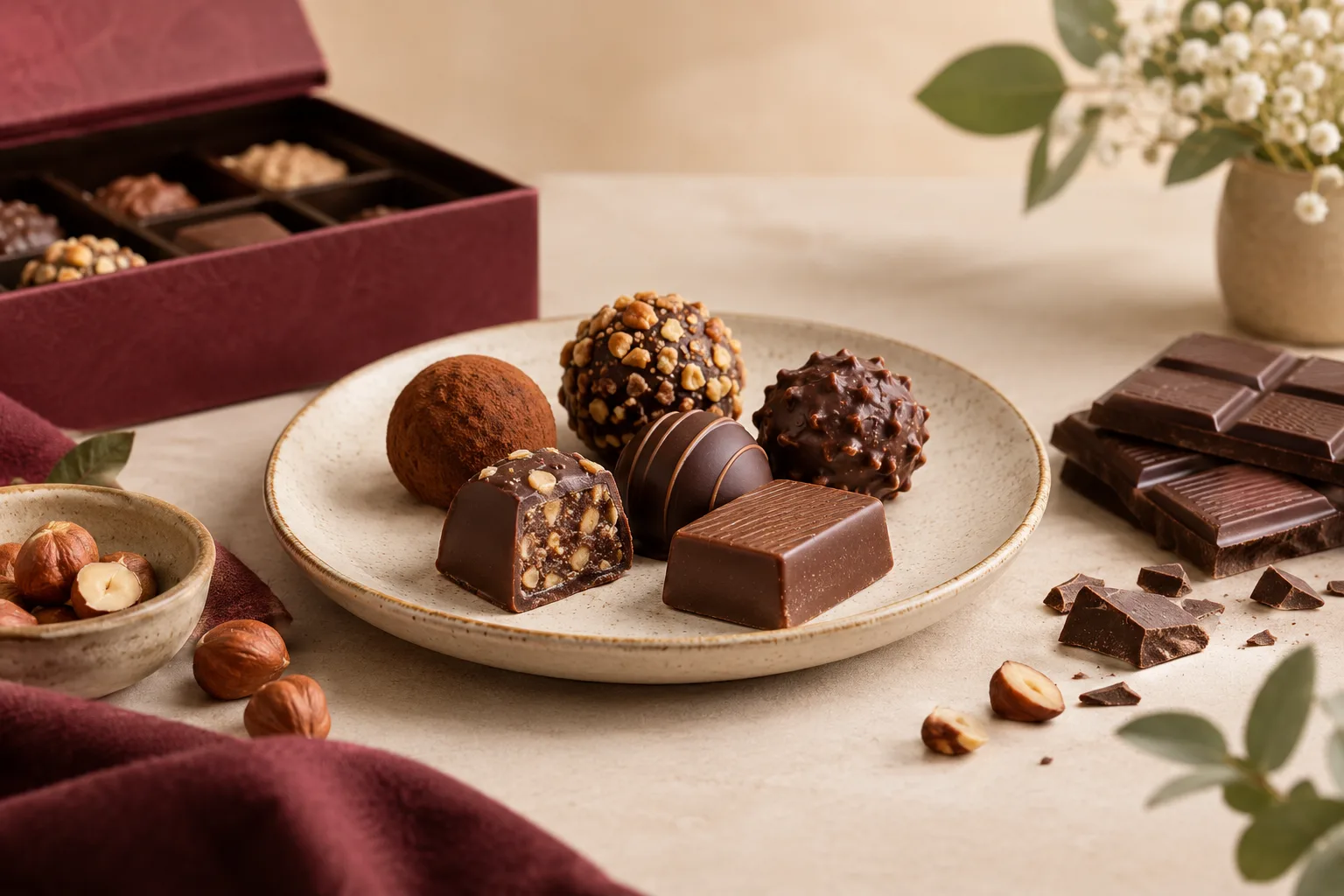
What content marketing means
Content marketing is writing articles, guides and pages that answer the questions buyers search before they are ready to enquire. This makes your business visible and trusted before the first call. GullySales plans this content from the first conversation onward, choosing topics that match real search demand rather than guesses.
Also for chocolate manufacturers
- Social media marketing for chocolate manufacturers
- Lead generation for chocolate manufacturers
- SEO for chocolate manufacturers
- Buyer personas for chocolate manufacturers
- CRM for chocolate manufacturers
- Follow-up systems for chocolate manufacturers
- WhatsApp marketing for chocolate manufacturers
- Digital marketing for chocolate manufacturers
Sales and marketing for chocolate manufacturers, the overview.
Last updated 14 Nov 2026.
For chocolate manufacturers
Where it usually goes wrong, and what we would do.
“A gifting buyer needs help choosing, not a pitch”
The admin manager who must buy for a team has no idea what size, flavour or finish suits. A guide on choosing a corporate box, with the options laid out, makes you the maker who answered before being asked.
“Bakers learn from other bakers”
A pastry chef trusts a worked example. A short piece showing how your couverture tempers, sets and tastes in a tart or an entremet teaches the reader and shows the product without a sales line.
“The origin of the bean is a story, not a spec”
Buyers curious about craft want to know who grows the cocoa, how it is fermented and how you roast it. Written plainly with your own photographs, that story separates a maker from a reseller.
“Allergen and storage questions are content too”
Gift recipients ask about nuts, milk and how long a box keeps. A clear page taken from your labels answers these once, and spares your team the same call each season.
What we do
What we deliver for chocolate manufacturers.
The work available for this need. We agree the deliverables and responsibilities for your engagement in writing.
A gifting guide
A guide for corporate and wedding buyers that explains box sizes, customisation choices and what to decide before asking for a quote.
Result: A buyer can read it and send you a complete brief.
A couverture handling guide
A plain guide to storing, melting and tempering your bulk chocolate, with photographs from your own kitchen.
Result: A pastry chef can use the guide at the bench.
An origin and process story
A page and a short film on where your cocoa comes from and how it becomes a bar.
Result: The story is told in your words with your own pictures.
A label-based allergen and storage page
A page that repeats what is on your labels about ingredients, allergens and storage, and nothing more.
Result: Every statement on the page matches a label.
A season-by-season content plan
A list of pieces timed to gifting, wedding and baking seasons, with an owner for each.
Result: A plan names each piece and the season it serves.
How the result is measured
- Pages published
- Organic traffic
- Enquiries from content pages
Recorded as a baseline before work starts, so every later report has an honest comparison.
Posts and pieces to plan
Each guide answers a question a buyer asks before ordering chocolate.
- Choosing a corporate gift box
- A guide as a page or PDF comparing box sizes, fillings and branding options. It needs your real sizes and a photograph of each, nothing borrowed.
- Storing and melting couverture
- A handling guide for pastry kitchens covering storage temperature range, tempering steps and bloom. Have a pastry chef you work with review it for accuracy.
- Why bean-to-bar costs more
- A story piece on sourcing, roasting and small batches. Back it with supplier names and process photographs you can show.
- What the label says about allergens
- A page reproducing your label's allergen and ingredient statements for each product. Copy it from the printed label; add nothing the label does not say.
- Wedding favour planning
- A planning piece on pack sizes, wrappers and ordering dates, with a photograph of a finished favour. It meets the family before they search for makers.
Who it is for
This is written for these chocolate manufacturers.
- Bean-to-bar and craft chocolate makers
- Homemade and small-batch chocolate businesses scaling up
- Couverture and compound chocolate manufacturers supplying bakers
- Chocolate gift box and hamper makers
- Chocolate bar and filled chocolate manufacturers for retail
- Sugar-free, vegan and protein chocolate brands
- Chocolate makers supplying cafes, hotels and ice cream brands
- Private label and corporate-branded chocolate makers
Before you decide
When this may not be the right fit.
- You have no ingredient or allergen details written down, so a guide would force guesses on food information.
- Nobody can approve technical content for bakers, and an error in a couverture guide would cost trust with the very buyers you want.
- You are hoping a single article will fill the festival diary, when gifting buyers choose from makers they already know.
Before you decide
Agree the work. Know how to judge it.
Content marketing for chocolate manufacturers: use these checks to prepare, choose the scope, and review what changes.
Bring the right evidence
Bring questions from sales calls and examples of objections that delay a decision. Choose a subject expert who can check the substance, and identify evidence that can be published.
Make the scope clear
Agree the reader, buying question, format, and distribution route for each piece. Set the approval process and distinguish new research from rewriting material you already have.
Check the work in use
Ask a colleague to use the draft in a real buyer conversation. It should answer the question, support its claims, and make the next step clear without requiring a sales pitch to explain it.
Know when to change course
If the same unanswered question appears in several articles, improve the strongest page before commissioning another. More words are not a substitute for missing evidence.
These are discussion points, not a fixed package. GullySales confirms the deliverables, responsibilities, fee, and term in writing after reading your brief and speaking with you.
Before we start
What to have ready before the work starts.
The records, access and decisions this work needs from chocolate manufacturers. Anything missing is noted in the written scope, with who will supply it.
- Technical sheet for couverture or compound
- The sheet that goes to bakers, showing cocoa and fat content as printed, melting behaviour, storage and pack sizes. Any version is acceptable if current. Without it, a handling guide would rely on general knowledge, and a pastry chef who tries it would find a difference from your product.
- Three real buyer questions you remember
- Questions you have been asked on the phone, in a shop or on chat, written in the buyer's words with the date if known. Even rough notes work. If you have none, the guides start from our guess at what buyers wonder, and the first publications lose the point of being useful.
- A story of where your cocoa comes from
- A page of your own notes on how beans are bought, who supplies them and how you process them. Keep to what you can show with a bill or a supplier name. Without it, the origin story would be thin, and we will not invent a farm or a region.
- Allergen and storage lines from the label
- The exact lines on your packs for allergens, storage and shelf life, photographed or typed. The content page quotes them and sends readers to the label. If they are missing, the allergen page waits, because a guess about nuts or milk can harm a customer.
- A person who can approve facts
- One person, the maker or a senior kitchen member, who reads each draft and replies in writing. This person must be reachable. Without them, drafts sit unapproved and nothing is published, since a mistake about a process or an ingredient in a guide is worse than silence.
How it works
How the content marketing work runs
The work itself, in order. How an engagement starts, from your brief to a written scope, is set out on our method page.
- 1
Interview the person who packs the box
We spend time with the person who packs gift boxes and the one who talks to bakers, and write down the questions each hears. Buyers ask about shelf life, melting in transit, how much to order and how to store. These real questions, in their words, become the list of guides to write.
- 2
Choose the first three guides together
From the question list, we propose three guides: how to choose a corporate gift box, how a baker should handle couverture, and where your cocoa comes from. You choose by season and by the buyer you want to win. Who checks facts on each guide is named before any writing starts.
- 3
Collect the labels and process notes
You pass us pack labels, a technical sheet for couverture and your own notes on how the beans are sorted, roasted and conched. We read them to get every fact in the guide from your sources. Anything we cannot find in a document, we ask you, and we do not fill it from the internet.
- 4
Draft in plain words for each reader
We write the gifting guide for a first-time corporate buyer, in short sentences, and the couverture guide for a pastry chef, using the terms they already know. Neither guide makes a health claim. Each ends with one clear next step, either a sample request or a gifting enquiry.
- 5
Have your kitchen head correct the draft
The person who knows the recipe reads every guide for wrong temperatures, wrong names and promises about taste or shelf life that the product cannot keep. Their corrections come back to us marked on the page. We revise, and nothing is published until the owner signs off in writing.
- 6
Read what buyers did after reading
Once published, we look at which guide brought enquiries and which brought only visitors, against the enquiry record kept before the work began. You and we decide which guide to extend and which to retire. We report what the figures show and never promise a count of orders.
Where this fits
Three pieces of sales work, in this order.
This work sits inside sales process design, at stage 0, foundation. The audit comes before it, and sales management keeps it running.
Step 1
Sales audit
Find where deals are being lost and what to fix first.
Start here if you cannot say where orders are lost.
Step 2 · you are here
Sales process design
One written way to sell, from first enquiry to repeat order.
Start here if every salesperson sells differently.
Step 3
Sales management
A target, a review routine and someone who owns the number.
Start here if the team has targets and no routine.
FAQ
Questions owners ask before they call.
Not here? More answers, or ask on WhatsApp.
We are not writers. Who writes this?
Can the guide mention that dark chocolate is good for the heart?
Does a chocolate maker need a blog?
Can the allergen page replace the label?
Do the guides need photographs?
How are the guides kept up to date?
How much does it cost?
How long is the contract?
How soon will we see results?
Who will actually do the work?
More for chocolate manufacturers
Related work to consider.
Closest to this: content and social
Also for chocolate manufacturers
Or start from the overview: sales and marketing for chocolate manufacturers.
Your next practical step
Tell us what you are trying to grow, and we will read it before we call.
Eight short steps, mostly taps. Skip anything you would rather answer on the call.