Home textile manufacturers · Manufacturing
An interior designer or hotel buyer specifies the supplier they never have to double-check.
An interior designer in Hyderabad is fitting out a hotel lobby and needs curtain fabric, cushion covers and runner cloth in one colour story. The designer asks two suppliers for swatch books and a rate by the metre.
Scope, fee, reporting and term are agreed in writing after we have read your brief and spoken to you.
In one paragraph
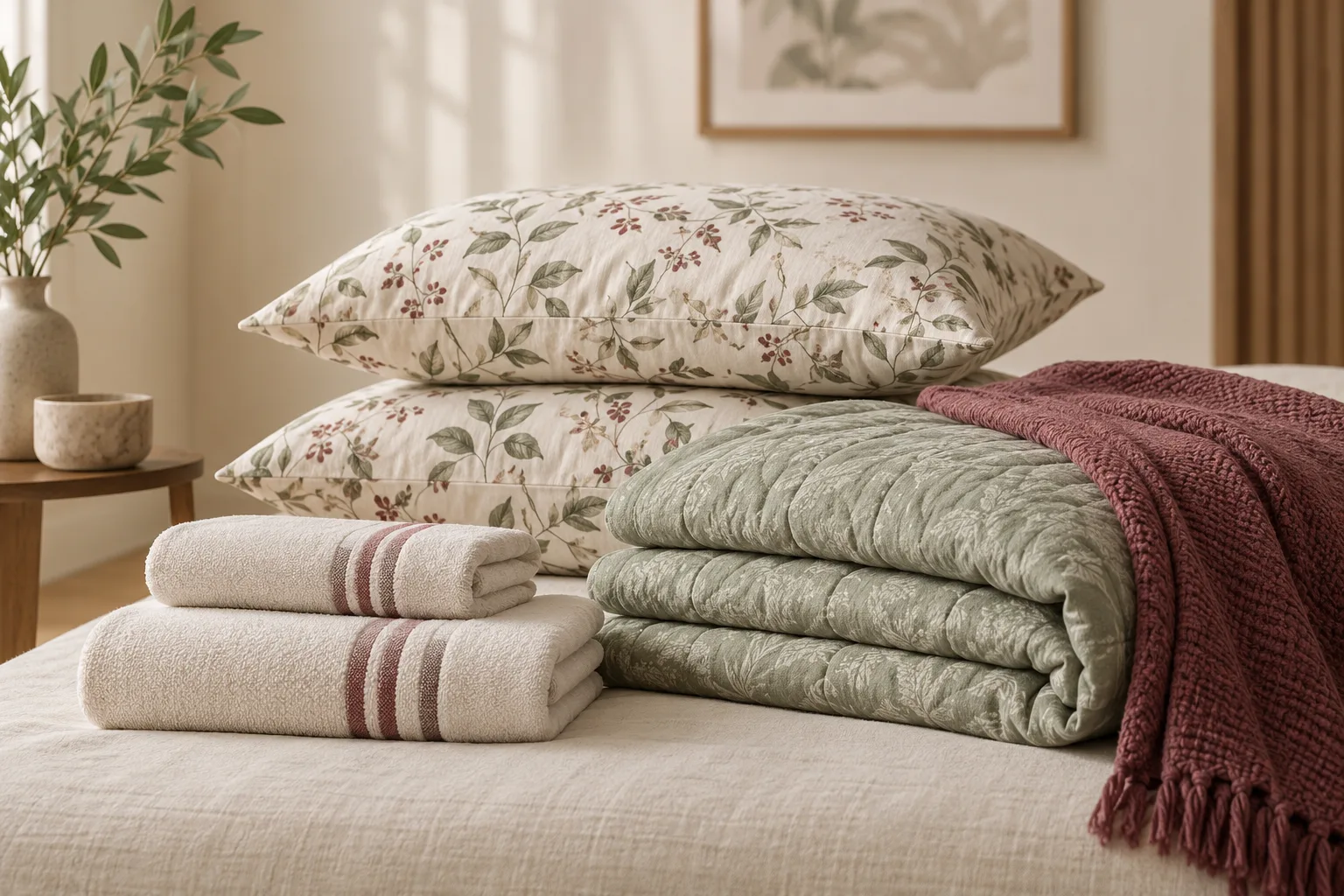
Home textile manufacturers make curtains, cushion covers, upholstery fabric, table linen, bedding and soft furnishings for homes, hotels and export programmes. Marketing makes your range visible to the people who specify and buy it, and sales turns a swatch request into a priced order. GullySales builds that around designers, project buyers and trade customers.
One supplier sends a clean range sheet, a lead time on the sample and a name to call. The other says the swatch book will go with the next courier.
Your unit sells several products to several kinds of buyer: dealers, furniture showrooms, project contractors, exporters' buying houses and online sellers. That spread is a strength until those buyers cannot see the full range, and enquiries arrive as scattered calls that nobody follows up on.
Last updated 18 Oct 2026.
How buyers decide
How home textile manufacturers are chosen.
For projects, the specifier, an interior designer or architect, picks the fabric and the contractor or hotel purchase team negotiates the rate. The designer needs swatches, colour matching, washable and flame-retardant options where relevant, and a supplier who holds the shade across lots. The purchase team then compares rates for the quantity.
For trade, a curtain shop or furniture showroom owner chooses on design freshness, price per metre or piece, and whether the supplier brings out new collections. They place small repeat orders and move on quickly if stock is late or the shade changes between lots.
The problem
What usually goes wrong for home textile manufacturers.
Common situations to check against your own enquiry records.
“Designers take our swatches and we never hear back”
A swatch book goes out, the project moves, and no one records where it went or who at the studio asked for it.
“Our range is wide but buyers only see a few items”
We make curtains, cushions, table linen and bedding, yet each buyer knows one product. Cross-selling depends on someone remembering to mention the rest.
“Project and hotel quotations stall in the purchase department”
A quote for several hundred metres goes in, and silence follows. Nobody tracks who is deciding or when the project needs delivery.
“Shade and lot variation brings back complaints”
A buyer who matched a colour in one lot sees a slightly different tone in the next. Without a documented approval, arguments are about opinion.
“Dealers order small lots again and again and we have no system for it”
Furniture shops and curtain dealers reorder by phone in small lots. Orders are noted on paper, and nobody can say which shop last took which design.
“Export buying houses hold the buyer relationship”
Orders come through agents who control the buyer relationship. We make the goods, but we have no direct conversation with those who sell them.
What we do
What we do for home textile manufacturers.
Possible deliverables for home textile manufacturers. Your written scope confirms what is included.
A digital range book
A page and downloadable book showing each collection with colourways, widths, composition and care information, built for a designer to browse on a phone.
A swatch tracking routine
Every swatch and sample book sent is logged against the designer, the project and the person who asked, with a message written for each stage.
A project quotation sheet
A fixed format showing quantity, rate, shade reference, delivery plan and validity, with a line for who at the buyer is deciding.
A shade and lot approval record
A short document signed off by the buyer for colour, finish and width before the lot is produced.
A dealer ordering channel
A WhatsApp catalogue and reorder routine for curtain shops and showrooms, with each shop's last order recorded beside its name.
How the result is measured
- Swatch requests by source, such as designer, dealer or portal
- Swatches sent against quotes submitted
- Project quotes against orders won
- Dealer reorders against due
- Repeat order share by buyer group
- Direct export enquiries
Recorded as a baseline before work starts, so every later report has an honest comparison.
Every service, written for home textile manufacturers
Each has its own page: what it involves for home textile manufacturers, what you get, and what it is measured on.
- Lead generationFind the designers, hotel buyers and dealers who will actually order your fabric.
- SEOBe the fabric supplier that appears when a designer searches for what you make.
- Social media marketingShow the drape, the weave and the finished room where designers already scroll.
- Content marketingPublish the guides a designer or purchase head keeps open while specifying fabric.
- Buyer personasKnow who specifies, who negotiates and who reorders before you write the next quote.
- CRMKeep every swatch, quote and reorder against the name of the person who asked.
- Follow-up systemsChase the swatch and the quotation with a plan, so no designer simply drifts away.
- WhatsApp marketingRun dealer orders and designer swatch requests on the app they already use.
- Digital marketingPut the range, the proof and a swatch request within a designer's reach online.
- WebsiteGive designers and buyers a site that shows the range and takes a swatch request.
Worth a page and a campaign of their own
A range book with swatch, colour and care details · Designer and architect outreach with a sample request routine · Tracking of swatches sent and projects followed up · Hotel, hospital and contractor quotation follow-up · Shade approval records for repeat lots · A reorder list and a simple order channel for dealers · Cross-selling across the range to existing buyers · Direct export buyer introductions beyond agents · IndiaMART and trade portal listings with real photos · Local search pages for towns with showroom clusters
Priority campaigns
Campaigns for what home textile manufacturers most want to sell.
Each one planned around when your buyers decide, and measured against the baseline.
Designer and architect introduction
Personal outreach to interior design studios and architecture firms in your region with the range book and a swatch offer.
Hospitality and healthcare supply push
Introductions to hotel purchase heads, hostel operators and hospital administrators who buy linen and curtains in volume.
New collection launch
A launch sequence for dealers and designers with photographs, a WhatsApp broadcast to opted-in contacts and a sample dispatch list.
Direct export outreach
A capability profile and introductions to home brands and retailers abroad who buy from India, supported by trade fair preparation.
Beyond search
Where we reach buyers of home textile manufacturers, beyond Google.
Search matters, but it is rarely the only way this industry's buyers find a supplier.
Interior designers and architects
Design studios and architecture firms in your region, noted by the hotels, homes or offices each designs, so the range book sent fits.
Hotel, hostel and hospital buyers
Facility and purchase heads who buy curtains and linen by the hundred metres, approached with a supplier introduction.
Curtain shops and furniture showrooms
Dealers in textile clusters and furniture markets who reorder a few metres at a time by phone.
Export buyers and sourcing offices
Buying offices and home brands that source from India and ask for compliance papers with the first quote.
A practical starting point · Home textile manufacturers
Start with one buying journey.
Use a real enquiry to find the first useful change. You do not need to buy every service listed on this page.
- The record to review
- Start with a recent RFQ and the quotation it produced. Remove buyer identifiers, then retain the specification, quantity, delivery requirement, and reason the order moved forward or stopped.
- The buyer's question
- Check whether the buyer can establish technical fit before asking for a price. Purchasing, engineering, and the end user may need different evidence from the same product page.
- The handover to agree
- Give the technical question to someone who can answer it, and keep the commercial follow-up with a named owner. A vague request for a catalogue should not be treated as a qualified RFQ.
Who it is for
This is written for these home textile manufacturers.
- Curtain and drapery fabric manufacturers
- Cushion cover and soft furnishing makers
- Upholstery and sofa fabric producers
- Table linen, runner and kitchen textile units
- Bedding and quilt manufacturers
- Hotel and hospital linen suppliers
- Export-oriented home furnishing units
- Handloom and block-print home textile producers
Not for
It is not the right fit if.
- You want a guaranteed Google ranking or a guaranteed number of leads. Nobody honest can promise either.
- You need enquiries by next week and have nobody to answer them.
- You want posts and reach reported, not enquiries and orders.
How it works
How the work runs for home textile manufacturers
The work itself, in order. How an engagement starts, from your brief to a written scope, is set out on our method page.
- 1
Learn which products earn most
Which products earn the best margin, who buys each one and where orders slip away are set out first.
- 2
Look at how swatches and quotes are handled
How swatch requests and project quotes are recorded now, and what a designer finds when searching for your fabric.
- 3
Choose the first buyer groups
Designers, project buyers, dealers or exporters: you choose which to pursue first, and we note what each needs to see before ordering.
- 4
Prepare the range book and records
The range book, swatch log, quotation format and dealer order list are written, then outreach begins.
- 5
Compare swatches with orders
Swatches sent, quotes submitted, orders won and repeat dealers are set against the figures noted at the start.
Where this fits
Three pieces of sales work, in this order.
GullySales builds every engagement from three pieces of sales work. This page is not one of them, but the same three steps apply to the business behind it.
Step 1
Sales audit
Find where deals are being lost and what to fix first.
Start here if you cannot say where orders are lost.
Step 2
Sales process design
One written way to sell, from first enquiry to repeat order.
Start here if every salesperson sells differently.
Step 3
Sales management
A target, a review routine and someone who owns the number.
Start here if the team has targets and no routine.
FAQ
Questions home textile manufacturers ask before they call.
Not here? More answers, or ask on WhatsApp.
We make a wide range of products. Where do we start?
Can you help us reach interior designers?
We already sell to showrooms. Does this affect them?
Do you run campaigns for our export buyers?
What if our designs are copied?
How much does it cost?
How long is the contract?
How soon will we see results?
Who will actually do the work?
What do you need from us?
Part of Manufacturing. See the other industries in the sector.
Your next practical step
Tell us what you are trying to grow, and we will read it before we call.
Eight short steps, mostly taps. Skip anything you would rather answer on the call.