Modular kitchen manufacturers · Follow up systems
Put a named person and a next date on every dealer, builder and designer enquiry.
A follow-up system for a kitchen factory is the set of rules that decide who calls a dealer, builder or designer next, and when. GullySales writes those rules around your sales cycle, which runs from sample to quote to trial order.
Scope, fee, reporting and term are agreed in writing after we have read your brief and spoken to you.
What follow up systems means
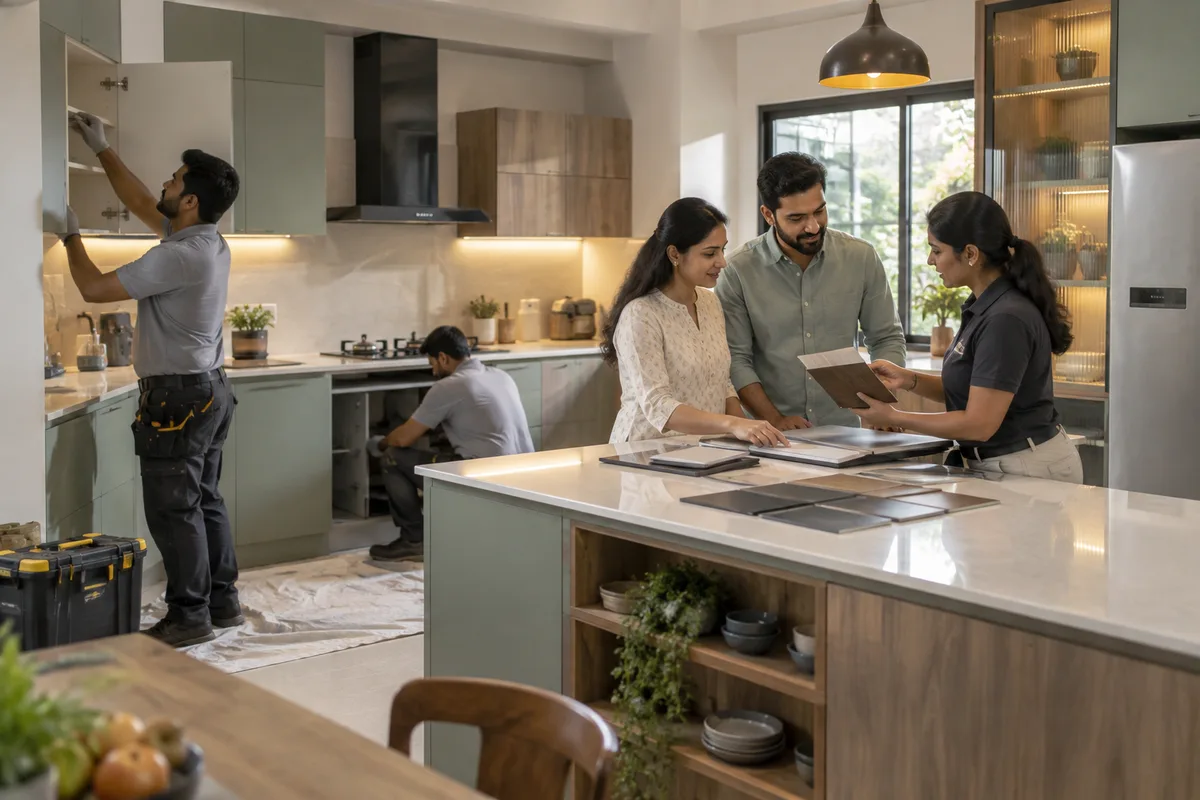
A follow-up system is the set routine for calling, messaging or emailing an enquiry more than once, since most buyers do not decide on the first conversation. GullySales sets the number and timing of follow-ups so an undecided buyer keeps hearing from you until they decide either way.
Also for modular kitchen manufacturers
- Lead generation for modular kitchen manufacturers
- CRM for modular kitchen manufacturers
- CPQ consulting for modular kitchen manufacturers
- SEO for modular kitchen manufacturers
- Social media marketing for modular kitchen manufacturers
- Content marketing for modular kitchen manufacturers
- Buyer personas for modular kitchen manufacturers
- WhatsApp marketing for modular kitchen manufacturers
Sales and marketing for modular kitchen manufacturers, the overview.
Last updated 18 Oct 2026.
For modular kitchen manufacturers
Where it usually goes wrong, and what we would do.
“A sample goes out and the trail goes cold”
A finish sample sent to a designer is a reason to call. Without a reminder, nobody asks whether it was seen, and the designer uses the supplier who did.
“Builder decisions take long and need patience with a plan”
A project quote may wait on approvals for a long time. A call with nothing new to say annoys the purchase head. A planned sequence, such as a revised rate, a site visit or a sample apartment invitation, gives each call a reason.
“Trial orders deserve extra attention”
A new dealer's first order shapes whether a second arrives. A call when the goods leave, another when they land and a check after fitting shows the dealer the factory follows through.
“Lapsed dealers are a ready list”
A showroom that stopped ordering has a reason. A respectful call to ask what happened, and a record of the answer, recovers some and teaches the factory about the rest.
What we do
What we deliver for modular kitchen manufacturers.
The work available for this need. We agree the deliverables and responsibilities for your engagement in writing.
A follow-up rule for each stage
For each pipeline stage, the next action, the person responsible and a date field that must be filled.
Result: No enquiry sits without a next step.
Sample follow-up sequence
A set of touches after a finish sample or sample kitchen goes to a designer or dealer.
Result: Each sample sent has a record of what followed.
Builder quote follow-up plan
A series of reasons to call a purchase head during a long decision, each adding something new.
Result: The calls carry information, not pressure.
New dealer onboarding calls
Calls tied to dispatch, delivery and fitting of the first order.
Result: A new dealer hears from the factory at each step.
A lapsed-dealer review
A list of dealers who stopped ordering, with a call script and a place to record the reason.
Result: The reasons for lapses are written down.
How the result is measured
- Follow-up completion rate
- Average number of follow-ups before close
- Enquiries closed after repeat follow-up
Recorded as a baseline before work starts, so every later report has an honest comparison.
What to capture or send
The notes and messages that give every sample, quote and trial order a next step.
- Sample received check
- Sent to a designer after a finish sample goes out. The reply, or its absence, is logged so the next call has a reason.
- Revised rate after a drawing change
- Sent to the builder's purchase head with the new version, so the call brings something the earlier quote did not.
- Sample apartment invitation
- An invitation to see a fitted kitchen, sent to a builder's project team that is still deciding.
- Dispatch note for a trial order
- Sent to a new dealer as goods leave, with the transporter's details, so the dealer does not have to ring and ask.
- Condition check after fitting
- Asked of the dealer once the kitchen is in, covering the shutters on arrival and after fitting, to show the factory follows through.
- Lapsed-dealer call note
- Recorded after a call to a showroom that stopped ordering, with the reason given, so some can be recovered and the rest taught the factory something.
Who it is for
This is written for these modular kitchen manufacturers.
- Franchise-network modular kitchen brands with their own factory
- Contract manufacturers who make kitchens for other brands' showrooms
- Project-focused factories supplying builders and developers
- Regional factories supplying local kitchen studios and carpenters
- Factories offering PU, acrylic and laminate shutters at different price points
- Kitchen accessories and wardrobe makers adding kitchens to their range
- Small-town manufacturers selling directly through one showroom
- Export-oriented kitchen cabinet makers
Not for
It is not the right fit if.
- Nobody owns the dealer relationship, so a follow-up plan would be passed between reps.
- Samples go out without a record of who received them, so there is nothing to follow up.
Before you decide
Agree the work. Know how to judge it.
Follow-up systems for modular kitchen manufacturers: use these checks to prepare, choose the scope, and review what changes.
Bring the right evidence
Trace recent enquiries from arrival to the last recorded action. Include a won enquiry, an unsuitable one, and one that went quiet, with personal details removed for the initial discussion.
Make the scope clear
Agree who accepts each enquiry, what makes it qualified, and how ownership changes. Include a rule for missed replies and a clear reason for closing an enquiry.
Check the work in use
Pick an enquiry at random and ask the team to find its owner, latest conversation, and next action. Check that the record agrees with what actually happened.
Know when to change course
If no one has capacity to respond, assign that responsibility before buying more leads. Automation can support the owner, but it cannot replace an unresolved handover.
These are discussion points, not a fixed package. GullySales confirms the deliverables, responsibilities, fee, and term in writing after reading your brief and speaking with you.
How it works
How the follow up systems work runs
The work itself, in order. How an engagement starts, from your brief to a written scope, is set out on our method page.
- 1
Record access and baseline agreement
You provide recent enquiry records and nominate the person responsible for sales. We compare arrival times with replies and agree which records are reliable enough for the baseline.
- 2
Response and closure decisions
Your sales lead approves response targets and follow-up gaps against available capacity. We also agree when to close an enquiry, pause contact, or refer a question to someone else.
- 3
Message and question approval
Your team reviews the reply library and first-call questions before use. Any technical answer or commercial promise needs approval from the person authorised to give it.
- 4
Task testing and team handover
We set up the agreed records and reminders, then test an incoming enquiry through to its next action. Your team checks ownership, including what happens when the assigned person is absent.
- 5
Results review and routine changes
We compare results with the baseline and identify missed steps. Changes to targets or messages are agreed with your sales lead; reporting frequency is agreed in writing.
Where this fits
Three pieces of sales work, in this order.
This work sits inside sales process design, at stage 2, qualification. The audit comes before it, and sales management keeps it running.
Step 1
Sales audit
Find where deals are being lost and what to fix first.
Start here if you cannot say where orders are lost.
Step 2 · you are here
Sales process design
One written way to sell, from first enquiry to repeat order.
Start here if every salesperson sells differently.
Step 3
Sales management
A target, a review routine and someone who owns the number.
Start here if the team has targets and no routine.
FAQ
Questions owners ask before they call.
Not here? More answers, or ask on WhatsApp.
When should we call a builder?
Who should own follow-up, sales or the CRM?
Is automation useful here?
A builder's purchase head has gone silent after a quote. Who calls?
How much does it cost?
How long is the contract?
How soon will we see results?
Who will actually do the work?
What do you need from us?
What if we are not happy with the work?
More for modular kitchen manufacturers
Related work to consider.
Closest to this: leads and follow-up
Also for modular kitchen manufacturers
Or start from the overview: sales and marketing for modular kitchen manufacturers.
Your next practical step
Tell us what you are trying to grow, and we will read it before we call.
Eight short steps, mostly taps. Skip anything you would rather answer on the call.