Plastic packaging manufacturers · Website
Build a site that lets a packaging head find the pack, the size and the next step.
A website for a plastic packaging manufacturer is where a brand checks your range, materials and plant before it asks for a sample. GullySales plans the pages, the enquiry form and the technical setup so a buyer can tell what you make and how to start.
Scope, fee, reporting and term are agreed in writing after we have read your brief and spoken to you.
What website means
A website is the page a customer lands on after searching, clicking an advert or scanning a code, and it decides whether they call or leave. GullySales builds and maintains sites that load quickly, explain the offer plainly and make the enquiry form or phone number easy to find.
Also for plastic packaging manufacturers
- SEO for plastic packaging manufacturers
- Lead generation for plastic packaging manufacturers
- Social media marketing for plastic packaging manufacturers
- Content marketing for plastic packaging manufacturers
- Buyer persona for plastic packaging manufacturers
- CRM for plastic packaging manufacturers
- Follow-up systems for plastic packaging manufacturers
- WhatsApp marketing for plastic packaging manufacturers
Sales and marketing for plastic packaging manufacturers, the overview.
Last updated 14 Nov 2026.
For plastic packaging manufacturers
Where it usually goes wrong, and what we would do.
“Buyers look for a pack, not a company story”
A packaging head lands on your site wanting structures, sizes and print options. A page that opens with history and a vision statement hides the pack they came to find.
“Plant proof reassures a cautious buyer”
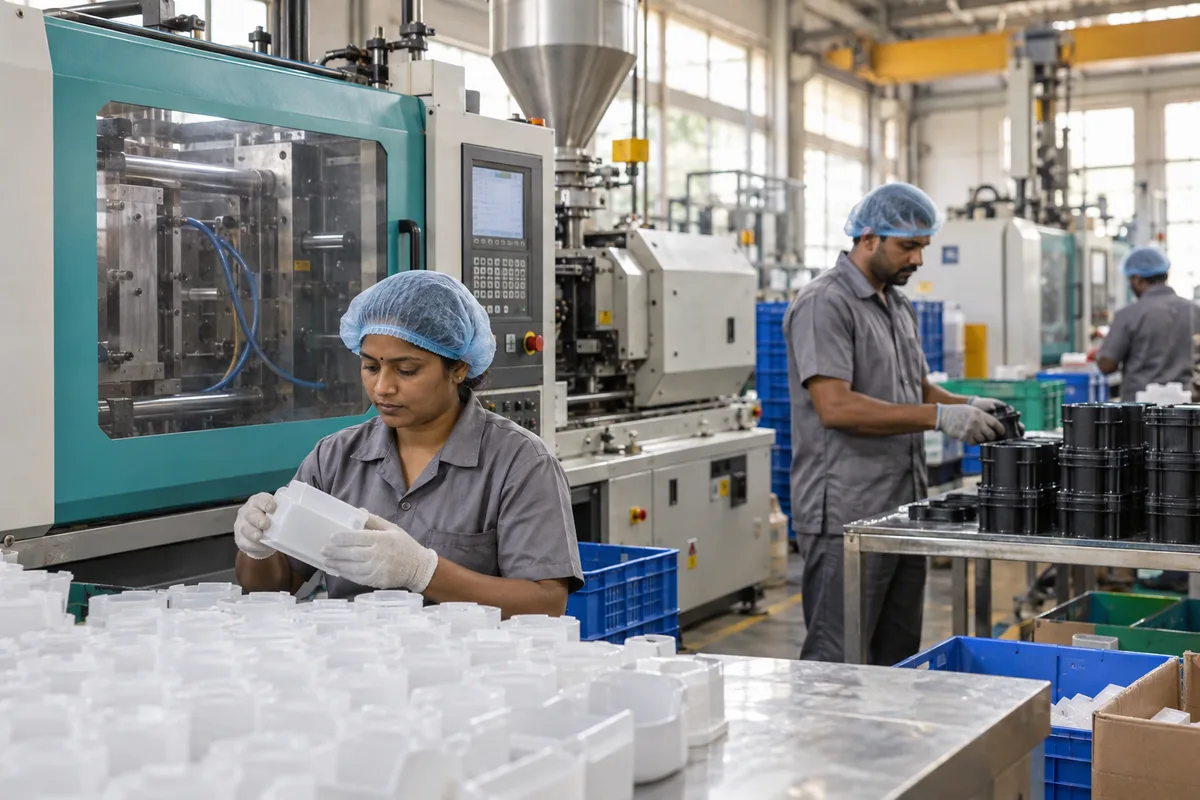
Photos of the machines, the sealing and printing lines and the testing bench show a brand that you can run a lot. Add only what is real; stock pictures of generic factories tell a buyer nothing.
“A long form loses the enquiry”
A form asking for twenty details puts off a busy buyer. Ask for name, product, pack type, filling machine and phone number, and collect the rest on the first call.
“The site must work on a phone”
Packaging heads and founders read quotes and catalogues on their phones. Pages that load slowly or need pinching and zooming lose the enquiry before it starts.
What we do
What we deliver for plastic packaging manufacturers.
The work available for this need. We agree the deliverables and responsibilities for your engagement in writing.
A site map built on pack types
A structure with a page for each pack type and buyer sector, plus pages for the plant, quality and cylinder costs.
Result: A buyer reaches the right pack within a click or two.
Pack page templates
A standard layout showing materials, structures, sizes, print method, uses and an enquiry button on each pack page.
Result: Every pack page answers the same questions in the same order.
A short enquiry form
A form with a handful of fields, a clear reply promise set by you and a record of each submission.
Result: Each enquiry arrives with the details you need to quote.
Plant and quality page
Real photographs and descriptions of your machines and testing, with claims your quality head has confirmed.
Result: A brand can see what is behind the pack.
Technical set-up
Titles, speed, mobile layout and tracking so the site can be found and measured.
Result: Pages open cleanly on a phone and report their enquiries.
How the result is measured
- Page load time
- Bounce rate
- Enquiries from the website
Recorded as a baseline before work starts, so every later report has an honest comparison.
Searches your buyers type
Build each page of the site to answer a question a packaging buyer actually asks.
- pouch sizes and gusset options
- Give the pouch page a size table with gusset types and print area, so the buyer can match it to their product weight.
- food grade film manufacturer
- Add a quality page describing the plant's hygiene practices and certificates you hold, with copies a buyer may request.
- minimum order for printed pouches
- Show the minimum lot on each pack page along with the cylinder cost explainer, so a small brand sees the entry point early.
- HDPE jar and cap options
- List jar sizes, neck finishes and cap types in one table, with a form asking for the product and the filling machine.
- request a sample of a pouch
- Place a short form on every pack page asking for product, machine and artwork status, not a general contact box.
Who it is for
This is written for these plastic packaging manufacturers.
- Flexible film and laminate pouch makers
- Poly bag and carry bag makers
- PET and HDPE bottle and jar makers
- Cap and closure makers
- Woven sack and bulk bag makers
- Crates, drums and returnable packaging makers
- Stretch film and shrink film makers
- Rigid tray and container makers for food
Before you decide
When this may not be the right fit.
- You have not photographed your packs or recorded their sizes, so the site would hold empty pack pages.
- Your current site works and the real gap is that no one replies to enquiries, which a new design would not fix.
- You cannot yet decide which pack types to show first, and a site map built on guesses would need rebuilding.
Before you decide
Agree the work. Know how to judge it.
Website for plastic packaging manufacturers: use these checks to prepare, choose the scope, and review what changes.
Bring the right evidence
List the pages that support a buying decision and the actions visitors must complete. Keep examples of failed forms, unclear product information, and questions your team answers repeatedly.
Make the scope clear
Agree the page list, content ownership, integrations, and who controls the domain and hosting. Include redirects and existing search traffic in a redesign brief, before changing addresses.
Check the work in use
Complete a real enquiry journey on a phone and a laptop. Check that the confirmation appears, the enquiry reaches the right person, and tracking records the action once.
Know when to change course
If visitors can enquire but the team does not follow up, start with the sales handover. A larger website will not resolve that delay.
These are discussion points, not a fixed package. GullySales confirms the deliverables, responsibilities, fee, and term in writing after reading your brief and speaking with you.
Before we start
What to have ready before the work starts.
The records, access and decisions this work needs from plastic packaging manufacturers. Anything missing is noted in the written scope, with who will supply it.
- Photographs of each pack on a plain surface
- Pack pages depend on clear images. Phone photographs on a plain table are acceptable. If none exist, we plan a photo session, and pages go live with a placeholder until the images are ready.
- Hosting and domain login details
- We cannot launch without control of the domain and hosting. Bring the registrar and host logins, or the name of the vendor who holds them. If the domain is in a former employee's name, recovery must come first. Include the email accounts that use the domain, since a hosting change can interrupt them if they are not planned for.
- Data sheets and certificates for publication
- Buyers look for evidence of the certificates you hold. Bring copies and tell us which may be shown. A certificate that has lapsed must be left off, and a missing one means the quality page stays short.
- A statement of the plant's real capability
- We need honest figures for the machines, the print method and the sizes you make, stated in words. Bring the machine list. If the owner would rather not publish capacity, we describe the range only, and a cautious buyer may ask for it.
- A person who answers the enquiry form
- The form is useful only if someone reads it. Name the person and their backup. Without a name, the site is built but enquiries sit unread, and brands judge the plant by its silence.
How it works
How the website work runs
The work itself, in order. How an engagement starts, from your brief to a written scope, is set out on our method page.
- 1
List the packs and the brands you serve
We begin with your product range, grouped by pouch, bottle, cap, bag or crate, and a list of the sectors you supply. You confirm what the plant makes today and what it plans to add. The list fixes the pages the site needs and the ones it can leave out.
- 2
Collect photographs, sheets and certificates
You hand over pack photographs, product data sheets and the certificates the plant holds. We note what is missing and arrange a photo session at the plant if needed. Anything you do not want public is marked. The site is built only on material you have cleared. We also ask whether any photograph shows a customer's pack or logo, because such images need the brand's agreement before they appear on a public page.
- 3
Agree the site map and a pack page design
We draw a site map organised around pack types, with a plant and quality page and a short enquiry route. You approve one pack page layout that every other page will copy. Changes are cheaper at this point than after the pages are filled.
- 4
Review a test site with plant people
We load the content onto a private test site. Your sales head and quality head read each page for errors in structure, size and claim. A packaging head would spot a wrong thickness at once, so we correct each before launch. Each reviewer signs off by page, so we know which pages are cleared and which still wait for a correction.
- 5
Test the enquiry form on a phone
Someone from your team fills the form on a phone, as a buyer on the shop floor would, and we confirm the message reaches the right person with the pack and quantity intact. A long form loses enquiries, so we remove any field your estimator does not need.
- 6
Go live and read the enquiries received
After launch we check links, speed and the form, and hand you the logins. Later, we compare enquiries, sample requests and quotations arising from the site with the counts recorded before it was rebuilt. You decide what to add or change.
Where this fits
Three pieces of sales work, in this order.
This work sits inside sales process design, at stage 1, prospecting and lead generation. The audit comes before it, and sales management keeps it running.
Step 1
Sales audit
Find where deals are being lost and what to fix first.
Start here if you cannot say where orders are lost.
Step 2 · you are here
Sales process design
One written way to sell, from first enquiry to repeat order.
Start here if every salesperson sells differently.
Step 3
Sales management
A target, a review routine and someone who owns the number.
Start here if the team has targets and no routine.
FAQ
Questions owners ask before they call.
Not here? More answers, or ask on WhatsApp.
Can our site show prices?
Do we need a new site or can you fix the current one?
Should the website show certificates and test reports?
How should pack pages handle products we make to order?
Can the site be built on our current domain and hosting?
Who writes the text on the pack pages?
How long is the contract?
How soon will we see results?
Who will actually do the work?
What do you need from us?
More for plastic packaging manufacturers
Related work to consider.
Closest to this: search and visibility
Also for plastic packaging manufacturers
- Lead generation for plastic packaging manufacturers
- Social media marketing for plastic packaging manufacturers
- Content marketing for plastic packaging manufacturers
- Buyer persona for plastic packaging manufacturers
- CRM for plastic packaging manufacturers
- Follow-up systems for plastic packaging manufacturers
Or start from the overview: sales and marketing for plastic packaging manufacturers.
Your next practical step
Tell us what you are trying to grow, and we will read it before we call.
Eight short steps, mostly taps. Skip anything you would rather answer on the call.