Waterproofing product manufacturers · Follow up systems
Follow up the demonstration, the document request and the trial patch before they go cold.
A follow-up system for a waterproofing manufacturer is the set of reminders and messages that move an applicator, dealer or engineer from first contact to a repeat order. GullySales builds the sequence around your demonstrations, document requests and site trials.
Scope, fee, reporting and term are agreed in writing after we have read your brief and spoken to you.
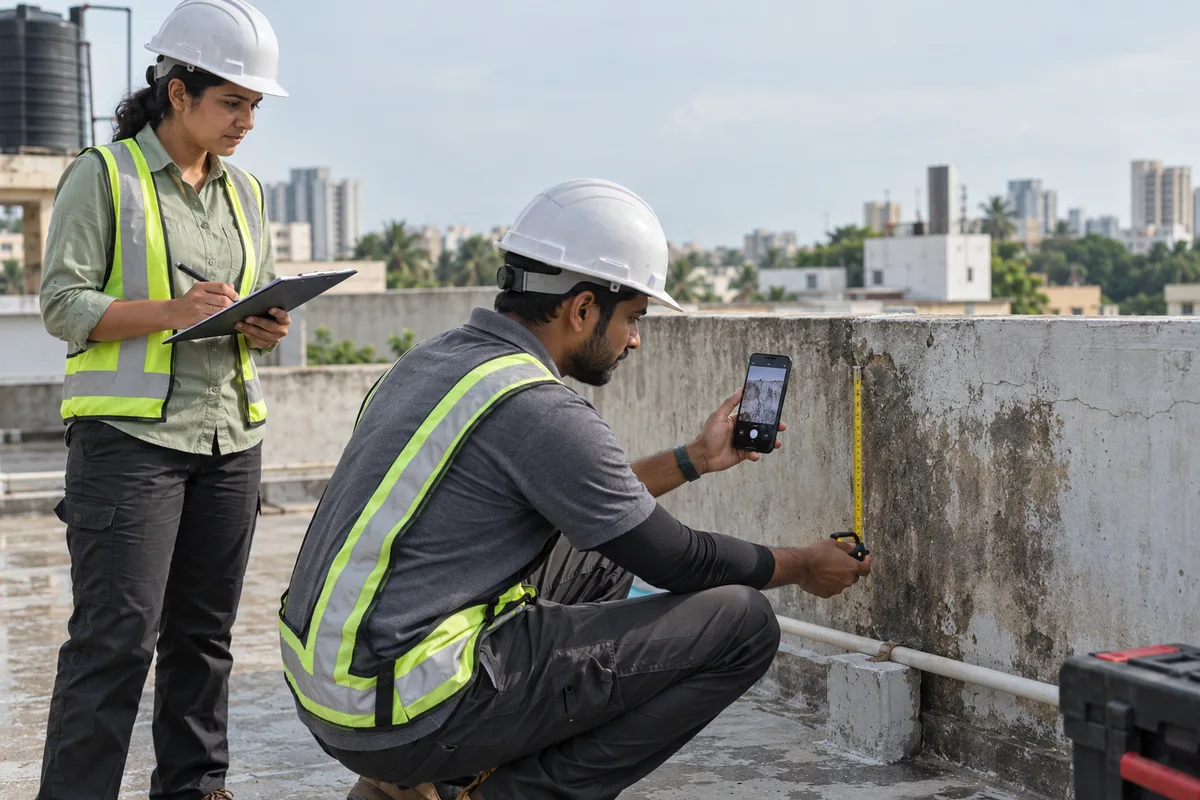
What follow up systems means
A follow-up system is the set routine for calling, messaging or emailing an enquiry more than once, since most buyers do not decide on the first conversation. GullySales sets the number and timing of follow-ups so an undecided buyer keeps hearing from you until they decide either way.
Also for waterproofing product manufacturers
- Lead generation for waterproofing product manufacturers
- CRM for waterproofing product manufacturers
- SEO for waterproofing product manufacturers
- Social media marketing for waterproofing product manufacturers
- Content marketing for waterproofing product manufacturers
- Buyer persona for waterproofing product manufacturers
- WhatsApp marketing for waterproofing product manufacturers
- Digital marketing for waterproofing product manufacturers
Sales and marketing for waterproofing product manufacturers, the overview.
Last updated 14 Nov 2026.
For waterproofing product manufacturers
Where it usually goes wrong, and what we would do.
“A demonstration with no call after it is wasted”
Applicators who watched a session in the morning are on another site by evening. A call or message that same day, asking about their next job, is what turns a demonstration into a trial.
“A document request is a buying signal”
When a consultant asks for a data sheet, they are listing products. A reply that arrives late, or without the method statement, drops the manufacturer from the list before the engineer reads a line.
“A trial patch needs a return visit”
A trial coat on a terrace proves little until the ponding test is checked. If nobody returns to look and record it, the proof stays unused and the sale stays open.
“Dealers drift when nobody calls after the first order”
A dealer who took a first stock and heard nothing sells the old brand again. A planned call after the first sales, asking what moved and what did not, keeps the line on the shelf.
What we do
What we deliver for waterproofing product manufacturers.
The work available for this need. We agree the deliverables and responsibilities for your engagement in writing.
Post-demonstration sequence
A set of calls and messages after each session, with a question about the applicator's next job and a method card.
Result: Every attendee has a logged follow-up and an answer.
Document-request reply routine
A rule and a template so a request is answered with one link and the right pack, and logged.
Result: A consultant's request is acknowledged and answered by a named person.
Trial patch checklist
A record of the trial date, the check date, the result and the photograph, owned by one person.
Result: Each trial has a result recorded and a next step.
Dealer re-order reminders
Prompts for a call after the first order and ahead of the pre-monsoon season.
Result: Dealers are called before the season, not after it.
Missed follow-up report
A list of enquiries with no activity, shown to the sales head.
Result: Nothing sits untouched without someone seeing it.
How the result is measured
- Follow-up completion rate
- Average number of follow-ups before close
- Enquiries closed after repeat follow-up
Recorded as a baseline before work starts, so every later report has an honest comparison.
What to capture or send
The moments after a demonstration or a document request that need a reply.
- Demonstration attendees
- Record who attended and which product was shown. The next message to an engineer differs from the one to an applicator.
- Documents requested
- Log which data sheet or test report was asked for. It shows the use the buyer has in mind and what to send next.
- Trial patch location and date
- Note the wall or terrace chosen, so the return visit checks the same patch and photographs the result.
- Dealer's first order and stock level
- Record the opening order and ask whether it moved. A dealer who has not sold a bucket needs a counter display, not a reminder.
- Reason for a not-now
- Capture the words, such as an existing stock or a project not yet started. Tie the next message to that reason and the season.
- Callback received
- If a job returns, call the applicator first and log the cause before anyone else hears of it.
Who it is for
This is written for these waterproofing product manufacturers.
- Cementitious and polymer-modified waterproofing coating makers
- Liquid-applied membrane and PU coating makers
- Bituminous membrane and primer manufacturers
- Crystalline waterproofing compound makers for basements and tanks
- Waterproofing admixture and integral compound makers
- Sealant, joint filler and injection grout manufacturers
- Roof coating and heat-reflective terrace paint makers
- Regional makers supplying through dealers and applicators
Before you decide
When this may not be the right fit.
- Your demonstrations are held without a list of who attended, so follow-ups would go to guesses.
- You cannot send a technician back to inspect a trial patch, so promising a return visit would damage trust.
- Your sales team has no owner for each lead, and a reminder system without an owner only creates noise.
Before you decide
Agree the work. Know how to judge it.
Follow-up systems for waterproofing product manufacturers: use these checks to prepare, choose the scope, and review what changes.
Bring the right evidence
Trace recent enquiries from arrival to the last recorded action. Include a won enquiry, an unsuitable one, and one that went quiet, with personal details removed for the initial discussion.
Make the scope clear
Agree who accepts each enquiry, what makes it qualified, and how ownership changes. Include a rule for missed replies and a clear reason for closing an enquiry.
Check the work in use
Pick an enquiry at random and ask the team to find its owner, latest conversation, and next action. Check that the record agrees with what actually happened.
Know when to change course
If no one has capacity to respond, assign that responsibility before buying more leads. Automation can support the owner, but it cannot replace an unresolved handover.
These are discussion points, not a fixed package. GullySales confirms the deliverables, responsibilities, fee, and term in writing after reading your brief and speaking with you.
Before we start
What to have ready before the work starts.
The records, access and decisions this work needs from waterproofing product manufacturers. Anything missing is noted in the written scope, with who will supply it.
- A list of demonstrations given
- Provide the demonstrations and visits your executives have made, with dates and who attended. We read the silence from it. Without it we write rules for a sales team that does not exist. Include the demonstrations that went well, because the sequence is built from what worked as much as from what did not.
- The method card to send after a demonstration
- Provide the card or sheet the executive hands over. The follow-up message carries it. If none exists, the first piece of content work produces one. Bring the version in current use, because an older card still sent by an executive undoes the follow-up.
- Trial site details and dates
- Bring the list of trial patches with site, product and date applied. The checklist and return visits depend on it. If none were recorded, we begin from the next trial. Add the inspection result if it was recorded, since a trial without a result teaches nobody.
- The dealer order dates
- Provide the dates of each dealer's recent orders. The reorder reminder is calculated from them. Without dates, the reminder is a guess. Add the stock reported at each dealer visit, if recorded, because the reminder is more useful when it speaks to what is on the shelf.
- A named owner for follow-up
- Decide whether sales or marketing owns each step. A sequence with no owner is dropped within the first busy season.
How it works
How the follow up systems work runs
The work itself, in order. How an engagement starts, from your brief to a written scope, is set out on our method page.
- 1
List the demonstrations that went quiet
We take the demonstrations your executives gave and mark which were followed by a call, a visit or nothing. You tell us which you expected to convert. The silence shows where the sequence should begin. We also note which executive gave each demonstration, since a sequence suits some people's habits and not others.
- 2
Write the call after a demonstration
A demonstration with no call after it is wasted. We write a short sequence: a message with the method card the same day, a call to ask what the applicator will try, and a visit to the first site. You edit the wording to sound like your executive. The sequence also says what the executive writes in the register after each step, so the next person can continue.
- 3
Treat a document request as a buying signal
When an engineer or applicator asks for a data sheet, the reply should go with a question about the job. We write the reply routine and the person who sends it. You decide how soon the executive calls, in terms of the order of events and not a deadline. We also decide what the reply says when the requester is an engineer who has no application planned.
- 4
Draw up the trial patch checklist
A trial patch needs a return visit. We write a checklist covering the surface, the product, the quantity, the date applied and the date to inspect. The executive fills it on site, and the follow-up is set from it. Your technical person approves the checklist. The checklist also notes the weather on the day of application, since a wet surface explains a failed patch.
- 5
Set dealer reorder reminders
Dealers drift when nobody calls after the first order. We write a reminder for the executive based on the dealer's order dates in the register. You decide which dealers receive a visit and which a call. The reminder also shows the stock the dealer reported, so the call can begin from something real.
- 6
Read the missed follow-up report
A short report lists the demonstrations, requests and trials with no follow-up logged. We read it with you against the sales sheets from before. You see where the silence cost orders, and you choose which rule to tighten. The report also lists the executive for each gap, so the conversation is about the process and not about blame.
Where this fits
Three pieces of sales work, in this order.
This work sits inside sales process design, at stage 2, qualification. The audit comes before it, and sales management keeps it running.
Step 1
Sales audit
Find where deals are being lost and what to fix first.
Start here if you cannot say where orders are lost.
Step 2 · you are here
Sales process design
One written way to sell, from first enquiry to repeat order.
Start here if every salesperson sells differently.
Step 3
Sales management
A target, a review routine and someone who owns the number.
Start here if the team has targets and no routine.
FAQ
Questions owners ask before they call.
Not here? More answers, or ask on WhatsApp.
How many follow-ups are right for an applicator?
Who owns the follow-up, sales or marketing?
What if a lead says no now but asks again in the rains?
What if an applicator trials our product and then goes silent?
What goes in the message after a demonstration?
How do we follow up a dealer who has gone quiet after the first order?
How much does it cost?
How long is the contract?
How soon will we see results?
Who will actually do the work?
More for waterproofing product manufacturers
Related work to consider.
Closest to this: leads and follow-up
Also for waterproofing product manufacturers
- SEO for waterproofing product manufacturers
- Social media marketing for waterproofing product manufacturers
- Content marketing for waterproofing product manufacturers
- Buyer persona for waterproofing product manufacturers
- WhatsApp marketing for waterproofing product manufacturers
- Digital marketing for waterproofing product manufacturers
Or start from the overview: sales and marketing for waterproofing product manufacturers.
Your next practical step
Tell us what you are trying to grow, and we will read it before we call.
Eight short steps, mostly taps. Skip anything you would rather answer on the call.