Fertilizer dealers · CRM
Keep every farmer, crop and due amount in one place, not in the owner's head.
A CRM for a fertiliser dealer is a record of each farmer with village, crop, acreage, purchases and dues, kept where the owner and family can read and update it from a phone. GullySales works on setting up the fields, filling them from your notebooks and making the reminders run from the record.
Scope, fee, reporting and term are agreed in writing after we have read your brief and spoken to you.
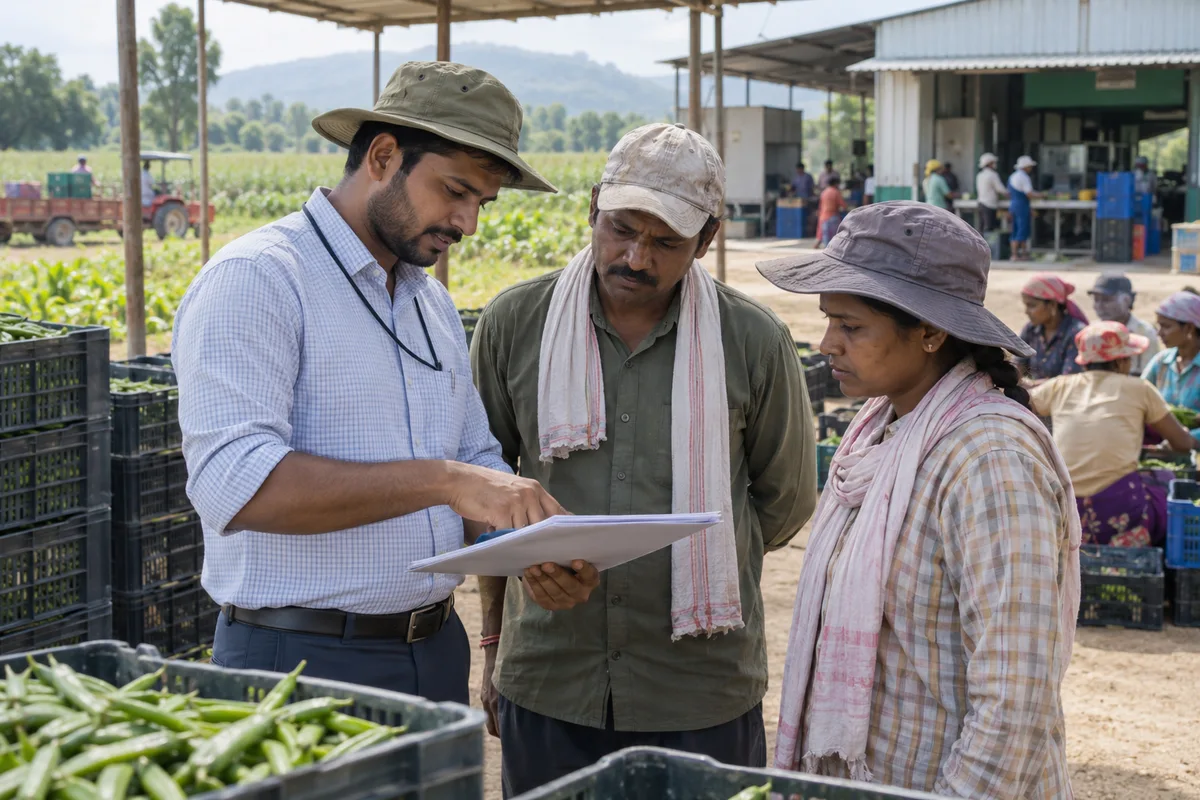
What CRM means
A CRM is the record where every enquiry, call and quote is kept against a customer, replacing separate notebooks, spreadsheets and memory. GullySales sets up or cleans an existing CRM and reports from it by enquiry outcome rather than by activity logged.
Last updated 18 Oct 2026.
For fertilizer dealers
Where it usually goes wrong, and what we would do.
“The credit notebook is the real database”
Every farmer's dues are in a ledger that only the owner reads. If the owner is away, nobody knows who owes what, and a payment goes unrecorded. A shared record ends that dependence.
“Crop and acreage decide what to sell”
Without the crop and area, every call is a general one. With them, the dealer can ring the cotton growers before top dressing and skip those who grow something else.
“Too many fields kill the habit”
A form with twenty boxes will not be filled at a busy counter. Name, village, crop, area, last purchase and dues are enough to start, with more added only when the staff are using them.
“The record is private to the shop”
Farmer details and credit amounts are sensitive. The register should sit with people the owner trusts, protected by a phone lock and a login, and not be shared with company representatives.
What we do
What we deliver for fertilizer dealers.
Every deliverable, what it covers for you, and the result it is there to produce. Nothing here is an extra.
A farmer register with the right fields
Name, village, crop, acreage, last purchase and credit status, set up in a simple tool the family can use on a phone.
Result: Every farmer in the notebook has a line.
A move of the notebook into the register
Entering existing farmers and dues from the ledger, with a check for duplicates.
Result: The old notebook and the register agree.
Filters for crop, village and dues
Saved views such as cotton growers in one village or farmers with dues past their date.
Result: You can list who to call in a moment.
Access and roles for the family
Who can view, who can edit and who sees the dues.
Result: Staff see what they need and no more.
A habit of updating at the counter
A short routine for adding a purchase or a payment at the time of sale.
Result: The register shows today's purchases and payments.
How the result is measured
- Enquiries logged in the CRM
- Data completeness
- Reports generated from CRM data
Recorded as a baseline before work starts, so every later report has an honest comparison.
Fields worth keeping
Keep the fields a dealer needs each season.
- Farmer, village and phone
- Entered by the counter staff at the first purchase. It makes the list searchable by village, which decides where to hold a demonstration.
- Crop and acreage
- Asked once a season and entered. It tells the shop how much the farmer is likely to need and what to stock.
- Credit given and due date
- Entered at billing with the date the farmer promised to pay. It replaces the notebook and lets the shop chase politely.
- Products bought last season
- Copied from the bill. It lets the shop call before the next dose is due, not after the farmer has bought elsewhere.
- Recommended by
- Name of the farmer who sent the buyer. It records the shop's strongest source so the owner can thank the referrer.
Who it is for
This is written for these fertilizer dealers.
- Fertiliser and seed retail shops in mandi towns
- Village-level input dealers
- Cooperative society and PACS outlets
- Large multi-product agri input stores
- Organic and bio-input stores
- Dealers who also sell pesticides and farm tools
- Wholesale fertiliser stockists supplying village dealers
- Dealers attached to FPOs and farmer groups
Not for
It is not the right fit if.
- You do not yet write credit in one place, and a list should start with that before adding other fields.
- The owner is the only person who knows the farmers, and no one else will update a record.
- You would collect fields the shop never uses, which kills the habit.
How it works
How the CRM work runs
The work itself, in order. How an engagement starts, from your brief to a written scope, is set out on our method page.
- 1
Map the sales process
We sit with the people who sell and write down how a deal moves from enquiry to payment, including where it stalls.
- 2
Agree stages, fields and owners
Each stage gets a name your team already uses and a proof that the deal has left it. We agree which fields are required at which stage, and who may change what.
- 3
Build on a copy
Pipeline, fields and views are built on a trial copy where the CRM offers one, or in a separate pipeline where the plan allows. Live work stays untouched.
- 4
Connect channels, then switch on automations
Channels are connected first. Each automation is then switched on separately, so a misfiring rule is easy to find.
- 5
Test with real deals
The people who will use the CRM run open deals through it. Gaps are fixed before the whole team switches over.
- 6
Switch over and trim
Once real use shows which fields stay empty and which stages nobody uses, those are cut and the handover record is updated.
Where this fits
Three pieces of sales work, in this order.
This work sits inside sales management. A target, a review routine and someone who owns the number.
Step 1
Sales audit
Find where deals are being lost and what to fix first.
Start here if you cannot say where orders are lost.
Step 2
Sales process design
One written way to sell, from first enquiry to repeat order.
Start here if every salesperson sells differently.
Step 3 · you are here
Sales management
A target, a review routine and someone who owns the number.
Start here if the team has targets and no routine.
FAQ
Questions owners ask before they call.
Not here? More answers, or ask on WhatsApp.
Which CRM tool should we use?
Is the farmer data safe?
Can the register help collect dues?
Who should own the farmer list in the shop?
How much does it cost?
How long is the contract?
How soon will we see results?
Who will actually do the work?
What do you need from us?
What if we are not happy with the work?
More for fertilizer dealers
Everything else we would do for you.
Closest to this: leads and follow-up
Also for fertilizer dealers
Or start from the overview: sales and marketing for fertilizer dealers.
Your next practical step
Tell us what you are trying to grow, and we will read it before we call.
Eight short steps, mostly taps. Skip anything you would rather answer on the call.