Mining equipment suppliers · Lead generation
Find the mines and contractors about to buy, not only the ones that already ring.
Lead generation for a mining equipment supplier means finding the mine owners, managers and contractors who have a purchase coming and getting your name in front of them first. GullySales works on the sources of those leads, the questions that qualify them and the record that holds each one.
Scope, fee, reporting and term are agreed in writing after we have read your brief and spoken to you.
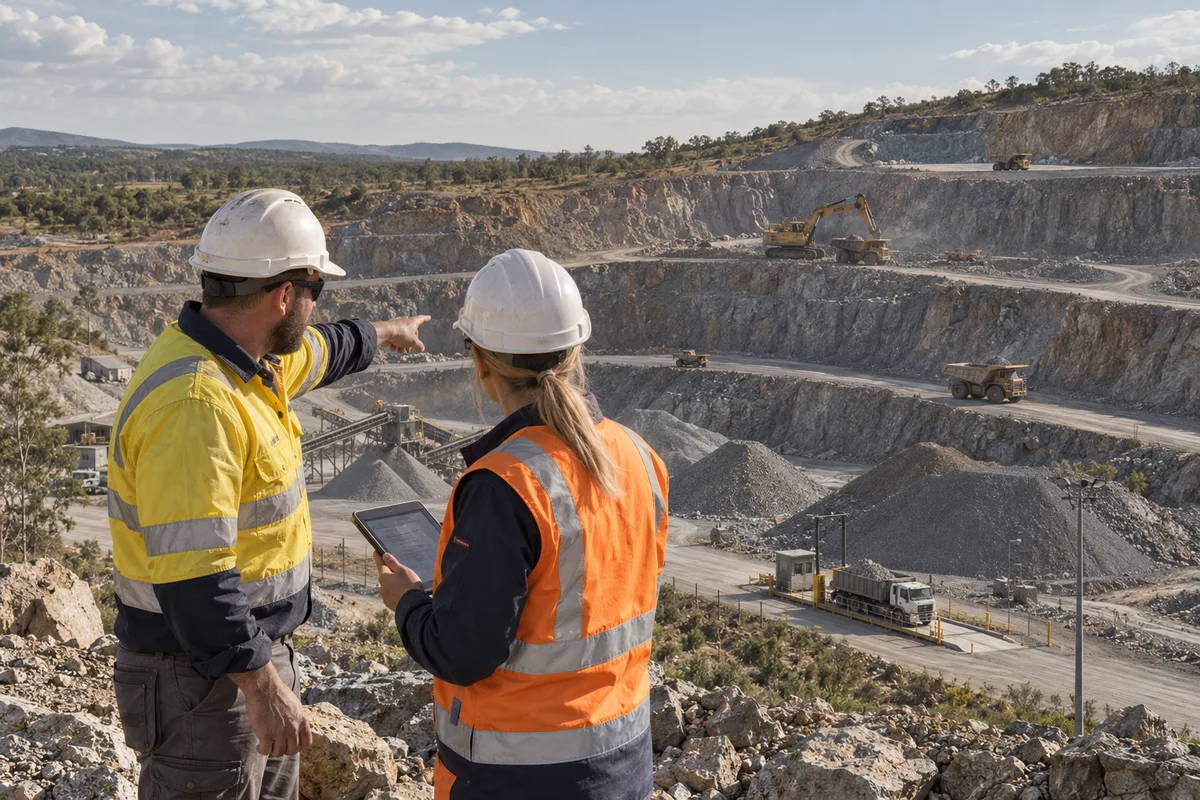
What lead generation means
Lead generation is the combined work of every channel that brings in a new enquiry, whether from search, adverts, referrals or a stall at an exhibition. GullySales runs these channels together and reports the number of enquiries each one produced, not the activity behind it.
Also for mining equipment suppliers
- CRM for mining equipment suppliers
- Follow-up systems for mining equipment suppliers
- SEO for mining equipment suppliers
- Social media marketing for mining equipment suppliers
- Content marketing for mining equipment suppliers
- Buyer personas for mining equipment suppliers
- WhatsApp marketing for mining equipment suppliers
- Digital marketing for mining equipment suppliers
Sales and marketing for mining equipment suppliers, the overview.
Last updated 18 Oct 2026.
For mining equipment suppliers
Where it usually goes wrong, and what we would do.
“The best lead is a new contract, not a web form”
A mining contractor who has just won an overburden or haulage contract must find machines within a short window. A supplier who tracks awards and lease expansions in the territory reaches that buyer before the comparison starts, while a web form only catches those who already know where to look.
“Your spares book is a lead list”
Every mine that buys wear parts and filters from you has a fleet, and the fleet has an age. Suppliers rarely write that age down. The next-machine conversation then begins at a rival's door because nobody on your side asked while the engineer was on site.
“Enquiries for machines outside your range cost sales time”
A buyer asks for a rig or a capacity you do not stock, and a sales head spends days on a quote that cannot close. Lead qualification at the first call, covering task, quantity, site and range, protects the hours for orders you can supply.
What we do
What we deliver for mining equipment suppliers.
Every deliverable, what it covers for you, and the result it is there to produce. Nothing here is an extra.
Territory lead map
A list of mines and contractors in your districts, grouped by mineral and size, with the machines each is known to run.
Result: You can see which mines have no contact on your side.
Qualifying questions for the first call
A short set of questions on task, site, quantity, finance route and decision maker, asked in the same order every time.
Result: Each enquiry record shows whether the machine is in your range.
Contract-award watch
A routine for noting contractors who win or renew mining contracts, with an introduction ready to send.
Result: A new award in your territory has a named owner on your team.
Spares-book fleet check
A pass through your spares customers to record fleet make, age and the next likely purchase.
Result: Each spares customer shows a fleet age or a blank to fill.
Source tagging
Each lead is tagged with where it came from, such as search, exhibition, contractor, financier or a service call.
Result: You can compare which sources produced quotations.
How the result is measured
- Enquiries generated
- Cost per enquiry
- Enquiries by source
Recorded as a baseline before work starts, so every later report has an honest comparison.
What to capture or send
What to record from a machine enquiry before a site visit is booked.
- Machine type and duty
- A dumper for overburden or a drill for blast holes. The job decides the model, so write the buyer's words, not your product name.
- Mine, material and bench conditions
- Rock type, bench height and haul distance, noted from the caller. It shows whether the machine you hold fits before an engineer drives out.
- New contract or replacement
- A mine that has won a new contract buys differently from one replacing a worn unit. Record which, since it sets the timing.
- Who decides and who pays
- Owner, contractor or financier. Without the name, a visit speaks to the wrong person.
- Existing fleet and make
- The machines on site now, with age and hours if offered. It marks a buyer for spares, service and a later machine sale.
Who it is for
This is written for these mining equipment suppliers.
- Dumper, tipper and haul truck dealers
- Excavator, loader and dozer dealers
- Drill rig and blast-hole drilling equipment suppliers
- Conveyor, crusher feeder and screening equipment makers
- Dewatering pump and ventilation equipment suppliers
- Tyre, wear part and spares distributors
- Used and refurbished mining machinery dealers
- Equipment rental and operator-supply companies
Not for
It is not the right fit if.
- The enquiry is for a machine outside your range, and a visit would cost a day of an engineer for no order
- Your service team cannot reach the mine, so a sale would leave the buyer unsupported
- You have no way to tell a mine ready to buy from one asking for a price to compare
How it works
How the lead generation work runs
The work itself, in order. How an engagement starts, from your brief to a written scope, is set out on our method page.
- 1
Understand your capacity
We ask how many enquiries your team can answer well, who answers after hours, and what a good enquiry looks like. Without this, the system fills a funnel nobody is watching.
- 2
Audit current sources
We read your call log, WhatsApp chats, enquiry sheet and platform dashboards. The baseline is recorded: enquiries by source, reply time, conversion and cost per order.
- 3
Strategise the channel mix
Search and maps are chosen for people ready to buy, ads for people who are not yet looking, and content and referrals for trust.
- 4
Implement capture and follow-up
Pages, forms, tags, the lead record and the first-reply message are built and tested end to end. We submit test enquiries ourselves before any media money is spent.
- 5
Measure and optimise
Enquiries are traced to source and judged by what became orders, not by volume alone. Channels that fill the sheet with poor enquiries are cut back. How often you are reported to is agreed in writing.
Where this fits
Three pieces of sales work, in this order.
This work sits inside sales process design, at stage 1, prospecting and lead generation. The audit comes before it, and sales management keeps it running.
Step 1
Sales audit
Find where deals are being lost and what to fix first.
Start here if you cannot say where orders are lost.
Step 2 · you are here
Sales process design
One written way to sell, from first enquiry to repeat order.
Start here if every salesperson sells differently.
Step 3
Sales management
A target, a review routine and someone who owns the number.
Start here if the team has targets and no routine.
FAQ
Questions owners ask before they call.
Not here? More answers, or ask on WhatsApp.
Which leads are worth a site visit for heavy machines?
Can search alone fill our pipeline?
How does a mine's lease or contract timing affect when we call?
Can we find buyers from tender notices?
How much does it cost?
How soon will we see results?
Who will actually do the work?
What do you need from us?
What if we are not happy with the work?
More for mining equipment suppliers
Everything else we would do for you.
Closest to this: leads and follow-up
Also for mining equipment suppliers
Or start from the overview: sales and marketing for mining equipment suppliers.
Your next practical step
Tell us what you are trying to grow, and we will read it before we call.
Eight short steps, mostly taps. Skip anything you would rather answer on the call.