Nightclubs and discotheques · Website
Build a site where a host can book and a planner can compare.
A website for a nightclub or discotheque is where a host books a table, a promoter finds the list route and a planner checks capacity and sound. GullySales designs and writes pages that load on a phone and carry the booking step.
Scope, fee, reporting and term are agreed in writing after we have read your brief and spoken to you.
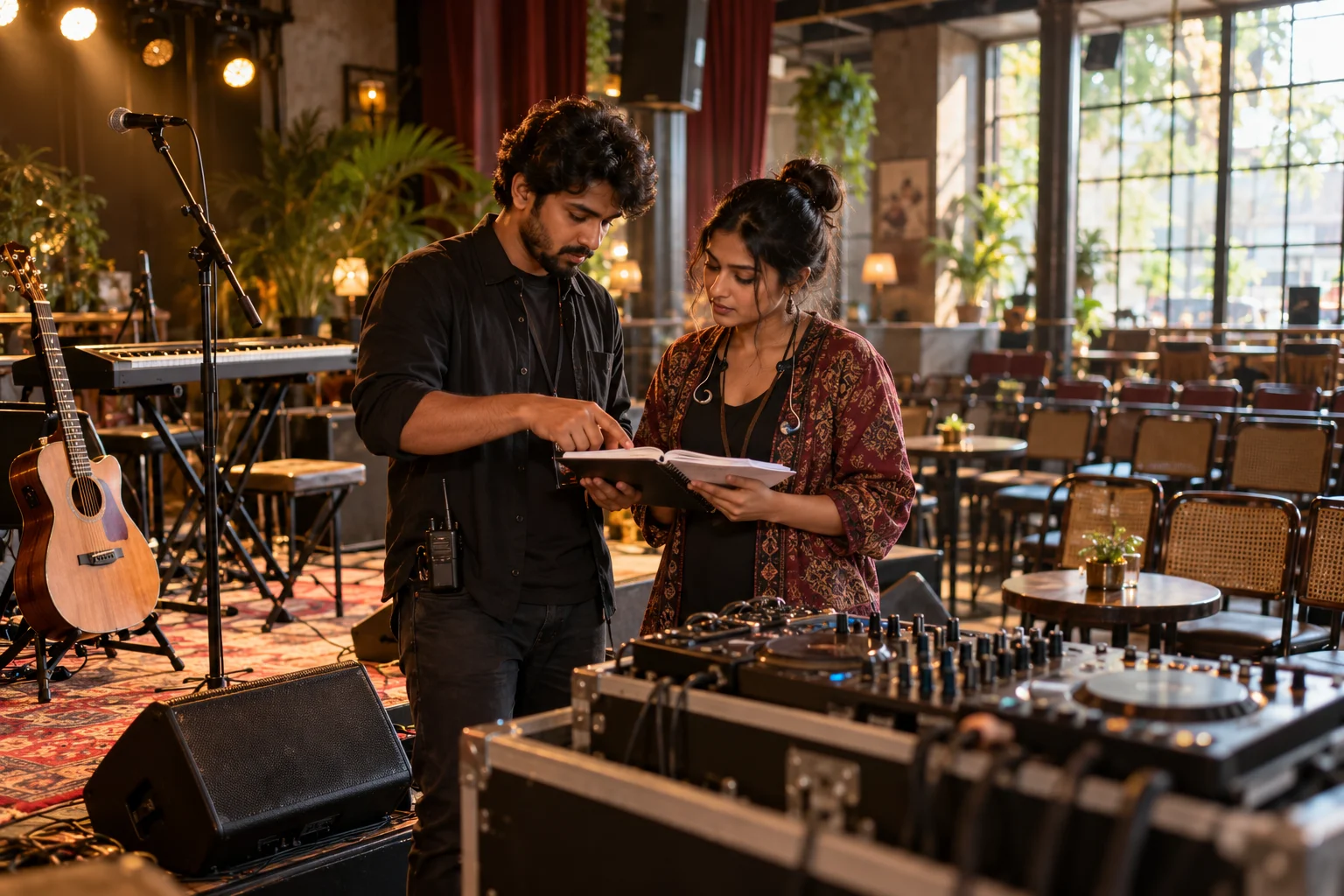
What website means
A website is the page a customer lands on after searching, clicking an advert or scanning a code, and it decides whether they call or leave. GullySales builds and maintains sites that load quickly, explain the offer plainly and make the enquiry form or phone number easy to find.
Also for nightclubs and discotheques
- SEO for nightclubs and discotheques
- Local SEO for nightclubs and discotheques
- Lead generation for nightclubs and discotheques
- Social media marketing for nightclubs and discotheques
- Content marketing for nightclubs and discotheques
- Buyer personas for nightclubs and discotheques
- CRM for nightclubs and discotheques
- Follow-up systems for nightclubs and discotheques
Sales and marketing for nightclubs and discotheques, the overview.
Last updated 22 Oct 2026.
For nightclubs and discotheques
Where it usually goes wrong, and what we would do.
“The visitor is on a phone, deciding now”
A group picking a venue opens the site on a mobile. Heavy videos and tiny menus lose them before the page loads.
“The entry policy is hidden”
If a guest has to hunt for the rules, they reach the door unsure. The policy should be plain on the booking page.
“Events pages are stale”
A calendar showing last month's nights makes the club look closed. Someone must own the update.
“One form for everything”
A single contact form for parties, lists and hire sends every request to the same person. Separate forms route each to the right one.
What we do
What we deliver for nightclubs and discotheques.
Every deliverable, what it covers for you, and the result it is there to produce. Nothing here is an extra.
A nights calendar
Upcoming nights with music style, time and booking links.
Result: A visitor learns what is on and how to reserve.
A party and table page
A page with the enquiry form and the entry policy.
Result: Hosts book with the facts in front of them.
A promoter page
A route for lists with terms and confirmation steps.
Result: Promoters know how to send a list.
A corporate hire page
Capacity, layout, sound and a request form.
Result: Planners can compare the venue.
A phone layout and loading check
Testing on common phones, with fixes.
Result: The pages open without trouble on a handset.
A map and arrival page
Address, landmark, parking and drop-off notes for the venue, plus the door timings, so a group coordinating several cars finds the entrance without a call.
Result: Guests arrive at the right entrance.
A consented gallery
Photographs of the room, the booth and the lighting, with guest faces left out unless the person agreed, in place of a reel of crowd clips. Each photograph is logged with the date and who approved it, and a guest who spots a picture can ask for removal through a link on the page. The gallery is refreshed after a launch or a private evening, with the host's agreement.
Result: The room is shown without exposing a guest.
How the result is measured
- Page load time
- Bounce rate
- Enquiries from the website
Recorded as a baseline before work starts, so every later report has an honest comparison.
Searches your buyers type
What visitors look for on a club's website and the page that should answer.
- what time does the club open tonight
- The home page showing tonight's hours and music at the top. It is read on a phone by someone already on the way.
- book a table for six
- A booking page with a short form: date, group size, occasion. The reply comes from a named manager.
- promoter guest list how to apply
- A promoter page explaining the list route, the format and who confirms. Promoters read it once and pass it on.
- private party hire with capacity
- A hire page with floor capacity, hours and sound details, plus photographs of the floor in daylight. Planners compare it with other venues.
- how to reach the club
- An arrival page with the map, parking and the landmark. Late-night arrivals need directions that work without a signal.
Who it is for
This is written for these nightclubs and discotheques.
- Standalone nightclubs and discotheques in metros
- Club lounges inside five-star and boutique hotels
- Rooftop and open-air party venues
- Clubs with a resident DJ and a monthly guest artist
- EDM and electronic music venues
- Bollywood and commercial party nights
- Beach and resort club nights in Goa
- Venues that host private launches, birthdays and corporate evenings
Not for
It is not the right fit if.
- You have no photographs the guests agreed to or the venue owns, so a site would rest on borrowed images.
- Nobody can keep the nights page current, so the website would show last month's party as the next one.
How it works
How the website work runs
The work itself, in order. How an engagement starts, from your brief to a written scope, is set out on our method page.
- 1
Confirm structure and content
We agree the page list, what each page must answer, and who supplies the text and photographs, before any design starts.
- 2
Design the templates
The home page, a service page, a location page and the enquiry page are designed first, on phone and desktop, and shown to you.
- 3
Build and test
The site is built and checked on real phones and the common browsers. Every form, call button and WhatsApp link is tested end to end.
- 4
Load real content
Actual copy, images and information replace placeholders. Pages are read through once by you, since you spot wrong details we cannot.
- 5
Check before launch
Tracking, page titles, the sitemap and the privacy page are checked on the staging site. If an old site exists, its addresses are mapped so old links still land somewhere.
- 6
Launch and hand over access
The site goes live and we record the domain, hosting, content login and analytics in your name. The first live enquiry is traced to confirm tracking works.
Where this fits
Three pieces of sales work, in this order.
This work sits inside sales process design, at stage 1, prospecting and lead generation. The audit comes before it, and sales management keeps it running.
Step 1
Sales audit
Find where deals are being lost and what to fix first.
Start here if you cannot say where orders are lost.
Step 2 · you are here
Sales process design
One written way to sell, from first enquiry to repeat order.
Start here if every salesperson sells differently.
Step 3
Sales management
A target, a review routine and someone who owns the number.
Start here if the team has targets and no routine.
FAQ
Questions owners ask before they call.
Not here? More answers, or ask on WhatsApp.
Do we need a site if Instagram works?
Who keeps the nights page current?
Can the site show the bar?
Our entry rules depend on the night. How do we put them on the site?
How much does it cost?
How long is the contract?
How soon will we see results?
Who will actually do the work?
What do you need from us?
What if we are not happy with the work?
More for nightclubs and discotheques
Everything else we would do for you.
Closest to this: search and visibility
Also for nightclubs and discotheques
Or start from the overview: sales and marketing for nightclubs and discotheques.
Your next practical step
Tell us what you are trying to grow, and we will read it before we call.
Eight short steps, mostly taps. Skip anything you would rather answer on the call.