Pet service businesses · Content marketing
Answer the puppy and travel-season questions before a parent ever searches for you.
Content marketing for a pet business means writing guides on topics a parent searches. Examples include preparing a puppy for its first boarding stay, or grooming a double-coat breed before summer. GullySales writes this around the seasons and services with the highest enquiry volume.
Scope, fee, reporting and term are agreed in writing after we have read your brief and spoken to you.
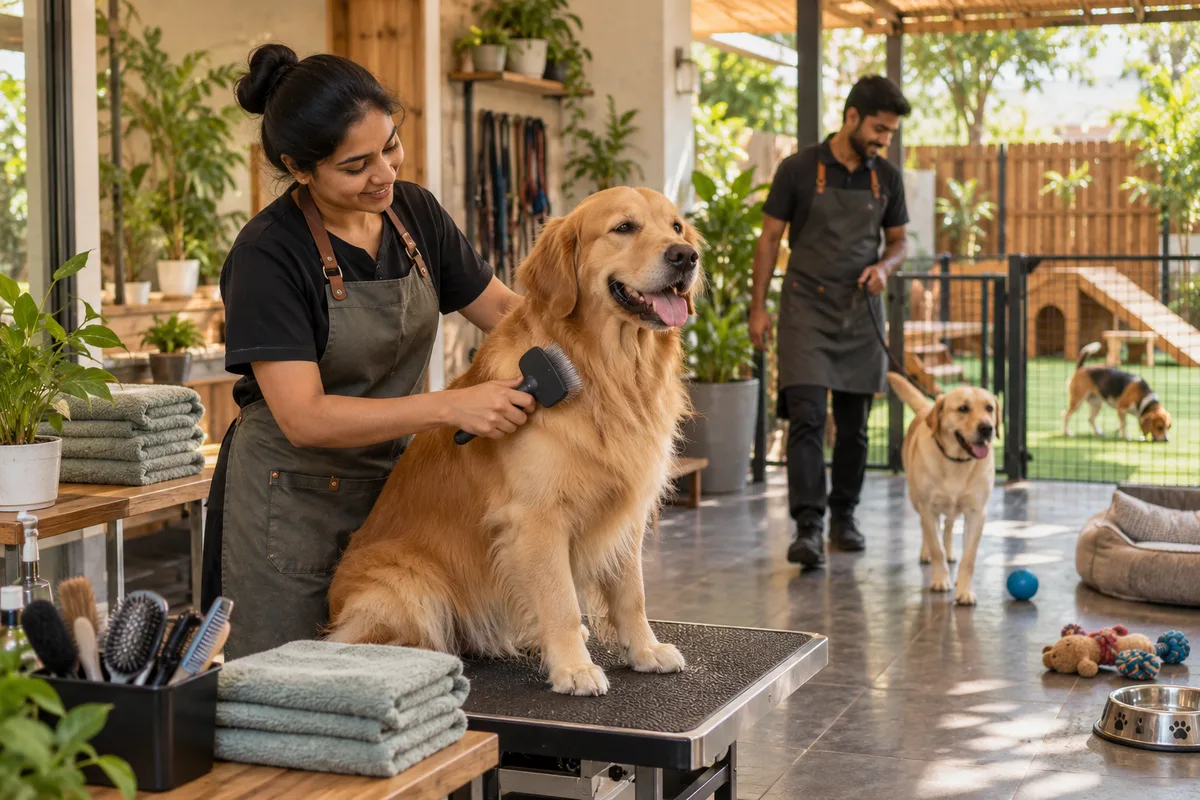
What content marketing means
Content marketing is writing articles, guides and pages that answer the questions buyers search before they are ready to enquire. This makes your business visible and trusted before the first call. GullySales plans this content from the first conversation onward, choosing topics that match real search demand rather than guesses.
Also for pet service businesses
- Influencer marketing for pet service businesses
- Social media marketing for pet service businesses
- Answer engine optimisation for pet service businesses
- Branding and identity for pet service businesses
- Digital marketing for pet service businesses
- Email marketing for pet service businesses
- Google Business Profile for pet service businesses
- Lead generation for pet service businesses
Sales and marketing for pet service businesses, the overview.
Last updated 5 Oct 2026.
For pet service businesses
Where it usually goes wrong, and what we would do.
“First-time boarding guides reduce anxious calls”
A clear article on what to pack and expect for a first stay answers questions before the phone rings.
“Breed-specific grooming content reaches a warmer search”
An article on grooming a Labrador's coat before summer reaches an owner already searching for exactly that.
“Seasonal content matches real spikes in enquiries”
A guide on Diwali noise anxiety and safe boarding, published before the festival, reaches parents planning ahead.
What we do
What we deliver for pet service businesses.
Every deliverable, what it covers for you, and the result it is there to produce. Nothing here is an extra.
First-time boarding guide
An article covering what to pack, how drop-off works and what to expect on day one, for a parent boarding a pet for the first time.
Result: Fewer anxious calls arrive before a first stay, since the questions are already answered.
Breed and coat-specific grooming articles
Separate pages for double-coat, curly-coat and short-coat grooming needs, matched to the breeds you actually see most.
Result: An owner with a double-coated dog finds the page written for that coat.
Festival season safety and boarding guide
A guide on noise anxiety and safe boarding, timed ahead of Diwali and other loud local festivals.
Result: A parent planning around the festival finds you while still deciding.
New puppy settling-in guides
Short guides on choosing a first trainer or groomer for a new puppy, written from your own trainers' experience.
Result: A new pet owner trusts your advice before ever visiting.
Content calendar tied to services and seasons
A running list of topics matched to grooming cycles, boarding seasons and training enquiries, so nothing generic gets published.
Result: Every article answers a question a real customer was about to ask.
How the result is measured
- Pages published
- Organic traffic
- Enquiries from content pages
Recorded as a baseline before work starts, so every later report has an honest comparison.
Questions buyers ask first
The questions a pet parent asks before leaving a pet with you, and the page that answers each.
- What do I need to bring for my dog's first boarding stay?
- A boarding checklist. List vaccination records, food, medicines, the usual toy and the emergency contact. Say what you do at drop-off and how a nervous pet settles.
- Is the place clean and safe, and who looks after my pet at night?
- A facility page with photographs of the actual kennels, runs and play areas. Name the night staff arrangement, how a sick pet is handled, and which vet you use in an emergency.
- How do you groom a double-coated breed before summer?
- A breed guide for Huskies, Golden Retrievers and similar. Explain brushing, why shaving can harm some coats, and what a groom includes. Show your own grooming photographs.
- How do I settle a new puppy in the first weeks?
- A puppy guide on feeding, toilet training, sleep and the first vaccinations. Say the vet decides on vaccines. Link to your puppy training or socialisation class if you run one.
- Will fireworks or festival noise upset my pet?
- A festival safety page. Explain how to keep a nervous pet calm, why a quiet room helps, and how your boarding centre handles noise nights. Say plainly when your places are fully booked.
- What does a training course involve, and will it work for my dog?
- A training page. Describe the sessions, the methods you use, what the owner practises at home and the age and temperament you accept. Do not promise a result. Behaviour changes by dog.
Who it is for
This is written for these pet service businesses.
- Dog grooming salons
- Pet boarding and daycare centres
- Pet training academies
- Mobile grooming services
- Veterinary clinics offering allied services
- Pet taxi and transport services
- Multi-service pet care centres
- Cattery and exotic pet boarding
Not for
It is not the right fit if.
- No one on site can answer a coat-care or first-boarding question accurately, so the articles would be guesses.
- You are fully booked through the season and cannot take on the parents the articles would bring.
How it works
How the content marketing work runs
The work itself, in order. How an engagement starts, from your brief to a written scope, is set out on our method page.
- 1
Agree the plan
Topics and formats come from the content strategy and the buyer-question list. The volume goes into the written scope, agreed with you, not into a number quoted on a call.
- 2
Brief and draft
Each piece starts from its one-page brief and a short conversation with your technical person, recorded if they allow it, so the draft uses their words.
- 3
Check the facts
Your person marks the draft for accuracy and we correct it. Regulated subjects also go to your own adviser, because restrictions on claims apply to articles as much as to advertisements.
- 4
Publish and distribute
The piece goes live on your site, then out through the channels where your buyers already are.
- 5
Read the enquiries and adjust
Results are reported against the baseline recorded before work began. Topics that brought readers but no enquiries are changed or dropped. How often you are reported to is agreed in writing.
Where this fits
Three pieces of sales work, in this order.
This work sits inside sales process design, at stage 0, foundation. The audit comes before it, and sales management keeps it running.
Step 1
Sales audit
Find where deals are being lost and what to fix first.
Start here if you cannot say where orders are lost.
Step 2 · you are here
Sales process design
One written way to sell, from first enquiry to repeat order.
Start here if every salesperson sells differently.
Step 3
Sales management
A target, a review routine and someone who owns the number.
Start here if the team has targets and no routine.
FAQ
Questions owners ask before they call.
Not here? More answers, or ask on WhatsApp.
How often should we publish?
Who should write it?
Should we write about vaccines and health, or leave that to the vet?
Can we use a customer's pet photograph?
How much does it cost?
How long is the contract?
How soon will we see results?
Who will actually do the work?
What do you need from us?
What if we are not happy with the work?
From the blog
Further reading for pet service businesses.
 6 min read · 26 Aug 2026Pet grooming marketing: how to get grooming and boarding customersPet grooming marketing works on Maps, reviews, before and after photographs and fast replies. Boarding is won on trust. Here is how to fill both, and what a plan should cover.
 8 min read · 19 Aug 2026The pet parent journey: from the first search to regular visitsThe pet parent journey runs from the first anxious search to years of repeat visits. Here are the stages, and where Indian clinics lose owners.
 6 min read · 20 Jul 2026Seasonal and event-linked demand: planning for peaks and quiet monthsHow a specialist trade with busy and slow months can read its own year from past bookings, then time outreach and capacity ahead of each peak instead of after it.
More for pet service businesses
Everything else we would do for you.
Closest to this: content and social
Also for pet service businesses
Or start from the overview: sales and marketing for pet service businesses.
Your next practical step
Tell us what you are trying to grow, and we will read it before we call.
Eight short steps, mostly taps. Skip anything you would rather answer on the call.