Stone quarry companies · Local SEO
Be the quarry on the map when a foreman searches for stone near the work.
Local SEO for a stone quarry decides whether your yard appears on the map when a buyer searches for stone close to a site. GullySales works on the profile, the delivery area and the details a buyer needs before ringing the number.
Scope, fee, reporting and term are agreed in writing after we have read your brief and spoken to you.
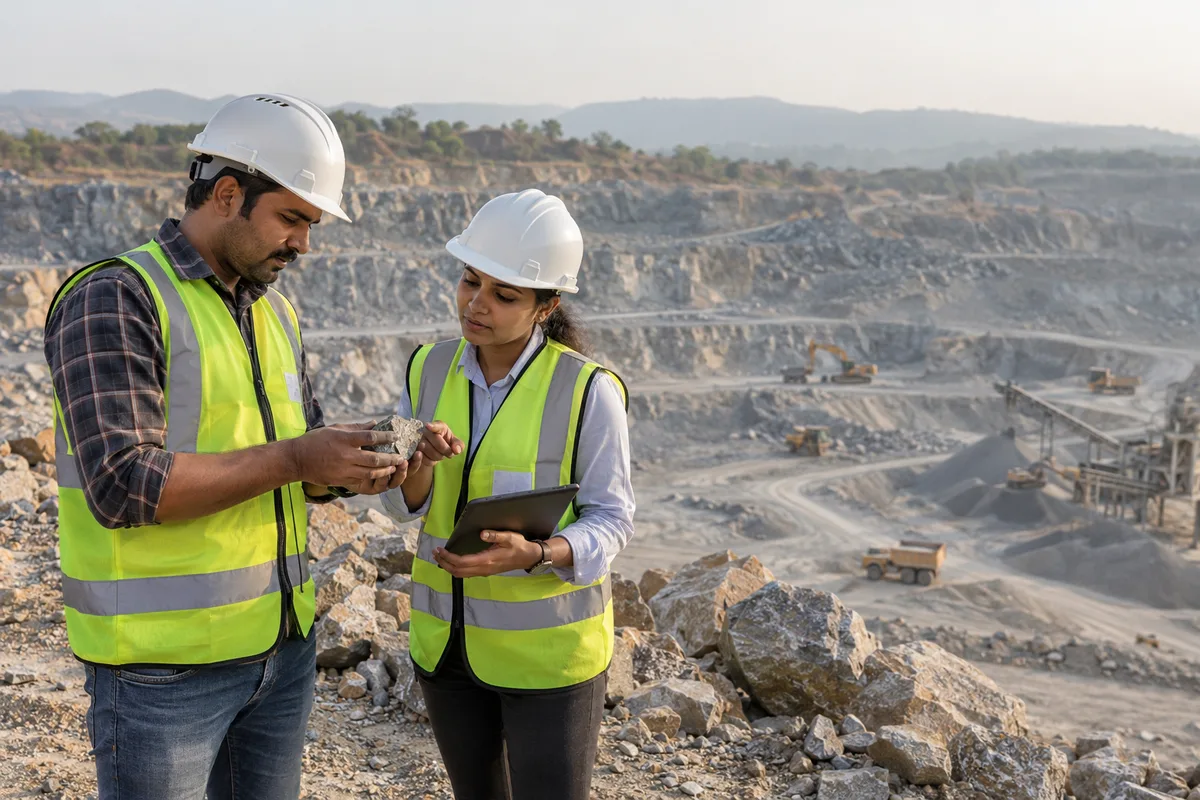
What local SEO means
Local SEO is the work of making your business show up for searches that name your town or locality, such as a service plus an area name. GullySales sets up locality pages, local citations and map listings so nearby customers find you before a competitor across town.
Last updated 18 Oct 2026.
For stone quarry companies
Where it usually goes wrong, and what we would do.
“The foreman searches from the site”
A foreman standing at a half-built wall searches for stone near the village and sees the closest quarries. Distance counts, and a quarry with a profile set to the wrong spot loses the call to one a few kilometres further away.
“The pin is often on the highway, not the gate”
A map pin dropped on the main road sends a driver past the turning to the quarry. A truck lost on a side lane costs a delivery slot, and the buyer remembers it when choosing next time.
“A phone that rings in an office nobody sits in”
Quarry hours run from early morning, but a listing that shows office hours sends calls to a desk that is empty. A buyer who rings once and hears nothing moves to the next name on the map.
“Photographs show scale better than words”
A photograph of kerbs stacked beside a measuring rod tells an engineer more than a paragraph. A listing with only a logo gives the buyer nothing to judge the stone by.
What we do
What we deliver for stone quarry companies.
Every deliverable, what it covers for you, and the result it is there to produce. Nothing here is an extra.
A profile with the correct pin and hours
The gate location, working hours that match when the weighbridge and loading run, and the phone number someone answers.
Result: A driver following the map arrives at the quarry gate.
Stone types listed as products
Each stone entered as a product with its size and use, matching the product sheet.
Result: The listing names the stones you sell.
A delivery area drawn on real roads
The towns and taluks a truck can reach at your fixed rate, entered as the service area.
Result: The area on the listing matches the delivery map.
A set of honest photographs
Stacked kerbs, graded rubble, the dressing yard and a loaded truck, with a scale object in view.
Result: A buyer sees the stone and the yard before calling.
A routine for asking contractors for reviews
A request made after a clean delivery, with the link ready to send on WhatsApp to the foreman or contractor.
Result: The newest reviews are from buyers whose loads reached the site.
How the result is measured
- Map pack ranking
- Local search visibility
- Enquiries by locality
Recorded as a baseline before work starts, so every later report has an honest comparison.
Searches your buyers type
The map searches a foreman makes from the site, and what the listing should say.
- stone quarry near me
- A listing with the pin on the quarry gate, not the highway, and the quarry's working hours. A driver following the pin should reach the weighbridge.
- rubble supplier in the taluk
- Add rubble, boulders and kerb stone as products with short descriptions. The listing then matches the stone word a foreman types.
- paving stone yard open on Sunday
- Set the days and hours the yard is open for loading and for visits. A buyer on a Sunday search needs a yes or no.
- building stone delivery to the village
- Draw the delivery area on real roads and name the villages. It tells a searcher whether the load reaches their site before they call.
- quarry stone sample photos
- Photographs of kerbs beside a rod and a stacked load. An engineer judges size from the picture and decides whether to ring.
Who it is for
This is written for these stone quarry companies.
- Rubble and boulder quarries
- Kerb stone and paving stone quarries
- Compound-wall and building stone quarries
- Sandstone and Kota stone quarries
- Rural road and canal work suppliers
- Temple trust and garden-wall suppliers
- Yards that cut and dress stone
- Small owner-run quarries selling by the truck
Not for
It is not the right fit if.
- The quarry's address is shared with a lease owner or a plant that you do not control, so a pin you place could point to the wrong gate.
- The office phone on the listing goes unanswered during loading, so a visible number would only record missed calls.
How it works
How the local SEO work runs
The work itself, in order. How an engagement starts, from your brief to a written scope, is set out on our method page.
- 1
Write down what is true
Each branch's real address, signboard name, phone, hours and owning Google account go into one record you sign off. Every later listing is copied from it.
- 2
Search as your buyer does
We search each branch on a phone from points around it, in your buyers' words, and note who appears with what reviews and photos.
- 3
Fix the profile first
Ownership first, then name, address, pin, phone, hours and business type. Google can suspend a profile with extra words in its name or an address that is not a real premises.
- 4
Build the branch pages and match the listings
Each real branch gets its own page, and the other listings are changed to agree with it. We write none for towns without a branch, because Google treats near-identical pages as doorway pages.
- 5
Ask, reply and measure
We agree with each branch who asks for reviews, when and how. Results are set against the baseline recorded before work began, and the branch that is behind gets the next round.
Where this fits
Three pieces of sales work, in this order.
This work sits inside sales process design, at stage 1, prospecting and lead generation. The audit comes before it, and sales management keeps it running.
Step 1
Sales audit
Find where deals are being lost and what to fix first.
Start here if you cannot say where orders are lost.
Step 2 · you are here
Sales process design
One written way to sell, from first enquiry to repeat order.
Start here if every salesperson sells differently.
Step 3
Sales management
A target, a review routine and someone who owns the number.
Start here if the team has targets and no routine.
FAQ
Questions owners ask before they call.
Not here? More answers, or ask on WhatsApp.
Does a rural quarry need a map listing?
Can we hide our address and show only a service area?
Will a map listing show other people's quarries near ours?
Is it safe to show the exact address of a working quarry?
How much does it cost?
How long is the contract?
How soon will we see results?
Who will actually do the work?
What do you need from us?
What if we are not happy with the work?
More for stone quarry companies
Everything else we would do for you.
Closest to this: search and visibility
Also for stone quarry companies
Or start from the overview: sales and marketing for stone quarry companies.
Your next practical step
Tell us what you are trying to grow, and we will read it before we call.
Eight short steps, mostly taps. Skip anything you would rather answer on the call.