Corporate concierge services · Local SEO
Be on the map for the tech park, the tower and the apartment complex you actually serve.
Local SEO for a concierge service puts the firm in front of buyers who search for help near a specific building or business district. GullySales sets up the Google Business Profile for the way you work, whether from an office, on client premises or both, and keeps the name, address and phone consistent.
Scope, fee, reporting and term are agreed in writing after we have read your brief and spoken to you.
What local SEO means
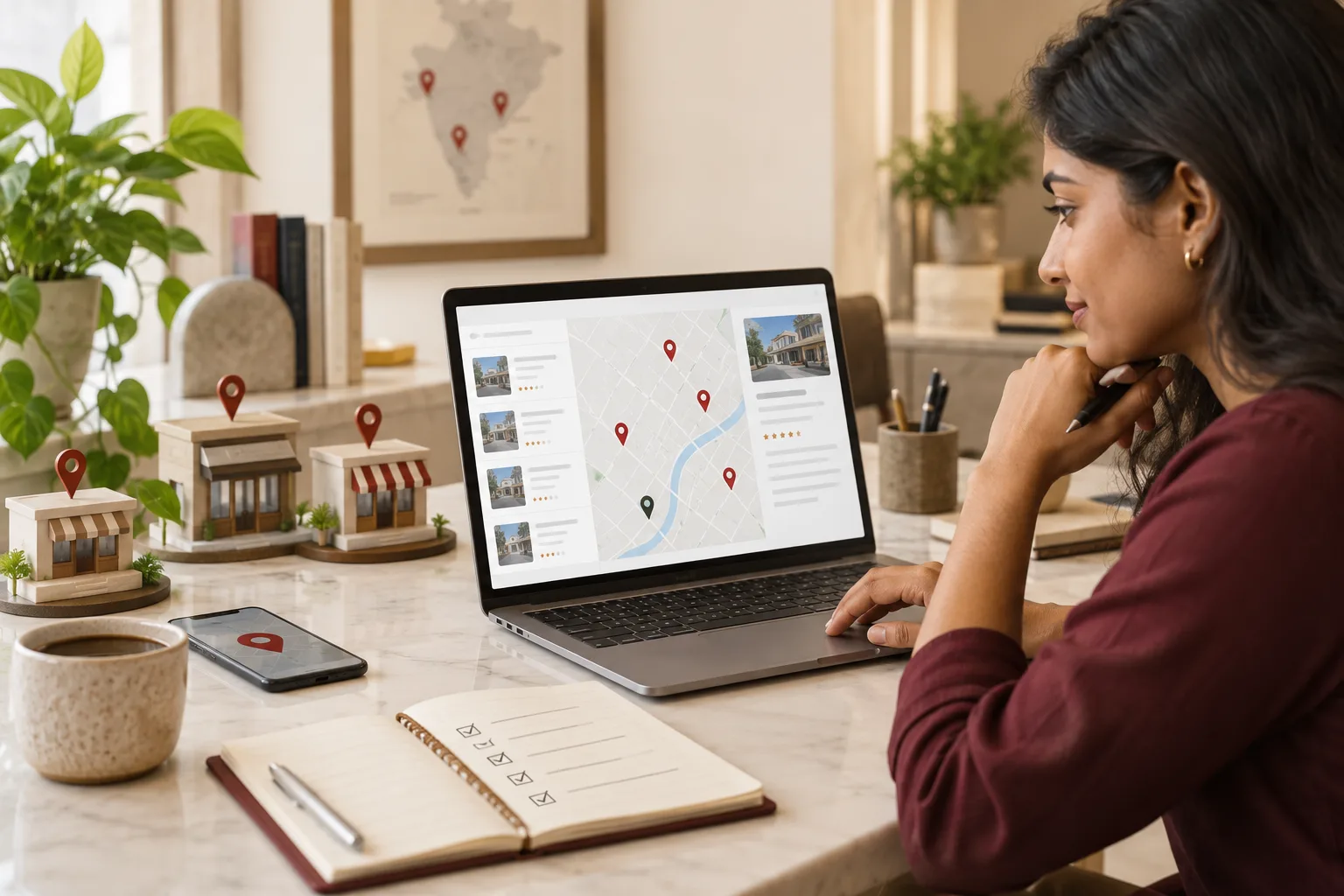
Local SEO is the work of making your business show up for searches that name your town or locality, such as a service plus an area name. GullySales sets up locality pages, local citations and map listings so nearby customers find you before a competitor across town.
Also for corporate concierge services
- SEO for corporate concierge services
- Website development for corporate concierge services
- Lead generation for corporate concierge services
- Social media marketing for corporate concierge services
- Content marketing for corporate concierge services
- Buyer personas for corporate concierge services
- CRM for corporate concierge services
- Follow-up systems for corporate concierge services
Sales and marketing for corporate concierge services, the overview.
Last updated 14 Nov 2026.
For corporate concierge services
Where it usually goes wrong, and what we would do.
“Staff on client premises are not a storefront”
If your team sits at a desk inside a client's building, that is a place of work, but Google's rules for listings need care. Read the current guidelines before you add the address.
“The area served is a list of buildings”
A concierge listing is useful when it names Whitefield, Manyata or Embassy Tech Village rather than all of Bengaluru. Choose the areas where you can send staff within the working day.
“Reviews come from admin heads, not residents”
A committee or admin head may not be able to post a review about a vendor. Plan who can write one, and never pay or offer a reward for it.
What we do
What we deliver for corporate concierge services.
The work available for this need. We agree the deliverables and responsibilities for your engagement in writing.
A Business Profile set up for the way you work
Main business type, services, hours, service areas and a description, set as Google's guidelines allow for an office or a service-area firm.
Result: A buyer nearby finds a profile that matches reality.
A named list of areas served
The business districts and residential areas where you have staff, written once and repeated on the website and the profile.
Result: No building is promised that you cannot reach.
Consistent name, address and phone
The same firm name, office and number on the profile, the website, JustDial, LinkedIn and any directory kept. Duplicates removed or merged.
Result: Google and the buyer see one firm.
Photographs of the team and the desk
Staff in uniform with their consent, the office or the desk, and a request log with names covered.
Result: A buyer sees real people before the first call.
A review request routine for permitted reviewers
A message to executives and residents who have used the service, asking if they would like to post a review, with a link and no incentive.
Result: Reviews come from people who used the service.
How the result is measured
- Map pack ranking
- Local search visibility
- Enquiries by locality
Recorded as a baseline before work starts, so every later report has an honest comparison.
What Google weighs here
The signals behind a local listing and what each one means for a concierge business.
- Relevance: business type and services
- Pick the nearest main business type Google offers, then add services such as travel arrangement and errand running. The description must match the website.
- Distance: buyer to office or area
- A facilities head searching from HITEC City sees listings near them first. A service-area listing appears for the areas you name, so name only where you can send staff.
- Prominence: reviews, mentions and links
- Reviews, press mentions and links from client sites build prominence. Ask for them honestly, and check what a client allows before you name them.
- Name, address and phone match
- One firm name, one number, one address on every directory. A rented desk with a different address on a directory splits what Google knows.
- Shared offices and hidden addresses
- A co-working desk may not qualify as an address. Check Google's current guidelines before you set a visible or hidden address.
Who it is for
This is written for these corporate concierge services.
- Residential concierge for gated communities and apartment complexes
- Office concierge for tech parks and corporate towers
- Executive travel and itinerary arrangement
- Event and offsite arrangement for companies
- Errand and personal assistance for senior executives and promoter families
- Home care coordination for NRI families
- Vendor coordination for facility management teams
- Concierge desks for serviced apartments and co-living
Before you decide
When this may not be the right fit.
- Your staff work only inside client buildings and you have no office, so a listing could mislead buyers about where to find you.
- You cannot name the areas you serve, since every request is accepted wherever it comes from, and a listing would claim a coverage you cannot staff.
Before you decide
Agree the work. Know how to judge it.
Local SEO for corporate concierge services: use these checks to prepare, choose the scope, and review what changes.
Bring the right evidence
Confirm the real business address, service area, contact details, and who controls the business listings. Keep examples of calls that came from the wrong location or asked for a service you do not provide.
Make the scope clear
Choose the locations you actually serve and the information each needs. Agree who approves listing changes, responds to enquiries, and keeps opening hours accurate.
Check the work in use
Check the journey from a local search to a call or enquiry on a phone. The address, service area, and description should agree across your website and listings.
Know when to change course
Do not create an office claim for a place where you only serve customers remotely. Clear service coverage is more useful than a misleading local presence.
These are discussion points, not a fixed package. GullySales confirms the deliverables, responsibilities, fee, and term in writing after reading your brief and speaking with you.
Before we start
What to have ready before the work starts.
The records, access and decisions this work needs from corporate concierge services. Anything missing is noted in the written scope, with who will supply it.
- Owner access to every listing
- Profile work stops without the right to edit. Bring the email addresses that created each listing, or tell us none exists. If an agency or a former manager holds one, we begin the ownership claim first and leave other work on that entry until it is resolved.
- A decision on showing your office address
- Only the owner can decide whether the head office appears on the map. Consider whether a buyer will visit, what the landlord permits and whether you want walk-ins. If the decision is not made, we default to a service-area profile with the address hidden.
- Written permission for any building named
- To list a building or park among your areas, you need the client's written agreement, normally from the facilities head or the committee secretary. An email will do. Without it, the profile lists localities only, which is safe but tells a buyer less.
- Photograph consent from your team
- Each person on the desk must agree to appear. Ask them beforehand and keep a record. If some decline, we photograph the desk, register and equipment only, and the profile shows less of the people a committee wants to see.
- Names of admin heads who might review
- Reviews from facilities heads and committee secretaries carry weight, but their employer or society rules may not allow them. Name those who might write one and ask them first. If none can, the profile starts with few reviews, and we do not ask residents to fill the gap.
How it works
How the local SEO work runs
The work itself, in order. How an engagement starts, from your brief to a written scope, is set out on our method page.
- 1
Find your desks on the map
We search the map for your name, your office and for the buildings where your staff sit, and note every entry, including any that show a client building as if it were your address. You confirm which are yours. The outcome is a list of live, duplicate and wrongly placed entries, before anything is changed or claimed.
- 2
Decide how the profile shows your work
Your staff work inside client premises, so a storefront profile would be wrong. You decide whether the profile shows your head office or hides it and names the areas you serve. We explain what each option means to a buyer who checks you, check the platform's current rules and record your choice.
- 3
Write the areas and buildings served
From your contracts and desk list, we write the localities and, where the client agrees, the kinds of building you serve. A building is named only with written permission. You review the list for places you would not reach in good time, and those are removed so no area is claimed that you cannot cover.
- 4
Photograph the desk and team
We visit a desk where the client allows it, or your own office, and photograph the uniform, the request register, the handover board and the team, with each person's consent and no resident or visitor in frame. You choose which photographs appear. Photographs of a client's lobby are used only with their written agreement.
- 5
Match name, address and phone everywhere
We list the details on the map profile, the website, the directories and your social pages, and correct each to the same wording. Where an old listing shows a former number, we request a merge or removal through the platform's route. You confirm the phone number reaches a person who can answer.
- 6
Read profile activity against earlier enquiries
After the profile has been live for a while, we read its calls, direction requests and website visits against the enquiry count noted at the start. You tell us which calls came from a facilities head or a committee. Together we decide whether the areas, photographs or review requests need another round.
Where this fits
Three pieces of sales work, in this order.
This work sits inside sales process design, at stage 1, prospecting and lead generation. The audit comes before it, and sales management keeps it running.
Step 1
Sales audit
Find where deals are being lost and what to fix first.
Start here if you cannot say where orders are lost.
Step 2 · you are here
Sales process design
One written way to sell, from first enquiry to repeat order.
Start here if every salesperson sells differently.
Step 3
Sales management
A target, a review routine and someone who owns the number.
Start here if the team has targets and no routine.
FAQ
Questions owners ask before they call.
Not here? More answers, or ask on WhatsApp.
Can a firm that works inside client buildings have a listing?
We run a desk in a gated community's clubhouse. Is that a business address?
Do branches in different cities need separate profiles?
Competitors claim to serve every area. Should we?
Why can we not list the tech parks we serve by name?
Can residents leave reviews of the concierge service?
How much does it cost?
How long is the contract?
How soon will we see results?
Who will actually do the work?
More for corporate concierge services
Related work to consider.
Closest to this: search and visibility
Also for corporate concierge services
Or start from the overview: sales and marketing for corporate concierge services.
Your next practical step
Tell us what you are trying to grow, and we will read it before we call.
Eight short steps, mostly taps. Skip anything you would rather answer on the call.