Cyber law advocates · Local SEO
Make the office easy to find for the person who wants to sit across a table from an advocate.
Local SEO for a cyber law practice means keeping the office address, hours and practice description accurate on maps and city searches. GullySales works on the business profile and the city pages, and promises no position.
Scope, fee, reporting and term are agreed in writing after we have read your brief and spoken to you.
What local SEO means
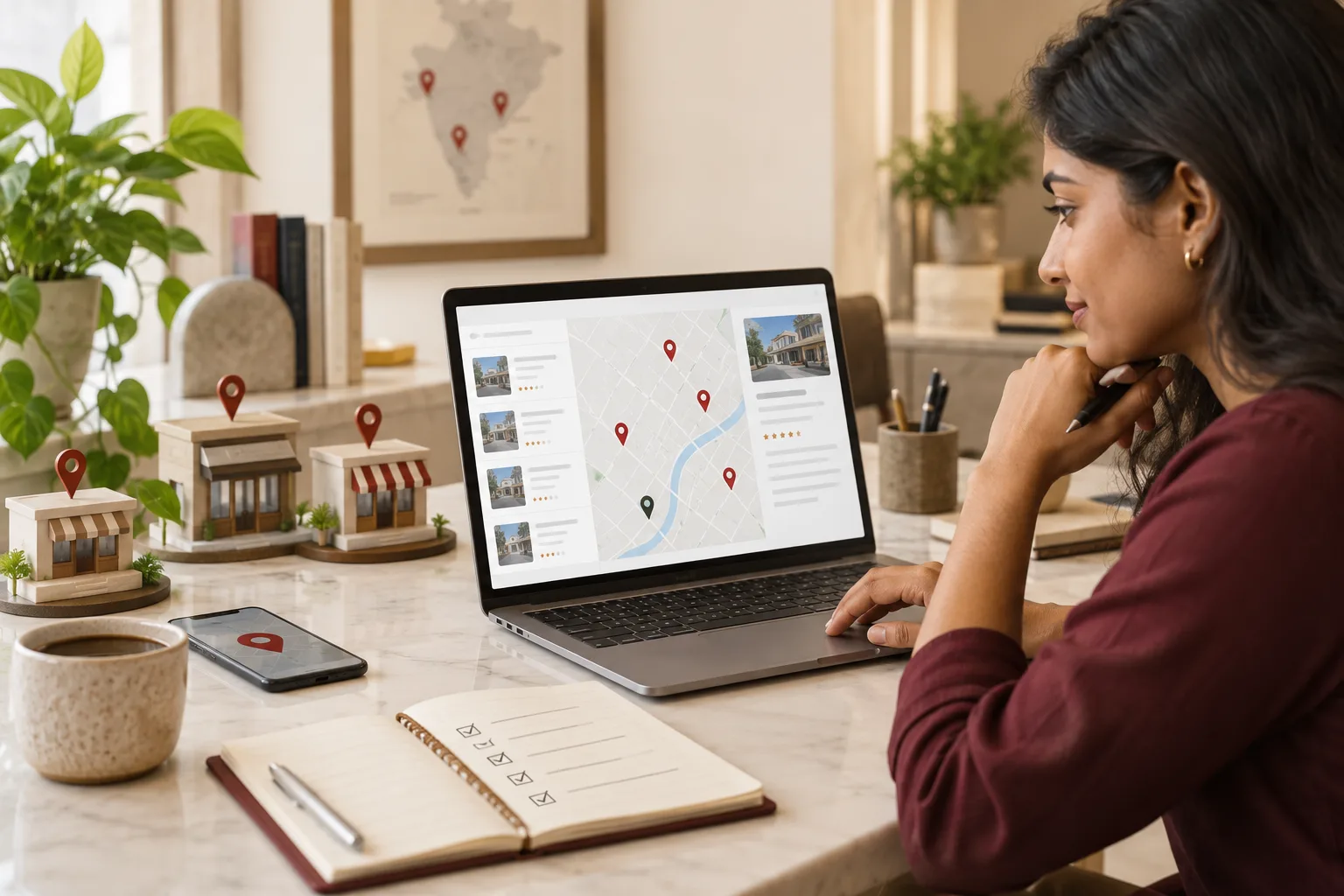
Local SEO is the work of making your business show up for searches that name your town or locality, such as a service plus an area name. GullySales sets up locality pages, local citations and map listings so nearby customers find you before a competitor across town.
Last updated 14 Nov 2026. Rules for this trade differ by state and professional body, and they change. We describe restrictions in general terms, so check the current position with your own council or adviser before you publish anything.
For cyber law advocates
Where it usually goes wrong, and what we would do.
“A distressed person wants an office they can reach”
Much of the work is done by phone and email, yet a person who has been defrauded asks for a meeting in the same city. A missing or wrong listing loses that search.
“Referrers check the map before they send someone”
A CA or an IT head looks up the practice to give the address. An old chamber number or a closed-looking listing weakens the recommendation.
“Chambers and home offices look the same on a map”
A visitable chamber, a service area and a home address mean different things to the platform. The wrong type can lead to a suspension or a client at the wrong door.
“Public reviews raise confidentiality problems”
A review can reveal that a person has been a victim or a client. Professional rules on testimonials differ by body, so ask your own council before inviting any.
What we do
What we deliver for cyber law advocates.
The work available for this need. We agree the deliverables and responsibilities for your engagement in writing.
Business profile set-up
A complete listing with the practice's name, chamber address, floor, hours and a plain description, matching the website exactly.
Result: The listing, the website and the letterhead give one address.
City pages for the places served
A page for each city where the practice has an office or regularly appears, naming the office and the kind of problems handled there.
Result: Each page names a real office or a real forum.
Directions and arrival note
A short note on parking, the building entrance and who to ask for, for a visitor who is already upset.
Result: A first-time visitor reaches the right door without a phone call.
Listing audit across directories
A check of how the practice appears on legal directories and bar association listings, with entries to correct.
Result: Each directory shows the practice under the same name and address.
A review policy note
A written position, agreed by the advocates, on whether and how the practice responds to reviews that appear.
Result: Whoever replies follows a rule the partners signed.
How the result is measured
- Map pack ranking
- Local search visibility
- Enquiries by locality
Recorded as a baseline before work starts, so every later report has an honest comparison.
Searches your buyers type
Local searches come from people who want an advocate they can visit.
- cyber law advocate near me
- A complete profile with the practice described in plain words, the chamber address and an arrival note.
- cyber crime lawyer Hyderabad
- A city page that names the office, the problems handled and whether a meeting in person is possible.
- online fraud advocate Pune
- A page matching the listing, with the district, the forums the practice appears before and a plain first-steps note.
- advocate for defamation online Chennai
- A page for the city that states the problem types handled, with no claim of results.
- data privacy lawyer Bengaluru
- A page for companies in the city covering the advice the practice gives on data duties, in general terms and with a line to check current rules.
Who it is for
This is written for these cyber law advocates.
- Practices handling online financial fraud for individuals
- Practices handling defamation, impersonation and harassment online
- Advocates advising businesses on data and privacy questions
- Counsel for takedown and content removal requests
- Advocates who assist with cyber crime complaints and police liaison
- Employment and insider-misuse advisers
- Advisers to start-ups and e-commerce sellers on platform disputes
- Counsel for intermediaries and platforms
Before you decide
When this may not be the right fit.
- The practice works only online and sees no visitors, so a map listing would send people to a closed door.
- You have no staffed office in the second city, so a listing there would not be honest.
Before you decide
Agree the work. Know how to judge it.
Local SEO for cyber law advocates: use these checks to prepare, choose the scope, and review what changes.
Bring the right evidence
Confirm the real business address, service area, contact details, and who controls the business listings. Keep examples of calls that came from the wrong location or asked for a service you do not provide.
Make the scope clear
Choose the locations you actually serve and the information each needs. Agree who approves listing changes, responds to enquiries, and keeps opening hours accurate.
Check the work in use
Check the journey from a local search to a call or enquiry on a phone. The address, service area, and description should agree across your website and listings.
Know when to change course
Do not create an office claim for a place where you only serve customers remotely. Clear service coverage is more useful than a misleading local presence.
These are discussion points, not a fixed package. GullySales confirms the deliverables, responsibilities, fee, and term in writing after reading your brief and speaking with you.
Before we start
What to have ready before the work starts.
The records, access and decisions this work needs from cyber law advocates. Anything missing is noted in the written scope, with who will supply it.
- Owner access to the existing listing
- Listings get started by someone who has left. We need owner or manager access, or the details to claim it. Without access, a duplicate may need to be reported, which slows correction.
- Proof of the address you wish to show
- The platform may ask for a rent paper, a bill or a bar association letter. Have one ready for each place. A home office you prefer not to show is marked as service-area only, and no address appears. If the proof is in a former partner's name, tell us now, because the platform compares the name on the paper with the name on the listing.
- A written statement of appointment hours
- Callers will arrive on the hours you list. Say when advocates are present, when only staff are, and whether walk-ins are seen. If hours change with court days, tell us how to state that. Include the hours of any court-side desk separately, since a visitor who arrives at the wrong hour reads the listing as unreliable.
- An advocate's view on public reviews
- Reviews can reveal that a person consulted you, which is confidential. Decide whether to invite them at all. Without a decision, we switch off prompts and write only the policy note. Whatever is decided, the advocate should say who may reply to a public comment, because an unplanned reply can confirm that a person consulted the practice.
- A photograph of the entrance and signboard
- A visitor under stress needs to find the door. A clear phone photograph with the signboard readable is enough. If you prefer no photograph, we leave the section empty and rely on the arrival note.
How it works
How the local SEO work runs
The work itself, in order. How an engagement starts, from your brief to a written scope, is set out on our method page.
- 1
List each chamber, office and consultation point
We start with every place a person could actually meet an advocate of the practice: the main chamber, a branch, a court-side desk, a home office used for appointments. You tell us which you want shown publicly. Anything not shown stays off the map and the listings. We also ask which of them share a lift or a gate with other chambers, since that detail belongs in the arrival note.
- 2
Confirm the facts a lost visitor needs
For each place we write down the exact address, the landmark a driver would use, the floor, the entrance, the hours for appointments and whether walk-ins are seen. An advocate reads the final facts. Remote-only work is also stated plainly, so nobody travels to an empty office.
- 3
Look at the practice as the map shows it
We search the city and the area as a referrer would, and note what the map shows for you and for neighbouring chambers. We check the listing against directories and old addresses. The advocate decides which of the mismatches matter and which can wait. We also look at the photographs other chambers show, to learn what a distressed visitor expects to see when arriving.
- 4
Draft the profile text and an arrival note
We write the business profile description in plain words with no claim of results, and a short note on how to arrive, where to park and whom to ask for. The advocate approves the wording against the bar council's current rules on professional listings.
- 5
Publish the city pages and set the review policy
Pages for the cities you serve describe how consultations happen there, in person or remote. A one-page note says how the practice treats public reviews, given client confidentiality, and who replies to a question left on the listing.
- 6
Compare direction requests and calls with the record
We read the calls and direction requests from the profile beside the enquiry log, against the figures recorded before the work. You see which place brought a person through the door and which listing brought only confusion. The advocate then decides what to correct or remove.
Where this fits
Three pieces of sales work, in this order.
This work sits inside sales process design, at stage 1, prospecting and lead generation. The audit comes before it, and sales management keeps it running.
Step 1
Sales audit
Find where deals are being lost and what to fix first.
Start here if you cannot say where orders are lost.
Step 2 · you are here
Sales process design
One written way to sell, from first enquiry to repeat order.
Start here if every salesperson sells differently.
Step 3
Sales management
A target, a review routine and someone who owns the number.
Start here if the team has targets and no routine.
FAQ
Questions owners ask before they call.
Not here? More answers, or ask on WhatsApp.
Our work is mostly remote. Do we need local SEO?
Can we list a home office?
Can we show branches in other cities?
Why not stuff the listing name with search terms?
Who should reply to a question left on the map listing?
What if someone else already made a listing for our office?
How much does it cost?
How long is the contract?
How soon will we see results?
Who will actually do the work?
More for cyber law advocates
Related work to consider.
Closest to this: search and visibility
Also for cyber law advocates
Or start from the overview: sales and marketing for cyber law advocates.
Your next practical step
Tell us what you are trying to grow, and we will read it before we call.
Eight short steps, mostly taps. Skip anything you would rather answer on the call.