RERA and property dispute lawyers · Local SEO
A buyer looks for a chamber near the project, the authority and the court in their own part of the city.
Local SEO here is the work of appearing on Google Maps and in local results when a buyer looks for a chamber near their flat, the civil court or the state authority. GullySales builds the profile, the listings and the locality pages, then logs the calls they bring.
Scope, fee, reporting and term are agreed in writing after we have read your brief and spoken to you.
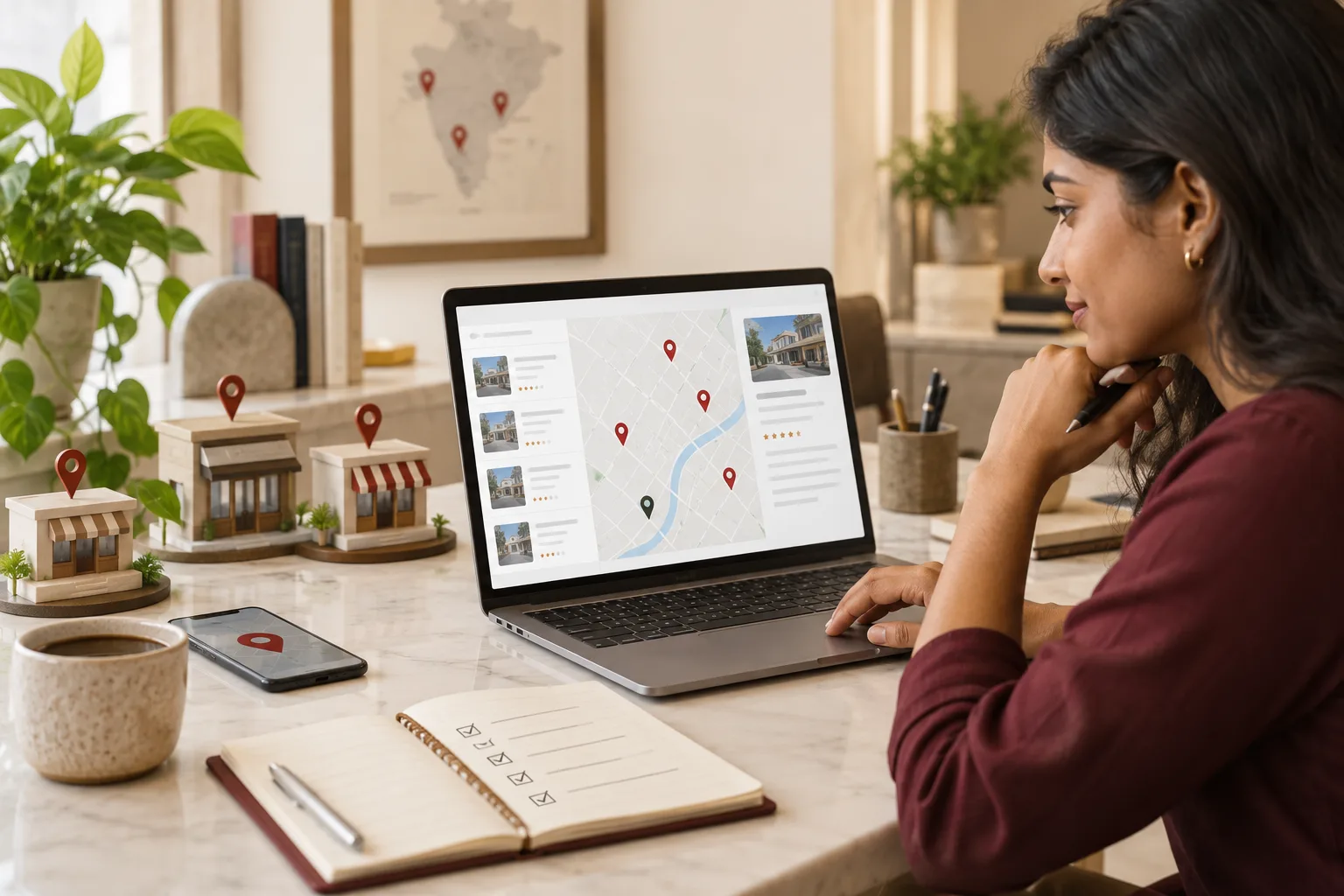
What local SEO means
Local SEO is the work of making your business show up for searches that name your town or locality, such as a service plus an area name. GullySales sets up locality pages, local citations and map listings so nearby customers find you before a competitor across town.
Also for RERA and property dispute lawyers
- SEO for RERA and property dispute lawyers
- Website for RERA and property dispute lawyers
- Lead generation for RERA and property dispute lawyers
- Social media marketing for RERA and property dispute lawyers
- Content marketing for RERA and property dispute lawyers
- Buyer personas for RERA and property dispute lawyers
- CRM for RERA and property dispute lawyers
- Follow-up systems for RERA and property dispute lawyers
Sales and marketing for RERA and property dispute lawyers, the overview.
Last updated 14 Nov 2026. Rules for this trade differ by state and professional body, and they change. We describe restrictions in general terms, so check the current position with your own council or adviser before you publish anything.
For RERA and property dispute lawyers
Where it usually goes wrong, and what we would do.
“Searches name the locality”
A buyer in Whitefield, Hinjewadi or Gachibowli looks for an advocate close to home. A profile naming only the city misses the neighbourhood where the project stands.
“Chamber and authority sit in different parts of town”
The state authority can be across the city from the chamber. A page that names both lets a caller plan the journey.
“Chambers share one address”
In a court complex or commercial block, several advocates occupy one floor. Each profile needs its own name, hours and practice areas, set up as Google's current guidelines permit.
“Reviews carry risk here”
Clients seldom want a property dispute attached to their name, and publicity rules for advocates limit what may be requested. Ask your council before inviting any review.
What we do
What we deliver for RERA and property dispute lawyers.
The work available for this need. We agree the deliverables and responsibilities for your engagement in writing.
Verified Business Profile
Name, address, the hours a clerk answers, languages, practice areas and forums attended, following Google's current guidelines.
Result: A listing the buyer can ring straight from the map.
Locality pages
One page for each part of the city where buyers hold flats, naming the authority and courts the chamber attends.
Result: A searcher finds their own neighbourhood named.
Matching directory entries
The same name, address and number on JustDial, Sulekha and bar association lists, with duplicate entries claimed.
Result: One consistent entry wherever the chamber is listed.
Photographs of the entrance
Pictures that help a first-time visitor find the door in a building shared by other chambers.
Result: A visitor recognises the entrance on arrival.
Map-call record
Calls, direction requests and site visits from the profile, noted against the clerk's register.
Result: The chamber can set the map against its other sources.
How the result is measured
- Map pack ranking
- Local search visibility
- Enquiries by locality
Recorded as a baseline before work starts, so every later report has an honest comparison.
Local searches
Local searches name a locality, a forum or a project, and each one needs its own page or profile field.
- RERA lawyer near me
- The Business Profile has to answer it, so fill in practice areas, address and the hours a clerk picks up.
- property dispute lawyer Hinjewadi
- A locality page that says which authority and courts the chamber attends and how to reach the office. Build one per area served.
- advocate near RERA authority office
- A page that gives the distance to the authority with a map link. State only what is true of the premises.
- tenancy lawyer Indiranagar
- A tenancy page for that locality naming the courts attended. Use only places the chamber serves.
- partition lawyer Pune civil court
- A page for family property matters naming the court and the languages spoken in the office.
- advocate directories
- Entries on Indian directories and bar association lists, with name, address and number identical to the Business Profile.
Who it is for
This is written for these RERA and property dispute lawyers.
- Homebuyer complaint practices before state real estate authorities
- Title and possession dispute practices
- Tenancy and eviction practices
- Partition and family property practices
- Practices advising builders and developers on compliance
- Advocates for owners' and residents' associations
- Practices for buyers in group complaints
- Advocates in consumer forum and civil court matters over property
Before you decide
When this may not be the right fit.
- The chamber works only on referral and keeps no street premises, so a map listing would draw walk-ins it cannot receive.
- The office is about to move, which would force every listing to be rewritten, so wait until the move is done.
- The partner has not settled what the profile may say about practice areas.
Before you decide
Agree the work. Know how to judge it.
Local SEO for RERA and property dispute lawyers: use these checks to prepare, choose the scope, and review what changes.
Bring the right evidence
Confirm the real business address, service area, contact details, and who controls the business listings. Keep examples of calls that came from the wrong location or asked for a service you do not provide.
Make the scope clear
Choose the locations you actually serve and the information each needs. Agree who approves listing changes, responds to enquiries, and keeps opening hours accurate.
Check the work in use
Check the journey from a local search to a call or enquiry on a phone. The address, service area, and description should agree across your website and listings.
Know when to change course
Do not create an office claim for a place where you only serve customers remotely. Clear service coverage is more useful than a misleading local presence.
These are discussion points, not a fixed package. GullySales confirms the deliverables, responsibilities, fee, and term in writing after reading your brief and speaking with you.
Before we start
What to have ready before the work starts.
The records, access and decisions this work needs from RERA and property dispute lawyers. Anything missing is noted in the written scope, with who will supply it.
- Login or proof for the profile
- Someone must verify the chamber with Google by phone, postcard or video. Bring the email that owns any existing listing. If a former clerk made it, we start recovery and meanwhile plan around a new listing.
- The chamber's exact registered name
- Bring the name as shown on the signboard and in the bar records. The partner decides how it is written online. A wording that adds a speciality to the name may breach your council's rules, so we use the plain name unless you advise otherwise.
- A decision about the shared address
- If colleagues share the chamber, say who will hold the profile and how the others will be named. Two profiles for one address confuse the map. Without agreement, we do not create a listing, since a dispute over it costs more than the delay.
- Photographs of the entrance and signboard
- Clear pictures of the building, the board and the stairs help a client find the door. Keep client papers and faces out. If no usable images exist, a staff member can take them in one visit, and the profile waits for them. The signboard picture is the one that counts, since clients arrive on foot from a lane they have not seen before.
- A line to call, answered by a person
- Name the number on the listing and who answers when the clerk is at court. A map listing that rings unanswered wastes the call. If nobody is free, we suggest a WhatsApp number with a saved first reply instead.
How it works
How the local SEO work runs
The work itself, in order. How an engagement starts, from your brief to a written scope, is set out on our method page.
- 1
Walk from the chamber door to the forum
We list where the chamber sits and where the authority, civil court and consumer forum sit, and how a client reaches each from the chamber. You tell us how clients arrive, by auto, car or metro. The note guides which localities and landmarks the profile and pages mention.
- 2
Claim the profile, and screenshot it first
With your login or a fresh verification, we record what the listing says today: name, hours, address, business type, photographs and any reviews or duplicates. If the address is shared with colleagues, we note who else claims it. These screenshots are the baseline for calls and direction requests.
- 3
Sign off the facts with the partner
We write out the name, address, phone, WhatsApp, hours and the matters listed, and the partner checks every line against the council's rules. A name that suggests a speciality may be restricted, so the partner decides. Nothing is entered until the sheet is signed. The partner also decides whether the profile lists matters at all or only the chamber's name and address.
- 4
Photograph the entrance and the waiting area
A client looking for a chamber needs to find the right door. A staff member photographs the signboard, the building entrance and the waiting room, with no client papers in view. We choose the set and write plain captions. The partner approves each picture, and we leave out any frame that shows a file cover, a name on a nameplate or a client waiting.
- 5
Match the listing on other directories
We compare the profile with the entries on legal directories and map services and correct any difference in name or address. You tell us which listings the chamber wants removed. Consistent details make the chamber easier to find and harder to confuse with another. We also check that no directory shows a closed branch, an old phone number or a former partner's name.
- 6
Read calls and directions against the start
After the profile has been live, we compare the count of calls and direction requests with the starting screenshots. The clerk notes which callers mention the map. You decide whether to add locality pages or leave the profile as it is.
Where this fits
Three pieces of sales work, in this order.
This work sits inside sales process design, at stage 1, prospecting and lead generation. The audit comes before it, and sales management keeps it running.
Step 1
Sales audit
Find where deals are being lost and what to fix first.
Start here if you cannot say where orders are lost.
Step 2 · you are here
Sales process design
One written way to sell, from first enquiry to repeat order.
Start here if every salesperson sells differently.
Step 3
Sales management
A target, a review routine and someone who owns the number.
Start here if the team has targets and no routine.
FAQ
Questions owners ask before they call.
Not here? More answers, or ask on WhatsApp.
May the business name include 'RERA lawyer'?
We share a chamber with colleagues. Who holds the profile?
A rival has listed a fake chamber at the authority's address. What do we do?
Can we give the court's address as ours?
Can the profile say we are near the state authority or the civil court?
How do we deal with a review that claims a result or criticises the advice?
How much does it cost?
How long is the contract?
How soon will we see results?
Who will actually do the work?
More for RERA and property dispute lawyers
Related work to consider.
Closest to this: search and visibility
Also for RERA and property dispute lawyers
- Lead generation for RERA and property dispute lawyers
- Social media marketing for RERA and property dispute lawyers
- Content marketing for RERA and property dispute lawyers
- Buyer personas for RERA and property dispute lawyers
- CRM for RERA and property dispute lawyers
- Follow-up systems for RERA and property dispute lawyers
Or start from the overview: sales and marketing for RERA and property dispute lawyers.
Your next practical step
Tell us what you are trying to grow, and we will read it before we call.
Eight short steps, mostly taps. Skip anything you would rather answer on the call.