Vaastu consultants · Follow up systems
Answer the plan that arrived last night before the family asks someone else.
A follow-up system for a vaastu practice is the set of agreed replies and reminders that move a caller from a floor plan to a booked visit, and a past client to the next referral. GullySales writes the routine with you and works on getting it used by whoever answers the phone.
Scope, fee, reporting and term are agreed in writing after we have read your brief and spoken to you.
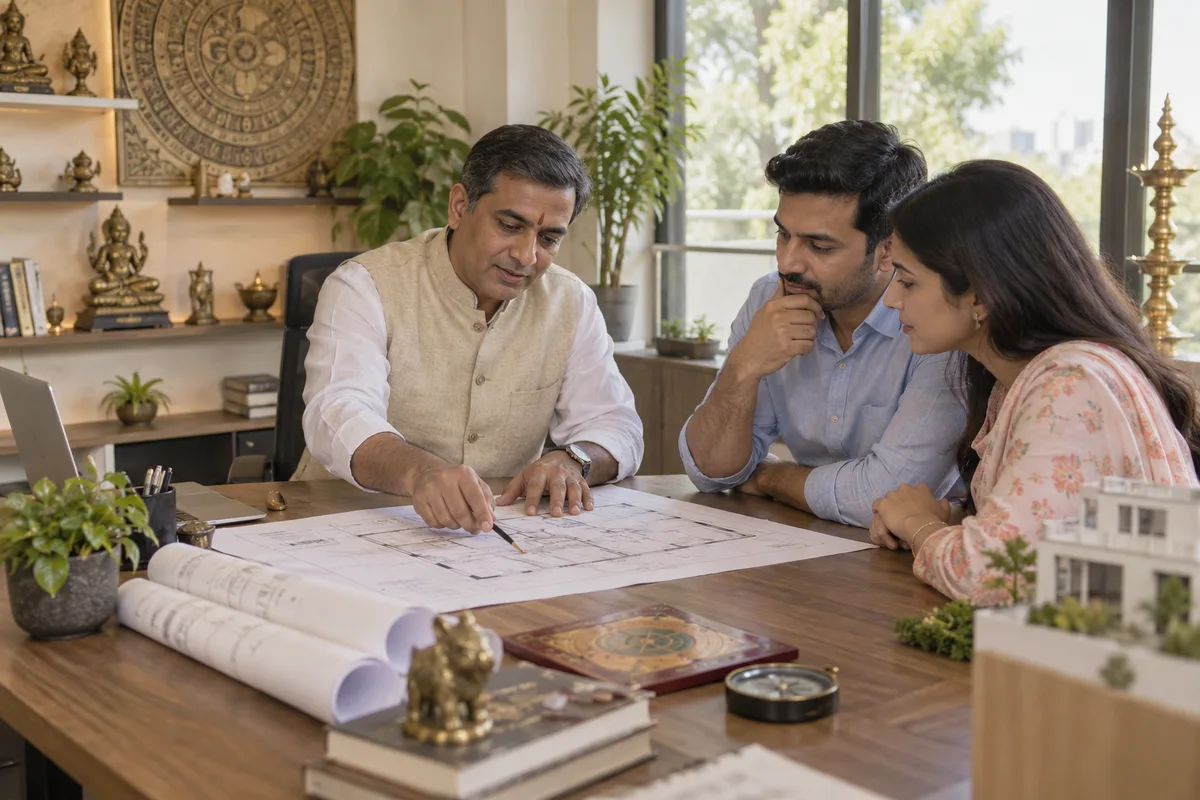
What follow up systems means
A follow-up system is the set routine for calling, messaging or emailing an enquiry more than once, since most buyers do not decide on the first conversation. GullySales sets the number and timing of follow-ups so an undecided buyer keeps hearing from you until they decide either way.
Last updated 14 Nov 2026.
For vaastu consultants
Where it usually goes wrong, and what we would do.
“The booking deadline sets the clock”
A family checking a flat has a date by which they must pay the booking amount. A reply that comes after that date is a reply to nobody, because the family has already asked the next consultant on the list.
“A quoted fee that differs by person kills the call”
When one person in the office gives a figure and another gives a different one, the caller concludes the fee is negotiable or unclear. One written fee note, sent the same way every time, removes the doubt.
“The enquiry that went quiet is not always lost”
A family waiting for the builder's reply or the priest's date has not said no. A polite message sent when the date approaches brings the plan back, whereas silence from your side ends the conversation.
“Past clients are the cheapest introduction”
After griha pravesh the family knows a dozen relatives buying flats. A short thank-you and a reminder of your name, sent without pressure, keeps you where the next conversation about a consultant begins.
What we do
What we deliver for vaastu consultants.
The work available for this need. We agree the deliverables and responsibilities for your engagement in writing.
An acknowledgement for a plan or a call
A short message that says the plan is received, who will look at it, and what the fee covers, ready to send the moment a plan arrives.
Result: No plan sits unanswered overnight.
A written fee note for each service
One plain description for the flat visit, the plot review, the office consultation and the factory layout, with what is and is not included.
Result: Every caller hears the same fee in the same words.
A reminder for enquiries that go quiet
A single respectful follow-up for the family that asked, then paused, tied to the date they mentioned for their booking or housewarming.
Result: Paused enquiries are picked up instead of forgotten.
A note to builders before each launch
A short message to developers you have advised, sent when a new project is announced, that reminds them you are available to review the layout.
Result: Repeat builder work starts with your message.
A thank-you and review ask after a visit
A message sent after the visit that thanks the family, offers to clarify the advice, and invites a review if they found the visit useful.
Result: Reviews come from families you have actually served.
A checklist for whoever answers the phone
One page that tells your assistant what to ask, what to send and what to log for every call.
Result: The routine survives a day when you are away.
How the result is measured
- Follow-up completion rate
- Average number of follow-ups before close
- Enquiries closed after repeat follow-up
Recorded as a baseline before work starts, so every later report has an honest comparison.
What to capture or send
Each moment between a call and a visit needs a message or a note.
- Plan acknowledgement
- A short reply when a floor plan arrives, saying it is received, who will review it and what you need to know about its orientation.
- Fee note
- A written message stating the service, the fee and what it includes. One note replaces several versions given by phone.
- Quiet enquiry reminder
- A single polite message to a family that asked and then went silent, offering to answer a question. Stop after the reply.
- Builder launch note
- A message to a builder before a project launch, offering a layout review. Keep a record of when the project is announced.
- After the visit
- A thank-you with the points discussed and a line inviting a question. Record whether the family agreed to leave a review.
Who it is for
This is written for these vaastu consultants.
- Independent vaastu consultants working from home or a small office
- Vaastu consultants attached to a temple, math or astrology practice
- Consultants who also practise as architects or civil engineers
- Vaastu advisers working with builders and developers on layouts
- Consultants specialising in commercial, shop and office vaastu
- Consultants advising on factories, warehouses and industrial plots
- Online vaastu consultants reviewing plans across cities
- Family practices passed down from a senior consultant
Before you decide
When this may not be the right fit.
- Nobody is free to answer a floor plan when it arrives, and a chase would show how slow the reply is.
- You have not fixed your fees, and each person gives a different answer by phone.
Before you decide
Agree the work. Know how to judge it.
Follow-up systems for vaastu consultants: use these checks to prepare, choose the scope, and review what changes.
Bring the right evidence
Trace recent enquiries from arrival to the last recorded action. Include a won enquiry, an unsuitable one, and one that went quiet, with personal details removed for the initial discussion.
Make the scope clear
Agree who accepts each enquiry, what makes it qualified, and how ownership changes. Include a rule for missed replies and a clear reason for closing an enquiry.
Check the work in use
Pick an enquiry at random and ask the team to find its owner, latest conversation, and next action. Check that the record agrees with what actually happened.
Know when to change course
If no one has capacity to respond, assign that responsibility before buying more leads. Automation can support the owner, but it cannot replace an unresolved handover.
These are discussion points, not a fixed package. GullySales confirms the deliverables, responsibilities, fee, and term in writing after reading your brief and speaking with you.
Before we start
What to have ready before the work starts.
The records, access and decisions this work needs from vaastu consultants. Anything missing is noted in the written scope, with who will supply it.
- Sample chats showing how plans were answered
- Bring a few, with details hidden. They show the language that already works. Without them we write the routine in our own words, and the messages may sound unlike you.
- The fee basis for each service, in writing
- One note per service, set by you. It is the base of the fee message. Without it, the person answering invents an answer, and the family hears two different ones.
- Who answers when you are with a family
- Name the person who picks up the phone and replies to chats during consultations. If you work alone, say what the phone says when you are busy. A missed plan is a missed booking, and the family does not wait.
- A list of holidays and mourning periods to respect
- Tell us the festivals and sensitive periods for which messages should be held. The reminder routine follows it. If you give no list, we hold messages near widely observed festivals and ask you to confirm the rest. We also mark families who asked to be left alone, so the reminder never reaches them.
- Permission lines for past clients
- Decide how you ask a family whether they are happy to be messaged later. A line at the end of the visit will do. Without permission, past clients are not part of the routine, and the cheapest introductions are left unused.
How it works
How the follow up systems work runs
The work itself, in order. How an engagement starts, from your brief to a written scope, is set out on our method page.
- 1
Read how a plan has been answered so far
We read a sample of past chats and calls, with names hidden, noting how fast each plan was acknowledged and what was said. You tell us which families booked. The pattern of what worked in your own replies is the base of the routine.
- 2
Write the acknowledgement for a plan or call
A plan or a call is acknowledged in a few lines the same evening: thanks, what you need and when the family will hear. You approve the text. Whoever answers the phone sends the same words.
- 3
Put the fee note in writing for each service
A fee told by two people in two ways ends the call. We write a short note for each service and you approve it. It is sent when a family asks, and its basis is the same whoever quotes. The note is kept in the record beside the enquiry so no one quotes from memory.
- 4
Draft the reminder for a quiet enquiry
A family may go silent while it decides. We write a gentle reminder, held until the family's own deadline has passed, that asks whether they need anything further. You decide whether to send a second, and we respect a family in mourning or in a festival period by holding the message.
- 5
Add the builder note and the thank-you
Before each project launch, a note goes to the builders and designers you serve. After a visit, a thank-you and a review request go to the family. You choose the wording of each and who sends it.
- 6
Give the phone checklist to whoever answers
A short card lists what to ask, what to say about the fee and what to promise. We rehearse it with whoever picks up your calls. After a run of enquiries we compare booked visits with the starting count and adjust.
Where this fits
Three pieces of sales work, in this order.
This work sits inside sales process design, at stage 2, qualification. The audit comes before it, and sales management keeps it running.
Step 1
Sales audit
Find where deals are being lost and what to fix first.
Start here if you cannot say where orders are lost.
Step 2 · you are here
Sales process design
One written way to sell, from first enquiry to repeat order.
Start here if every salesperson sells differently.
Step 3
Sales management
A target, a review routine and someone who owns the number.
Start here if the team has targets and no routine.
FAQ
Questions owners ask before they call.
Not here? More answers, or ask on WhatsApp.
What if I cannot answer messages during consultations?
Should I chase a family that has gone quiet?
Is it appropriate to ask for reviews?
Is it right to follow up with a family during a mourning period or festival?
Is it right to follow up with a family at all?
What should whoever answers the phone never say?
How much does it cost?
How long is the contract?
How soon will we see results?
Who will actually do the work?
More for vaastu consultants
Related work to consider.
Closest to this: leads and follow-up
Also for vaastu consultants
Or start from the overview: sales and marketing for vaastu consultants.
Your next practical step
Tell us what you are trying to grow, and we will read it before we call.
Eight short steps, mostly taps. Skip anything you would rather answer on the call.