Industrial park developers · Lead generation
Bring in manufacturers whose plant fits the plots and sheds you actually have.
Lead generation for an industrial park means putting your plots, sheds and infrastructure in front of the manufacturers, exporters and advisers who are choosing a location. GullySales works on the park pages, the adviser routes and the enquiry record that tell you which enquiries are worth a site visit.
Scope, fee, reporting and term are agreed in writing after we have read your brief and spoken to you.
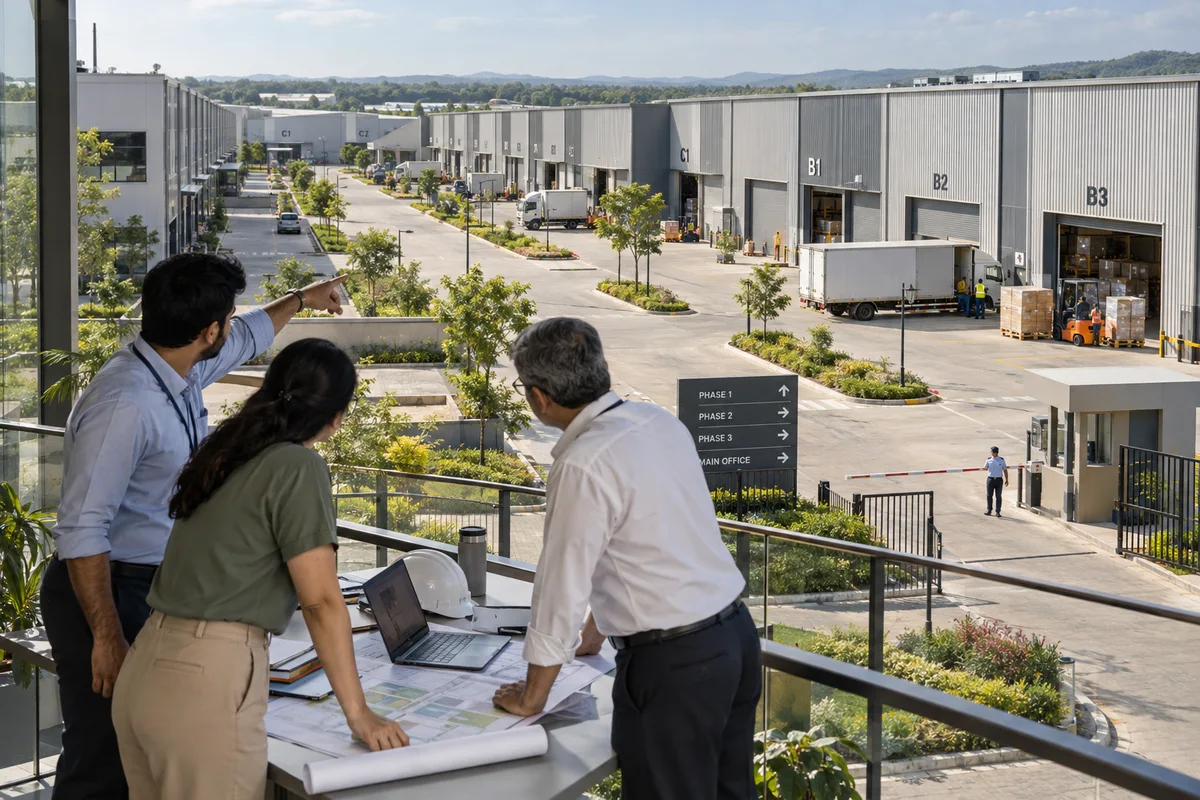
What lead generation means
Lead generation is the combined work of every channel that brings in a new enquiry, whether from search, adverts, referrals or a stall at an exhibition. GullySales runs these channels together and reports the number of enquiries each one produced, not the activity behind it.
Also for industrial park developers
Sales and marketing for industrial park developers, the overview.
Plan the next part of the work
Last updated 21 Nov 2026.
For industrial park developers
Where it usually goes wrong, and what we would do.
“A shed enquiry and a plot enquiry are different leads”
A small manufacturer wanting a ready shed to lease and an owner wanting several acres to build on have different budgets, advisers and decision times. Treated as one pool of enquiries, both get a pitch that fits neither, and the follow-up goes to the wrong person.
“The first enquiry can arrive through someone else”
A consultant, a banker or an association secretary names a park long before the owner rings. If those people hold an old picture of the park, the lead never reaches you, and nothing on your record shows that it was lost.
“Enquirers who cannot see the specification go quiet”
A manufacturer comparing three parks reads power load, water source and road width before anything else. A page that gives acres and a photograph pushes the reader to ask by phone, and the ones who do not ask simply shortlist another park.
“A lead without a plant need is a visit wasted”
A site visit with a vehicle, a manager and a morning is costly. If nobody asked what the plant makes, how much power it draws and when construction must start, the visit ends with a pleasant lunch and no plan.
What we do
What we deliver for industrial park developers.
The work available for this need. We agree the deliverables and responsibilities for your engagement in writing.
Enquiry routes split by plot and shed
Separate entry points for land buyers and shed lessees, each asking the questions that decide fit: use, size, power need and start date.
Result: Each enquiry arrives labelled with what the buyer wants.
Qualifying questions for the first call
A short list your sales team asks every enquirer, covering product, power load, water need, effluent and the date the plant must run.
Result: Two enquiries from the same week can be compared on the same facts.
Adviser and lender routes
A one-page summary of the park for consultants and bank relationship managers, with a way to register the enquirer they send.
Result: You can see which adviser sent which manufacturer.
Source tagging on every enquiry
Marketplace, search, association, adviser and walk-in are recorded when the enquiry is first logged.
Result: The sales head can see which source brings buyers who visit.
A visit-readiness check
Before a site visit is booked, the record shows the buyer's product, size and timeline.
Result: Visits are booked for enquiries that have a stated need.
How the result is measured
- Relevant enquiries by source
- Duplicate and unsuitable enquiries
- Time to the first response
- Accepted enquiries reaching an agreed next step
Recorded as a baseline before work starts, so every later report has an honest comparison.
What to capture or send
Capture these details when a manufacturer asks about a plot or a shed.
- Plot or ready shed
- Record which one the manufacturer wants first. The two follow different stages and papers, and an enquiry filed under both goes to neither.
- Area or built-up space needed
- Note the acres or square feet the plant states. A request far from what the park holds is better answered at once than after a visit.
- Product and process of the plant
- Ask what the unit makes, and whether it uses water, effluent treatment or heavy power. Some uses are not allowed in a park, so this settles fit early.
- Power and water load expected
- Store the load figures the plant gives. The sales head can then check them against what the park supplies before booking a visit.
- Who referred the enquiry
- Mark adviser, lender, portal or direct. Consultants and bankers send some of the best leads, and the record shows which route to keep.
Who it is for
This is written for these industrial park developers.
- Auto component and engineering manufacturers
- Food processing and packaging units
- Pharma and chemicals units where the park allows them
- Electronics and electrical assemblers
- Textile and garment units
- Export-oriented manufacturers
- Industrial consultants and project advisers
- Anchor tenants and large single-plot buyers
Before you decide
When this may not be the right fit.
- Your approvals and layout are not final, so enquiries would be told about plots you cannot yet allot.
- No one is named to take a visitor round the site, so more leads would produce visits that go wrong.
- You have not worked out what uses the park will refuse, and leads from those industries would waste visits.
Before you decide
Agree the work. Know how to judge it.
Lead generation for industrial parks: use these checks to prepare, choose the scope, and review what changes.
Bring the right evidence
Define the organisations or buyers you can serve and the reasons they would consider a conversation. Bring examples of accepted and rejected prospects so the selection rule is visible.
Make the scope clear
Agree the research sources, contact approach, qualification rules, and handover. Clarify which meetings count as accepted and what happens to replies that are not ready to buy.
Check the work in use
Review why a prospect was selected and what was learned from the response. Count held, relevant conversations separately from contacts found, messages sent, or meetings booked.
Know when to change course
If the same objection appears repeatedly, adjust the offer or buyer group before increasing outreach. Respect a request to stop contact and keep the exclusion in the record.
These are discussion points, not a fixed package. GullySales confirms the deliverables, responsibilities, fee, and term in writing after reading your brief and speaking with you.
Before we start
What to have ready before the work starts.
The records, access and decisions this work needs from industrial park developers. Anything missing is noted in the written scope, with who will supply it.
- A current sheet of every plot and shed
- We need size, frontage, price basis, power sanction, water source and the stage of each approval, one line per unit. A spreadsheet is best, though a dated typed list will do. If the sheet is out of date, the enquiry pages promise units that are gone and a manufacturer comes for nothing.
- A set of papers you can show on request
- Gather the land use papers, layout approval, power and water arrangements and pollution control clearances the park holds, as copies. Only the papers that exist are listed. If the set is incomplete, the lead routine says what is available and what is pending, and a consultant will not take the park to a client.
- The name of the person who qualifies enquiries
- Someone must ask the qualifying questions and record the answers on the same day. It may be the sales head or a coordinator. If nobody is named, the questions are skipped, and site visits go to people who never intended to build.
- Details of consultants and bankers you already know
- List the advisers, lenders and departments who have brought you a manufacturer, with the person you deal with. Without this list the adviser route begins empty, and we say so, then build it from the region's own sources.
How it works
How the lead generation work runs
The work itself, in order. How an engagement starts, from your brief to a written scope, is set out on our method page.
- 1
Sort the stock into plots and ready sheds
We start with your availability sheet and mark which plots and which sheds are open to sell or lease today, with size, frontage, power sanction and the status of each paper. Your sales head tells us which units are held back. This gives us two separate enquiry routes, since a shed buyer and a plot buyer ask for different things, and we note the count of enquiries and site visits as they stand.
- 2
Write the questions that qualify a first call
With your sales head we draft the few questions asked on every first call: what the unit makes, the power load, the water and effluent needs, the land or shed size, who decides and when construction must begin. Funding plans are not asked at this stage. The answers go into the record, so a site visit is booked only for a manufacturer whose need fits the park.
- 3
Approach consultants, lenders and departments
Industrial consultants, bankers who finance units and state industry bodies recommend parks they have seen work. We list the ones active in your region and write a plain information note for each, with your specification and contact. You decide who calls whom. After this step the park has a route into people who advise manufacturers.
- 4
Tag every enquiry with its source
Whether the enquiry came from a portal, a consultant, a phone call or a visit to the gate, it is entered with its source, the unit sought and the person who made it. Your office staff are shown how to fill the fields while the caller is still on the line. The record then shows which route brings manufacturers you can serve.
- 5
Check readiness before booking a visit
A visit wasted on a browser costs a sales head a day. We write a short readiness check: the manufacturer has named the product, the site size, the power load and the decision maker. Your sales head decides whether to book. Afterwards we read the visits against the starting count to see which routes produced real prospects.
Where this fits
Three pieces of sales work, in this order.
This work sits inside sales process design, at stage 1, prospecting and lead generation. The audit comes before it, and sales management keeps it running.
Step 1
Sales audit
Find where deals are being lost and what to fix first.
Start here if you cannot say where orders are lost.
Step 2 · you are here
Sales process design
One written way to sell, from first enquiry to repeat order.
Start here if every salesperson sells differently.
Step 3
Sales management
A target, a review routine and someone who owns the number.
Start here if the team has targets and no routine.
FAQ
Questions owners ask before they call.
Not here? More answers, or ask on WhatsApp.
Should we pay for marketplace listings to generate leads?
How do we tell a serious enquirer from a browser?
Are there rules on how we advertise plots and sheds?
Should we ask a manufacturer's funding plan on the first call?
Should we advertise plot prices to attract leads?
Who should take the first call, the sales head or an executive?
How long is the contract?
How soon will we see results?
Who will actually do the work?
What do you need from us?
More for industrial park developers
Related work to consider.
Closest to this: leads and follow-up
Also for industrial park developers
Or start from the overview: sales and marketing for industrial park developers.
Your next practical step
Tell us what you are trying to grow, and we will read it before we call.
Eight short steps, mostly taps. Skip anything you would rather answer on the call.