Real estate marketing agencies · Local SEO
Show up when a developer in your city looks for an agency nearby.
Local SEO for a real estate marketing agency means making sure a developer searching for an agency in a given city finds your office, your profile and your city pages. GullySales works on the map listing, the city pages and the consistency of how your agency is named across the web.
Scope, fee, reporting and term are agreed in writing after we have read your brief and spoken to you.
What local SEO means
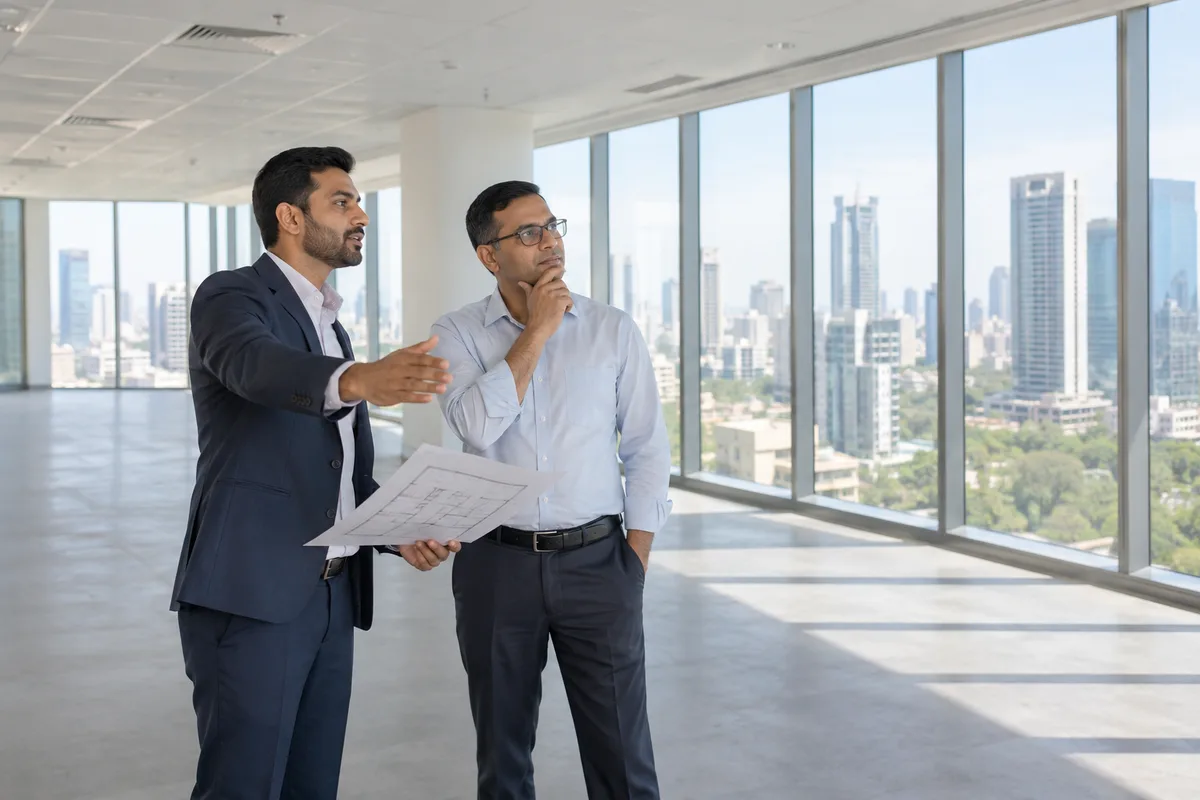
Local SEO is the work of making your business show up for searches that name your town or locality, such as a service plus an area name. GullySales sets up locality pages, local citations and map listings so nearby customers find you before a competitor across town.
Also for real estate marketing agencies
- SEO for real estate marketing agencies
- Website for real estate marketing agencies
- Lead generation for real estate marketing agencies
- Social media marketing for real estate marketing agencies
- Content marketing for real estate marketing agencies
- Buyer persona for real estate marketing agencies
- CRM for real estate marketing agencies
- Follow-up systems for real estate marketing agencies
Sales and marketing for real estate marketing agencies, the overview.
Last updated 14 Nov 2026.
For real estate marketing agencies
Where it usually goes wrong, and what we would do.
“A developer wants a team within reach”
Site visits, hoarding approvals and launch events need people on the ground. A marketing head searching for an agency in their own city is checking whether you can be at the site.
“The map listing is the first look”
Before the website opens, a developer sees your profile on the map with its photos, address and reviews. An outdated address or a missing business-type choice sends the reader to the next agency.
“City pages beat one national page”
An agency in Hyderabad serving Pune and Chennai needs separate pages for each city, naming the projects types and areas handled there. One page listing every city reads as a claim, not as presence.
“Reviews from developers need care”
A developer who praises your work online is a strong signal to the next developer. Asking for it is a delicate request that goes through the relationship holder, with no reward offered.
What we do
What we deliver for real estate marketing agencies.
The work available for this need. We agree the deliverables and responsibilities for your engagement in writing.
Map profile set-up and upkeep
Your agency's name, address, service areas, hours, photos and description, entered consistently and kept current.
Result: The listing matches your website and your visiting card.
City and region pages
A page for each city you serve, naming the segments handled and the nature of work done there.
Result: A developer in each city finds a page that names the city.
A listing consistency check
A sheet of every directory and platform where your agency appears, with name, address and phone compared line by line.
Result: Differences between listings are on one sheet with a fix beside each.
A review request routine
A courteous note the relationship holder sends to a satisfied developer, with the link ready.
Result: Each request is logged with who sent it and when.
Local content for developer associations
Short pieces on regional launch practice, written for the developer bodies and events in your city.
Result: Your name appears where local developers already look.
How the result is measured
- Map pack ranking
- Local search visibility
- Enquiries by locality
Recorded as a baseline before work starts, so every later report has an honest comparison.
Searches your buyers type
Place searches a developer makes when looking for an agency in reach.
- real estate marketing agency in Bangalore
- A city page and map profile stating where the studio sits, which developers' areas you cover and who to meet.
- property advertising agency near Whitefield
- An area page for the locality, with a line on how close you are to the sites you plan launches for.
- real estate branding studio Hyderabad
- A city page for the second office or market, shown only if you have a presence or regular visits there.
- hoarding agency for project launch
- A page on outdoor planning for launches in the city, naming what you plan and what a site permit needs from the developer.
- real estate event agency near me
- A listing and page for broker and sales-team events, with a note on venues you work with.
Who it is for
This is written for these real estate marketing agencies.
- Launch-focused agencies for residential projects
- Performance marketing agencies generating site-visit leads for developers
- Channel partner marketing and broker event agencies
- Digital and social media agencies serving developers
- Creative and branding studios for real estate
- Outdoor and hoarding specialists for project launches
- Agencies for plotted and township developments
- Commercial real estate marketing agencies
- Boutique agencies working with one or two developers
Before you decide
When this may not be the right fit.
- You work from a home address you do not wish to publish, so a map listing would expose it.
- You serve developers across the country and hold no local base, so city pages would claim presence you lack.
- You expect a map listing to bring in briefs that nearly always come by recommendation.
Before you decide
Agree the work. Know how to judge it.
Local SEO for real estate marketing agencies: use these checks to prepare, choose the scope, and review what changes.
Bring the right evidence
Confirm the real business address, service area, contact details, and who controls the business listings. Keep examples of calls that came from the wrong location or asked for a service you do not provide.
Make the scope clear
Choose the locations you actually serve and the information each needs. Agree who approves listing changes, responds to enquiries, and keeps opening hours accurate.
Check the work in use
Check the journey from a local search to a call or enquiry on a phone. The address, service area, and description should agree across your website and listings.
Know when to change course
Do not create an office claim for a place where you only serve customers remotely. Clear service coverage is more useful than a misleading local presence.
These are discussion points, not a fixed package. GullySales confirms the deliverables, responsibilities, fee, and term in writing after reading your brief and speaking with you.
Before we start
What to have ready before the work starts.
The records, access and decisions this work needs from real estate marketing agencies. Anything missing is noted in the written scope, with who will supply it.
- Owner login for the map listing
- Whoever created the listing holds the login. It may be a former employee or a vendor. We need the owner to add us, or the listing must be verified again. Without access nothing on the profile can change, and the plan has no first step.
- Proof of address for the office
- A rent agreement, a utility bill or a registration showing the address. The platform may ask for proof when verifying, and a listing without it can be suspended. If the office is shared, tell us, and we will describe it as it is.
- Cities where you have a real office
- Write down where you have a desk, a staff member or a regular presence. Each city page depends on it. If the list is missing, we limit the work to the city of your head office and add pages only as you confirm presence elsewhere.
- Photographs of the office and the team
- Clear pictures of the board, the reception, the meeting room and the people who will meet developers. Real images matter more than designed ones to a promoter who is about to visit. When none exist, the listing shows a blank, and the visit starts with doubt.
- Developer association memberships you hold
- List the associations and forums where you are a member or a regular guest, with the name used in each. These give local pages and entries a basis. Without them we have no honest local connection to write about except the office itself.
How it works
How the local SEO work runs
The work itself, in order. How an engagement starts, from your brief to a written scope, is set out on our method page.
- 1
Stand outside your office and photograph it
We start with the street view of your office: the board, the building, the floor, the entrance a developer's driver would look for. A clerk takes photographs by day. These show what a visitor will find, and they tell us whether the listing describes a real, reachable place or a registered address nobody visits.
- 2
Settle the agency name and every address
You tell us the name that appears on your letterhead and registration, and every address the agency has used. We list the places where the name appears differently and choose the form to keep. This matters for agencies that moved or rebranded, because old records split calls between two entries.
- 3
Claim the map profile and fill it truthfully
We confirm owner access, claim the listing and enter name, address, hours, phone, website and a short description you approve. We check the platform's current rules on business types and on names, and we leave out any claim you cannot support. You read every field before it is saved.
- 4
Write a page for each city you actually serve
We draft one page for each city where you have an office or have run launches: which developers' projects you have supported there, in general terms, how to reach you and which events or associations you attend. You check each statement. We do not publish a page for a city you only visit.
- 5
Find the developer associations and local listings
We list the local developer associations, builder forums and trade directories in your cities, and check whether you are listed correctly. You tell us which memberships you hold. Each entry where the name differs is corrected, and each entry you cannot support is left alone.
- 6
Weigh profile views and calls against the start
After the listing has been live, we read calls, direction requests and website visits from the profile against the figures noted at the start. You tell us which calls were real developer enquiries. We report the figures as they stand and change the profile where it brought only the wrong callers.
Where this fits
Three pieces of sales work, in this order.
This work sits inside sales process design, at stage 1, prospecting and lead generation. The audit comes before it, and sales management keeps it running.
Step 1
Sales audit
Find where deals are being lost and what to fix first.
Start here if you cannot say where orders are lost.
Step 2 · you are here
Sales process design
One written way to sell, from first enquiry to repeat order.
Start here if every salesperson sells differently.
Step 3
Sales management
A target, a review routine and someone who owns the number.
Start here if the team has targets and no routine.
FAQ
Questions owners ask before they call.
Not here? More answers, or ask on WhatsApp.
We serve developers in several cities. Do we need an office in each?
Can we ask developers for reviews?
Does the map listing matter if developers come by recommendation?
Can we show a city page for a city we only visit?
Do reviews on the map matter for an agency?
Can we list ourselves as an agency in a city where we work by phone only?
How much does it cost?
How long is the contract?
How soon will we see results?
Who will actually do the work?
More for real estate marketing agencies
Related work to consider.
Closest to this: search and visibility
Also for real estate marketing agencies
Or start from the overview: sales and marketing for real estate marketing agencies.
Your next practical step
Tell us what you are trying to grow, and we will read it before we call.
Eight short steps, mostly taps. Skip anything you would rather answer on the call.