Candle makers · Lead generation
Know where each candle order came from, so you can find more like it.
Lead generation for a candle maker is turning a reel viewer, a stall visitor or an office buyer into someone who asks for a price. GullySales sets up the places an enquiry can land and the habit of recording where it came from, so the maker can see which source pays.
Scope, fee, reporting and term are agreed in writing after we have read your brief and spoken to you.
What lead generation means
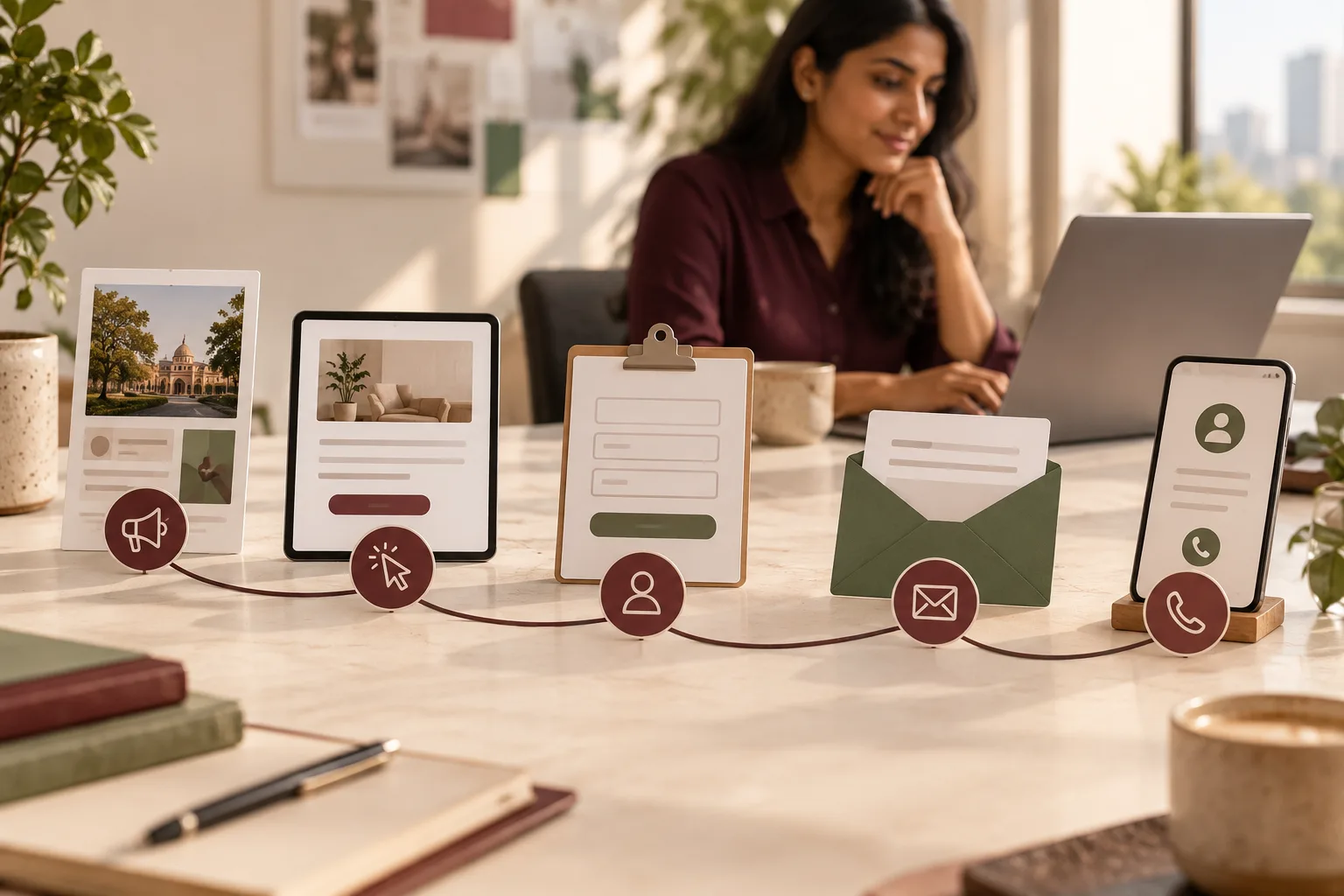
Lead generation is the combined work of every channel that brings in a new enquiry, whether from search, adverts, referrals or a stall at an exhibition. GullySales runs these channels together and reports the number of enquiries each one produced, not the activity behind it.
Plan the next part of the work
Last updated 21 Nov 2026.
For candle makers
Where it usually goes wrong, and what we would do.
“Enquiries arrive in five places and are counted in none”
A DM, a WhatsApp message, a marketplace question, a stall conversation and a friend's referral. With no single list, the maker cannot say which source brought the last big order.
“Stall visitors leave with a smile and no record”
A mela table in Bengaluru or Jaipur draws crowds who love the scents. Without a sign-up, nobody follows up and the visit is forgotten by the next festival.
“Office buyers ask once and move on”
A corporate buyer asks on Instagram for a quote. A late or vague reply sends them to a gifting company that sent a PDF the same day.
What we do
What we deliver for candle makers.
The work available for this need. We agree the deliverables and responsibilities for your engagement in writing.
One enquiry sheet for every channel
Name, phone, source, occasion, quantity and date, filled for each DM, WhatsApp, stall and marketplace question.
Result: You can see which source brings orders.
A stall sign-up card
A card or QR code at the table asking for a name, the occasion buyers shop for and permission to message, with a reward such as a sample tea-light.
Result: A stall crowd leaves behind a list you may contact.
A corporate enquiry form
A short form asking for quantity, date, budget, branding needs and delivery city, linked from the profile and the catalogue.
Result: An office buyer states the need in one go.
A referral note for past buyers
A short message a happy buyer can forward to a friend planning a wedding, a housewarming or an office gift.
Result: A satisfied buyer brings the next one.
Directory and marketplace listings
IndiaMART and Google listings for bulk and wedding orders, written with minimum quantity and customisation options.
Result: Bulk buyers who search find you.
How the result is measured
- Relevant enquiries by source
- Duplicate and unsuitable enquiries
- Time to the first response
- Accepted enquiries reaching an agreed next step
Recorded as a baseline before work starts, so every later report has an honest comparison.
Where enquiries come from
The places a candle order starts, and what to record at each.
- Instagram DM
- Record the post or reel the buyer replied to, the fragrance asked about and the occasion, then move the chat to WhatsApp for the quote.
- Stall or mela conversation
- Note the product the visitor held longest and whether they agreed to be messaged. A scribble on the back of a bill is not a record.
- Corporate gifting request
- Capture company, quantity, date, budget and whether a logo is needed. Reply with a written quote, not a voice note.
- Marketplace question
- Answer on the platform, and note the buyer's city and product. The platform's rules decide what contact details you may take away.
- Referral from a past buyer
- Record who sent the buyer and thank the sender by name. Referrals are the cheapest orders you will get.
- Wedding planner or decorator
- Log the function date, the number of guests and the style asked for, and offer a sample box before the planner shortlists.
Who it is for
This is written for these candle makers.
- Home-based soy and paraffin candle makers selling on Instagram
- Scented jar and tin candle brands
- Decorative candles: pillars, floating candles, diyas and sculpted shapes
- Festival makers for Diwali, Christmas and Valentine's Day
- Wedding and return-gift candle suppliers
- Corporate gifting candle suppliers
- Candle workshop and DIY kit sellers
- Candle makers selling through exhibitions, flea markets and melas
- Aromatherapy and wellness candle brands
- Candle makers who sell wholesale to gift shops and cafes
Before you decide
When this may not be the right fit.
- You cannot yet make more than your current orders in the same week, so more enquiries would be turned away or filled late.
- Your price list, minimum quantity and customisation rules are not fixed, so every enquiry would get a different answer.
Before you decide
Agree the work. Know how to judge it.
Lead generation for candle makers: use these checks to prepare, choose the scope, and review what changes.
Bring the right evidence
Define the organisations or buyers you can serve and the reasons they would consider a conversation. Bring examples of accepted and rejected prospects so the selection rule is visible.
Make the scope clear
Agree the research sources, contact approach, qualification rules, and handover. Clarify which meetings count as accepted and what happens to replies that are not ready to buy.
Check the work in use
Review why a prospect was selected and what was learned from the response. Count held, relevant conversations separately from contacts found, messages sent, or meetings booked.
Know when to change course
If the same objection appears repeatedly, adjust the offer or buyer group before increasing outreach. Respect a request to stop contact and keep the exclusion in the record.
These are discussion points, not a fixed package. GullySales confirms the deliverables, responsibilities, fee, and term in writing after reading your brief and speaking with you.
Before we start
What to have ready before the work starts.
The records, access and decisions this work needs from candle makers. Anything missing is noted in the written scope, with who will supply it.
- Every place an enquiry has landed
- Bring access or screenshots from Instagram, WhatsApp, the marketplace seller panel, the stall notebook and your email. One screenshot from each is enough to begin. Without them, enquiries from a source we cannot see are counted as zero, and the plan will undervalue the channel that works quietly.
- Your order notebook or payment statement
- We need to know which enquiries ended in a paid order. A notebook page, a UPI statement or a marketplace report will do, as long as dates match. If orders are not recorded anywhere, we start a simple record, and comparisons begin one season later.
- The smallest and largest order you can make
- A form for office buyers must state what you can pour in a festival week. Bring the smallest batch worth making and the largest you can finish with your present hands and moulds. If the figure is unknown, the form stays open-ended and you may have to refuse orders afterwards.
- A printed price list for gift sets
- Buyers ask for a price before anything else. Bring the current list for jars, sets and wedding favours, even if handwritten. If prices change with wax or wick costs, say when you last revised them. Without it, the enquiry form collects questions that you must answer from memory.
- A person who answers the first message
- Someone must reply to a DM the same evening a stall visitor sends it. Name that person, even if it is a relative who helps at weekends. Without a name, the sheet fills but nobody replies, and a gift buyer moves to the next seller.
How it works
How the lead generation work runs
The work itself, in order. How an engagement starts, from your brief to a written scope, is set out on our method page.
- 1
Collect enquiries from five places into one pile
We ask you to open the Instagram messages, the WhatsApp chats, the stall notebook, the marketplace panel and the email inbox, and we copy every price request from the last busy season onto one sheet with the date and the place it came from. You tell us which ones became orders. When the step ends you can see for the first time how many people asked and where they asked.
- 2
Write down the starting count by source
Before changing anything we record how many enquiries came from each place, how many were for a single gift and how many for fifty or more, and how many were paid. You supply the orders from your own notebook or payment entries. We estimate nothing, and the sheet becomes the reference every later change is read against, so a good reel is credited fairly.
- 3
Design the stall card and the sign-up line
We draft a small stall card with a QR code to a short form and a line on the packing slip inviting a buyer to leave a name and number for festival reminders. You choose the wording and the printer. The card asks for an occasion and a month, so the follow-up that comes later is about what the buyer really needs.
- 4
Build the office buyer's enquiry form
A person ordering for a team asks about quantity, label, packing, invoice and delivery date, so we make a form that takes those in one go instead of ten messages. You decide the smallest order you accept and the date after which a festival order cannot be promised. The form sends to the same sheet as every other source.
- 5
Send test enquiries through every door
We submit an enquiry through the form, a DM, a WhatsApp message and the stall card, and watch each land on the sheet with its source. Whoever in the household answers replies to each as a buyer would. You note which route felt slow, and we fix the gap before the festival season brings real volume.
- 6
Read the enquiries against paid orders
After the first gifting season we put the new sheet beside the starting count: enquiries by place, bulk enquiries, orders paid. You tell us which orders were repeat buyers. We say which place brought paid orders, which brought only questions, and what to try next, without promising any number of enquiries for the next festival.
Where this fits
Three pieces of sales work, in this order.
This work sits inside sales process design, at stage 1, prospecting and lead generation. The audit comes before it, and sales management keeps it running.
Step 1
Sales audit
Find where deals are being lost and what to fix first.
Start here if you cannot say where orders are lost.
Step 2 · you are here
Sales process design
One written way to sell, from first enquiry to repeat order.
Start here if every salesperson sells differently.
Step 3
Sales management
A target, a review routine and someone who owns the number.
Start here if the team has targets and no routine.
FAQ
Questions owners ask before they call.
Not here? More answers, or ask on WhatsApp.
Should we buy leads from a gifting directory?
What counts as a qualified candle lead?
How do we handle the same buyer asking on DM and WhatsApp?
Is a home studio a problem for corporate buyers?
Who should reply when a buyer messages at night?
Is a stall sign-up card worth the printing cost?
How long is the contract?
How soon will we see results?
Who will actually do the work?
What do you need from us?
More for candle makers
Related work to consider.
Closest to this: leads and follow-up
Also for candle makers
Or start from the overview: sales and marketing for candle makers.
Your next practical step
Tell us what you are trying to grow, and we will read it before we call.
Eight short steps, mostly taps. Skip anything you would rather answer on the call.