Dairy stores · Lead generation
Find the households and kitchens that still need a milk vendor.
Lead generation for a dairy store means finding the homes, tea stalls and hostels that are choosing a vendor right now, and recording each enquiry before it is lost. GullySales works on the sources that feed your delivery route and the list that holds every enquiry.
Scope, fee, reporting and term are agreed in writing after we have read your brief and spoken to you.
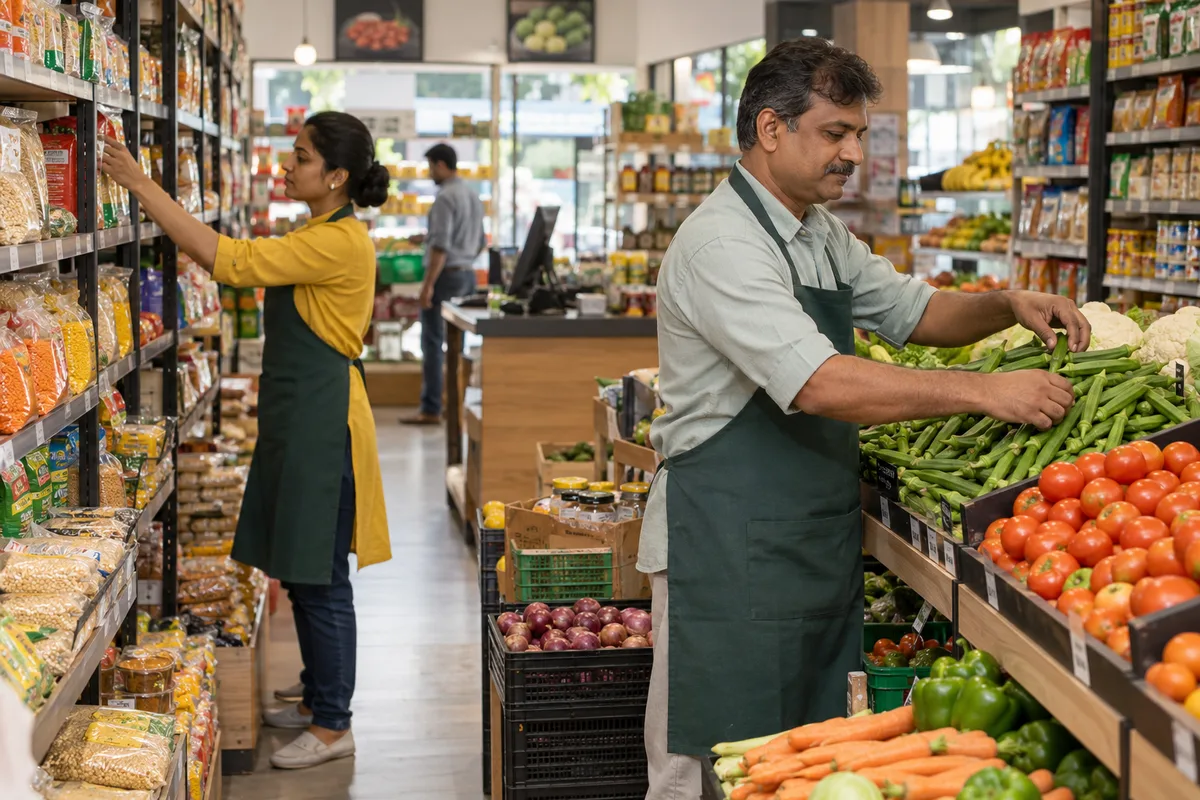
What lead generation means
Lead generation is the combined work of every channel that brings in a new enquiry, whether from search, adverts, referrals or a stall at an exhibition. GullySales runs these channels together and reports the number of enquiries each one produced, not the activity behind it.
Plan the next part of the work
Last updated 21 Nov 2026.
For dairy stores
Where it usually goes wrong, and what we would do.
“A new flat has no vendor for a short while”
A family that has just moved in asks the building group, the security guard and the shop downstairs. Whoever is named first is trialled. A dairy store that is not named in those places never hears about the household.
“The apartment committee is a lead with a whole block behind it”
One agreed vendor can carry a whole block. The person who decides is a committee member or the association secretary, and a polite note with brands and delivery times reaches them better than a stall at the gate.
“Tea stalls and hostels are leads that buy every morning”
A kitchen needs steady supply, a bill and a credit arrangement the owner can live with. Those buyers are found by walking the route, and the shop seldom writes down who was visited.
“An enquiry on the phone disappears when the counter is busy”
A caller asks for curd and paneer delivery while a queue stands at the till. Without a place to note the name and flat, the enquiry is forgotten by evening.
What we do
What we deliver for dairy stores.
The work available for this need. We agree the deliverables and responsibilities for your engagement in writing.
Lead source list for your delivery area
A list of buildings, lanes, hostels and tea stalls within reach, marked as served, approached or untouched.
Result: A route map that shows where the next enquiry could come from.
Enquiry register
One sheet where every call, message and walk-in is noted with name, flat, product wanted and who follows up.
Result: No enquiry rests only in someone's memory.
Apartment introduction note
A short written introduction for the association, with brands stocked, delivery times and a trial arrangement you set.
Result: A note a committee member can forward to the building group.
Trade supply sheet
A page for tea stalls, hostels and canteens with what you can supply, the quantities and the credit terms you agree.
Result: A sheet ready to leave behind after a visit.
Referral ask for existing households
A message that asks a settled household to mention the shop to a neighbour in another building.
Result: A routine for asking, so referrals are not left to chance.
How the result is measured
- Relevant enquiries by source
- Duplicate and unsuitable enquiries
- Time to the first response
- Accepted enquiries reaching an agreed next step
Recorded as a baseline before work starts, so every later report has an honest comparison.
What to capture or send
Write each dairy store enquiry into the register with the facts the delivery boy needs.
- Building and flat, or shop name
- The address as the delivery boy would find it, taken on the first call before the counter gets busy again.
- What they buy now and from whom
- Packet milk, loose milk or curd from another vendor. It tells you what the household is replacing and what to offer.
- Packets per day and the brand asked for
- The brand and the pack size as the household says them, so the first morning's crate is packed correctly.
- Tea stall, hostel or hotel kitchen
- Mark trade buyers separately. They buy every morning in larger numbers and ask for a bill, not a packet.
- Day the enquiry came and the staff who took it
- So an unanswered call can be traced and the enquiry is called back before the household gives up.
- Referred by a neighbour or found on the map
- One word is enough. It shows which building to approach next and which listing is working.
Who it is for
This is written for these dairy stores.
- Milk booths and dairy parlours selling packet milk from a state federation
- Neighbourhood dairy shops with curd, paneer and butter
- Dairy stores with a home subscription route
- Shops selling loose milk from a local farm or gowshala
- Dairy and sweet counters that also carry ghee and mithai
- Stores that supply tea stalls, hostels and small hotels
- Dairy shops inside apartment complexes and gated communities
- Franchise outlets of a dairy brand
Before you decide
When this may not be the right fit.
- Your delivery boys already cover every street they can reach before the shops open, so another enquiry would mean a missed morning.
- Nobody is at the counter or the phone through the busy hours, since an enquiry unanswered for a day is one the next vendor takes.
Before you decide
Agree the work. Know how to judge it.
Lead generation for dairy stores: use these checks to prepare, choose the scope, and review what changes.
Bring the right evidence
Define the organisations or buyers you can serve and the reasons they would consider a conversation. Bring examples of accepted and rejected prospects so the selection rule is visible.
Make the scope clear
Agree the research sources, contact approach, qualification rules, and handover. Clarify which meetings count as accepted and what happens to replies that are not ready to buy.
Check the work in use
Review why a prospect was selected and what was learned from the response. Count held, relevant conversations separately from contacts found, messages sent, or meetings booked.
Know when to change course
If the same objection appears repeatedly, adjust the offer or buyer group before increasing outreach. Respect a request to stop contact and keep the exclusion in the record.
These are discussion points, not a fixed package. GullySales confirms the deliverables, responsibilities, fee, and term in writing after reading your brief and speaking with you.
Before we start
What to have ready before the work starts.
The records, access and decisions this work needs from dairy stores. Anything missing is noted in the written scope, with who will supply it.
- The current delivery book or customer sheet
- This shows which streets and buildings you serve and how they are grouped. It can be handwritten, as long as addresses are readable. Without it we cannot say which leads fall inside your round, and the list of places to approach becomes a guess.
- A person at the counter who writes enquiries down
- Phone calls vanish when the counter is busy. Name the staff member who will fill the register and a cover for when they are away. Without a named person the register has gaps, and a household that called once and heard nothing is gone for good.
- Your supply terms for tea stalls and hostels
- Trade buyers ask about credit, billing and assured supply before anything else. Tell us what you can offer, even if it is a simple rule. Where terms are missing, the trade sheet will say only that you supply on request and a call will follow.
- A contact in each apartment association
- An introduction through a known resident carries more weight than a cold visit. Please give us the names of any committee members or residents you serve. Where there is no contact, we plan a polite visit to the gate or office and leave the note for the secretary.
- A phone or register kept at the counter
- The enquiry register only works if it sits where the calls are taken. A bound notebook next to the phone, or a notes app on the counter phone, is enough. Without one place for it, enquiries are written on scraps, and the apartment and tea stall leads we find have nowhere to be recorded.
How it works
How the lead generation work runs
The work itself, in order. How an engagement starts, from your brief to a written scope, is set out on our method page.
- 1
Read the delivery book street by street
We start with your delivery book and mark every street, lane and building you already serve, then note where the delivery boys skip because the distance is too long. You tell us which streets you would like to add. The result is a map of the area your shop can serve without making the morning round late.
- 2
List the new flats and committees nearby
We walk or drive the area around the shop and note new apartment blocks, hostels, tea stalls and offices that may have no fixed milk vendor yet. You tell us which committees you know by name. What we hand back is a short list of places worth an introduction, with a contact person where one exists.
- 3
Write the apartment note and the trade sheet
A committee reads a different note from a tea stall owner. We draft a single page for the committee, with the products, the delivery window and a name to call, and another for tea stalls and hostels, with supply terms and the bill. You correct anything your shop cannot keep to, and approve both.
- 4
Set up the enquiry register at the counter
We create a simple register, on paper or on a phone, where every enquiry is written the moment it arrives: name, flat or street, product, start date and who took the call. You choose which the counter staff will actually use. We test it for a few busy mornings before relying on it.
- 5
Ask existing households to introduce neighbours
Your regular households are the cheapest source of new ones. We write a short message that a delivery boy can pass on or a household can forward, asking them to mention the shop to a neighbour. You decide whether any thank-you is offered. Each introduction is entered in the register with the name of the household that sent it.
- 6
Check new households against the register
We compare the enquiries written in the register with the households that actually started delivery, using the delivery book as it stood before the work began. You tell us which sources, such as flats, committees or referrals, brought customers who stayed. That decides which source gets your effort next.
Where this fits
Three pieces of sales work, in this order.
This work sits inside sales process design, at stage 1, prospecting and lead generation. The audit comes before it, and sales management keeps it running.
Step 1
Sales audit
Find where deals are being lost and what to fix first.
Start here if you cannot say where orders are lost.
Step 2 · you are here
Sales process design
One written way to sell, from first enquiry to repeat order.
Start here if every salesperson sells differently.
Step 3
Sales management
A target, a review routine and someone who owns the number.
Start here if the team has targets and no routine.
FAQ
Questions owners ask before they call.
Not here? More answers, or ask on WhatsApp.
Where do new dairy customers come from?
Should we pay for ads to get milk customers?
What should we say in an advert about milk quality?
Should the register be on paper or a phone?
What if a lead is far outside our delivery round?
Should the delivery boys bring in new customers?
How much does it cost?
How long is the contract?
How soon will we see results?
Who will actually do the work?
More for dairy stores
Related work to consider.
Closest to this: leads and follow-up
Also for dairy stores
Or start from the overview: sales and marketing for dairy stores.
Your next practical step
Tell us what you are trying to grow, and we will read it before we call.
Eight short steps, mostly taps. Skip anything you would rather answer on the call.