Designer boutiques · Lead generation
Admirers of the label become enquiries only when a next step is in front of them.
Lead generation for a designer boutique is the work of turning people who admire the label into named enquiries for a consultation. GullySales works on the portfolio, the enquiry route and the capture of names from every place the label is seen.
Scope, fee, reporting and term are agreed in writing after we have read your brief and spoken to you.
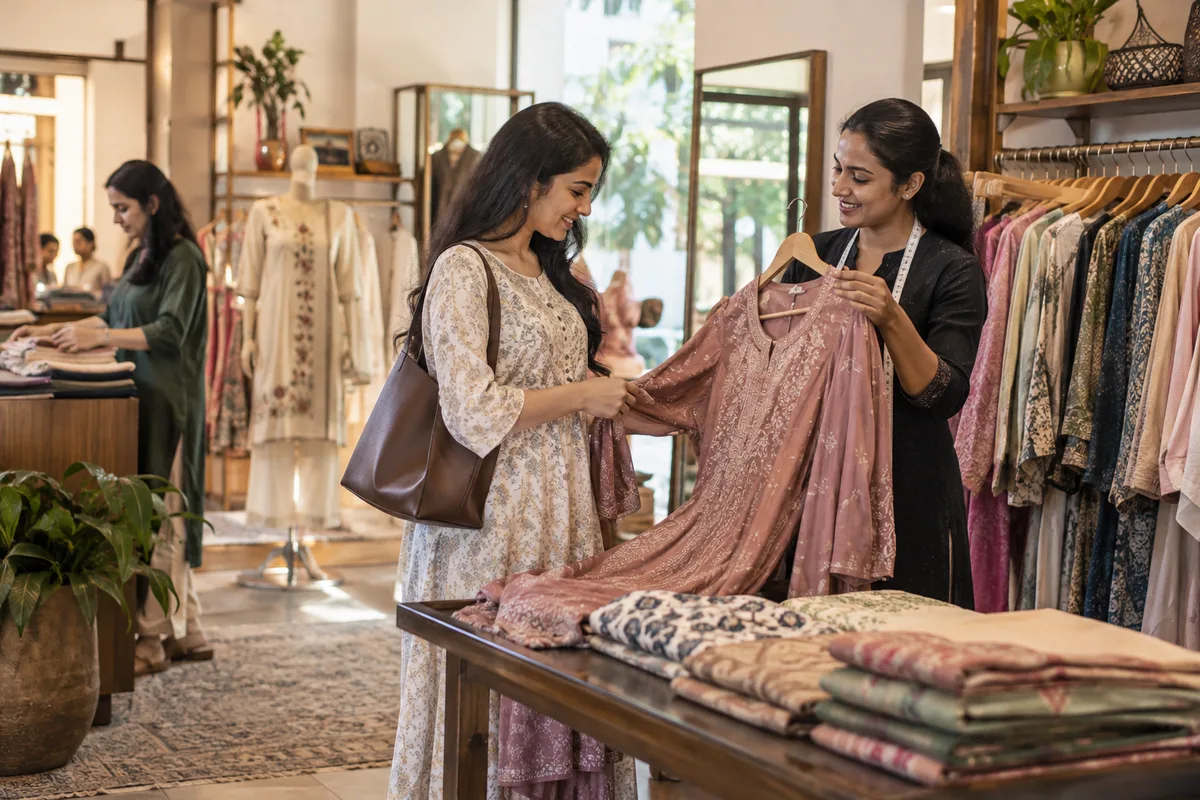
What lead generation means
Lead generation is the combined work of every channel that brings in a new enquiry, whether from search, adverts, referrals or a stall at an exhibition. GullySales runs these channels together and reports the number of enquiries each one produced, not the activity behind it.
Plan the next part of the work
Last updated 21 Nov 2026.
For designer boutiques
Where it usually goes wrong, and what we would do.
“Admiration does not come with a phone number”
A bride saves a lehenga from the reel and moves on to the next post. Unless the page gives a plain way to ask for a consultation, the saved picture stays a saved picture and the designer never learns who liked it.
“The enquiry arrives with no budget attached”
The first message says only that the buyer likes a piece. The designer then spends an hour on a quote for a buyer whose wedding budget was never going to reach the label. A starting range shown early sorts the serious from the curious.
“The wedding date decides the order of the queue”
A bride with a date in four months and a bride with a date next year need different replies. A lead record that asks for the occasion date first lets the studio fit its production space before promising anything.
“Exhibition footfall leaves as strangers”
A pop-up stand collects admiration all day and a pile of unnamed visitors by evening. Without a capture card or a scanned code at the stand, the cost of the exhibition buys compliments and no one to call back.
What we do
What we deliver for designer boutiques.
The work available for this need. We agree the deliverables and responsibilities for your engagement in writing.
A portfolio that ends in an ask
Finished pieces grouped by occasion, each page closing with one request to book a consultation.
Result: A visitor on any piece can see how to start.
A starting range for each outfit type
Written ranges for bridal, festive and party wear, placed beside the booking route.
Result: Enquiries arrive already knowing the level of price.
An enquiry form that asks for the date
Questions on the occasion, the date, the outfit type and the budget band, in that order.
Result: Each lead carries what the designer needs to reply.
A capture card for exhibitions
A card or code at the stand for name, number, occasion and interest, with a follow-up note prepared.
Result: Every visitor who showed interest has a record.
Lead sources written on every enquiry
A source tag on each lead: reel, search, referral, exhibition, walk-in.
Result: You can see which door brought the consultations.
How the result is measured
- Relevant enquiries by source
- Duplicate and unsuitable enquiries
- Time to the first response
- Accepted enquiries reaching an agreed next step
Recorded as a baseline before work starts, so every later report has an honest comparison.
What to capture or send
Capture these on every consultation request, and send this back.
- Occasion and event date
- A sangeet outfit for a date six months away is planned differently from a reception look needed soon. Ask for the date first, as it decides the queue.
- Outfit type wanted
- Lehenga, sherwani, saree or a co-ordinated family set. Capture it in the form so the reply opens with a relevant portfolio piece.
- Budget range, asked gently
- Offer ranges instead of a blank box. A buyer who picks a range tells you early whether the label fits, without feeling quizzed.
- Reference pictures saved
- The pieces from your page the buyer admired, or from elsewhere. Record the links, since they show taste better than a written brief.
- Who will attend the consultation
- Bride alone, with a mother or with the groom's side. Note it, because a consultation with several decision makers needs more time.
- Starting price sent back
- The range for that outfit type, in the first reply. Log it, so a later quote that rises can be explained against what was said at the start.
Who it is for
This is written for these designer boutiques.
- Women's designer wear boutiques
- Bridal and couture designers
- Menswear designers for grooms and festive wear
- Sustainable and handloom-based designer labels
- Contemporary designers working with Indian textiles
- Designer-owners selling by appointment from a studio
- Multi-designer boutiques showing several labels
- Designer labels selling through exhibitions and pop-ups
Before you decide
When this may not be the right fit.
- The designer cannot give a consultation slot to a new enquiry, so more requests would wait while admirers cool off.
- You have no starting range for any outfit type, so every enquiry would end in a price argument at the first meeting.
- Your pop-up cards are collected but nobody will call them, so an exhibition would add names to a sheet and no more.
Before you decide
Agree the work. Know how to judge it.
Lead generation for designer boutiques: use these checks to prepare, choose the scope, and review what changes.
Bring the right evidence
Define the organisations or buyers you can serve and the reasons they would consider a conversation. Bring examples of accepted and rejected prospects so the selection rule is visible.
Make the scope clear
Agree the research sources, contact approach, qualification rules, and handover. Clarify which meetings count as accepted and what happens to replies that are not ready to buy.
Check the work in use
Review why a prospect was selected and what was learned from the response. Count held, relevant conversations separately from contacts found, messages sent, or meetings booked.
Know when to change course
If the same objection appears repeatedly, adjust the offer or buyer group before increasing outreach. Respect a request to stop contact and keep the exclusion in the record.
These are discussion points, not a fixed package. GullySales confirms the deliverables, responsibilities, fee, and term in writing after reading your brief and speaking with you.
Before we start
What to have ready before the work starts.
The records, access and decisions this work needs from designer boutiques. Anything missing is noted in the written scope, with who will supply it.
- The old enquiry notebook or phone list
- We need the names collected before we began, in whatever state they are in, because the comparison at the end only means something against them. Scribbles, voice notes and screenshots are acceptable. If nothing was written down, we start a fresh record and say plainly that earlier sources cannot be judged.
- A list of orders taken and their origin
- Write down the last batch of confirmed orders and, where you remember, how each client found the label. This tells us which door has produced real orders so far. Where the memory is uncertain, mark it uncertain; we will not turn a guess into a source.
- The designer's own starting range
- Only the designer can say what a lehenga, a sherwani or a festive set begins at. We need those starting points decided before the portfolio carries them, because a published range that the designer later disowns costs more goodwill than showing none. If the designer is not ready, the portfolio simply goes without a range.
- Someone to answer the new enquiries
- A named person in the studio must reply when an enquiry arrives, even if the designer is at a fitting. Without that person, the form brings names into a silence and the work above achieves nothing. If nobody is available yet, we plan the enquiry route around the hours the studio is genuinely staffed.
How it works
How the lead generation work runs
The work itself, in order. How an engagement starts, from your brief to a written scope, is set out on our method page.
- 1
Sit with the enquiry notebook
We begin with wherever names have been written down so far: the designer's phone, a diary beside the cutting table, the notes left after exhibitions. You read through the entries with us and say which ones became orders and which went quiet. We note where each person first saw the label, and we leave the record untouched so it can later be compared with what changes.
- 2
Mark every place the label is seen
We list each door through which an admirer meets the label: the Instagram profile, the studio window, a pop-up stall, a wedding where a client wore a piece, a friend's recommendation. You tell us which doors you control and which belong to others. Each door gets a plain name, so that every enquiry afterwards can be labelled with where it came from.
- 3
Agree what the portfolio asks for
We go through the portfolio with the designer and decide the single request each viewer meets at the end: a consultation date, a message, or a visit. You approve the wording of that request and the starting range shown for each outfit type. Nothing is published until you have read the final wording aloud and are comfortable saying it to a client.
- 4
Run a pretend enquiry through the studio
We send a test enquiry through the form and the exhibition capture card, and someone in the studio answers it as they would a real bride. We watch where the date is missed, where the budget conversation stumbles and who picks up. You see exactly how a stranger's first message reaches the person who will speak with them.
- 5
Compare enquiries with the wedding calendar
Once names arrive, we sit with you over the list and the booked dates, and read how many enquiries came from each place the label was seen against the notebook figures from the first step. You decide which sources deserve more of the designer's time and which should be left alone for the coming collection.
Where this fits
Three pieces of sales work, in this order.
This work sits inside sales process design, at stage 1, prospecting and lead generation. The audit comes before it, and sales management keeps it running.
Step 1
Sales audit
Find where deals are being lost and what to fix first.
Start here if you cannot say where orders are lost.
Step 2 · you are here
Sales process design
One written way to sell, from first enquiry to repeat order.
Start here if every salesperson sells differently.
Step 3
Sales management
A target, a review routine and someone who owns the number.
Start here if the team has targets and no routine.
FAQ
Questions owners ask before they call.
Not here? More answers, or ask on WhatsApp.
Do we need paid ads to get enquiries?
How do we stop low-budget enquiries?
What if the enquirer will not share a budget?
Do exhibitions bring real enquiries?
Who answers the enquiries once they begin to arrive?
What if the label has no records of earlier enquiries?
How long is the contract?
How soon will we see results?
Who will actually do the work?
What do you need from us?
More for designer boutiques
Related work to consider.
Closest to this: leads and follow-up
Also for designer boutiques
Or start from the overview: sales and marketing for designer boutiques.
Your next practical step
Tell us what you are trying to grow, and we will read it before we call.
Eight short steps, mostly taps. Skip anything you would rather answer on the call.