Dry fruit stores · Lead generation
Fill the festival order book from the people who already trust your trays.
Lead generation for a dry fruit store is the work of finding the gift buyers, company admin teams and regular households who are ready to order, and getting their name and need onto your list. GullySales works on the sources those enquiries come from and on a register that records where each one began.
Scope, fee, reporting and term are agreed in writing after we have read your brief and spoken to you.
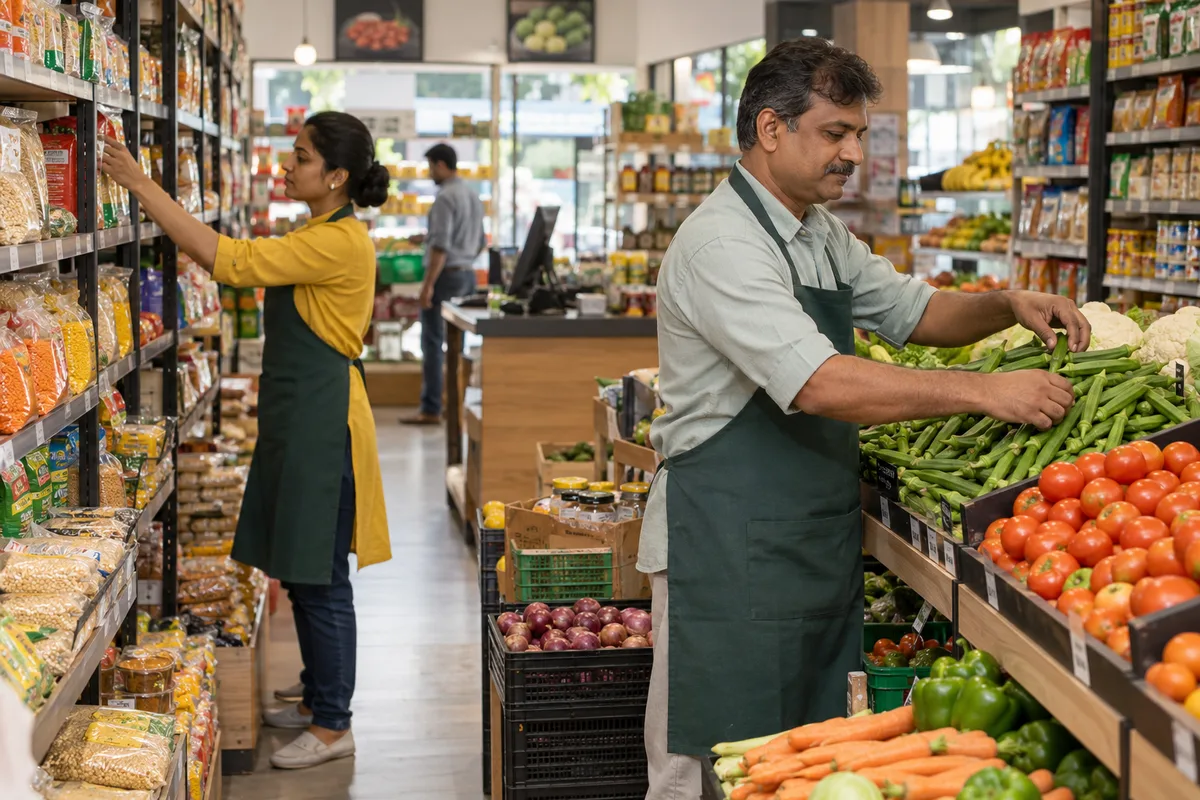
What lead generation means
Lead generation is the combined work of every channel that brings in a new enquiry, whether from search, adverts, referrals or a stall at an exhibition. GullySales runs these channels together and reports the number of enquiries each one produced, not the activity behind it.
Plan the next part of the work
Last updated 21 Nov 2026.
For dry fruit stores
Where it usually goes wrong, and what we would do.
“The best leads already walked past your counter”
Every person who tasted a cashew and left without buying is a lead nobody wrote down. A store with a tray of samples and no way of asking for a number loses the one moment the buyer was warm.
“A corporate lead is a person with a deadline”
The admin head who asks for hampers is not browsing. They have a budget, a list of addresses and a date. The shop that sends a catalogue and a quotation first is the shop that is asked the next question.
“Wedding planners send leads in bundles”
One planner serves several families and events. A single good tray, a sample pack and a clear delivery date turns that planner into a source of orders for the whole season, which a household cannot do.
“Leads from a marketplace are not yours”
A buyer who orders your packs through a marketplace belongs to the marketplace. Move the next order to your own WhatsApp number or phone so that the name stays with the store. Ask for the number on the first WhatsApp order, and the buyer stays a name on your list through every later festival.
What we do
What we deliver for dry fruit stores.
The work available for this need. We agree the deliverables and responsibilities for your engagement in writing.
A lead register by source
A simple sheet with the buyer, the occasion, the box asked for and where the enquiry came from: counter, Maps, WhatsApp, planner or company.
Result: You can read which source brought last Diwali's boxes.
A counter card that asks for the number
A small card at the tasting tray that asks for a name and a WhatsApp number in return for a festival catalogue.
Result: Walk-in tasters become names on the list.
A corporate outreach list
A list of local companies, their admin or HR contacts and the gifting they did last year, built from your own order book first.
Result: A named person to write to at each company.
A planner introduction pack
A one-page box list, a sample pack and a stated delivery date for wedding planners and decorators.
Result: A planner can pass your list to a family in one message.
Enquiry forms that reach a person
A short form on the website and on the Maps listing that sends each enquiry to a named person.
Result: No enquiry sits in an unread inbox.
A reply sheet for each source
A first message ready for each kind of lead, so the household, the company and the planner each hear what they need.
Result: The first reply fits the buyer.
How the result is measured
- Relevant enquiries by source
- Duplicate and unsuitable enquiries
- Time to the first response
- Accepted enquiries reaching an agreed next step
Recorded as a baseline before work starts, so every later report has an honest comparison.
What to capture
Write down who tasted, who asked and who needs a box.
- Name and number of a sampling visitor
- Asked at the sample tray with a one-line reason, such as a call before the festival box is ready; turns a walk-past into a lead.
- Company, quantity and delivery date
- For an admin manager asking for hampers; sets the quote, the packing plan and who is called first.
- Budget per box and addresses count
- Tells the packing table whether this is one office delivery or several homes, and which box to propose.
- Festival or occasion
- Diwali, Eid, a wedding or a return gift; decides the box, the card and the date by which the order must close.
- Last year's box, if any
- Copied from the hamper notebook; lets the reply start with what they bought and offer a change.
Who it is for
This is written for these dry fruit stores.
- Retail dry fruit shops in busy markets
- Dry fruit and masala shops in residential neighbourhoods
- Gift-box specialists that sell hampers around Diwali and weddings
- Importers and wholesalers that also retail
- Shops that sell roasted, flavoured and chocolate-coated nuts
- Stores within sweet shops and department stores
- Stores that sell to caterers, mithai makers and bakers
- Dry fruit businesses that ship across India by courier
Before you decide
When this may not be the right fit.
- Your packing table cannot take more hamper orders in festival week, so more corporate leads would only be refused.
- Nobody asks for a number at the counter, and you would need that habit before any enquiry source helps.
- You hold no stock records, so a promise made to a company on grade or quantity could not be backed.
Before you decide
Agree the work. Know how to judge it.
Lead generation for dry fruit stores: use these checks to prepare, choose the scope, and review what changes.
Bring the right evidence
Define the organisations or buyers you can serve and the reasons they would consider a conversation. Bring examples of accepted and rejected prospects so the selection rule is visible.
Make the scope clear
Agree the research sources, contact approach, qualification rules, and handover. Clarify which meetings count as accepted and what happens to replies that are not ready to buy.
Check the work in use
Review why a prospect was selected and what was learned from the response. Count held, relevant conversations separately from contacts found, messages sent, or meetings booked.
Know when to change course
If the same objection appears repeatedly, adjust the offer or buyer group before increasing outreach. Respect a request to stop contact and keep the exclusion in the record.
These are discussion points, not a fixed package. GullySales confirms the deliverables, responsibilities, fee, and term in writing after reading your brief and speaking with you.
Before we start
What to have ready before the work starts.
The records, access and decisions this work needs from dry fruit stores. Anything missing is noted in the written scope, with who will supply it.
- The hamper and bulk order notebook
- Bring every page where past gift boxes, company orders and large household orders were written down, even as photographs. They are the first register. If the record lives only in memory, we start the register from the next season's orders. If a page is torn or the handwriting is unclear, mark the doubtful entries so we ask you before they enter the register.
- A list of companies and planners nearby
- Names of offices, wedding planners, caterers and sweet makers you could approach, with a contact where you have one. A rough list suffices. Without it, the outreach has no targets and relies on walk-ins alone.
- Photographs of your boxes and trays
- Clear pictures of finished gift boxes, with contents named and sizes visible. Planners and admin teams ask for them first. If none exist, we plan a photo session before the sources are opened.
- A staff member who asks for the number
- Name the person at the counter who will ask for a name and number, and who writes it in the register. Without a named person, the card sits unused and the register stays empty.
How it works
How the lead generation work runs
The work itself, in order. How an engagement starts, from your brief to a written scope, is set out on our method page.
- 1
Open the festival hamper notebook
We begin with the notebook, order slips or phone contacts where your shop has noted past gift-box and bulk orders, as far back as you have them. You tell us which buyers were households, which were company admin teams and which came through a wedding planner. What exists afterwards is a first register of real buyers sorted by who they were and how they found you.
- 2
Stand at the weighing counter for an afternoon
We watch how customers arrive at the counter, who asks for a gift box, who asks for a rate for a large quantity and who gives a number when asked. You point out the buyers you wish you had followed up. We note every point at which a name and a need could be written down and currently is not.
- 3
Make the counter card that asks for a number
We write a small card or a spoken line, in your language, asking a buyer for a name, a number and the occasion, with a reason that benefits them, such as sending a catalogue before the festival. You approve the wording and decide who asks. The card is printed and kept beside the weighing scale.
- 4
List the companies and planners worth a visit
With you, we write the offices, the wedding planners, the caterers and the sweet makers within reach of your shop, and mark those you already know. You choose who gets a visit, a catalogue on WhatsApp or nothing for now. The introduction pack for planners and the quotation page for company buyers are drafted from this list.
- 5
Send a test enquiry through every source
We send a made-up corporate request, a planner enquiry and a household gift-box question through the form, the WhatsApp number and the counter card while your staff answer as they would in festival week. We watch where each lands and who sees it. Anything that stalls is fixed before the sources go in front of buyers.
Where this fits
Three pieces of sales work, in this order.
This work sits inside sales process design, at stage 1, prospecting and lead generation. The audit comes before it, and sales management keeps it running.
Step 1
Sales audit
Find where deals are being lost and what to fix first.
Start here if you cannot say where orders are lost.
Step 2 · you are here
Sales process design
One written way to sell, from first enquiry to repeat order.
Start here if every salesperson sells differently.
Step 3
Sales management
A target, a review routine and someone who owns the number.
Start here if the team has targets and no routine.
FAQ
Questions owners ask before they call.
Not here? More answers, or ask on WhatsApp.
Where do dry fruit store leads come from?
Should we buy leads from a list?
Is a website needed to get leads?
What is the best way to collect numbers at the counter?
Can we buy a list of company contacts for gifting?
What do we do with a lead that comes through a marketplace?
How much does it cost?
How long is the contract?
How soon will we see results?
Who will actually do the work?
More for dry fruit stores
Related work to consider.
Closest to this: leads and follow-up
Also for dry fruit stores
Or start from the overview: sales and marketing for dry fruit stores.
Your next practical step
Tell us what you are trying to grow, and we will read it before we call.
Eight short steps, mostly taps. Skip anything you would rather answer on the call.