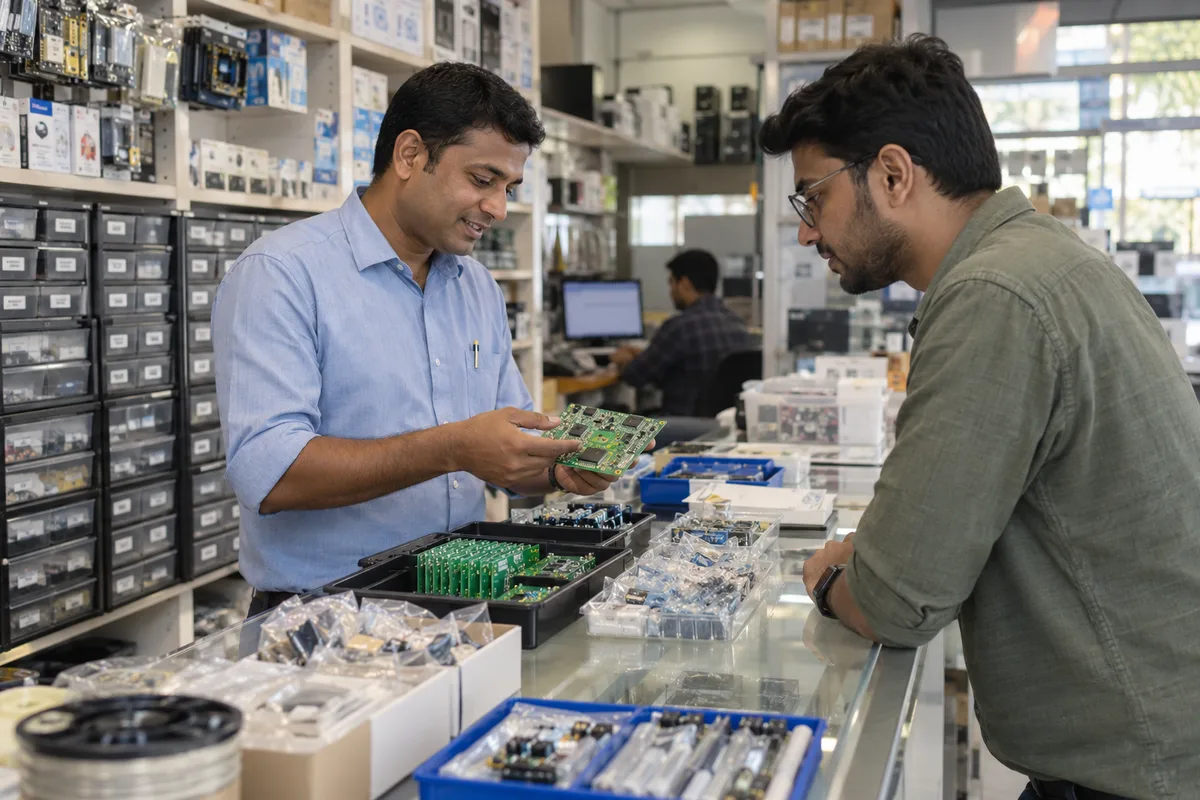
How people choose in this industry
Four kinds of buyer use the same counter and want different things. The purchase team of an EMS or OEM unit buys against a BOM and an approved vendor list, and asks about brand authorisation, date codes and paperwork. A hardware startup or R&D lab wants ten pieces of one part today. A repair shop buys by the marking on a chip. A college or maker buys modules, boards and sensors for a project with a submission date.
Almost all of them start with the part number. They paste it into Google, open the datasheet, and look at who shows stock and who ships to them. A distributor with no page for that part is not in the comparison. Buyers then compare a quote against a global listing, without counting duty, shipping and the wait, so your reply has to carry those answers before they ask.
The order goes to the counter that answers clearly on the first reply: in stock or not, how many, from which source, and what date. Price matters, but a source the buyer can trust matters more, because a fake or wrongly marked part costs far more than the rupees saved. Credit terms for known buyers and a GST invoice that matches the goods settle repeat business.
The decision before implementation
Agree the task to demonstrate and who will review the work before choosing the training or content scope.
Existing industry priorities to review
- Stocked microcontrollers and power ICs
- Resistors and capacitors in reels, cut tape and loose lots
- Connectors, relays and switches
- Development boards, modules and sensors
- BOM quoting and kitting for contract manufacturers
These describe the industry's wider priorities. The written scope identifies which this service will address.