Fashion accessory stores · Lead generation
Turn the shopper who tried on sunglasses and walked on into a name you can message.
Lead generation for a fashion accessory store means turning a passer-by, a scroller or a small boutique owner into a named person who has asked about stock, a set or a rate. GullySales works on the sources that bring those people to the shop or the chat, and on a record of where each one came from.
Scope, fee, reporting and term are agreed in writing after we have read your brief and spoken to you.
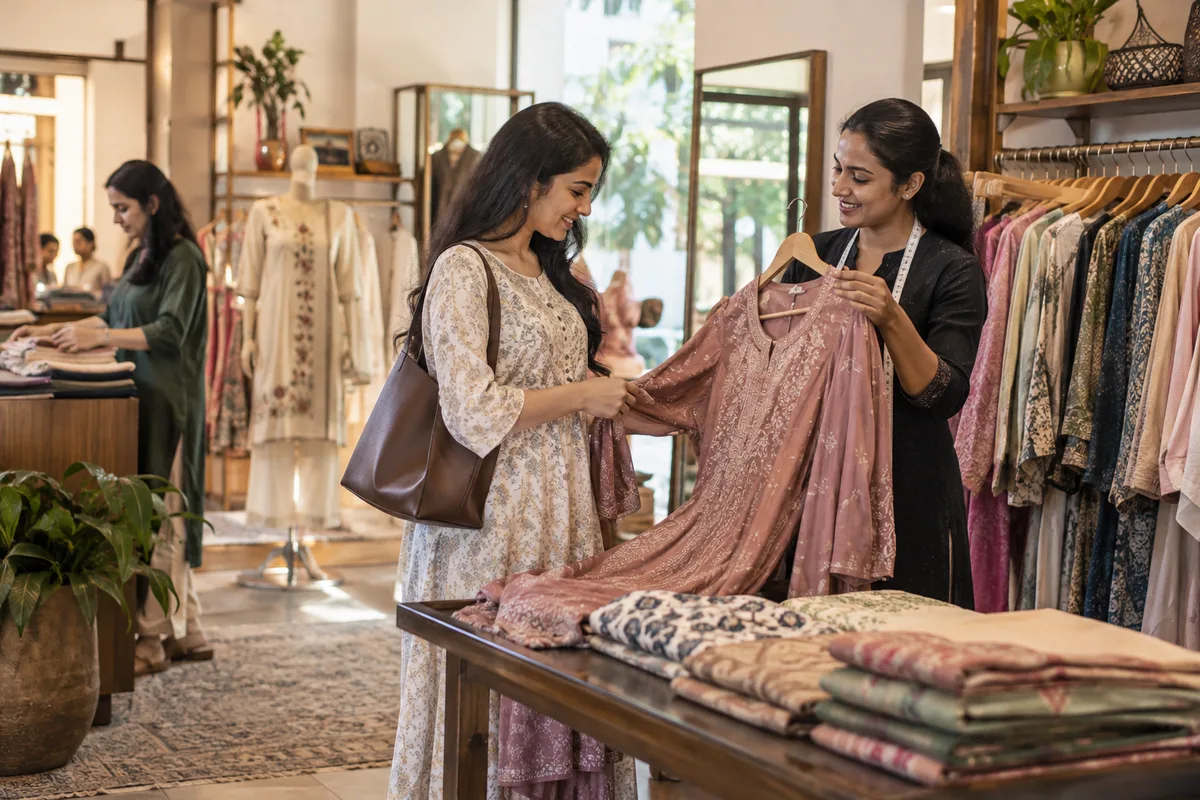
What lead generation means
Lead generation is the combined work of every channel that brings in a new enquiry, whether from search, adverts, referrals or a stall at an exhibition. GullySales runs these channels together and reports the number of enquiries each one produced, not the activity behind it.
Also for fashion accessory stores
- CRM for fashion accessory stores
- Follow-up systems for fashion accessory stores
- SEO for fashion accessory stores
- Local SEO for fashion accessory stores
- Social media marketing for fashion accessory stores
- Content marketing for fashion accessory stores
- Buyer personas for fashion accessory stores
- WhatsApp marketing for fashion accessory stores
Sales and marketing for fashion accessory stores, the overview.
Plan the next part of the work
Last updated 21 Nov 2026.
For fashion accessory stores
Where it usually goes wrong, and what we would do.
“Footfall is not a lead until someone is named”
The shopper tries on a pair of sunglasses, says they will think about it and walks on. Without a name, a number and consent to message, the visit leaves nothing behind. In this trade a lead is a person the shop can reach about the very thing they tried.
“Three kinds of buyer ask for three different things”
The student wants whatever is trending this week, the family wants a set to finish a wedding outfit, the boutique owner wants a rate for a pack. One message sent to all three serves none of them, so each source needs its own offer and its own first reply.
“The reel brings a message, not a visit”
Someone sees earrings styled on a reel and sends a message asking whether they are in stock. If nobody replies with a photograph and the name of the lane, that enquiry moves to the next seller on the same phone screen.
“Wholesale buyers are already in the neighbourhood”
Salons, boutiques and gift shops nearby buy accessories in packs, yet they do not search for a wholesaler. They notice one. A rate sheet and a short call plan reach them in a way a public post never does.
What we do
What we deliver for fashion accessory stores.
The work available for this need. We agree the deliverables and responsibilities for your engagement in writing.
A name-and-number moment at the counter
A polite line for the counter staff to ask the customer whether the shop may message them about new arrivals, with the answer written down next to what they tried.
Result: Every consenting customer on the list has a name, a number and a note of the item.
Source tags on every enquiry
A tag for walk-in, Instagram, Google listing, college group, referral or wholesale call, written against each enquiry the day it arrives.
Result: You can see which source sent the last ten people who asked.
One offer for each source
A student offer for the hostel groups, a set suggestion for the festival shopper and a pack rate for the boutique owner, each written in its own words.
Result: Each source has a message that fits the person reading it.
A first reply that carries a photograph
A reply template for stock enquiries that includes a photograph of the piece, the price, the lane or mall landmark and the hours.
Result: An enquiry gets a usable answer in the first message, not a question back.
A wholesale call list
A list of nearby salons, boutiques and gift shops with a rate sheet and a call script for the owner or a staff member.
Result: The list shows who was called, what was sent and who replied.
A tally of leads by source
A plain sheet that counts enquiries, visits and sales against each source, kept beside the customer list.
Result: You can point to the source that brought paying customers, not just messages.
How the result is measured
- Relevant enquiries by source
- Duplicate and unsuitable enquiries
- Time to the first response
- Accepted enquiries reaching an agreed next step
Recorded as a baseline before work starts, so every later report has an honest comparison.
What to capture
Record the moment a shopper shows interest in a piece.
- Item tried or asked about
- Staff write the sunglasses, clip or set the shopper handled. That one line is the reason for the next message, so it goes down before the shopper leaves the counter.
- Consent to message
- A yes or no beside the number, asked at the counter. Only the yes rows are used for new-arrival messages, and the shop can show it asked.
- Occasion or outfit
- A wedding, a college fest, a gift. It tells the shop which set to suggest and whether the shopper is buying this week or browsing.
- Source of the visit
- Walk-in, reel, map listing, college group, referral or wholesale call. Fill it on the day, since memory fades and the tally of sources depends on it.
- Trade or retail flag
- A boutique owner asking for a pack rate needs a different reply from a student. One tick decides which message template the person receives.
Who it is for
This is written for these fashion accessory stores.
- Hair accessory and kids' accessory shops
- Fashion jewellery and imitation jewellery stores
- Sunglasses and watches kiosks
- Belts, wallets and scarves shops
- Mall kiosks and cart stores
- Bridal accessory and bangles shops
- College-area budget accessory shops
- Wholesale accessory dealers with a shop front
Before you decide
When this may not be the right fit.
- You have no one at the counter who can ask for a number politely, so leads from footfall would still go unrecorded.
- Your stock cannot be held in pack quantities, so wholesale enquiries would be answered with a rate you cannot honour.
- The shop does not reply to messages on the day they arrive, so more reel enquiries would only reach the next seller.
Before you decide
Agree the work. Know how to judge it.
Lead generation for fashion accessory stores: use these checks to prepare, choose the scope, and review what changes.
Bring the right evidence
Define the organisations or buyers you can serve and the reasons they would consider a conversation. Bring examples of accepted and rejected prospects so the selection rule is visible.
Make the scope clear
Agree the research sources, contact approach, qualification rules, and handover. Clarify which meetings count as accepted and what happens to replies that are not ready to buy.
Check the work in use
Review why a prospect was selected and what was learned from the response. Count held, relevant conversations separately from contacts found, messages sent, or meetings booked.
Know when to change course
If the same objection appears repeatedly, adjust the offer or buyer group before increasing outreach. Respect a request to stop contact and keep the exclusion in the record.
These are discussion points, not a fixed package. GullySales confirms the deliverables, responsibilities, fee, and term in writing after reading your brief and speaking with you.
Before we start
What to have ready before the work starts.
The records, access and decisions this work needs from fashion accessory stores. Anything missing is noted in the written scope, with who will supply it.
- Two seasons of WhatsApp enquiry chats
- The first count depends on chats exactly as they stand, including the ones that went quiet. Exports are better, but screenshots are acceptable. If they are missing, we begin from a blank tally, and the first period tells us little about which source brought the named people.
- A staff member for the till script
- Whoever stands at the billing desk will say the ask aloud, so they must help word it and try it. Without them the script is written in an office and rejected on the floor, and the name-and-number moment never starts.
- Your decision on a reserve-for-me offer
- Only you can say whether the shop will hold a piece for a shopper who gives a name. The offer must be small, honest and possible on a busy Saturday. If you decline, the counter has nothing to offer in return, and the ask feels like a form.
- A list of boutiques that already buy
- Trade buyers who purchased before are the warmest wholesale leads. A page from the ledger with shop name, contact person and last order is enough. Without it we phone cold, and the call list holds strangers in place of the people likeliest to reorder.
How it works
How the lead generation work runs
The work itself, in order. How an engagement starts, from your brief to a written scope, is set out on our method page.
- 1
Stand at the counter for a busy hour
We watch how shoppers move between the front display, the trial mirror and the billing desk, and note who leaves without a word exchanged. You tell us which shoppers are students, which are boutique owners and which are gift buyers. By the end we have a plain account of where a stranger could become a named person, and which staff member is nearest to that moment.
- 2
Sort last season's enquiries by origin
We go through the WhatsApp chats, Instagram messages and any phone numbers jotted on bills, and mark where each person first heard of the shop. Several will have no origin written down, and that gap is itself the finding. You confirm which chats are shop enquiries and which are family. What exists afterwards is a first count of enquiries by source.
- 3
Agree the ask at the till
We draft the sentence your counter staff will say when a shopper tries on sunglasses and then hesitates, offering to message a photograph of the matching case or belt. You decide what the shop is willing to give in return, such as a reserved piece. Staff read it aloud to each other until it sounds like the shop, not a form.
- 4
Send a test enquiry through every door
We message the shop from the Maps listing, the Instagram bio and a wholesale call, and watch what arrives, who answers and whether the source is recorded. Where a reply comes without a photograph, or a trade question reaches the wrong person, we correct the route with you. The step ends when each source has an owner and a tag.
- 5
Read the tally against the starting count
We put the count of named enquiries by source beside the first count taken before the work began, and add what the till shows for walk-ins who gave a number. You see which source brought named people, which brought only views, and which wholesale calls turned into an order. Then you decide which source gets more of the shop's time next.
Where this fits
Three pieces of sales work, in this order.
This work sits inside sales process design, at stage 1, prospecting and lead generation. The audit comes before it, and sales management keeps it running.
Step 1
Sales audit
Find where deals are being lost and what to fix first.
Start here if you cannot say where orders are lost.
Step 2 · you are here
Sales process design
One written way to sell, from first enquiry to repeat order.
Start here if every salesperson sells differently.
Step 3
Sales management
A target, a review routine and someone who owns the number.
Start here if the team has targets and no routine.
FAQ
Questions owners ask before they call.
Not here? More answers, or ask on WhatsApp.
Is a lead only someone who messages us online?
How do we get leads without discounting everything?
Is it worth chasing boutique owners for wholesale?
Should the counter staff ask every shopper for a number?
What does GullySales do and what must the shop do itself?
How much does it cost?
How long is the contract?
How soon will we see results?
Who will actually do the work?
What do you need from us?
More for fashion accessory stores
Related work to consider.
Closest to this: leads and follow-up
Also for fashion accessory stores
Or start from the overview: sales and marketing for fashion accessory stores.
Your next practical step
Tell us what you are trying to grow, and we will read it before we call.
Eight short steps, mostly taps. Skip anything you would rather answer on the call.