Beauty parlours · Lead generation
Fill the empty chairs with customers who book facials, not only threading.
Lead generation for a beauty parlour is the work of getting new women in the neighbourhood to ask for an appointment, beyond the regulars who already walk in. GullySales works on where those women look, what they see and how an enquiry reaches the diary.
Scope, fee, reporting and term are agreed in writing after we have read your brief and spoken to you.
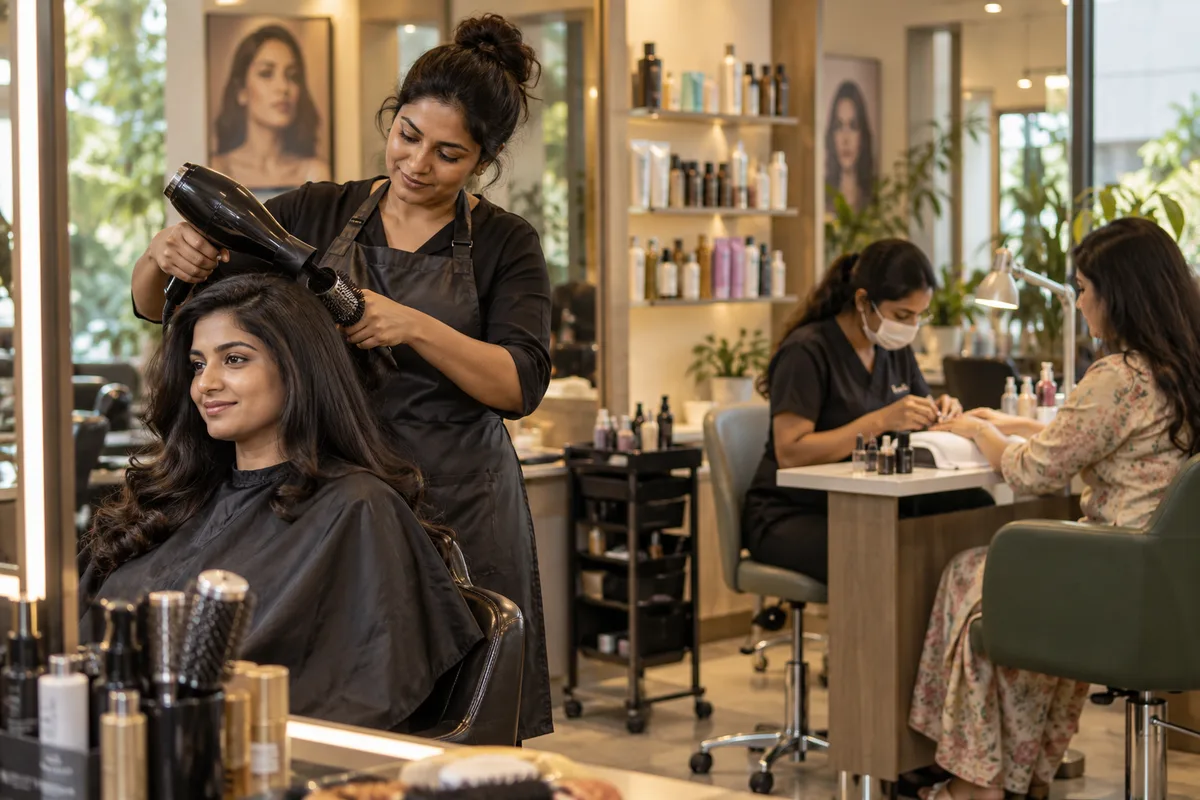
What lead generation means
Lead generation is the combined work of every channel that brings in a new enquiry, whether from search, adverts, referrals or a stall at an exhibition. GullySales runs these channels together and reports the number of enquiries each one produced, not the activity behind it.
Plan the next part of the work
Last updated 21 Nov 2026.
For beauty parlours
Where it usually goes wrong, and what we would do.
“The threading customer is easy to find and low in value”
A customer who wants eyebrows threaded walks to the nearest door. Facial, hair spa and bridal customers compare parlours before they book, so lead work aims at the second group and not at footfall that arrives anyway.
“New residents are the best leads and the least reached”
A family moving into the apartments nearby has no parlour yet and asks a neighbour or searches on the phone. If the parlour is on neither the neighbour's tongue nor the map, that household becomes someone else's regular.
“An enquiry is lost at the first unanswered message”
The owner is mid-facial with a client in the chair, the phone rings out, and the caller tries the next parlour on the list. A lead is only counted once someone has replied and written the name in the diary.
“Festival and function enquiries arrive in a rush”
Before a wedding season or Diwali, calls for makeup, mehendi and threading land together. Without a note of who asked first and for which date, the parlour accepts the loudest request and disappoints the earlier one.
What we do
What we deliver for beauty parlours.
The work available for this need. We agree the deliverables and responsibilities for your engagement in writing.
A list of where the next customer comes from
The owner's last stretch of bookings sorted by how each woman heard of the parlour: neighbour, map, Instagram, passing the door, a function.
Result: You see which source brought the paying services.
A map listing that turns a search into a call
Correct pin, opening hours, price card and photographs on the Google listing, with the call and WhatsApp buttons pointing to a number you answer.
Result: A woman searching nearby can reach you in one tap.
Offers aimed at facials and spa work
One or two introductory offers on the higher-value services, written so a new customer sees a reason to try them and a regular does not feel overlooked.
Result: The offer names a service you want to sell more of.
A neighbour introduction card
A small printed or WhatsApp card that a regular hands to a friend, carrying the parlour name, the location and a fixed welcome service.
Result: Each introduction can be traced to the regular who made it.
A written reply for every enquiry type
Saved answers for price, timing, home visit and bridal queries, so the owner or an assistant replies in the same words each time.
Result: No enquiry waits for the owner to finish with a client.
How the result is measured
- Relevant enquiries by source
- Duplicate and unsuitable enquiries
- Time to the first response
- Accepted enquiries reaching an agreed next step
Recorded as a baseline before work starts, so every later report has an honest comparison.
What to capture or send
Write down what each new customer asked for and where the name came from.
- Service asked about
- Threading, facial, hair spa, mehendi or bridal. It tells the owner whether the booking fills a chair with a short service or a longer, better-paid one.
- Where the customer heard of the parlour
- Neighbour, map listing, Instagram, passing the gate or a function. After a few weeks of notes the owner sees which source brings facial and bridal bookings.
- Flat or lane of residence
- Shows whether the apartments nearby are being reached, and which lane has no regular customer from your parlour yet.
- Date the service is needed by
- A function date decides the order of work in a rush. Without it, the loudest caller gets the slot and the earlier request is disappointed.
- Who recommended the parlour
- The regular who made the introduction gets thanked in person, and the owner learns whose word carries weight on that street.
Who it is for
This is written for these beauty parlours.
- Home-based beauty parlours
- Ground-floor neighbourhood ladies parlours
- Parlours inside apartment complexes
- Parlours with a mehendi and bridal corner
- Parlours in town markets and bazaars
- Parlours run by self-help group members
- Parlours in smaller towns and semi-urban areas
- Parlours that offer home visits for functions
Before you decide
When this may not be the right fit.
- You have no second pair of hands, so a rush of new enquiries would go unanswered while you are with a client
- Your chairs are full on most days already, and more enquiries would only mean turning customers away
- You have not decided which services you want more of, so there is nothing to aim lead work at
Before you decide
Agree the work. Know how to judge it.
Lead generation for beauty parlours: use these checks to prepare, choose the scope, and review what changes.
Bring the right evidence
Define the organisations or buyers you can serve and the reasons they would consider a conversation. Bring examples of accepted and rejected prospects so the selection rule is visible.
Make the scope clear
Agree the research sources, contact approach, qualification rules, and handover. Clarify which meetings count as accepted and what happens to replies that are not ready to buy.
Check the work in use
Review why a prospect was selected and what was learned from the response. Count held, relevant conversations separately from contacts found, messages sent, or meetings booked.
Know when to change course
If the same objection appears repeatedly, adjust the offer or buyer group before increasing outreach. Respect a request to stop contact and keep the exclusion in the record.
These are discussion points, not a fixed package. GullySales confirms the deliverables, responsibilities, fee, and term in writing after reading your brief and speaking with you.
Before we start
What to have ready before the work starts.
The records, access and decisions this work needs from beauty parlours. Anything missing is noted in the written scope, with who will supply it.
- The appointment diary for recent months
- We need the diary or notebook, crossed-out lines included, so we can see which customers are new and where they came from. If bookings sit only in memory, the first step is to start a simple log, and the comparison at the end begins from that day and not from the past.
- A phone that stays near the chair
- Messages must be seen and answered between customers. Tell us which phone receives enquiries, who holds it during the day and what happens when the owner is busy with a bride. If the phone is out of reach, an unanswered message goes cold, and the plan narrows to walk-ins and the card.
- The services you want more customers for
- Decide which services you want to grow, such as facials or bridal makeup, and which you keep for regulars. A threading customer is easy to attract and brings little, so the plan follows your decision. Without a decision, we aim at facials and occasion work by default, and you correct us.
- Directions a stranger can follow
- Give us the floor, the landmark and the gate directions a visitor should follow, or tell us if the parlour is in your own home and customers come by appointment only. We write the directions into every reply. If the lane is hard to find, a clear landmark is chosen with you before any card is printed.
How it works
How the lead generation work runs
The work itself, in order. How an engagement starts, from your brief to a written scope, is set out on our method page.
- 1
Copy the appointment diary page by page
We sit with the owner and go through the diary or notebook of the last few months, noting where each new customer said they heard of the parlour: a neighbour, the apartment group, Maps, Instagram or a walk past the door. You tell us which customers you would like more of. This sheet is where the plan starts, and we keep it for the comparison at the end.
- 2
Walk the lanes within reach of the door
With the owner, we walk the streets around the parlour, noting apartment blocks, new buildings, colleges, offices and the other parlours. We mark the roads a customer would not cross to come to you. The owner chooses two or three pockets to reach first, because new residents are the least reached and the likeliest to try a new parlour.
- 3
Prepare the neighbour introduction card
We write a small card the owner can hand to a neighbour, a new resident or a regular to pass on: the services, a number for messages, the hours, and the lane or floor to look for. The owner approves every word. A card is only made if the owner is willing to carry it and hand it out in person.
- 4
Write the replies for each kind of enquiry
We write the replies the owner sends when someone asks about threading, a facial, mehendi or bridal makeup, each naming the service, the dates still free and how to confirm. The owner reads them aloud and changes anything that does not sound like the owner. The festival rush gets its own reply, which asks for the date of the function first.
- 5
Send a test enquiry through every door
We make an enquiry by the map listing, the Instagram message, the number on the card and a walk-in, as a new resident would. We watch how long a reply takes, whether the diary is updated and whether the source is written down. After real enquiries arrive, we read the diary against the sheet we began with, and you decide which door to keep open.
Where this fits
Three pieces of sales work, in this order.
This work sits inside sales process design, at stage 1, prospecting and lead generation. The audit comes before it, and sales management keeps it running.
Step 1
Sales audit
Find where deals are being lost and what to fix first.
Start here if you cannot say where orders are lost.
Step 2 · you are here
Sales process design
One written way to sell, from first enquiry to repeat order.
Start here if every salesperson sells differently.
Step 3
Sales management
A target, a review routine and someone who owns the number.
Start here if the team has targets and no routine.
FAQ
Questions owners ask before they call.
Not here? More answers, or ask on WhatsApp.
Where do new parlour customers come from without paid ads?
Is it worth running offers for a home-based parlour?
Should I pay for leads from a listing site?
What if my parlour is in my own home and the lane is hard to find?
Do I have to give discounts to attract new customers?
What if my regulars object to new customers filling the diary?
How much does it cost?
How long is the contract?
How soon will we see results?
Who will actually do the work?
More for beauty parlours
Related work to consider.
Closest to this: leads and follow-up
Also for beauty parlours
Or start from the overview: sales and marketing for beauty parlours.
Your next practical step
Tell us what you are trying to grow, and we will read it before we call.
Eight short steps, mostly taps. Skip anything you would rather answer on the call.