Bridal makeup studios · Lead generation
Bring in brides who want your finish and have a date you can still give.
Lead generation for a bridal studio means attracting brides and families whose date, look and budget fit the artists you have free. It is a search for the right wedding morning, not for the longest list of messages. GullySales works on the enquiry routes, the look-matched pages and the date check that sit in front of your diary.
Scope, fee, reporting and term are agreed in writing after we have read your brief and spoken to you.
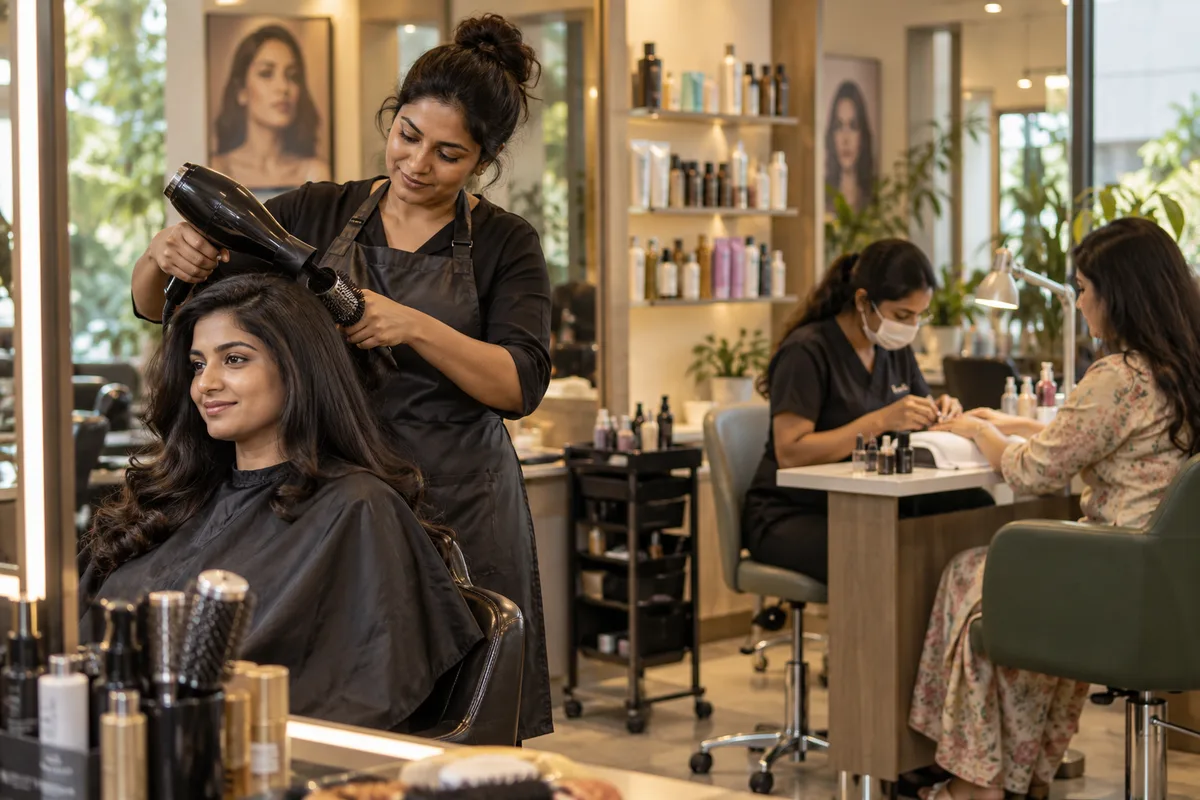
What lead generation means
Lead generation is the combined work of every channel that brings in a new enquiry, whether from search, adverts, referrals or a stall at an exhibition. GullySales runs these channels together and reports the number of enquiries each one produced, not the activity behind it.
Also for bridal makeup studios
- CRM for bridal makeup studios
- Follow-up systems for bridal makeup studios
- SEO for bridal makeup studios
- Local SEO for bridal makeup studios
- Social media marketing for bridal makeup studios
- Content marketing for bridal makeup studios
- Buyer personas for bridal makeup studios
- WhatsApp marketing for bridal makeup studios
Sales and marketing for bridal makeup studios, the overview.
Plan the next part of the work
Last updated 21 Nov 2026.
For bridal makeup studios
Where it usually goes wrong, and what we would do.
“An enquiry with a date is worth more than one without”
A message that names the muhurta and the venue is a booking in waiting. A message that asks only for rates is a comparison. Capture the date and venue at first contact, so the studio spends its replies on brides it can actually seat.
“Look-matched enquiries need a look-matched trail”
A bride with a deep complexion who finds only fair-skinned finishes in the portfolio moves on without writing. Enquiries from every skin tone and region arrive when the pictures, captions and landing pages show those looks done well, with consent.
“The family asks while the bride watches”
A cousin, mother or sister sends the first message and the bride reads along. An enquiry route that speaks to the person typing, and brings the bride in at the trial, keeps both on the thread.
“Destination weddings are a separate kind of lead”
A family marrying in another city asks about travel, stay and a team that can move together. Mixed in with local enquiries, these muddle the quote. Give them their own form and reply so the extra cost is clear from the first message.
What we do
What we deliver for bridal makeup studios.
The work available for this need. We agree the deliverables and responsibilities for your engagement in writing.
Date-and-venue enquiry form
A short form for the site and the Instagram link asking for wedding date, venue city, function and preferred look.
Result: Every enquiry arrives with the facts needed to check the diary.
Look pages by finish and region
Separate pages for airbrush, HD and regional looks, each with captioned work on different skin tones.
Result: A bride can find a look that resembles their own complexion and outfit.
Source tags on every enquiry
Each enquiry marked as Instagram, listing site, photographer, planner, friend or search.
Result: You can read which route produced confirmed dates, not only messages.
Partner list for photographers and planners
A named list of photographers, planners, decorators and boutiques who meet brides before you do, with a log of what each sends.
Result: You see which partners send brides who go on to book.
Destination enquiry route
A form and a reply that cover travel, stay and team size for weddings outside your city.
Result: Outstation quotes carry the extra costs from the start.
How the result is measured
- Relevant enquiries by source
- Duplicate and unsuitable enquiries
- Time to the first response
- Accepted enquiries reaching an agreed next step
Recorded as a baseline before work starts, so every later report has an honest comparison.
What to capture or send
What the studio records when a bride first asks.
- Wedding date and venue city
- The first two fields. A date the diary already holds can be declined politely at once, and the venue tells you the travel cost.
- Functions wanted
- Wedding, engagement, sangeet, reception. Each is a separate booking for the artist, and the count decides the package.
- Look and region
- South Indian, Bengali, Punjabi, minimal or airbrush finish. It sends the bride to the right portfolio page and the right artist.
- Who is enquiring
- The bride, a parent or a sister. Reply to that person, and note who will approve the trial.
- Where the enquiry came from
- Instagram, listing, planner or a past bride. It shows which source brings brides who book a trial.
Who it is for
This is written for these bridal makeup studios.
- Studios run by a lead artist with a team of assistants
- Bridal studios attached to a salon
- Studios offering airbrush and HD bridal makeup
- Studios for regional bridal looks, such as South Indian, Bengali or Punjabi
- Studios that cover destination and outstation weddings
- Studios that offer pre-wedding, engagement and reception makeup
- Studios with a bridal makeup academy
- Studios that also cover the groom's grooming and the wedding party
Before you decide
When this may not be the right fit.
- Your diary for the season is full or kept in three places, so new enquiries would only mean refusing brides.
- You have no one to reply on the day an enquiry arrives, so the bride would book the next studio on the list.
Before you decide
Agree the work. Know how to judge it.
Lead generation for bridal makeup studios: use these checks to prepare, choose the scope, and review what changes.
Bring the right evidence
Define the organisations or buyers you can serve and the reasons they would consider a conversation. Bring examples of accepted and rejected prospects so the selection rule is visible.
Make the scope clear
Agree the research sources, contact approach, qualification rules, and handover. Clarify which meetings count as accepted and what happens to replies that are not ready to buy.
Check the work in use
Review why a prospect was selected and what was learned from the response. Count held, relevant conversations separately from contacts found, messages sent, or meetings booked.
Know when to change course
If the same objection appears repeatedly, adjust the offer or buyer group before increasing outreach. Respect a request to stop contact and keep the exclusion in the record.
These are discussion points, not a fixed package. GullySales confirms the deliverables, responsibilities, fee, and term in writing after reading your brief and speaking with you.
Before we start
What to have ready before the work starts.
The records, access and decisions this work needs from bridal makeup studios. Anything missing is noted in the written scope, with who will supply it.
- The date diary for the coming wedding season
- We need the booked and free dates, by artist, so that the form and the replies promise only what the team can do. A notebook page or a photograph of the calendar is fine. Without it, enquiries are answered without a date check, and families are told yes to mornings that are already taken.
- Past brides and where they came from
- Even a short list of booked brides, with how each found the studio, tells us which routes already work. A column in a sheet is enough. Without it, we cannot tell a good source from a loud one, and the first weeks of work rest on guesses about the studio's own history.
- Photographs of work with the bride's consent
- Look pages need real finished work that you are free to show. Keep the consent messages with the pictures. If consent is missing for a look, we plan that page around other work, or leave it out until a bride agrees to be shown. Pictures of other brides' faces are not needed, only the work you may share.
- Names of photographers, planners and venues
- Partners who recommend a studio are the quietest source of brides. A short list of the people you already work beside, and the last wedding done with each, lets us plan the introductions. Without it, partner outreach starts from nothing. Add the last wedding you did with each, so the first message to them refers to real work.
- A decision on destination and outstation work
- Only the owner can say whether the studio travels, how far and with which artists. The destination enquiry route depends on the answer. Without a decision, destination enquiries are answered one by one, and the team loses time on weddings it may not take. A one-line decision on paper is enough, and it can be changed later.
How it works
How the lead generation work runs
The work itself, in order. How an engagement starts, from your brief to a written scope, is set out on our method page.
- 1
Open the diary and last season's enquiries
We begin with the date diary and the enquiry chats from the last wedding season, and mark which enquiries became booked mornings, which were lost to a clash of dates and which never gave a date at all. You tell us how the artists felt about each booking. This gives us the starting counts and the kind of bride the studio wants more of.
- 2
Decide which dates and looks are open
You tell us the muhurta dates still free, the artists who are available on them and the looks you want to be known for. We write these as the limits of the work. If the diary is nearly full for the main dates, we aim at the off-peak functions, such as engagement and reception makeup.
- 3
Write the date-and-venue enquiry form
We draft the form and the first reply so that a family gives the wedding date, the venue, the look wanted and who is asking before any rate is quoted. You approve the questions and the tone. The same questions are used on the site, in the Instagram bio link and in WhatsApp.
- 4
Build the look pages that bring matched brides
For each finish you want more of, such as airbrush, HD or a regional bridal look, we plan one page showing real work and the questions a bride would ask. You pick the photographs you have permission to show. A bride who lands on a matching page arrives already knowing what to ask for.
- 5
Tag the sources and meet the partners
We set up a way to record where each enquiry came from, whether a photographer, a planner, a venue, a listing site or Instagram, and we draw up a short list of partners to approach. You decide which partners you want to work with. Each introduction is noted in the diary.
- 6
Compare enquiries with booked mornings
After the new routes have run, we list the enquiries by source against the counts taken at the start, and ask which became trials and booked dates. You tell us which sources brought families who fit the diary. The comparison decides which routes get more attention and which get less.
Where this fits
Three pieces of sales work, in this order.
This work sits inside sales process design, at stage 1, prospecting and lead generation. The audit comes before it, and sales management keeps it running.
Step 1
Sales audit
Find where deals are being lost and what to fix first.
Start here if you cannot say where orders are lost.
Step 2 · you are here
Sales process design
One written way to sell, from first enquiry to repeat order.
Start here if every salesperson sells differently.
Step 3
Sales management
A target, a review routine and someone who owns the number.
Start here if the team has targets and no routine.
FAQ
Questions owners ask before they call.
Not here? More answers, or ask on WhatsApp.
Should we run paid ads for bridal leads?
How do we stop price-only enquiries wasting the team's time?
Do listing sites bring better leads than Instagram?
How do we turn away a date we cannot give?
Who answers the enquiry when the lead artist is on a wedding morning?
What do we say to a family whose date we cannot give?
How long is the contract?
How soon will we see results?
Who will actually do the work?
What do you need from us?
More for bridal makeup studios
Related work to consider.
Closest to this: leads and follow-up
Also for bridal makeup studios
Or start from the overview: sales and marketing for bridal makeup studios.
Your next practical step
Tell us what you are trying to grow, and we will read it before we call.
Eight short steps, mostly taps. Skip anything you would rather answer on the call.