Authorised car service centres · Website
Give owners a page where they can see your services and book a slot.
A website for a service centre is the page an owner reaches from a map, a search or a message, to check services and book. GullySales plans the pages, writes the content and builds the booking route, inside your manufacturer's brand rules.
Scope, fee, reporting and term are agreed in writing after we have read your brief and spoken to you.
What website means
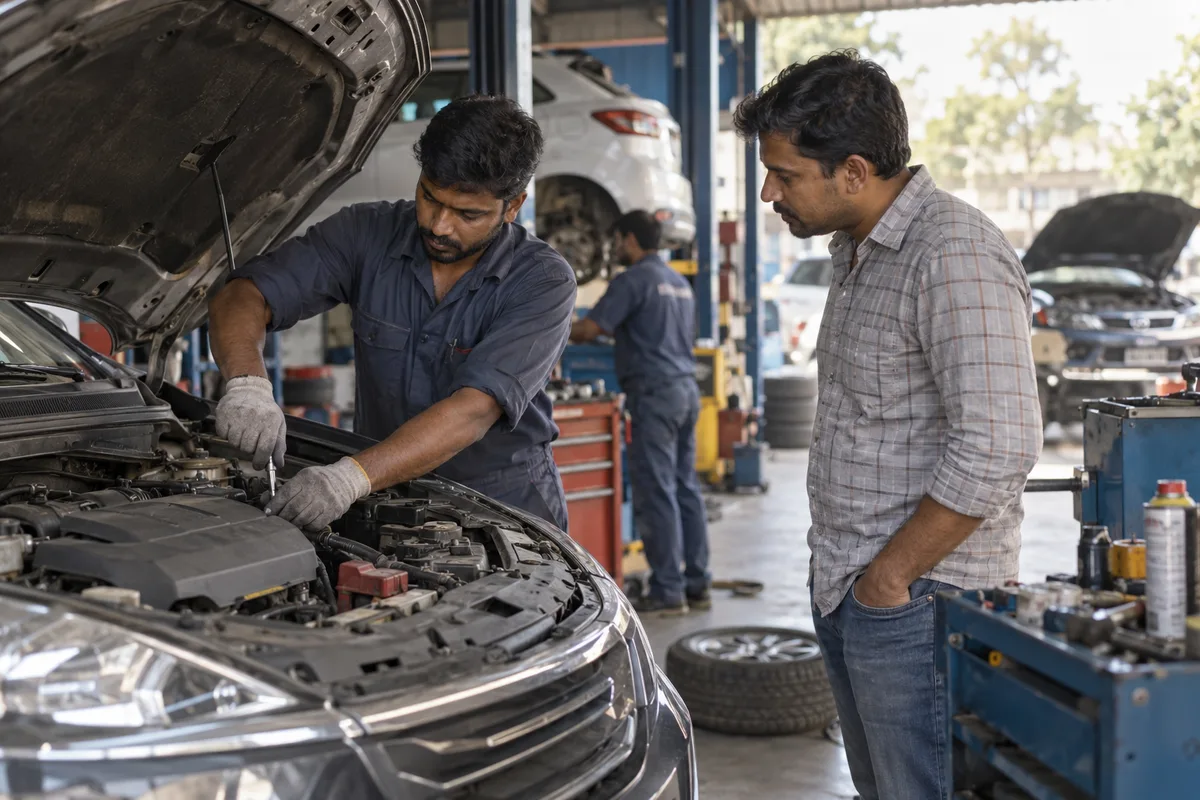
A website is the page a customer lands on after searching, clicking an advert or scanning a code, and it decides whether they call or leave. GullySales builds and maintains sites that load quickly, explain the offer plainly and make the enquiry form or phone number easy to find.
Also for authorised car service centres
- SEO for authorised car service centres
- Local SEO for authorised car service centres
- Lead generation for authorised car service centres
- Social media marketing for authorised car service centres
- Content marketing for authorised car service centres
- Buyer persona for authorised car service centres
- CRM for authorised car service centres
- Follow-up systems for authorised car service centres
Sales and marketing for authorised car service centres, the overview.
Last updated 14 Nov 2026.
For authorised car service centres
Where it usually goes wrong, and what we would do.
“The owner arrives on a phone and wants a slot”
The visit starts from a map listing on a phone. If the page asks the owner to scroll for the number, the owner calls someone else. The booking route belongs at the top.
“The dealer site may be controlled by the manufacturer”
Some brands host dealer pages on their own template. Where that is so, your effort goes into the sections you control, such as service pages, offers allowed and contact details.
“A service page must say what is and is not covered”
An owner reads about paid service, warranty and packages to decide. Pages that state exclusions plainly bring fewer disputes at the counter.
“The pick-up area and the bodyshop need their own pages”
An owner with a damaged car wants cashless details and a contact for the bodyshop. A buried line in a general page is missed.
What we do
What we deliver for authorised car service centres.
The work available for this need. We agree the deliverables and responsibilities for your engagement in writing.
Page plan
A list of pages: services, packages, bodyshop, pick-up and drop, contact and booking, with a purpose for each.
Result: A page list the service manager has approved.
Booking form or chat route
A short form asking for the model, the need and the preferred slot, linked to a chat option.
Result: A booking lands in the shared list with the details the advisor needs.
Service content
Plain descriptions of each job and package, written with the advisors and checked against the manufacturer's facts.
Result: Each page states what the job covers and what it does not.
Phone-first layout
Pages checked on a phone, with the call and map buttons placed where a driver can reach them.
Result: The number and map link show without scrolling.
Brand-rule review
Pages compared with your manufacturer's guidelines before they go live.
Result: Approval is noted for each page.
How the result is measured
- Page load time
- Bounce rate
- Enquiries from the website
Recorded as a baseline before work starts, so every later report has an honest comparison.
Searches your buyers type
Build the pages an owner needs on a phone before booking a service slot.
- book car service online
- A booking form asking for registration, model, service type and preferred day. Keep it short, and confirm by message with the advisor's name.
- [brand] service price list
- A page showing what each service interval includes and how the estimate is given. Quote no figure the counter will not honour.
- car pick-up and drop near me
- A page stating the areas you collect from and what the owner will be asked. An owner outside the area should see it before booking.
- authorised bodyshop for insurance claim
- A bodyshop page with the steps, the papers to bring and a contact. Say the insurer decides the claim.
- what is covered in warranty
- A plain page in the manufacturer's terms, linking to their full document. It is a reference page that advisors can send to an owner who asks.
Who it is for
This is written for these authorised car service centres.
- Passenger car dealership workshops
- Premium and luxury car service centres
- SUV and MPV brand service centres
- Dealer groups with several service outlets
- Authorised bodyshops attached to a dealership
- Authorised workshops serving cab and corporate fleets
- Service centres for electric and hybrid models of a brand
- Authorised workshops for older, post-warranty cars
Before you decide
When this may not be the right fit.
- The manufacturer's template does not permit extra pages, so anything you build would have to live elsewhere first.
- Your service prices are set by the brand and change without notice, so a published list would go stale.
- You have no one to receive online bookings, and the form would feed an empty inbox.
Before you decide
Agree the work. Know how to judge it.
Website for authorised car service centres: use these checks to prepare, choose the scope, and review what changes.
Bring the right evidence
List the pages that support a buying decision and the actions visitors must complete. Keep examples of failed forms, unclear product information, and questions your team answers repeatedly.
Make the scope clear
Agree the page list, content ownership, integrations, and who controls the domain and hosting. Include redirects and existing search traffic in a redesign brief, before changing addresses.
Check the work in use
Complete a real enquiry journey on a phone and a laptop. Check that the confirmation appears, the enquiry reaches the right person, and tracking records the action once.
Know when to change course
If visitors can enquire but the team does not follow up, start with the sales handover. A larger website will not resolve that delay.
These are discussion points, not a fixed package. GullySales confirms the deliverables, responsibilities, fee, and term in writing after reading your brief and speaking with you.
Before we start
What to have ready before the work starts.
The records, access and decisions this work needs from authorised car service centres. Anything missing is noted in the written scope, with who will supply it.
- Domain and hosting logins
- The registrar and hosting accounts, held in the dealership's name. Without them, we cannot move the site or fix an expired domain. If an agency holds them, recovery comes first and the build waits. Both are held in the dealership's own name, with a second person listed as a contact, in case of absence.
- The manufacturer's website rules
- The current guidelines or template terms that say what a dealer site must and must not carry. We take them as written. If nobody can find them, the build uses a plain layout outside the template where the agreement allows.
- Service content approved by a technician
- Plain descriptions of each job, what is checked, what the owner brings and how estimates are approved, read by a senior technician. The pages rest on it. Without it the site carries job names and a booking route only. Pages depend on it, so the technician should read the descriptions in full and return corrections in writing.
- Photographs of the workshop and team
- Clear daylight pictures of the entrance, the bays and the advisors, with no customer car or plate visible. Phone shots are acceptable. Without them the site uses plain layouts and says less about the place. Please send daylight pictures, since a dark picture of a bay says little to an owner. Pictures are checked for plates first.
- The booking route you can staff
- The honest answer on how bookings arrive: phone, form or chat. A booking form left unread does more harm than no form. If staff cannot cover chat, we build the form and phone route only and say so on the page. Staff try the route in front of us, so we see where they hesitate and what the form still lacks.
How it works
How the website work runs
The work itself, in order. How an engagement starts, from your brief to a written scope, is set out on our method page.
- 1
List the jobs the site must book
With the service manager we write down every job the workshop does and the owner who needs it, from periodic service to bodyshop repair. You strike anything the bays cannot take. The workshop is built to this list; any extra job needs your agreement first. Each job page is listed with its owner type and its technician, and the list is signed by the manager.
- 2
Collect logins and the template rules
We ask for the domain, hosting and current site access, and for the manufacturer's template or website rules. You send what you hold. Where the template is controlled by the manufacturer or its agency, we settle which pages we may build first. Access details travel by a safe route and never by message or email, and the general manager keeps the record.
- 3
Draw the page map and the phone layout
We sketch a page for each main job, the booking route, the pages for packages and warranty, and a layout that works with one thumb on a phone. No design work begins before you have approved the map. The map shows where an owner lands first and how few steps lead to a booked slot on a phone.
- 4
Fill the test site with approved words
We load the copy into a test version, not the live site. The service manager reads the pages for accuracy and your brand contact reads them against the manufacturer's rules. You return corrections in one round. Pages stay unpublished until the service manager and the brand contact have each read them and returned corrections. Closed faults are crossed off in the log.
- 5
Try the booking route as an owner would
You open the test site on a phone, book a slot and ask a question in the chat, as an owner would, and say yes or list faults. We fix and repeat. Only after your approval do we move the site to the live address. Nothing goes live while a fault is open, and we keep a visible list of faults until each is closed.
- 6
Test the live site and pass on logins
We test the forms and speed on a phone, confirm analytics is recording and hand all logins to the owner. We compare bookings with the counts taken earlier and promise no figure. The launch record is kept by the general manager, with every login and date written down for later. No count of bookings is promised before the first full month of use, and the comparison uses the earlier sheet.
Where this fits
Three pieces of sales work, in this order.
This work sits inside sales process design, at stage 1, prospecting and lead generation. The audit comes before it, and sales management keeps it running.
Step 1
Sales audit
Find where deals are being lost and what to fix first.
Start here if you cannot say where orders are lost.
Step 2 · you are here
Sales process design
One written way to sell, from first enquiry to repeat order.
Start here if every salesperson sells differently.
Step 3
Sales management
A target, a review routine and someone who owns the number.
Start here if the team has targets and no routine.
FAQ
Questions owners ask before they call.
Not here? More answers, or ask on WhatsApp.
Can we build outside the manufacturer's template?
Do we need online payment?
What should the website track?
What should the website tell us about the owners who visit?
Should the booking page take payment online?
What should the website tell us about visitors?
How much does it cost?
How long is the contract?
How soon will we see results?
Who will actually do the work?
More for authorised car service centres
Related work to consider.
Closest to this: search and visibility
Also for authorised car service centres
Or start from the overview: sales and marketing for authorised car service centres.
Your next practical step
Tell us what you are trying to grow, and we will read it before we call.
Eight short steps, mostly taps. Skip anything you would rather answer on the call.