Industries · Automotive
I have the stock and the workshop bays, but the call went to the other dealer.
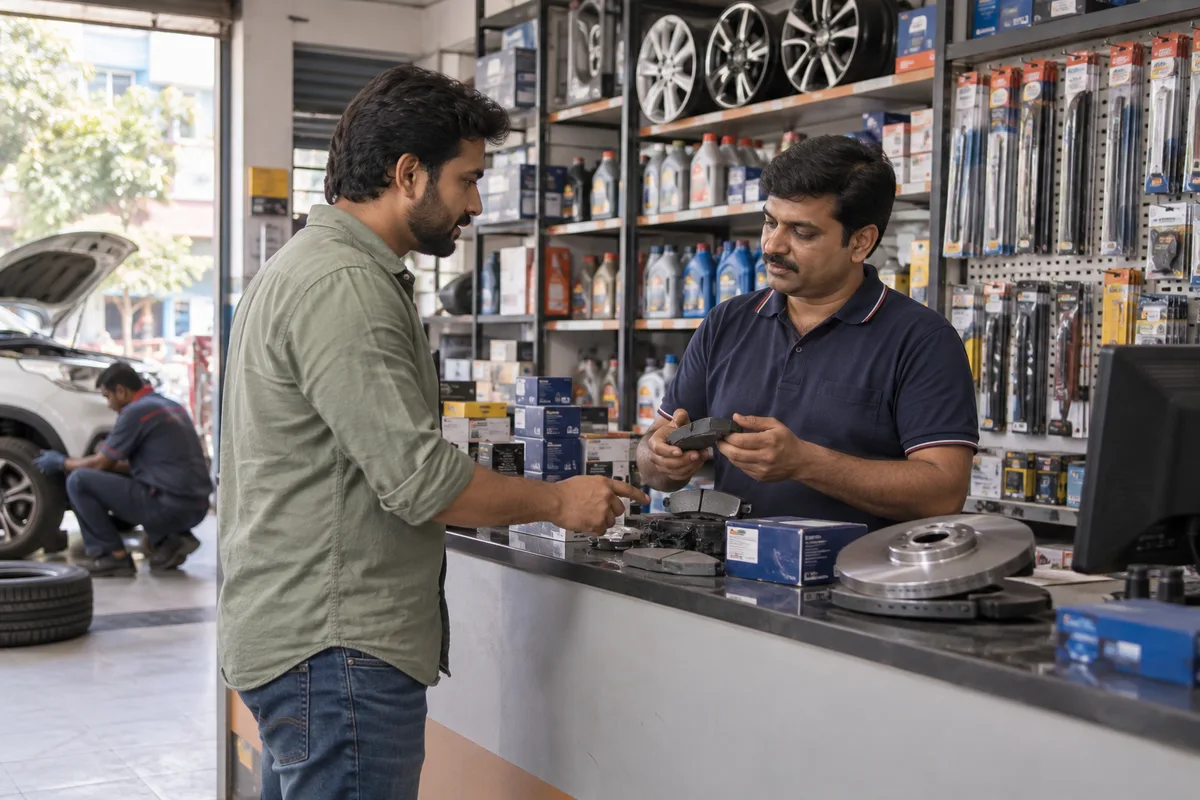
Someone fills in a form on the brand's website on a Saturday morning, and by lunch three dealers of the same brand have rung them. One sent an on-road price on WhatsApp, one said come and see us, one never called. A mechanic with a car on the lift does the same with a worn part: he photographs it, sends it to three counters, and buys from the one that confirms stock and price while the bonnet is still open.
Scope, fee, reporting and term are agreed in writing after we have read your brief and spoken to you.
In one paragraph
This page is for owners of showrooms, yards, workshops, parts counters, detailing studios and rental or leasing fleets. In this sector the first clear reply wins the visit, and the service record wins the second sale.
The buyer changes from trade to trade. A family decides on the car, a parent signs for the first bike, a transporter looks at chassis and finance together, a finance head compares a lease rental with a bank loan. For example, a transporter in Hosur asks two dealers about the same truck on a Monday: one replies with the finance terms and a yard visit time that day, the other rings back on Thursday. The second dealer never learns why the sale went elsewhere.
Most of these businesses also earn after the sale, through service, parts, detailing, renewals and the next vehicle. That money sits in job cards, lease files and the memory of one service advisor. Where it is written down and acted on, the owner is calling people who already know the shop. Where it is not, every sale has to be won from nothing.
Last updated 15 Oct 2026. Rules for regulated trades differ by state and professional body, and they change. Each page describes them in general terms only.
10 industries
Each trade here sells differently, so each has its own page.
Open the one that matches your business. Each lists the work we would do and why it fits that trade.
- Auto parts and accessories dealersGarage mechanics buy from whichever counter confirms stock and price first on WhatsApp, and tyre buyers search by size, so the stock list is the first thing to put online.
- Auto repair shopsA driver with a strange noise sees three garages on Maps and books the one that answers the phone, so the missed call and the unsent estimate are what to fix.
- Car dealersThe family decides together, and the showroom that sends an on-road price, a loan answer and an exchange value for the old car gets the visit.
- Car detailing studiosA ceramic coating means leaving the car for two days, which needs trust built before the visit, and the wash-schedule reminder is what turns one booking into a regular.
- Car rental companiesFamilies ask for outstation quotes late at night and companies want weekday trips, so an all-in WhatsApp quote sent fast keeps the booking off the aggregator.
- Fleet leasing companiesFinance, admin and HR heads compare your rental with a bank loan before a request for quotation goes out, so the comparison sheet is what to build first.
- Truck, trailer and commercial vehicle dealersOwner-drivers and fleet owners compare chassis, finance and who picks up during a breakdown, and a finance file left without a follow-up call is where this sale quietly dies.
- Two-wheeler dealersA first-bike buyer and a parent weigh instalment, down payment and delivery date, and the walk-in who leaves without a test ride is the one to ring back first.
- Two-wheeler service centresRiders go back to the mechanic they trust, so an estimate that does not grow halfway through the job is what earns the review that brings the next rider.
- Used car dealersBuyers compare one model across many yards on portals, so photographs, service history and an honest line about the dent decide whose yard they drive to.
How buyers choose
What decides who wins in automotive.
The first clear reply wins the visit
Buyers of cars, bikes, parts and rentals send the same enquiry to several sellers and then see who answers. A reply with the price, the stock position or the quote confirmed beats one that says come and see us. Portal leads and messages sent after the shutter is down are where most of this is lost.
Several people sign off one purchase
A family weighs in on the car, a mechanic recommends the part, a procurement head and a finance head sit behind the lease. Each of them reads something different. A showroom with only a price list has answered one of them.
Finance and paperwork are the sale
In vehicle retail the loan approval, the exchange valuation and the delivery date decide the booking, and the dealer who can say all three on the first visit wins. Garages and fleets have a version of this in credit terms, GST invoices and insurance claim handling.
Trust has to show before the visit
A used car, a repair bill and a ceramic coating all carry the same fear of being told one thing and billed another. A written estimate, a service history, photographs of the work and reviews that mention a fair bill do what a salesman cannot do by phone. Brand and dealer agreements limit what you may claim in adverts, so check with the manufacturer and your own adviser.
The calendar sets the rush
Festival dates fill showrooms, long weekends empty the rental fleet, the monsoon sells tyres and wipers, and an expiring warranty sends riders to independent workshops. Stock, offers and calls planned around those dates work with the buyer instead of waiting for them.
Repeat business sits in the record
The workshop knows which car is overdue a service, which garage account has gone quiet and which owner is four years into a loan. When that stays in a job card file, sales never sees it. A reminder with the last service details is cheaper than finding a new buyer.
From the blog
Reading for automotive owners.
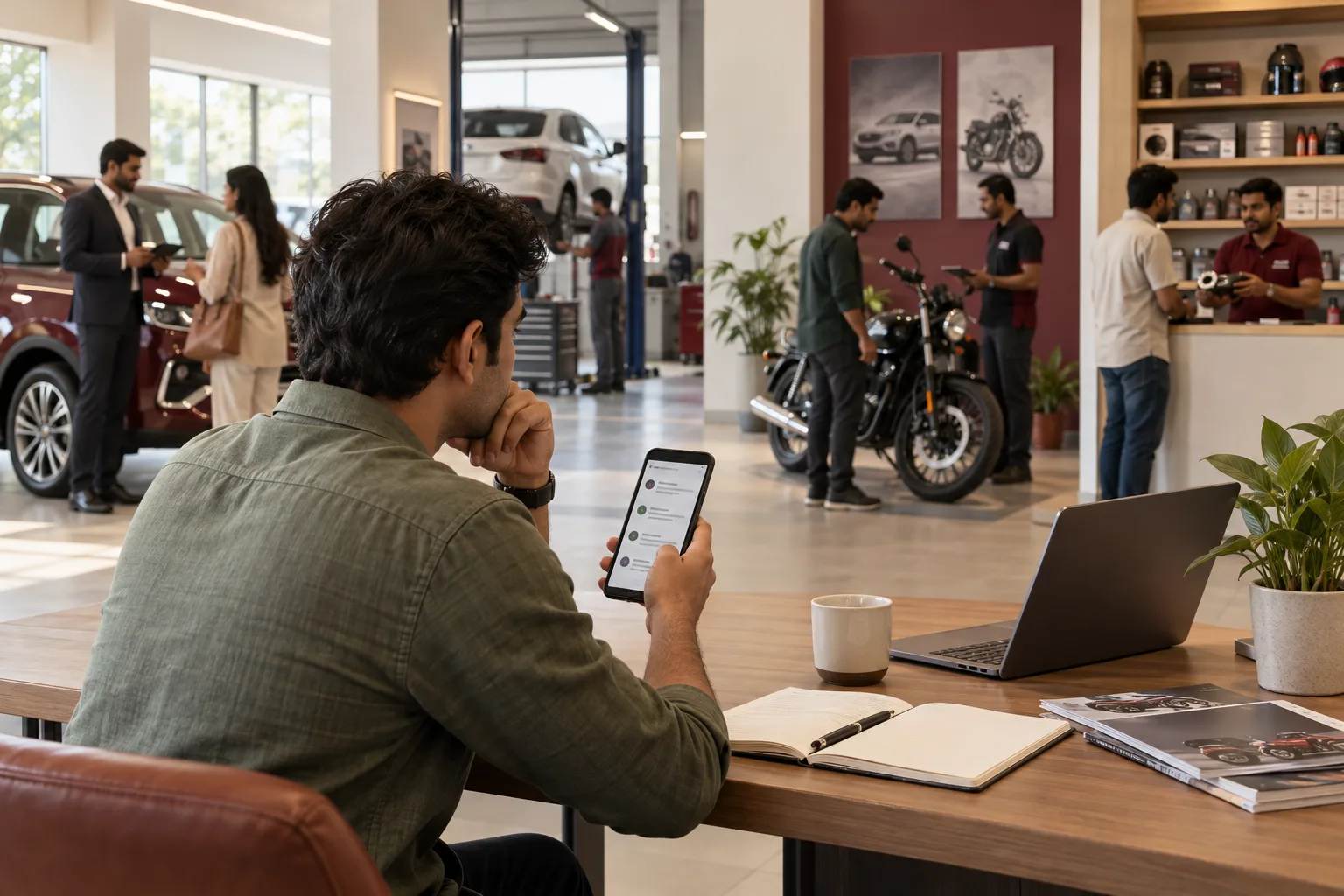 6 min read · 6 Oct 2026How buyers choose a showroom, workshop or parts counterCar, bike, repair and parts buyers send one enquiry to several sellers and pick the first clear answer. This post lists what each buyer checks, and where a dealer or workshop quietly loses them.
 6 min read · 17 Jun 2026Garage management software: what to check, and how to bring more cars inWhat garage management software must do, from job cards to service reminders, the questions to ask vendors, and the auto repair shop marketing that fills the bays.
 6 min read · 6 Oct 2026What a finance head asks before leasing company carsA company rarely leases cars because the rental looks low. It leases when the finance head can compare the lease with buying, see what is included and know who to call when a car breaks down.
Questions
Questions automotive owners ask.
Not answered here? Ask on WhatsApp or call, and you will speak to someone who does the work.
The manufacturer already advertises nationally. Why should my dealership market itself?
How do I get more reviews without pushing customers?
Are car, parts and rental portals worth listing on?
How do I know which source is bringing real sales?
Can one owner market a showroom, a workshop and a parts counter together?
Not sure which page fits? See every industry or tell us what you need, and we will start from what you sell.
Your brief
Tell us what you need, and we will read it before we call.
Eight short steps about your business, what you want and who decides. Most questions are a tap, and you can skip any you would rather answer on the call.
Your next practical step
Tell us what you are trying to grow, and we will read it before we call.
Eight short steps, mostly taps. Skip anything you would rather answer on the call.