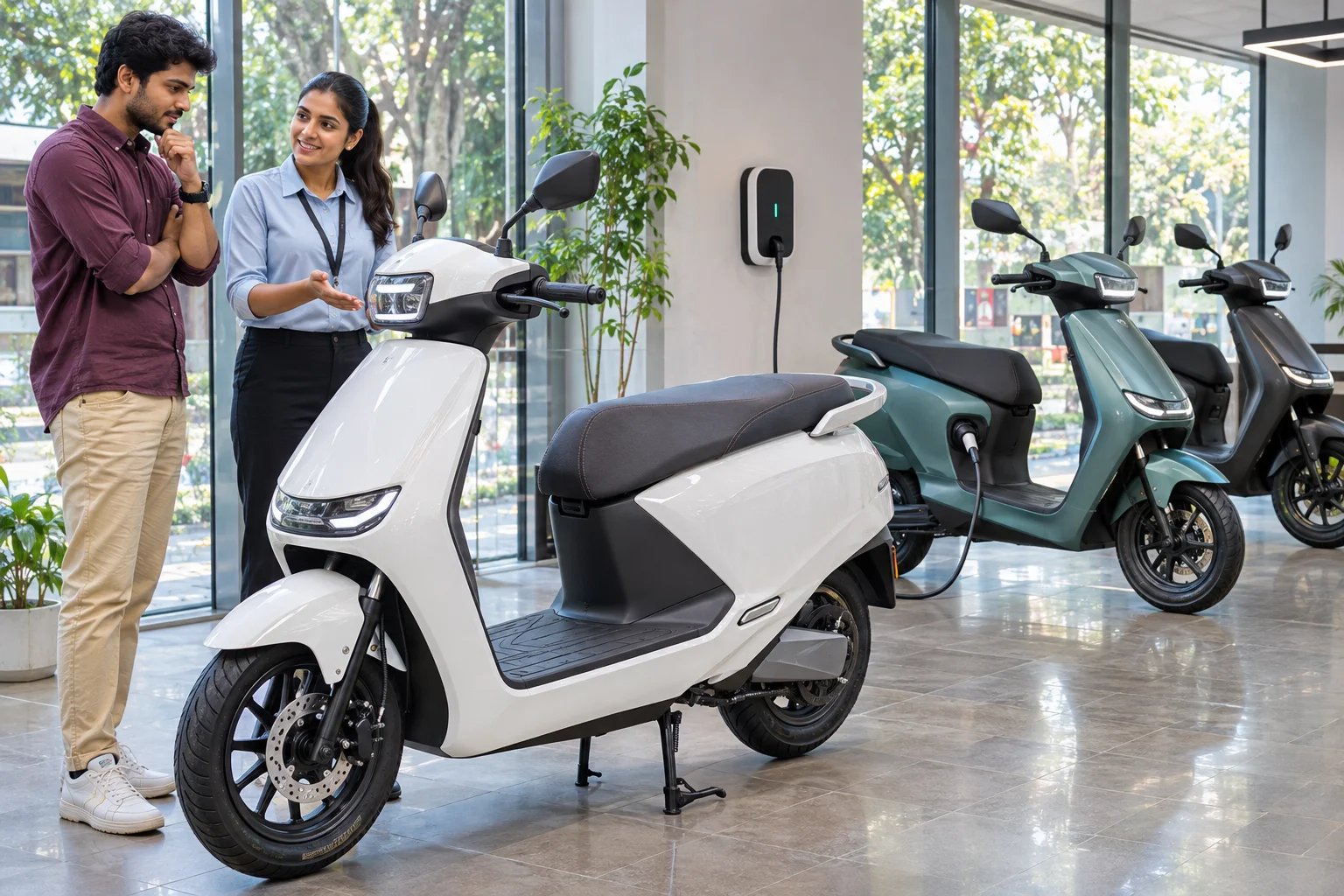
How people choose in this industry
The brand and model are picked from reviews and videos, so the dealer is picked on convenience and confidence. Buyers ask where the nearest service point is, how long a battery replacement takes, whether spares are in stock and who answers the phone after a problem. A dealer who shows the workshop and names the technician answers all four.
Daily range is the question a buyer asks first. A buyer compares the claimed range with what an owner they know actually gets on their route, in heat, with a pillion. A dealer who lets the buyer ride a route like their own, and says plainly what the scooter cannot do, earns that buyer's trust. The battery warranty needs the same plain treatment: what it covers and what it does not.
Delivery riders and small businesses decide differently. They calculate cost per day, downtime when the scooter is in service and how fast they can get another battery. Families buying for a student or a retired parent care about a low seat, easy parking and a simple charger. Subsidies and registration rules, especially for low-speed models, differ by state and change, so the dealer should explain them in general terms and point to the official source.
The decision before implementation
Define the process and access permissions before changing software settings or adding automation.
Existing industry priorities to review
- A consistent answer on charging at home
- Range explained with route examples
- Battery warranty described in plain words
- Service workshop and technician made visible
- Brand app bookings picked up by the dealership
These describe the industry's wider priorities. The written scope identifies which this service will address.