Dairy producers · Website
Give the bulk buyer a rate card and the household a sourcing story on the same site.
A dairy producer's website needs to serve two visitors: a bulk buyer looking for rates and minimum order quantities, and a household checking sourcing before trusting the brand. GullySales builds sites structured around both, with a clear enquiry path for each.
Scope, fee, reporting and term are agreed in writing after we have read your brief and spoken to you.
What website means
A website is the page a customer lands on after searching, clicking an advert or scanning a code, and it decides whether they call or leave. GullySales builds and maintains sites that load quickly, explain the offer plainly and make the enquiry form or phone number easy to find.
Last updated 5 Oct 2026. Rules for this trade differ by state and professional body, and they change. We describe restrictions in general terms, so check the current position with your own council or adviser before you publish anything.
For dairy producers
Where it usually goes wrong, and what we would do.
“Separate paths for bulk and retail visitors”
A hotel buyer and a household visitor are looking for different things. A site that lets each find their path quickly converts better than one generic homepage trying to serve both.
“Sourcing and quality-check pages, not just a product list”
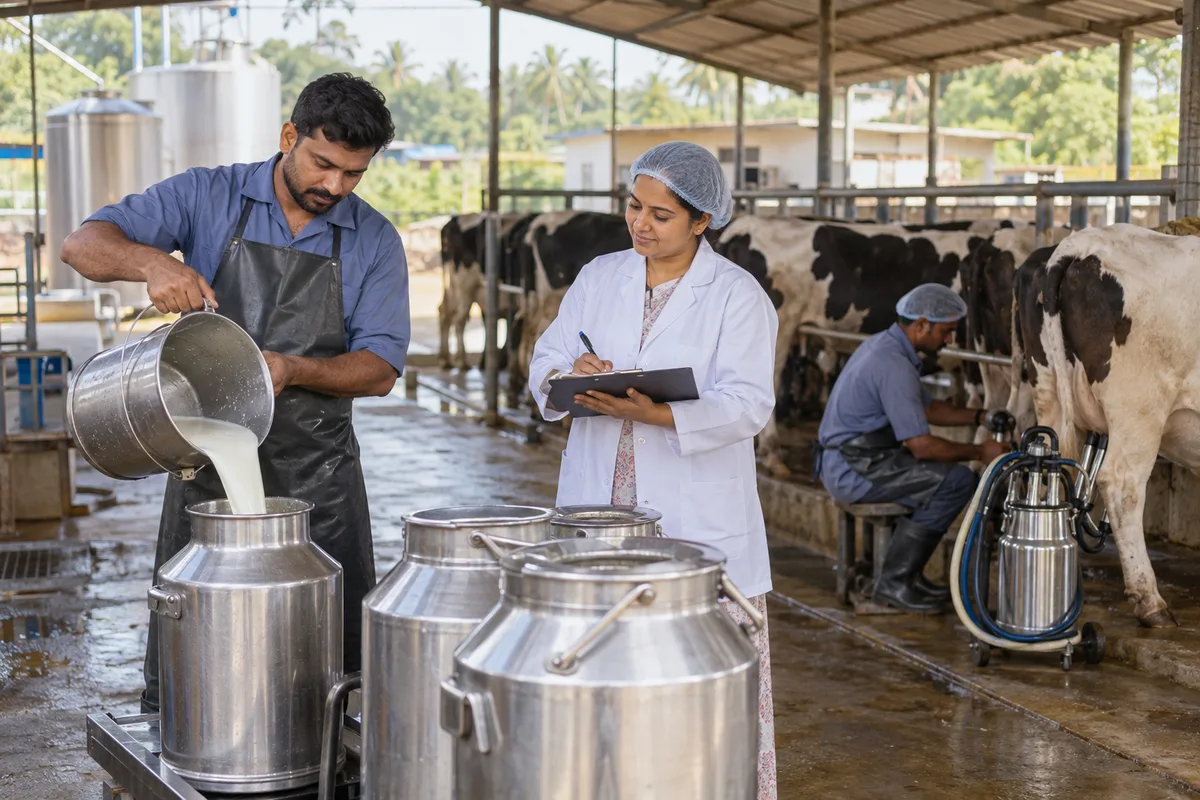
A page explaining how milk is collected, tested and processed answers the hygiene question a new household visitor is quietly asking before trusting the brand.
“A sample and rate-request form for bulk buyers”
A hotel or caterer wants a fast way to request a sample and a rate. A form that reaches the sales team the same day converts more of these enquiries.
What we do
What we deliver for dairy producers.
Every deliverable, what it covers for you, and the result it is there to produce. Nothing here is an extra.
Separate bulk and household visitor paths
A site structure that routes a hotel buyer and a household visitor to the content each is actually looking for.
Result: Each visitor finds their path quickly instead of one generic homepage.
Sourcing and quality-check pages
Pages explaining how milk is collected, tested and processed, answering the hygiene question a new household visitor is quietly asking.
Result: A cautious visitor trusts the brand before ever visiting a booth.
Sample and rate request form for bulk buyers
A form that reaches the sales team the same day, letting a hotel or caterer request a sample and a rate quickly.
Result: A bulk enquiry gets a fast start instead of waiting on an email reply.
Dedicated pages for paneer, ghee and flavoured milk
Individual pages for paneer, ghee and flavoured milk with their own detail, rather than one shared product list.
Result: A buyer researching one specific product finds a complete answer.
How the result is measured
- Page load time
- Bounce rate
- Enquiries from the website
Recorded as a baseline before work starts, so every later report has an honest comparison.
What the page must show
What a dairy's website must show before a household or a hotel buys.
- Each milk and product variety, named as on the pack
- List toned, double toned, full cream, curd, paneer and ghee exactly as printed on the pack, with the fat and SNF grade shown there. A buyer matching the website to the packet must find the same words.
- Pack sizes with price per pack
- Show each pouch or tub size and its price, and the date the price list was last changed. Households compare against the booth price, so keep the page in step with it.
- Delivery areas and the cut-off for next-day service
- List the localities and societies you serve, the delivery window and the hour by which a new order or a pause must be sent. Missed cut-offs are where most complaints begin.
- FSSAI licence and how the milk is tested
- Show your FSSAI licence number and describe the tests actually done at collection and at the plant. Say only what you do, in plain words, and keep the page the same as your records.
- Bulk buyers: what you need to quote
- Ask hotels, caterers and sweet shops for daily quantity, product, delivery time and credit terms in the form. Give them a different path from the household order page.
- The farm or plant, shown honestly
- Photograph the collection point, the chilling tank and the packing line. Show the real people and the real place, because a household visitor wants to see where the milk comes from.
Who it is for
This is written for these dairy producers.
- Milk producers and processors
- Paneer, curd and ghee manufacturers
- Flavoured and UHT milk brands
- Co-operative dairy societies
- Bulk suppliers to hotels and sweet shops
- Milk booth and kirana distribution networks
How it works
From your first message to the first report.
No open-ended retainer. Every step gives you something in writing.
First
Your brief
You tell us what you need in a few short steps: your business, what you want, where enquiries come from and how they are handled.
After the brief
A conversation and a written scope
We read it, then talk with whoever handles your enquiries. If you want our help, the scope, the fee and the reporting come in writing, and nothing starts before you have read them.
Before work starts
Baseline recorded
The numbers this work is meant to move, such as enquiries, quotations, orders, visits or renewals, written down so every later report has an honest comparison.
After the baseline
The first fix goes live
The fix we agreed to start with is put in place and measured against the baseline, whether that is a reply, a follow-up, a page, a listing or the handover between marketing and sales.
As agreed
Report against the baseline
What moved, what did not, and what changes next, in plain words. How often you get it is set in writing before work starts.
At renewal
Renew on the numbers
The term ends and you decide whether to continue from the results. The length is agreed in writing before anything starts.
How the website work runs
- 1
Confirm structure and content
We agree the site's pages and content needs before design begins, drawing on website strategy where it exists.
- 2
Design the site
Every page is designed against your brand identity and checked for how it should convert a visitor.
- 3
Build and test
The site is developed and tested across devices and browsers before anything goes live.
- 4
Load real content
Actual copy, images and information about your business replace placeholder content before launch.
- 5
Launch and hand over access
The site goes live with domain, hosting and content management access clearly handed to you.
Why us
Why owners pick GullySales over an agency.
Marketing and sales, as one job
Most agencies stop at the enquiry. We also fix what happens after it: the reply, the follow-up, the quote and the CRM.
The person on the first call does the work
No account managers in between. You are never handed to someone you have not met.
A baseline before anything starts
Your numbers are written down on day one, so every later report compares against something honest.
The fee in writing, split three ways
Our time, your media spend and production on separate lines. You always see what goes to us.
No guarantees we cannot keep
The term is agreed in writing and never a default twelve months. We never promise a ranking or a lead count, because nobody controls those.
One office, and we say so
Nagarbhavi, Bengaluru. We work across India by call and WhatsApp and travel when a session needs to be in person.
#257, 3rd floor, Sri Nanjundeshwara Complex, Nagarbhavi 8th Block, Outer Ring Road. How we work.
Your brief
Tell us what you need, and we will read it before we call.
Eight short steps about your business, what you want and who decides. Most questions are a tap, and you can skip any you would rather answer on the call.
FAQ
Questions owners ask before they call.
Not here? More answers, or ask on WhatsApp.
Do we need e-commerce for household sales?
How long does a rebuild take?
Should we put a milk subscription on the website?
Can we say our milk is pure or free of adulteration?
How much does it cost?
How long is the contract?
Who will actually do the work?
What do you need from us?
What if we are not happy with the work?
From the blog
Further reading for dairy producers.
 8 min read · 22 Jul 2026What a dairy brand's website must do for distributors and bulk buyersA dairy website is read by distributors and bulk buyers. Here are the pages, the FSSAI details and the cold chain answers they look for.
 5 min read · 6 Oct 2026How food brands win the trade and the shopperA packed food or household brand is chosen twice: by the distributor, retailer or kitchen that stocks it, then by the shopper who picks it up. Here is what each buyer checks and where brands lose both.
 6 min read · 16 Mar 2026How to get on a company's approved vendor list without the file stallingVendor registration runs inside the buyer's company, across four or five desks that each wait on something from you. Send the papers complete, name who answers for each, and keep your sponsor informed.
More for dairy producers
Everything else we would do for you.
Closest to this: search and visibility
Also for dairy producers
Or start from the overview: sales and marketing for dairy producers.
Your next practical step
Tell us what you are trying to grow, and we will read it before we call.
Eight short steps, mostly taps. Skip anything you would rather answer on the call.