E-commerce · Plumbing & Bathroom Products
The plumber needs forty fittings in three sizes, and the page lists them as one product.
A plumber on a site reads a drawing and writes a list. Half-inch elbows, three-quarter tees, so many metres of pipe, solvent cement, a ball valve. The list goes to a dealer who answers by phone. If the dealer's website cannot answer a list, it is not in the comparison.
Scope, fee, reporting and term are agreed in writing after we have read your brief and spoken to you.
In one paragraph
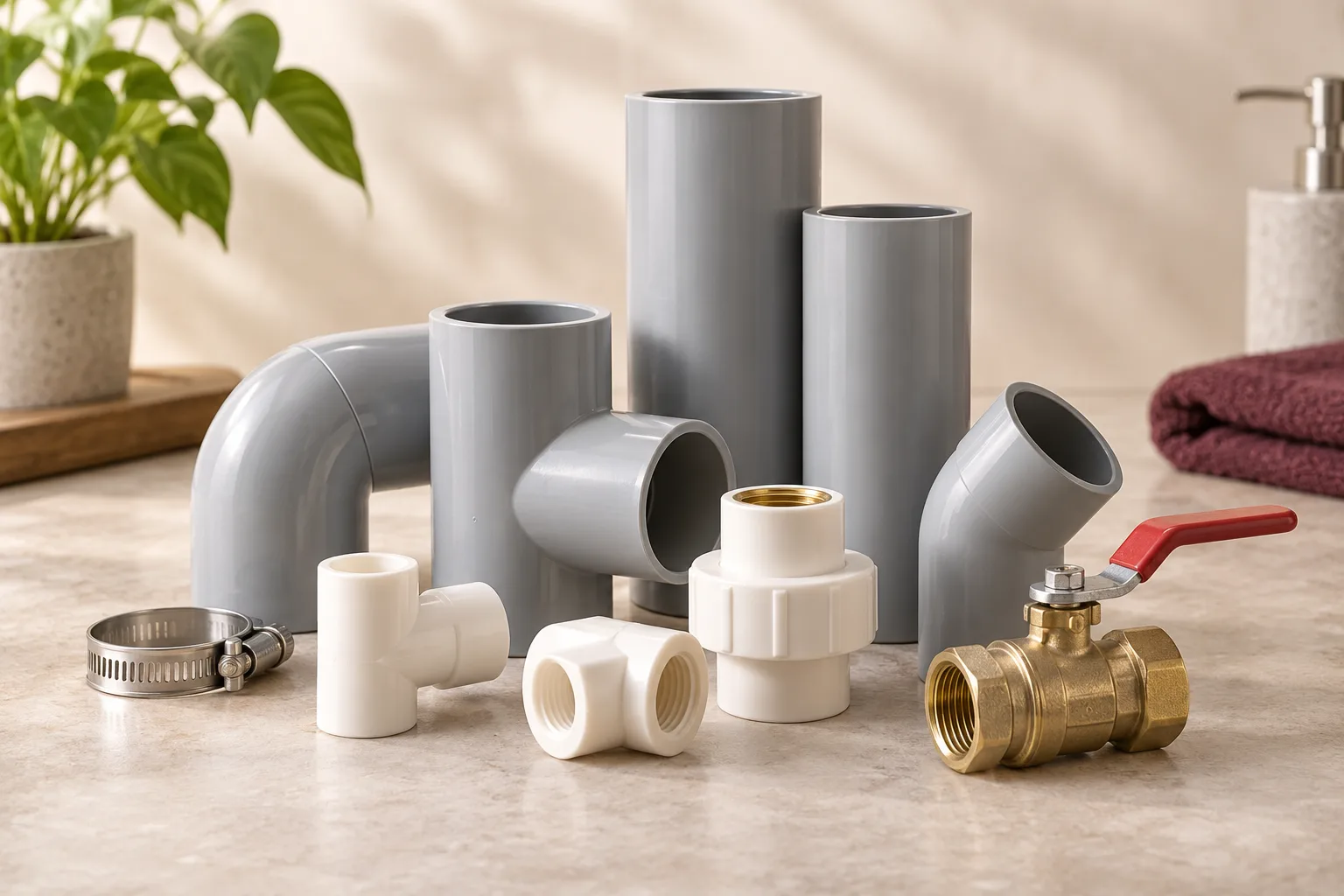
Pipes and fittings are the CPVC, UPVC, PPR, HDPE and GI pipes with the elbows, tees, unions and valves that join them, bought mostly by plumbers and contractors on a job. GullySales builds one row for each size and connection, separates hot water from cold and drainage lines, and takes quotations by bill of quantities.
A homeowner reaches these pages only when a joint leaks or a bathroom is being redone, and they need the size, the type and how to be sure it is the one that was there before.
Last updated 7 Oct 2026.
Who it is for
This is written for you if you sell pipes & fittings online.
- Manufacturers of CPVC, UPVC, PPR and HDPE pipes and fittings who sell through dealers
- Dealers who supply plumbers and builders by the length and the carton
- Sellers of valves, couplers and repair fittings to maintenance teams
- Importers of specialist fittings for water treatment and irrigation lines
Not for
It is not the right fit if.
- Sellers who cannot state the pipe material and the use for each line. The buyer must know whether it is for hot water, cold water or drainage.
- A business that wants to advise homeowners on plumbing design. A plumber does that, and we will not write it.
How buyers choose
What decides the sale of pipes & fittings.
Material by the use
Hot and cold water supply, drainage, and agricultural lines use different materials. CPVC and PPR are asked for on supply lines, and drainage uses its own pipe. The buyer decides by use, and the page must name each.
Nominal size and the joint
A size is called by its diameter, and the joint is solvent welded, threaded or fused. A tee of the right size and the wrong joint will not fit what is on the wall.
Length, bundle and carton
Pipe is sold by length and bundle, fittings by the piece and the carton. A contractor compares the rate per piece at the carton, and the dealer who states it is the easiest to compare.
Brand and the dealer who backs it
A plumber names a make and wants a dealer who will replace a faulty batch. Who stands behind the product on the site is a question plumbers do ask.
Where sales are lost
What usually goes wrong when you sell pipes & fittings online.
In the words sellers use on the first call.
“The plumber orders by phone because the site cannot take a list”
A buyer with forty lines of sizes and fittings will not add each to a cart. A request that takes the list as typed or photographed is the one that gets used.
“Buyers order the right size in the wrong joint”
Threaded against solvent weld is not obvious from a photograph. Joint type in the title and a labelled diagram would save the second trip.
“Our listings do not say hot or cold”
A buyer renovating a bathroom is asking whether it is for the geyser line. If the page does not say, they ask someone else.
“Every dealer in town has the same brand at a similar price”
The difference is stock, speed and delivery to the site. A page that states what is held and when it can arrive is the only differentiator.
The scope
The work we would propose for pipes & fittings.
Measured on purchases and, for trade buyers, qualified enquiries, quotation requests and repeat orders. Anything here that needs a platform or tool we have not used with you is confirmed with you before it goes in the scope.
- Size, joint and use tablesOne table per family showing nominal size, joint type, material and use (hot supply, cold supply, drainage). Every row carries the size as the plumber says it.
- Bill-of-quantities enquiryA form or upload that takes a list of sizes and counts, with delivery pincode and the date the site needs it, and returns a single quotation.
- Stock and delivery statementA reply that states stock position and delivery for each line, sent by an owner who is named for the enquiry.
- Dealer and distributor enquiryFor makers: a route for dealers in a town to ask for the price list, and a follow-up for each.
- Local search for the yardMaps profile, delivery area and photographs, so a contractor near the site finds a nearby dealer.
What we do
What you get for pipes & fittings.
Each deliverable and what it is there to change.
A fittings index by size and joint
Every fitting in one table with its joint type and use. It is what a plumber wants in a pocket.
A list-upload quotation page
A page that takes typed or photographed lists. It reduces the phone traffic and the mistakes in transcribing.
A hot and cold line guide
A short note on which material suits which line, as the maker states. The plumber confirms for the job.
A stock sheet
In-stock and delivery notes kept up to date for the lines that move. It decides whether the contractor orders from you today.
How the result is measured
- Qualified enquiries
- Quotation requests
- Orders won
- Repeat orders
- Wrong-size returns
- List uploads received
Recorded as a baseline before work starts, so every later report has an honest comparison.
How it works
From your first message to the first piece of work.
No open-ended retainer. Every step gives you something in writing.
First
Your brief
You tell us what you need in a few short steps: your business, what you want, where enquiries come from and how they are handled.
After the brief
A conversation and a written scope
We read it, then talk with whoever handles your enquiries. If you want our help, the scope, the fee and the reporting come in writing, and nothing starts before you have read them.
Before work starts
Baseline recorded
The numbers this work is meant to move, such as enquiries, quotations, orders, visits or renewals, written down so every later report has an honest comparison.
After the baseline
The first fix goes live
The fix we agreed to start with is put in place and measured against the baseline, whether that is a reply, a follow-up, a page, a listing or the handover between marketing and sales.
As agreed
Report against the baseline
What moved, what did not, and what changes next, in plain words. How often you get it is set in writing before work starts.
At renewal
Renew on the numbers
The term ends and you decide whether to continue from the results. The length is agreed in writing before anything starts.
What we need from you
What to have ready before we talk.
None of it has to be tidy. We read what you have.
- Product list with material, size, joint type and carton quantity
- The maker's catalogue and technical sheets
- A sample of recent plumber and contractor enquiries
- Stock and delivery area for each line
- Brands and makers you are authorised to sell
Selling in India and abroad
Selling pipes & fittings beyond your own market.
Where you sell decides sizes, units, seasons and returns. We work from Bengaluru and have no overseas office, so for a new country we start from your own sales and the platforms you already use.
Pipe standards and sizes differ
Nominal sizes and thread standards vary by country, and a fitting for one system may not suit another. State the standard for each line and confirm the market before listing.
Long goods and weight
Pipe is long and bulky. Freight for overseas orders is usually by container and a trade buyer thinks in bundles, so your forwarder gives the figures.
FAQ
Questions about selling pipes & fittings online.
Not here? More answers, or ask on WhatsApp.
How do I sell pipes online when buyers want to talk to someone?
Should I show price per metre or per length?
How can I tell customers which pipe is for hot water?
Is it worth listing every fitting separately?
How long is the contract?
How soon will we see results?
Who will actually do the work?
What do you need from us?
What if we are not happy with the work?
More in Plumbing & Bathroom Products
Sellers of pipes & fittings also need
Also selling from a shop, a workshop or a warehouse? See the page for plumbing and sanitaryware distributors and tile, flooring and bathware dealers.
This page is part of the e-commerce section. The D2C brands page covers the arithmetic of acquisition cost and the second order for any brand.
Why us
Why owners pick GullySales over an agency.
Marketing and sales, as one job
Most agencies stop at the enquiry. We also fix what happens after it: the reply, the follow-up, the quote and the CRM.
The person on the first call does the work
No account managers in between. You are never handed to someone you have not met.
A baseline before anything starts
Your numbers are written down on day one, so every later report compares against something honest.
The fee in writing, split three ways
Our time, your media spend and production on separate lines. You always see what goes to us.
No guarantees we cannot keep
The term is agreed in writing and never a default twelve months. We never promise a ranking or a lead count, because nobody controls those.
One office, and we say so
Nagarbhavi, Bengaluru. We work across India by call and WhatsApp and travel when a session needs to be in person.
#257, 3rd floor, Sri Nanjundeshwara Complex, Nagarbhavi 8th Block, Outer Ring Road. How we work.
Engagement options
Ways to work with us.
Pick the size of commitment that fits. Every option starts with your brief and a conversation.
Option 1
The conversation on its own
A call after you send your brief. It says honestly whether you need outside help, and many fixes are ones your own team can make.
Option 2
One fix, scoped
Start with the fix that matters most, such as reply time or follow-up. The fee is in writing before anything starts.
Option 3
An ongoing programme
We run the work, report against the baseline, and you renew on the numbers. The term and the reporting are agreed in writing first.
Option 4
Guidance for your own team or agency
We plan, brief and check the work of your in-house team or current agency, instead of replacing them.
Your brief
Tell us what you need, and we will read it before we call.
Eight short steps about your business, what you want and who decides. Most questions are a tap, and you can skip any you would rather answer on the call.
Your next practical step
Tell us what you are trying to grow, and we will read it before we call.
Eight short steps, mostly taps. Skip anything you would rather answer on the call.