CBSE schools · Buyer persona
Write down which parent you are talking to before you write the page.
A buyer persona for a CBSE school is a written description of the family making a particular admission decision. GullySales builds one per entry stage from your enquiry records and the questions your office hears.
Scope, fee, reporting and term are agreed in writing after we have read your brief and spoken to you.
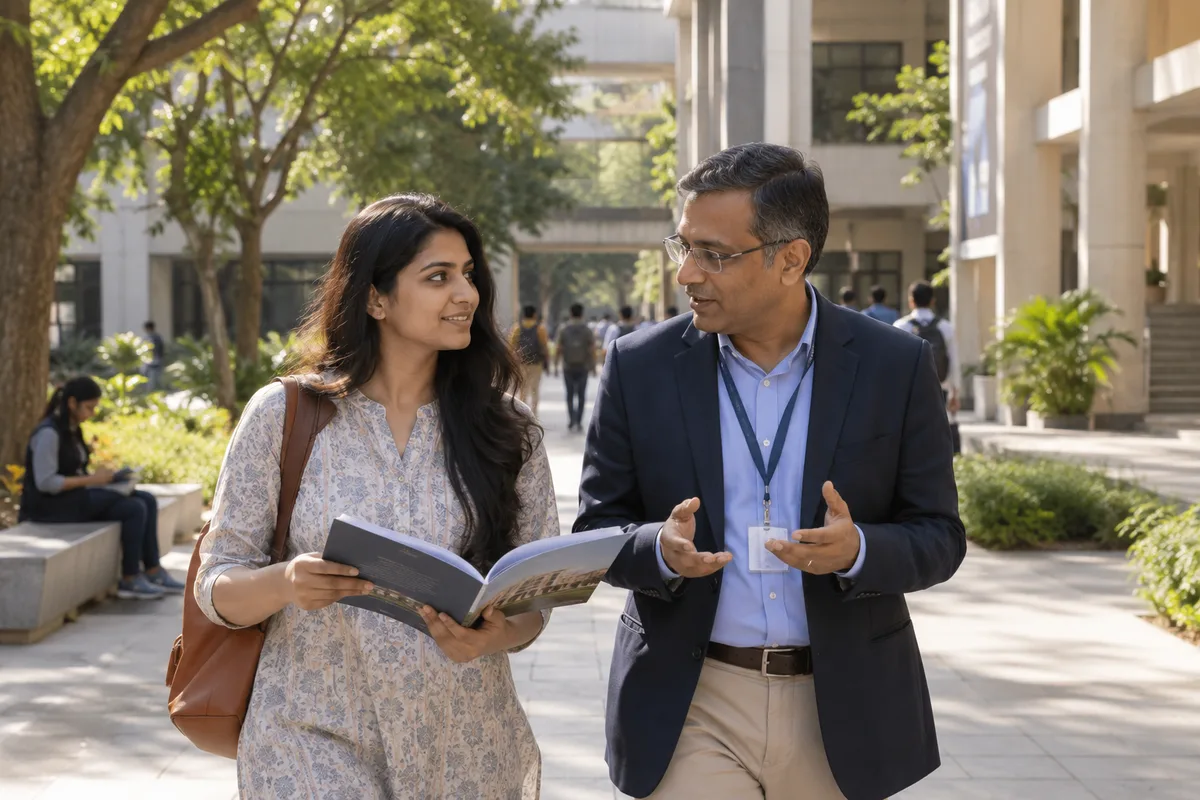
What buyer persona means
A buyer persona is a plain description of the kind of customer who actually buys from you. It includes what they search, what worries them and who else they ask before deciding. GullySales builds this from real enquiries and past sales rather than a generic template, then uses it to write every page and advert.
Last updated 18 Oct 2026.
For CBSE schools
Where it usually goes wrong, and what we would do.
“The Class 1 parent compares neighbourhood and first impressions”
They choose a school for years, and it is the first school the child attends. Safety, distance, teachers and the admission steps matter more than senior school detail.
“The Class 9 switching parent worries about the board years”
They fear syllabus gaps and a lost year. They want to know about subject choices, support for a new student and the school's approach to exam preparation.
“The transferred family decides in a short visit”
They arrive with a deadline set by an employer. They need a plain answer on the seat, documents and start date, and a person to ask for.
“The decision is shared”
A grandparent may pay, a mother may do the research and the child may have a view. A persona names who reads the website and who signs the form.
What we do
What we deliver for CBSE schools.
The work available for this need. We agree the deliverables and responsibilities for your engagement in writing.
A persona for each entry stage
One card each for Class 1, middle school, Class 9 and Class 11, built from your enquiry sheet.
Result: Cards the office can read before writing a reply.
Transfer family persona
The documents, the timing, the worries and the person they ask for.
Result: A card that shapes the transfer page and call script.
Questions and objections list
What each persona asks, what holds them back and the answer the school gives.
Result: A list used by admissions staff and the website writer.
A short interview guide
Questions to ask a few current parents about why they chose the school, asked politely and with consent.
Result: A guide the principal's office can run itself.
Review of the personas each admission year
Compare the cards with the families who joined and the ones who dropped out.
Result: Cards revised against the school's own records.
How the result is measured
- Enquiry match to persona
- Conversion rate by persona
- Content aligned to persona
Recorded as a baseline before work starts, so every later report has an honest comparison.
Who is asking
Different parents come to the same office with different worries.
- Parent of a three-year-old choosing a first school
- Wants to know the neighbourhood, the first impression of the room and the classes the school runs after Class 1.
- Parent moving a Class 8 child mid-year
- Wants a clear answer on the documents, the class placement and whether the school will take a transfer at this time.
- Parent of a Class 10 child considering a change
- Wants subject combinations, entry conditions and what the senior school offers. Asks if the school will take a new child into Class 11.
- Grandparent who pays or drives the child
- Wants the route, the gate and the hours. May be the one who visits, so the visit page must be written for them.
- Both parents who disagree on the school
- Want facts they can show each other: a written fee sheet and a message they can forward. Give both parents the same document.
Who it is for
This is written for these CBSE schools.
- Day schools with classes from nursery to Class 12
- CBSE schools running Class 1 to 10 only
- Schools run by a trust, society or educational group
- Private unaided CBSE schools in city suburbs
- CBSE schools attached to a residential campus
- Schools serving transferred central government, defence or corporate families
- New CBSE schools in their first affiliated years
- Schools that run exam-preparation classes in Class 11 and 12
Not for
It is not the right fit if.
- The office has no time to hear a dozen parents this season, so personas would be written from guesses.
- The school offers a single entry point and one kind of parent, so a set of personas would add little.
Before you decide
Agree the work. Know how to judge it.
Buyer personas for CBSE schools: use these checks to prepare, choose the scope, and review what changes.
Bring the right evidence
Write the decision the research must support, such as entering a market or choosing a buyer group. Separate what you know from sales records from what the team currently assumes.
Make the scope clear
Agree which buyers to speak to, which sources to review, and what access you can provide. Include lost enquiries and people who chose another supplier, where they are willing to take part.
Check the work in use
Look for source dates, sample limitations, and evidence that disagrees with the preferred answer. A recommendation should show how it follows from the findings.
Know when to change course
Do not treat a few positive conversations as proof of demand. Test the proposed offer with an actual buying decision before committing to a wider launch.
These are discussion points, not a fixed package. GullySales confirms the deliverables, responsibilities, fee, and term in writing after reading your brief and speaking with you.
How it works
How the buyer persona work runs
The work itself, in order. How an engagement starts, from your brief to a written scope, is set out on our method page.
- 1
Audience decision and scope approval
You send the requirements brief, then we discuss the decision these personas must support. The written scope identifies the audience groups and agreed outputs before work starts.
- 2
Record access and interview selection
Your team shares relevant purchase records and agrees which customers to approach. Customers agree before contact, and we identify gaps such as missing lost-deal notes.
- 3
Interview findings and evidence check
We ask buyers about their last purchase, including what happened before the enquiry and who else was involved. Staff conversations add objections and questions, with differences between accounts kept visible.
- 4
Persona review and corrections
Draft profiles go to the people who handle enquiries and close orders. We check disputed points against the available evidence rather than treating internal agreement as proof.
- 5
Application priorities and handover
You approve the profiles and decide which existing assets need attention first. The persona documents and application map pass to your marketing and sales owners, with implementation responsibilities recorded.
Where this fits
Three pieces of sales work, in this order.
This work sits inside sales process design, at stage 0, foundation. The audit comes before it, and sales management keeps it running.
Step 1
Sales audit
Find where deals are being lost and what to fix first.
Start here if you cannot say where orders are lost.
Step 2 · you are here
Sales process design
One written way to sell, from first enquiry to repeat order.
Start here if every salesperson sells differently.
Step 3
Sales management
A target, a review routine and someone who owns the number.
Start here if the team has targets and no routine.
FAQ
Questions owners ask before they call.
Not here? More answers, or ask on WhatsApp.
How many personas does a school need?
Where does the information come from?
Does this change how the office speaks?
Should the persona record a family's income?
How much does it cost?
How long is the contract?
How soon will we see results?
Who will actually do the work?
What do you need from us?
What if we are not happy with the work?
More for CBSE schools
Related work to consider.
Closest to this: strategy and research
Also for CBSE schools
Or start from the overview: sales and marketing for CBSE schools.
Your next practical step
Tell us what you are trying to grow, and we will read it before we call.
Eight short steps, mostly taps. Skip anything you would rather answer on the call.