CBSE schools · Corporate photography
Show parents the real classrooms and teachers, with consent settled first.
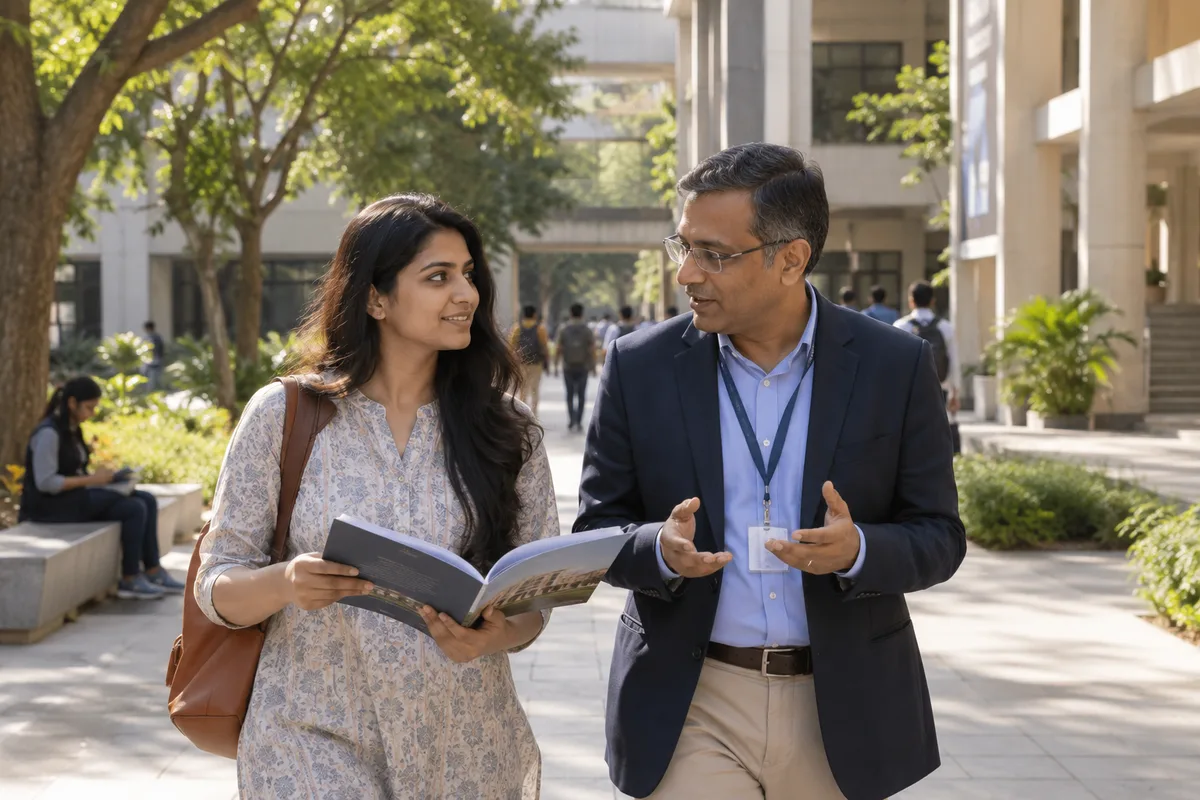
Corporate photography for a CBSE school records the campus as it is, including classrooms, laboratories, the library, the playground and the staff, so a parent can judge the place before visiting. GullySales builds the shot list from the questions parents ask, agrees the consent rules with the school before anyone lifts a camera, and hands over labelled files for the website, the listing and the prospectus.
Scope, fee, reporting and term are agreed in writing after we have read your brief and spoken to you.
What corporate photography means
Corporate photography records your business as it is: the premises, the team, the work in progress and the equipment in use. GullySales builds the shot list from the questions your buyers ask, agrees consent and site rules before anyone picks up a camera, and hands over named, labelled files for the places each image will appear.
Last updated 18 Oct 2026.
For CBSE schools
Where it usually goes wrong, and what we would do.
“Stock photographs of smiling children tell a parent nothing”
A parent comparing three schools on a phone sees the same uniformed children at a desk on every site. What decides the Saturday visit is the actual science laboratory, the actual bus bay and the actual teacher of the entry class. Real images answer the question that the page otherwise leaves open.
“Pictures of children need a rule before a shoot”
Children appear in school photographs, and parents have views on that. The school decides, in writing, which classes may be photographed, who signs for the child and what happens to a parent who declines. Settling this first protects the child and the school, and a lawyer's advice belongs to the management.
“Teachers are the face of the school and are rarely shown”
A family moving from another city wants to know who will teach Class 7 mathematics. A page with named staff portraits, taken with each teacher's agreement, gives the family a person to picture and gives the admissions desk something to point to.
“Photographs taken during the sports day sit unlabelled in a folder”
The school has hundreds of event images, but nobody knows which show children whose parents declined, which have good light, or which fit a banner. Without labels, the files get used once for the event report and are then forgotten by the office.
What we do
What we deliver for CBSE schools.
The work available for this need. We agree the deliverables and responsibilities for your engagement in writing.
A shot list built from parent questions
Spaces and moments are chosen from what parents ask on the phone: the entry classroom, the senior laboratories, the assembly, the transport bay, the canteen and the reception.
Result: The list can be read against the school's own enquiry log.
A consent and site-rule sheet
A one-page plan, agreed with the principal, for which areas may be photographed, which classes are included, how a parent's consent is recorded and who accompanies the photographer.
Result: The management holds a written rule before the first photograph is taken.
Staff portraits taken with agreement
Head-and-shoulders and at-work pictures of the principal, coordinators and subject teachers who have agreed to appear, kept separate from those who have not.
Result: Each portrait on the site has a named teacher's agreement on record.
Labelled files for each placement
Images are named by place and subject and sized for the admissions page, the Google listing, the prospectus and a WhatsApp album. A short note says which are cleared for which use.
Result: The office can find an approved image for any page without asking the photographer.
A shoot-day plan that respects lessons
A schedule agreed with the timetable coordinator so that classes, examinations and assemblies are not disturbed, with a backup space for bad weather.
Result: The school confirms the plan before the day and lessons run as normal.
How the result is measured
- Shot-list images delivered and approved
- Consent forms held for every person in a published image
- Pages still carrying stock images
Recorded as a baseline before work starts, so every later report has an honest comparison.
Who it is for
This is written for these CBSE schools.
- Day schools with classes from nursery to Class 12
- CBSE schools running Class 1 to 10 only
- Schools run by a trust, society or educational group
- Private unaided CBSE schools in city suburbs
- CBSE schools attached to a residential campus
- Schools serving transferred central government, defence or corporate families
- New CBSE schools in their first affiliated years
- Schools that run exam-preparation classes in Class 11 and 12
Before you decide
Agree the work. Know how to judge it.
Corporate photography for CBSE schools: use these checks to prepare, choose the scope, and review what changes.
Bring the right evidence
Identify the product, process, or buyer question the images or film must explain. Gather reference material and confirm permission for people, premises, and client work that may appear.
Make the scope clear
Agree the shot list, formats, usage rights, and approval stages before production. Separate filming or photography from editing, animation, and later adaptations.
Check the work in use
Check the finished asset in the place it will be used: a mobile page, presentation, advert, or product listing. Look at crop, captions, sound, and whether the important detail remains clear.
Know when to change course
Do not present an illustration or generated scene as evidence of client work. If a claim needs a real product demonstration, obtain that evidence before using the asset to support it.
These are discussion points, not a fixed package. GullySales confirms the deliverables, responsibilities, fee, and term in writing after reading your brief and speaking with you.
How it works
How the corporate photography work runs
The work itself, in order. How an engagement starts, from your brief to a written scope, is set out on our method page.
- 1
Brief and buyer questions
After your requirements brief and a first conversation, we list the questions buyers, families or candidates ask before they commit. The scope, fee and term are then put in writing.
- 2
Shot list and site walk
You walk the site with us, or send phone images of each area. We mark no-photo zones, quiet hours and the people who need notice.
- 3
Consent and clearance
Forms go to everyone who will appear, and your site head clears each area. Patient areas in healthcare are agreed with your compliance lead first.
- 4
Shoot day
The photographer follows the shot list and your safety rules, with your nominated person present. Screens are cleared, uniforms checked and anything unsafe is skipped.
- 5
Selection and review
You review the selection for accuracy, faces and visible information. Rejected images are deleted from the delivery set.
- 6
Handover
You receive the approved files, the image register, the consent forms and the placement map. The images are then placed on the pages named in the scope.
Where this fits
Three pieces of sales work, in this order.
This work sits inside sales process design, at stage 1, prospecting and lead generation. The audit comes before it, and sales management keeps it running.
Step 1
Sales audit
Find where deals are being lost and what to fix first.
Start here if you cannot say where orders are lost.
Step 2 · you are here
Sales process design
One written way to sell, from first enquiry to repeat order.
Start here if every salesperson sells differently.
Step 3
Sales management
A target, a review routine and someone who owns the number.
Start here if the team has targets and no routine.
FAQ
Questions owners ask before they call.
Not here? More answers, or ask on WhatsApp.
Do we need parental consent to photograph students?
Can the photographer take pictures during classes?
Who owns the photographs afterwards?
How much does it cost?
How long is the contract?
How soon will we see results?
Who will actually do the work?
What do you need from us?
What if we are not happy with the work?
More for CBSE schools
Related work to consider.
Closest to this: content and social
Also for CBSE schools
Or start from the overview: sales and marketing for CBSE schools.
Your next practical step
Tell us what you are trying to grow, and we will read it before we call.
Eight short steps, mostly taps. Skip anything you would rather answer on the call.