Coaching centres and tutors · Sponsorship marketing
A school fest banner helps only if the parents reading it can book a demo.
Sponsorship marketing for a coaching centre means paying a school event, sports day, society festival or community programme for the right to put the centre's name in front of its families. GullySales checks who attends, reads the rights in writing, plans how the centre shows up beyond a logo, and records the enquiries that name the sponsorship.
Scope, fee, reporting and term are agreed in writing after we have read your brief and spoken to you.
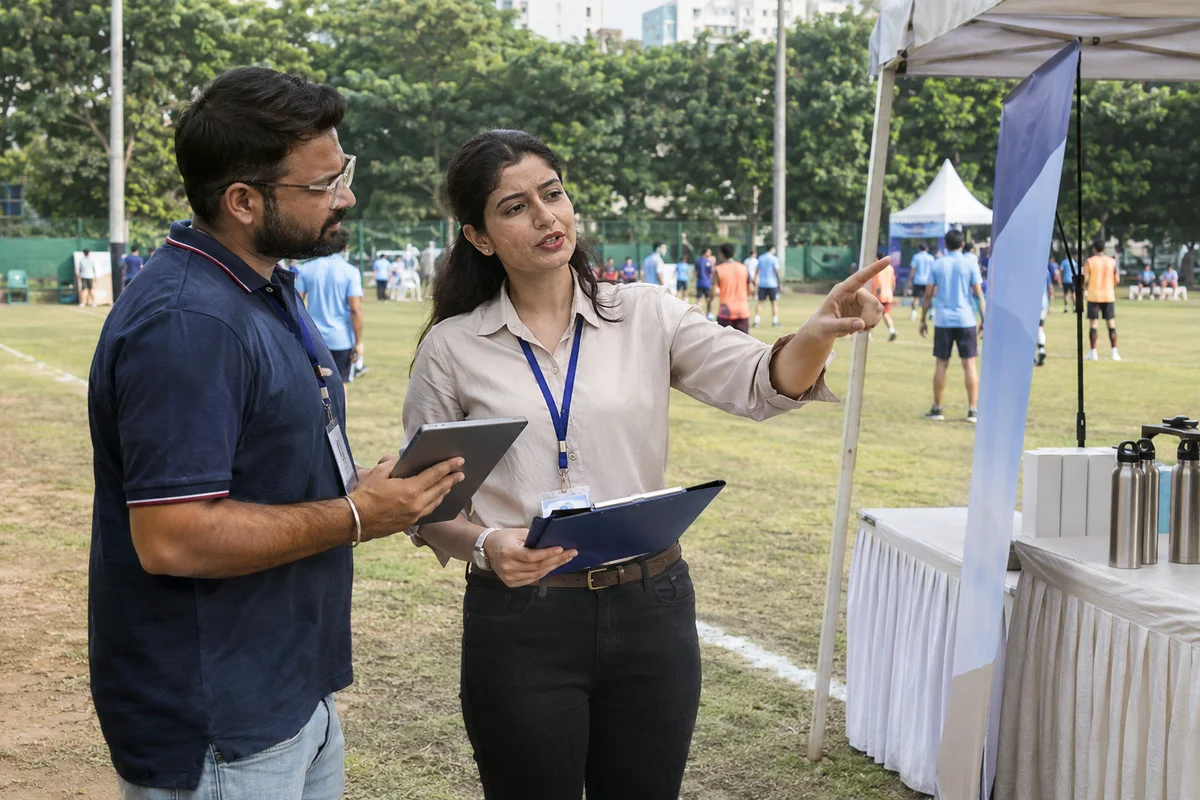
What sponsorship marketing means
Sponsorship marketing is paying a local event, team, school, festival or community programme for the right to put your name in front of its people. GullySales checks the fit with your buyers, reads the rights in writing, plans how you show up beyond a logo, and records the enquiries the sponsorship actually brought.
Also for coaching centres and tutors
- Branding and identity for coaching centres and tutors
- Apartment advertising for coaching centres and tutors
- Newspaper advertising for coaching centres and tutors
- Outdoor advertising for coaching centres and tutors
- SEO for coaching centres and tutors
- PPC advertising for coaching centres and tutors
- Lead generation for coaching centres and tutors
- Digital marketing for coaching centres and tutors
Sales and marketing for coaching centres and tutors, the overview.
Last updated 14 Nov 2026. Rules for this trade differ by state and professional body, and they change. We describe restrictions in general terms, so check the current position with your own council or adviser before you publish anything.
For coaching centres and tutors
Where it usually goes wrong, and what we would do.
“The request arrives from someone you know”
A school annual day, a residents' cricket tournament and a festival committee each ask at the same moment, and each is a good cause. The test is whether the families attending have children of the age and subject you teach, not whether refusing feels awkward.
“A logo on a banner is not a demo class”
Parents see the name for an evening and forget it by the next morning. A desk with a diagnostic test slot, a teacher to speak to and one number to message turns a glance into a booking. The banner only starts the recognition.
“Schools set their own rules for outsiders”
A school decides what outside organisations may display or say to pupils and parents, and some bar any commercial presence. Ask the principal or management in writing what is allowed, including a stall, a leaflet or a mention from the stage, before anything is printed.
“Sponsor wording has to stay modest”
Banners that name ranks, selections or toppers invite scrutiny of coaching advertisements. A sponsor's banner can carry the centre's name, the courses taught and a plain line on the partnership with the event. Check the current rules on coaching advertisements with your own adviser.
What we do
What we deliver for coaching centres and tutors.
The work available for this need. We agree the deliverables and responsibilities for your engagement in writing.
Audience fit note for each request
For each school, society or club, who attends, which classes the children study in, where they live and whether they fall within reach of your batches.
Result: A refusal goes to the request whose audience lives too far or is the wrong age.
Rights schedule in writing
The list of what the organiser gives you: placements, mentions, a table, use of the event name, and whether another centre may sponsor the same event. Anything promised in conversation is put on paper.
Result: You pay against a written list and can check each item afterwards.
Presence plan for the day
A teacher at a desk, a diagnostic test slot or a doubt-clearing corner, a named person from the centre, and a follow-up call for every family that leaves a number.
Result: Families who stop at the desk are called back by a person who spoke to them.
Source question on the enquiry sheet
A line asking how the family heard of you, added to the enquiry sheet, phone log and WhatsApp reply, with the event named.
Result: Admissions can be separated by the event that brought the family.
Event photographs with permissions
The shots worth taking at the stall and where they will be used. Pictures of children are taken only with the school's or a parent's written consent.
Result: Content from the event is reusable without a consent question later.
Review sheet after the event
A one-page record of what was promised, what ran, what was logged and whether to renew, change the terms or decline next time.
Result: The next request is answered from a record and not from goodwill.
How the result is measured
- Rights delivered against the rights schedule
- Enquiries that name the sponsorship as the source
- Reply time to those enquiries
Recorded as a baseline before work starts, so every later report has an honest comparison.
Who it is for
This is written for these coaching centres and tutors.
- School tuition centres for CBSE, ICSE and state boards
- Home tutors and individual subject teachers
- JEE and NEET entrance coaching institutes
- State entrance coaching for KCET, MHT CET and similar exams
- Government exam coaching for UPSC, state PSC, bank and SSC exams
- Commerce coaching for CA, CS and CMA foundation levels
- Language, spoken English and IELTS or PTE coaching centres
- Study abroad and overseas education consultants
- College admission and career counselling advisers
- Online and hybrid tutoring businesses
Before you decide
Agree the work. Know how to judge it.
Sponsorship marketing for coaching centres and tutors: use these checks to prepare, choose the scope, and review what changes.
Bring the right evidence
Collect the sales presentation, website, quotations, and other material buyers actually see. Mark where the description of the business changes or where a claim has no supporting evidence.
Make the scope clear
Agree whether the work concerns the offer, the words, the visual identity, or all of them. List the formats that need updating and who owns the final approval.
Check the work in use
Test the proposed direction on a real sales page or proposal. A buyer should be able to tell who the offer is for, what is different, and what evidence supports it.
Know when to change course
A new identity will not fix an unresolved service problem. Put the delivery issue right before making a stronger public promise about it.
These are discussion points, not a fixed package. GullySales confirms the deliverables, responsibilities, fee, and term in writing after reading your brief and speaking with you.
Before we start
What to have ready before the work starts.
The records, access and decisions this work needs from coaching centres and tutors. Anything missing is noted in the written scope, with who will supply it.
- Every sponsorship request in writing
- Bring the letters, messages or notes of requests you have received, even those you refused. They show how the centre is approached. Without them, we judge only the request in front of us, and the pattern of favours is not seen.
- The organiser's attendance information
- Ask the school or society for the classes, the families and the number expected, in writing. A rough figure is acceptable. If the event is open to the public, ask how entry is controlled. Without it, the audience is a guess, and the centre pays for families who may live too far away.
- A modest wording for the banner
- Prepare the plain line you would stand behind on a banner, such as the centre's name and the classes taught. No claims of rank are needed. Left unprepared, the banner is drafted at the print shop, and an unsupported claim appears at a school function.
- A staff member free on the day
- Name the teacher or counsellor who attends and the hours they can stay. Their presence turns a banner into a conversation. If no one can go, the sponsorship is reduced to a logo, and we advise against paying for it.
- The school's rule on outside organisations
- Ask the school or the society in writing what an outside sponsor may do, hand out or sell. Rules differ. Without the answer, a stall or leaflet may be stopped on the day, and the centre's name is attached to the complaint.
How it works
How the sponsorship marketing work runs
The work itself, in order. How an engagement starts, from your brief to a written scope, is set out on our method page.
- 1
Write down who is asking and why
We start by collecting every sponsorship request the centre has received or is considering, from a school's annual day to a society festival, with the name of the person who asked and their link to you. You tell us which requests feel like favours. We also note whether the person asking has children at the centre, since that changes what a refusal costs. The sheet separates a favour from a marketing decision before any money is considered.
- 2
Find out who will actually attend
For each event we ask the organiser who will be in the audience: which classes, how many families, how many of them live near the centre. You decide the minimum fit. We also ask whether the families are those of your feeder schools, because an event for a distant school brings goodwill but few admissions. An event that cannot say who attends is marked unknown, and the note records that nobody could answer.
- 3
Get the rights in writing before payment
We list what the sponsor is given, such as a banner, a mention on stage, a stall or a place in the programme, and ask the organiser to put it on paper with the date and the place. You sign only a document that matches. We also ask what happens if the event is postponed or cancelled, and whether the payment is returned. Anything promised verbally is written down or left out.
- 4
Plan the centre's part on the day
With the counsellor we decide who stands at the event, what they carry, what they say and how a family can book a demo, keeping the banner modest. You agree the school's rules on outsiders. The presence plan stops the centre buying a logo and doing nothing more.
- 5
Add a source line to enquiries
We add a line to the enquiry sheet and the WhatsApp reply so the counsellor asks every new caller whether they met the centre at the event. You read the wording before it is used. Photographs taken on the day have the permissions noted, and any child's image waits for the parent's written consent.
- 6
Read the event against the baseline
After the event we count demos booked and admissions with the event named as the source, and compare with the enquiry figures noted before it. You see the cost beside the families met. The counsellor adds what families said about the centre's presence, which the count does not capture. The decision is whether to sponsor the same event again, ask for a different right, or decline when the request next arrives.
Where this fits
Three pieces of sales work, in this order.
This work sits inside sales process design, at stage 0, foundation. The audit comes before it, and sales management keeps it running.
Step 1
Sales audit
Find where deals are being lost and what to fix first.
Start here if you cannot say where orders are lost.
Step 2 · you are here
Sales process design
One written way to sell, from first enquiry to repeat order.
Start here if every salesperson sells differently.
Step 3
Sales management
A target, a review routine and someone who owns the number.
Start here if the team has targets and no routine.
FAQ
Questions owners ask before they call.
Not here? More answers, or ask on WhatsApp.
Is a donation to a school event the same as a sponsorship?
Can we hand out leaflets at a school function?
How will we know the sponsorship worked?
What if a long-standing family asks us to sponsor and we cannot say no?
Can we sponsor a school and also offer our own batch there?
How much does it cost?
How long is the contract?
How soon will we see results?
Who will actually do the work?
What do you need from us?
From the blog
Further reading for coaching centres and tutors.
 5 min read · 6 Oct 2026How families and companies choose between institutesA parent, a student, a candidate and an HR head each pick an institute differently. Who decides, what each checks and what admissions should have ready.
 8 min read · 21 Sept 2026Radio advertising in BengaluruWho listens to radio in Bangalore, and where: the evening traffic crawl, the auto driver's station, shop counters with FM on, and reach past the city.
 8 min read · 21 Sept 2026Metro advertising in BengaluruNamma Metro sells three audiences under one name: people in the station, people in the train and drivers under the viaduct. Which to buy, and why.
More for coaching centres and tutors
Related work to consider.
Closest to this: brand and design
Also for coaching centres and tutors
Or start from the overview: sales and marketing for coaching centres and tutors.
Your next practical step
Tell us what you are trying to grow, and we will read it before we call.
Eight short steps, mostly taps. Skip anything you would rather answer on the call.