Cricket academies · Social media
Show parents the coaching, so the coach is trusted before the first call.
Social media marketing for a cricket academy is the short video, photograph and update that parents see in their feeds and family groups before they ever visit. GullySales works on what the academy posts, who gets consent and how a comment becomes an enquiry.
Scope, fee, reporting and term are agreed in writing after we have read your brief and spoken to you.
What social media means
Social media is the ongoing posting your business does on platforms such as Instagram, Facebook and LinkedIn to stay visible to customers and prospects between purchases. GullySales plans a posting calendar, writes captions and designs the images so the page looks active and answers what a visitor would ask.
Last updated 14 Nov 2026.
For cricket academies
Where it usually goes wrong, and what we would do.
“Parents watch the coaching, not the trophies”
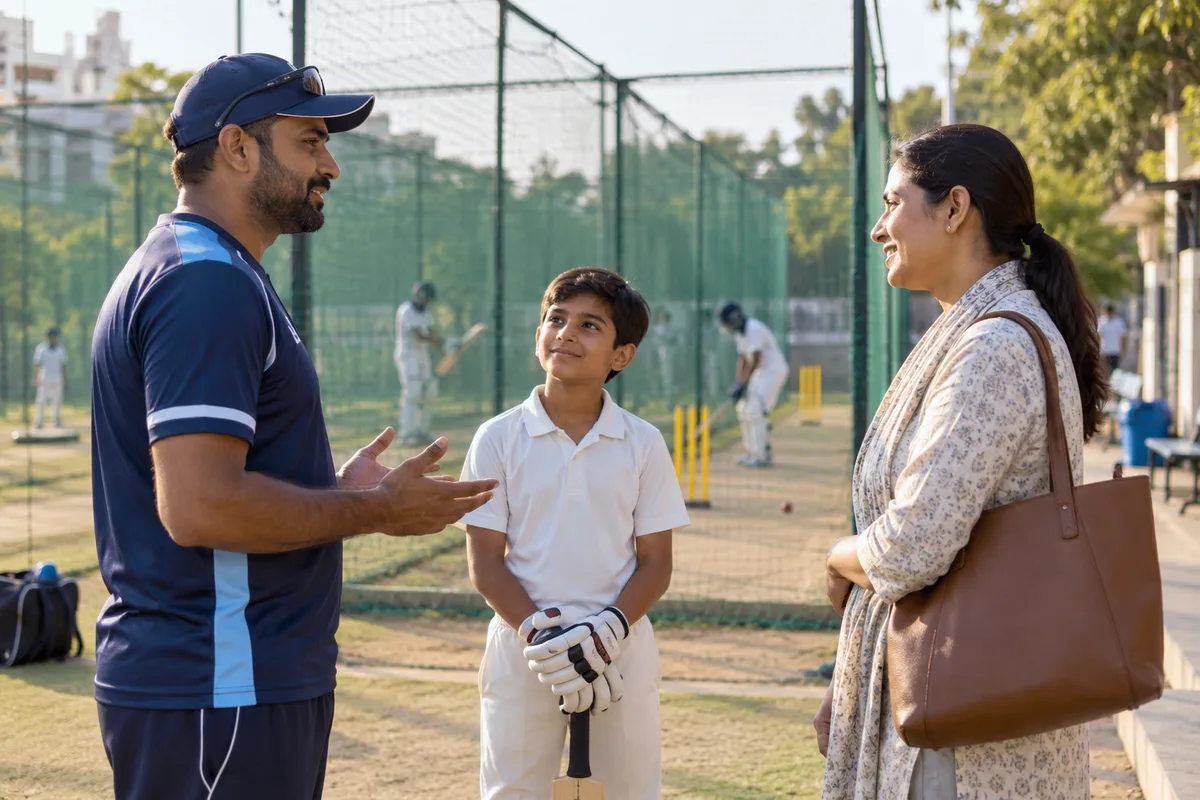
A clip of a coach correcting a small boy's grip and smiling tells a parent more than a shelf of cups. Posts that show how the session feels answer the real worry: will my child be treated kindly.
“Children are in every frame and consent is rarely written”
A proud post of a young batter is also a child's image shared publicly. Without a written parental consent that says where it will appear, the academy carries a risk it has not counted and cannot undo.
“Instagram is for browsing and WhatsApp is for deciding”
A parent likes a reel, then asks a friend in a family group. The post that works is one that is easy to forward and that ends with a clear route to a trial, not just a heart.
“Posting stops when the coach is busy”
The account is run by whoever has a free evening. It goes silent in the weeks after the camp, exactly when new term enquiries begin. A simple rota keeps the account alive without asking the coach.
What we do
What we deliver for cricket academies.
The work available for this need. We agree the deliverables and responsibilities for your engagement in writing.
A consent form and a record
A short written parental consent stating where an image may appear, with a register of who agreed and who did not.
Result: Every child shown in a post has consent on file.
A plan of post types
Drills, coach introductions, ground tours, batch announcements and trial invitations, each with a purpose.
Result: The account has a reason behind every post.
Short videos made at the nets
Clips filmed on a phone during ordinary sessions, edited with captions that carry the batch and the route to book.
Result: A parent can see a session before visiting one.
Comment and message replies
A routine for answering comments and direct messages, moving serious enquiries to WhatsApp.
Result: A question on a post becomes a logged enquiry.
Shareable cards for family groups
A batch card with age group, timing and booking route that a parent can forward in one tap.
Result: Your batch details travel between parents without retyping.
How the result is measured
- Posts published
- Engagement rate
- Enquiries from social profiles
Recorded as a baseline before work starts, so every later report has an honest comparison.
Posts and pieces to plan
Posts a cricket academy can plan around the coaching and not the scorecard.
- A drill filmed from behind the bowler
- A short vertical clip of one coaching drill, with the coach explaining one point in plain words. Parents judge the coaching by what they can see in it.
- The beginners' first net session
- A photo set of a first session, taken from the side with faces turned away or covered by helmets. Written consent is held for every child who appears.
- Summer camp day plan
- A card showing the day's order of warm-up, nets, fielding and rest, with the water and shade arrangements. Safety is what the parent looks for in it.
- Meet the coach
- A short introduction in the coach's own voice about how they teach a beginner. It is the nearest a parent comes to meeting the coach before the first call.
- A parent's question answered
- A card answering one question from the enquiry sheet, such as what a child should bring on the first day. It shows the academy listens.
Who it is for
This is written for these cricket academies.
- Neighbourhood cricket academies
- Academies with their own turf ground
- Academies hiring school or club grounds
- Summer camp focused academies
- Academies with age-group competition teams
- Indoor and net-practice centres
Before you decide
When this may not be the right fit.
- You have no signed consent from parents for photographs of their children, so the first posts would have to show the empty ground only.
- The coach is the only person who could film or post, and the coach has no time away from the ground, so the plan would stop in its first month.
Before you decide
Agree the work. Know how to judge it.
Social media marketing for cricket academies: use these checks to prepare, choose the scope, and review what changes.
Bring the right evidence
Review the posts that produced useful conversations, not only the ones with the most views. Gather buyer questions and decide which team member can contribute credible material.
Make the scope clear
Choose the audience and channel before setting a posting volume. Agree who supplies material, approves posts, and handles messages, including complaints or questions the agency cannot answer.
Check the work in use
Follow a post through to the profile, website, and response. A useful report explains the quality of conversations and enquiries, alongside reach and engagement.
Know when to change course
If publishing takes time away from unanswered buyer messages, fix the response routine first. Do not expand to another channel without a clear reason for being there.
These are discussion points, not a fixed package. GullySales confirms the deliverables, responsibilities, fee, and term in writing after reading your brief and speaking with you.
Before we start
What to have ready before the work starts.
The records, access and decisions this work needs from cricket academies. Anything missing is noted in the written scope, with who will supply it.
- Signed consent for each child on camera
- A form per child, signed by a parent, saying what may be shown and where. Posting a child without it risks a parent objecting in front of the whole group. If forms are missing, we film only the ground, the kit and the coach.
- Admin access to the academy's accounts
- We need to be added to the Instagram and Facebook pages as an editor, not given a password. If the account sits on a coach's personal profile, we move it to a business account first. Without this, posts have to be sent to you to publish by hand.
- A day the coach can be filmed
- Pick a session where the coach is happy to be filmed teaching, with parents informed. We need the coach for ten minutes of explanation to camera as well. If the coach will not appear on video, the content turns to the ground and the drills, and loses much of its trust.
- A named person to approve posts
- Someone with authority must see each post before it goes out, and say yes or no the same day. A post waiting for the coach to find a minute loses its moment. We cannot post anything showing a child or a score without that approval.
- The list of parents' group rules
- If the academy already runs parents' groups, tell us what rules exist about photographs and forwarding. Our captions and cards should fit them. Where no rule exists, we draft one for you to send before we post anything that can be forwarded.
How it works
How the social media work runs
The work itself, in order. How an engagement starts, from your brief to a written scope, is set out on our method page.
- 1
Scroll the feeds parents already follow
We look at which academies, coaches and school sports pages parents in the area follow, and note what they post: match clips, net sessions, results, fee notices. You tell us which accounts you respect and which you would not copy. This shows what a parent compares you with, and which format in your area gets watched and forwarded.
- 2
Settle consent for every child on camera
Before filming, we draft a short consent form for parents, in plain language, covering photographs and clips on the academy's pages and in family groups. You decide who collects them and where they are filed. We record each child as yes, no or only the back of the head. Posting begins only for children on the yes list.
- 3
Choose the post types with the coach
We sit with the coach and agree on a handful of repeatable posts: a drill explained in one clip, a net session with no faces, a coach's tip for a beginner, a ground-ready photograph. You reject any that would pull the coach away from the children. The list becomes the menu we plan the calendar from.
- 4
Film one real session together
We attend a session with a phone and a small stand, and film short clips while the coach coaches as usual. You approve the cuts, check every frame against the consent list, and choose the captions. What exists is a batch of clips ready to post, and the coach has learned what a usable clip needs.
- 5
Reply to comments and move them to WhatsApp
We write short replies for questions about batch timings, fees and trials, and agree who answers during session hours. Any parent who asks something specific is invited to continue on the academy's business number, where the enquiry sheet records them. You decide which questions get a public answer and which a private one.
- 6
Count enquiries, not likes
We compare the posts with the enquiry sheet and the trial register, and note which clip was followed by a message from a parent. You see which post types led to a trial. We report this against the figures before we began and pick what to repeat, and we make no promise about reach or follower numbers.
Where this fits
Three pieces of sales work, in this order.
This work sits inside sales process design, at stage 0, foundation. The audit comes before it, and sales management keeps it running.
Step 1
Sales audit
Find where deals are being lost and what to fix first.
Start here if you cannot say where orders are lost.
Step 2 · you are here
Sales process design
One written way to sell, from first enquiry to repeat order.
Start here if every salesperson sells differently.
Step 3
Sales management
A target, a review routine and someone who owns the number.
Start here if the team has targets and no routine.
FAQ
Questions owners ask before they call.
Not here? More answers, or ask on WhatsApp.
Can we post match photographs of our players?
Should we pay to boost posts?
How should a cricket academy post a child's score or wicket?
What do we do if a parent objects to a photograph already posted?
Should the coach appear in the posts?
What do we do if a parent asks us to take a photograph down?
How much does it cost?
How long is the contract?
How soon will we see results?
Who will actually do the work?
From the blog
Further reading for cricket academies.
 5 min read · 28 Jul 2026Using parent groups and community to bring in admissionsParents ask other parents first. How an academy, school or tuition centre can be useful in local parent groups without spamming, with house rules.
 7 min read · 26 Feb 2026How cricket academies handle the summer camp rushA summer camp brings a rush of calls in a few weeks. Plan the phone, the booking message and the follow-up so camp families stay on as regular members.
 5 min read · 28 Dec 2025An enquiry-to-enrolment tracker an institute can run on a spreadsheetA ten-column spreadsheet that shows where admissions are lost, from source to decision, each with an owner and a date. Layout, rules and a worked read-out.
More for cricket academies
Related work to consider.
Closest to this: content and social
Also for cricket academies
Or start from the overview: sales and marketing for cricket academies.
Your next practical step
Tell us what you are trying to grow, and we will read it before we call.
Eight short steps, mostly taps. Skip anything you would rather answer on the call.