Gymnastics academies · Lead generation
Fill the toddler, beginner and squad batches that still have empty places.
Lead generation for a gymnastics academy means bringing parents to a trial class for the specific batch that has room, whether that is toddlers, school-age beginners or a competitive squad. GullySales builds the batch pages, the trial booking route and the source tracking behind those enquiries.
Scope, fee, reporting and term are agreed in writing after we have read your brief and spoken to you.
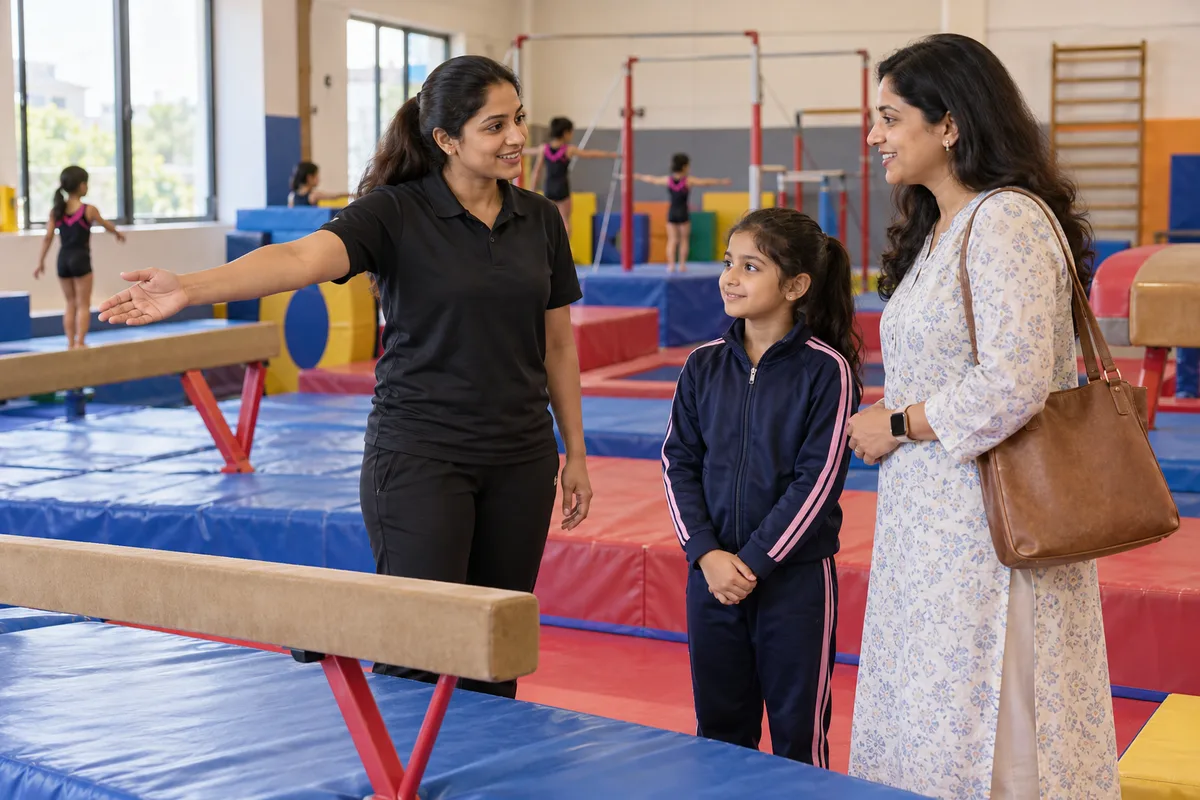
What lead generation means
Lead generation is the combined work of every channel that brings in a new enquiry, whether from search, adverts, referrals or a stall at an exhibition. GullySales runs these channels together and reports the number of enquiries each one produced, not the activity behind it.
Also for gymnastics academies
- CRM for gymnastics academies
- Follow-up systems for gymnastics academies
- SEO for gymnastics academies
- Local SEO for gymnastics academies
- Social media marketing for gymnastics academies
- Content marketing for gymnastics academies
- Buyer personas for gymnastics academies
- WhatsApp marketing for gymnastics academies
Sales and marketing for gymnastics academies, the overview.
Plan the next part of the work
Last updated 21 Nov 2026.
For gymnastics academies
Where it usually goes wrong, and what we would do.
“The enquiry names a batch, not an academy”
A parent asking about gymnastics for a school-age child wants an age group, a time and a place near school. An enquiry route that asks for the child's age and preferred days first lets the front desk offer a real batch instead of sending a general brochure.
“A batch with empty places needs its own push”
No academy has every batch equally full. The weekday evening beginners group may be waiting for children while the weekend toddler class has a waiting list. Lead generation points at the gap and leaves the full batches alone.
“Parents ask other parents first”
In a housing society group, one message from a neighbour about a good academy outweighs a paid advertisement. Recording which society or school each enquiry came from shows where the next taster session belongs.
“A trial date is the real conversion”
Parents do not enrol from a page. They want the child on the mat once and a coach in front of them. Every enquiry route should end in a booked trial, because a form with no trial date attached is only a name.
What we do
What we deliver for gymnastics academies.
The work available for this need. We agree the deliverables and responsibilities for your engagement in writing.
Batch-by-batch enquiry pages
One short page for each age group, listing days, times and the area served, with a trial button that carries the batch into the booking.
Result: The front desk knows which batch every enquiry wants.
A trial booking route
A form or WhatsApp message that asks the child's age, any earlier experience and preferred days, then offers a slot from batches with room.
Result: Each enquiry leaves with a trial date, not a promise of a callback.
Source tags on every enquiry
Society group, school, search, Instagram and walk-in recorded at the moment the parent first gets in touch.
Result: You can see which source brings booked trials.
A society and school outreach plan
A short pitch and a taster-session offer written for preschools, schools and housing societies near the academy.
Result: Outreach goes where the families you want already gather.
A places-left sheet read before any campaign
A simple list of open places in each batch, checked before effort is aimed at any programme.
Result: Campaigns aim at the batches that need children.
How the result is measured
- Relevant enquiries by source
- Duplicate and unsuitable enquiries
- Time to the first response
- Accepted enquiries reaching an agreed next step
Recorded as a baseline before work starts, so every later report has an honest comparison.
What to capture or send
Details to record when a parent first asks about a gymnastics batch.
- Child's age and any prior classes
- Decides between the toddler, beginner and squad batch, so the reply names the right group and coach.
- Batch or day asked about
- Written at the first message. It shows which batch has empty places and which parents need a trial slot.
- Preferred trial date
- Booked on the first call. A named date turns an enquiry into a child standing on the mat.
- Home locality or school
- Shows whether the family can manage the travel after school and which schools send most enquiries.
- Who referred the family
- A parent at the academy, a school or a neighbour, picked from a list, so the next showcase invitation goes to the right people.
Who it is for
This is written for these gymnastics academies.
- Recreational gymnastics academies
- Artistic gymnastics clubs
- Rhythmic gymnastics academies
- Toddler and preschool movement programmes
- Competitive gymnastics squads
- Gymnastics within multi-sport centres
- Parkour, tumbling and trampoline programmes
- Gymnastics and fitness programmes for older children and teenagers
Before you decide
When this may not be the right fit.
- No coach is free to run a trial, so a family that books would arrive to find nothing ready.
- A batch is already full and has a waiting list, so more enquiries for it would only add to the wait.
Before you decide
Agree the work. Know how to judge it.
Lead generation for gymnastics academies: use these checks to prepare, choose the scope, and review what changes.
Bring the right evidence
Define the organisations or buyers you can serve and the reasons they would consider a conversation. Bring examples of accepted and rejected prospects so the selection rule is visible.
Make the scope clear
Agree the research sources, contact approach, qualification rules, and handover. Clarify which meetings count as accepted and what happens to replies that are not ready to buy.
Check the work in use
Review why a prospect was selected and what was learned from the response. Count held, relevant conversations separately from contacts found, messages sent, or meetings booked.
Know when to change course
If the same objection appears repeatedly, adjust the offer or buyer group before increasing outreach. Respect a request to stop contact and keep the exclusion in the record.
These are discussion points, not a fixed package. GullySales confirms the deliverables, responsibilities, fee, and term in writing after reading your brief and speaking with you.
Before we start
What to have ready before the work starts.
The records, access and decisions this work needs from gymnastics academies. Anything missing is noted in the written scope, with who will supply it.
- The batch register with capacity noted
- We need the current register for every batch, showing who is enrolled and how many places each coach can safely supervise. It can be a notebook or a spreadsheet, as long as the names are readable. Without it we cannot tell which batch needs enquiries, and the plan would push families towards classes that are already full.
- Two terms of the enquiry book
- Bring the enquiry book or message history for the last two terms, even if entries are incomplete. We look for the batch asked about, the date and how the parent heard of you. If the book is thin, we agree a simple column to start filling now, and the plan relies on the sources you can already name.
- The head coach for one conversation
- The person who sets the trial format must be in the room once. Only the coach can say how many extra children a class can carry, what a trial child may attempt and when a squad needs an assessment instead. Without that conversation we would write an offer you cannot honour on the floor.
- A list of nearby schools and societies
- Write down the schools, housing societies, clubs and parent groups within the distance families travel to you, and mark the ones where you already know someone. The list can be rough. Where it is missing, the outreach plan starts from the families already enrolled and asks them where their friends' children study.
- Permission to use the facility photographs
- The batch pages and notices need pictures of the mats and apparatus. Bring photographs without identifiable children, or the consent forms for those that show them. If neither exists, we use the empty floor and the equipment, and the pages carry fewer faces until your consent routine is in place.
How it works
How the lead generation work runs
The work itself, in order. How an engagement starts, from your brief to a written scope, is set out on our method page.
- 1
Read the places-left sheet batch by batch
We start with your registers, not with a campaign. For each toddler, beginner and squad batch we note the capacity, the families enrolled and the empty places. You tell us which batches you want filled first and which are full on purpose, such as a squad that needs a coach's selection. That sheet decides where an enquiry is worth chasing and where a waiting list is the honest answer.
- 2
Trace where last term's families came from
We sit with the front desk and go through the enquiry book, the trial register and the enrolment forms for the last two terms. Each family gets a source: a school notice, a neighbour, a society board, a search, a camp. You confirm the ones we cannot place. What exists afterwards is a plain list of the routes that actually produced a child on the mat.
- 3
Write the trial offer with the head coach
The head coach and you decide what a trial class is: which batch it joins, how many children share it, what a parent may watch from the gallery and what is asked of the parent in return. We put that in words a parent can read in one look. You approve the wording, because it is a promise about your floor and your supervision.
- 4
Place the batch pages and booking route
We build or fix the enquiry page for each batch with the age band, the timing, the trial date and the form. Then we send two or three test enquiries ourselves, as parents, and watch who answers and how long the form takes on a phone. You see the test messages arrive at the desk before any parent does.
- 5
Visit the societies and schools you chose
From the source list you pick the housing societies, schools and activity groups worth a visit. We prepare the notice, the sample class invitation and the contact person for each, and your coach or manager takes them along. Every notice carries its own tag, so an enquiry that quotes it can be traced to that board or that school.
- 6
Read enquiries against the places-left sheet
We put the tagged enquiries, trials attended and joining forms next to the sheet recorded before the work began. You see, batch by batch, which routes brought trial bookings, which trials became enrolments and which batches still have room. The decision on where to push next stays with you, made from your own register.
Where this fits
Three pieces of sales work, in this order.
This work sits inside sales process design, at stage 1, prospecting and lead generation. The audit comes before it, and sales management keeps it running.
Step 1
Sales audit
Find where deals are being lost and what to fix first.
Start here if you cannot say where orders are lost.
Step 2 · you are here
Sales process design
One written way to sell, from first enquiry to repeat order.
Start here if every salesperson sells differently.
Step 3
Sales management
A target, a review routine and someone who owns the number.
Start here if the team has targets and no routine.
FAQ
Questions owners ask before they call.
Not here? More answers, or ask on WhatsApp.
Should we advertise gymnastics in general or one batch?
Where do enquiries come from for an academy like ours?
Is a free trial class necessary?
How do we collect enquiries without taking too much about the child?
Who calls the parent after an enquiry arrives?
Do we need to stop our current notices at schools?
How much does it cost?
How long is the contract?
How soon will we see results?
Who will actually do the work?

More for gymnastics academies
Related work to consider.
Closest to this: leads and follow-up
Also for gymnastics academies
Or start from the overview: sales and marketing for gymnastics academies.
Your next practical step
Tell us what you are trying to grow, and we will read it before we call.
Eight short steps, mostly taps. Skip anything you would rather answer on the call.