Preschools · Buyer persona
Write down who chooses the school: the mother, the father or the grandparent.
A buyer persona for a preschool describes the real decision-maker and the people who influence the choice, since the person who visits is not always the one who signs. GullySales builds a written card for each kind of family you admit.
Scope, fee, reporting and term are agreed in writing after we have read your brief and spoken to you.
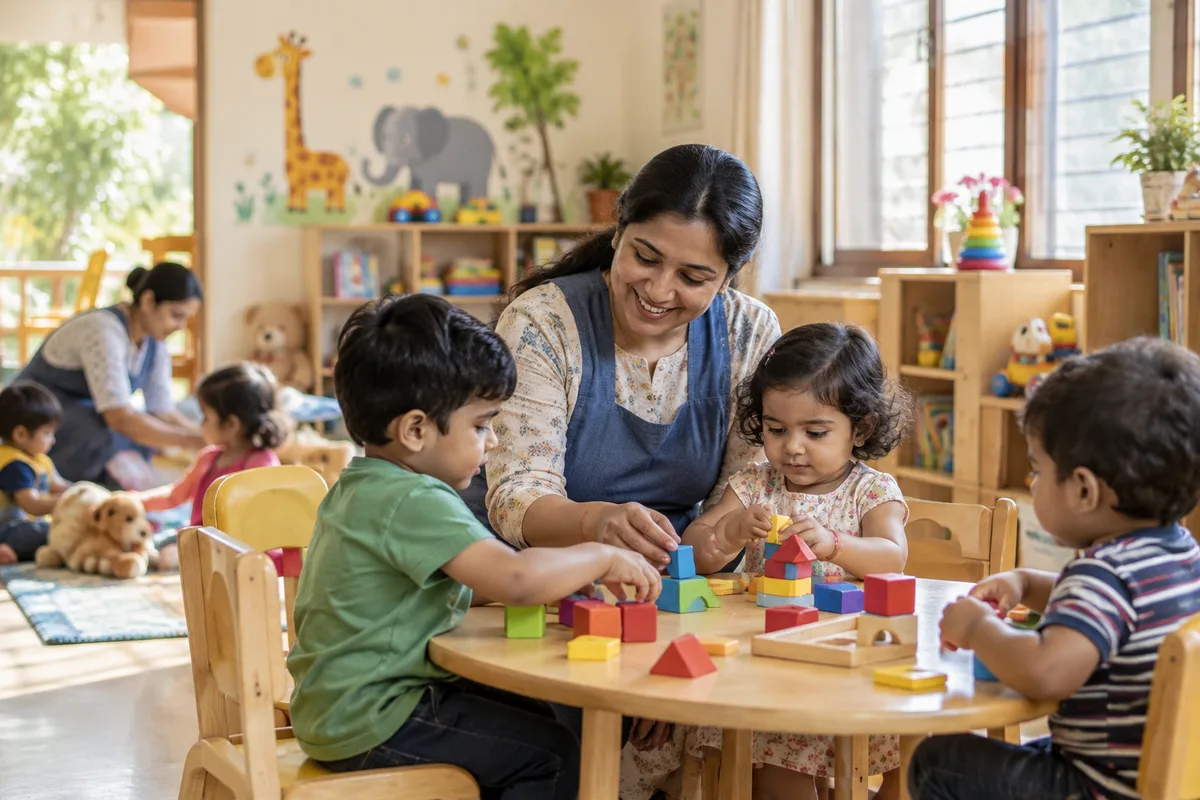
What buyer persona means
A buyer persona is a plain description of the kind of customer who actually buys from you. It includes what they search, what worries them and who else they ask before deciding. GullySales builds this from real enquiries and past sales rather than a generic template, then uses it to write every page and advert.
Last updated 18 Oct 2026.
For preschools
Where it usually goes wrong, and what we would do.
“The parent who visits is not always the decider”
A mother may do the research and the tour while the father decides the budget and a grandparent decides the distance. A school that speaks only to the visitor misses the voice that settles it.
“A first-time parent and a second-time parent ask different things”
The first child brings fear of separation and safety. The second brings comparison with the earlier school and a request for fewer rules. One reply script treats both the same and fits neither.
“Working parents buy hours, not just a class”
A couple with long commutes weighs day care, pick-up time and the van before the curriculum. If the card ignores timings, the school describes the wrong thing.
“A transfer family is in a hurry”
Parents who have just moved city need a seat and a clear process, and they judge the school by when a human answers. They are a different buyer from the family planning two years ahead.
What we do
What we deliver for preschools.
The work available for this need. We agree the deliverables and responsibilities for your engagement in writing.
A card for each family type
Short written cards for the first-time parent, the second-child family, the working couple and the family that has just moved.
Result: The office knows who it is talking to before the first call.
A list of questions each card asks
The usual questions and worries of each family type, taken from your own enquiry notes and tour records.
Result: Replies answer the worry that is actually there.
A role map for the household
A note on who researches, who visits, who pays and who is consulted, with the questions to ask on the call to find out.
Result: You learn who still needs to see the school.
A tour variation per card
Small changes in the route and talk for each family type, such as the van for working parents or the settling plan for first-timers.
Result: The tour speaks to the person on it.
A review against drop-outs
A comparison of the cards with the families who visited but did not enrol, and a revision where the card was wrong.
Result: The cards describe real families, not assumptions.
How the result is measured
- Enquiry match to persona
- Conversion rate by persona
- Content aligned to persona
Recorded as a baseline before work starts, so every later report has an honest comparison.
Who is asking
The mother, the father and the grandparent each ask the school a different question.
- First-time parent
- Wants to know about readiness, the first week and the teacher. The anxiety is about the child, not the fee.
- Second-time parent
- Wants the fee, the hours and the van, having done this before. The questions are short and practical.
- Working parents needing day care
- Want the hours, the extended day and the pick-up arrangement. They buy hours, not just a class.
- Grandparent who does the pick-up
- Wants to know who hands over the child and how the gate works. In some families the grandparent decides who collects.
- Family transferring in mid-year
- Wants a seat, the documents and a quick answer. They are in a hurry and ring several schools.
Who it is for
This is written for these preschools.
- Standalone neighbourhood preschools run by a single owner
- Franchise preschools running under a chain's name
- Preschools attached to a primary or high school
- Play schools inside apartment complexes and gated communities
- Preschools with an extended day or day care add-on
- Activity-based and play-way preschools
- Preschools with their own transport vans
- Preschools run by a trust or a charitable society
Not for
It is not the right fit if.
- You have not yet spoken to any enrolled family, so a persona would be an invention.
- Only one age group has seats, so separate personas would repeat the same reader.
- You cannot record who visited and who decided, so a persona could not be tested.
Before you decide
Agree the work. Know how to judge it.
Buyer personas for preschools: use these checks to prepare, choose the scope, and review what changes.
Bring the right evidence
Write the decision the research must support, such as entering a market or choosing a buyer group. Separate what you know from sales records from what the team currently assumes.
Make the scope clear
Agree which buyers to speak to, which sources to review, and what access you can provide. Include lost enquiries and people who chose another supplier, where they are willing to take part.
Check the work in use
Look for source dates, sample limitations, and evidence that disagrees with the preferred answer. A recommendation should show how it follows from the findings.
Know when to change course
Do not treat a few positive conversations as proof of demand. Test the proposed offer with an actual buying decision before committing to a wider launch.
These are discussion points, not a fixed package. GullySales confirms the deliverables, responsibilities, fee, and term in writing after reading your brief and speaking with you.
How it works
How the buyer persona work runs
The work itself, in order. How an engagement starts, from your brief to a written scope, is set out on our method page.
- 1
Audience decision and scope approval
You send the requirements brief, then we discuss the decision these personas must support. The written scope identifies the audience groups and agreed outputs before work starts.
- 2
Record access and interview selection
Your team shares relevant purchase records and agrees which customers to approach. Customers agree before contact, and we identify gaps such as missing lost-deal notes.
- 3
Interview findings and evidence check
We ask buyers about their last purchase, including what happened before the enquiry and who else was involved. Staff conversations add objections and questions, with differences between accounts kept visible.
- 4
Persona review and corrections
Draft profiles go to the people who handle enquiries and close orders. We check disputed points against the available evidence rather than treating internal agreement as proof.
- 5
Application priorities and handover
You approve the profiles and decide which existing assets need attention first. The persona documents and application map pass to your marketing and sales owners, with implementation responsibilities recorded.
Where this fits
Three pieces of sales work, in this order.
This work sits inside sales process design, at stage 0, foundation. The audit comes before it, and sales management keeps it running.
Step 1
Sales audit
Find where deals are being lost and what to fix first.
Start here if you cannot say where orders are lost.
Step 2 · you are here
Sales process design
One written way to sell, from first enquiry to repeat order.
Start here if every salesperson sells differently.
Step 3
Sales management
A target, a review routine and someone who owns the number.
Start here if the team has targets and no routine.
FAQ
Questions owners ask before they call.
Not here? More answers, or ask on WhatsApp.
How many cards does a school need?
Do we ask parents personal questions to build them?
Does a card replace talking to the parent?
Should a persona include the grandparent?
How much does it cost?
How long is the contract?
How soon will we see results?
Who will actually do the work?
What do you need from us?
What if we are not happy with the work?
More for preschools
Related work to consider.
Closest to this: strategy and research
Also for preschools
Or start from the overview: sales and marketing for preschools.
Your next practical step
Tell us what you are trying to grow, and we will read it before we call.
Eight short steps, mostly taps. Skip anything you would rather answer on the call.