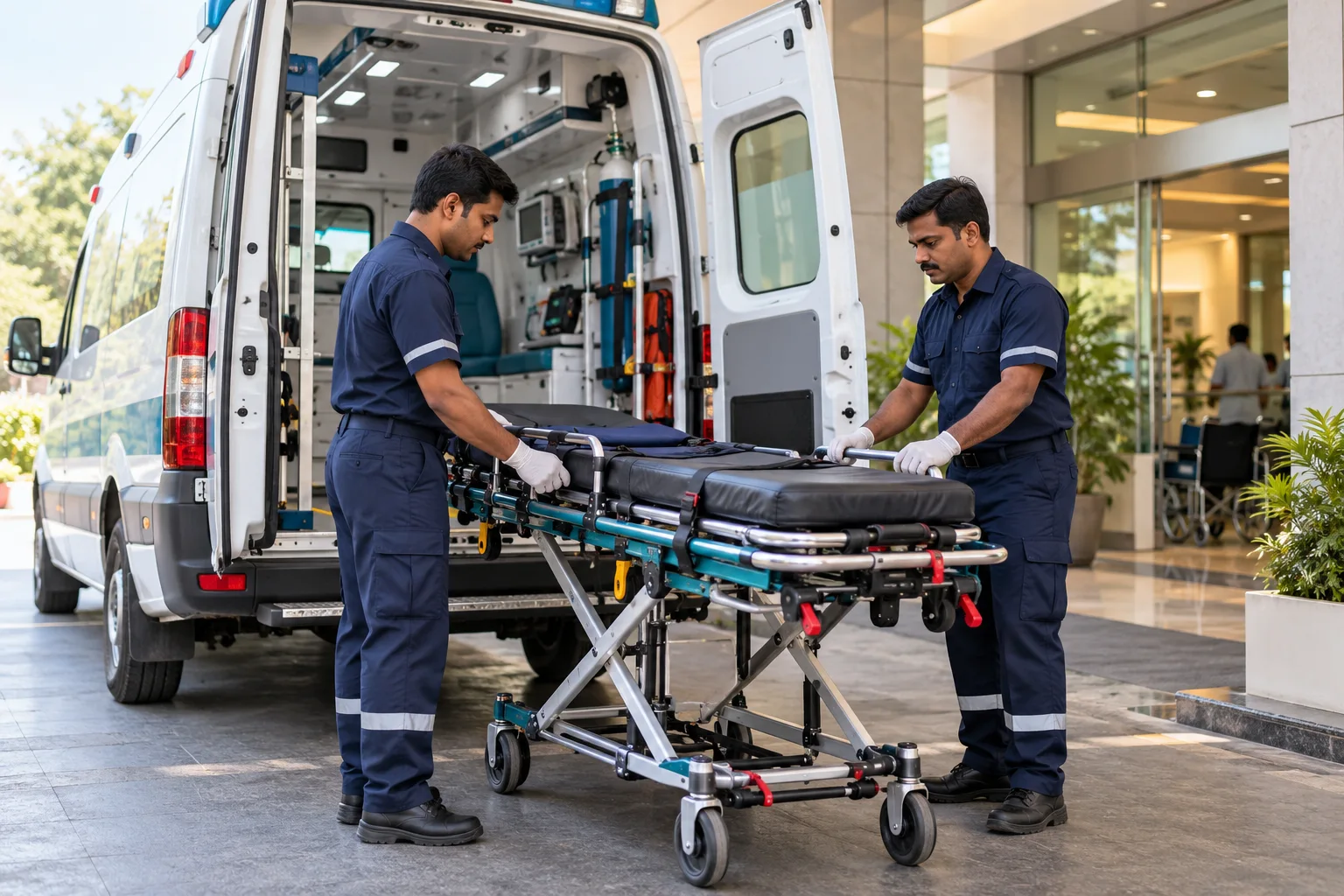
How people choose in this industry
In a true emergency the family calls the government number or whoever they know. Where they have a choice, they pick whoever answers, whoever is nearest on the map, and whoever has a vehicle fitted for the patient's condition. A listing with one working number and photographs of the actual vehicle beats a long list of fleet claims.
Planned transfers are decided differently. A hospital front desk, a nursing home or a dialysis centre keeps a short list of operators and calls the one with the right vehicle, a driver who behaves, and a rate that is not argued about afterwards. The person who decides is a desk supervisor or a ward in-charge, and your record of turning up on time is what that person checks.
Trust after the trip is simple and unforgiving. The family remembers whether the fare matched what was said, whether the oxygen worked and whether the driver was kind. That memory, shared in a family WhatsApp group, is the largest source of the next call.
The decision before implementation
Resolve an outstanding delivery issue before asking for advocacy or another purchase. Respect contact preferences.
Existing industry priorities to review
- Emergency ambulance calls in your area
- Hospital to hospital transfers
- ICU and ventilator ambulance
- Dialysis and regular patient runs
- Discharge drops to home
These describe the industry's wider priorities. The written scope identifies which this service will address.