Medical imaging centres · Social media
Post what a worried patient needs before the scan, and leave the dramatic images out.
Social media marketing for an imaging centre is a plain, calm presence that explains scans, preparation and booking to patients and families, and keeps referring doctors aware of you. GullySales plans the posts and the replies, and the choice of what to publish stays with you.
Scope, fee, reporting and term are agreed in writing after we have read your brief and spoken to you.
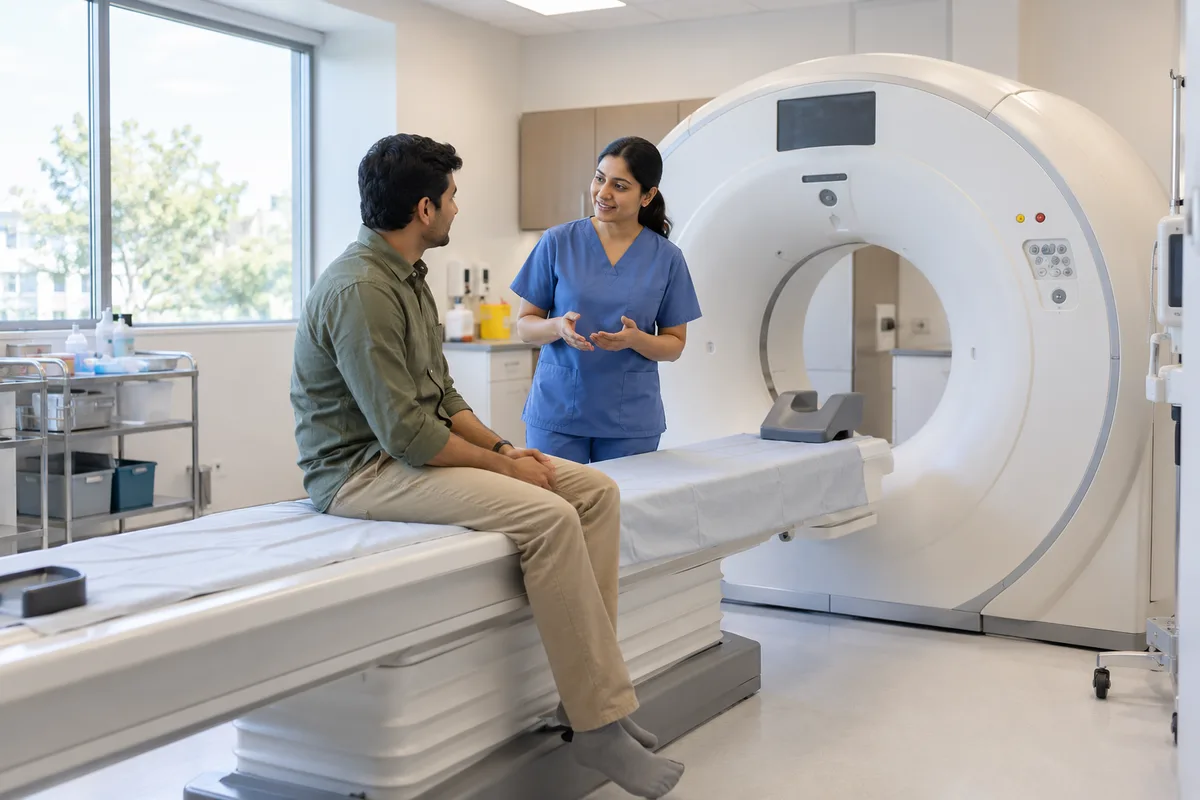
What social media means
Social media is the ongoing posting your business does on platforms such as Instagram, Facebook and LinkedIn to stay visible to customers and prospects between purchases. GullySales plans a posting calendar, writes captions and designs the images so the page looks active and answers what a visitor would ask.
Also for medical imaging centres
- Content marketing for medical imaging centres
- Lead generation for medical imaging centres
- SEO for medical imaging centres
- Local SEO for medical imaging centres
- Buyer personas for medical imaging centres
- CRM for medical imaging centres
- Follow-up systems for medical imaging centres
- WhatsApp marketing for medical imaging centres
Sales and marketing for medical imaging centres, the overview.
Last updated 14 Nov 2026. Rules for this trade differ by state and professional body, and they change. We describe restrictions in general terms, so check the current position with your own council or adviser before you publish anything.
For medical imaging centres
Where it usually goes wrong, and what we would do.
“The audience is anxious”
Someone sent for a mammogram or a CT of the head is already worried. A post that shows a machine as if it were a product launch adds to that worry. A post that explains what the scan feels like and how to prepare lowers it.
“Doctors follow quietly and judge by what is posted”
A referring surgeon seldom comments, but a glance at your page tells them whether the centre looks careful. Posts about the radiologist's subspecialty and the reporting method read as competence. Discount banners read as the opposite.
“Patient images are off limits”
A scan image, a name or a story from a real patient carries privacy and advertising risk in a regulated field. The page has to fill itself with explanations, preparation notes, equipment photographs and the team, with consent and rules checked.
What we do
What we deliver for medical imaging centres.
The work available for this need. We agree the deliverables and responsibilities for your engagement in writing.
A content plan by scan and audience
Topics for patients, families and doctors, each tied to a scan or a booking step.
Result: You see a plan that says which post is for which reader.
Post drafts with preparation notes
Short posts and images explaining fasting, clothing, metal items and arrival, ready for your approval.
Result: Drafts are ready for the owner or radiologist to approve.
A reply guide for comments and messages
Wording for questions about price, urgency and results, with a handover to the phone for anything clinical.
Result: Your team has a reply for each common question.
A photograph checklist
A list of what may be photographed, such as reception, waiting area and equipment, and what must not.
Result: Anyone taking pictures at the centre follows one list.
A doctor-facing profile post
A post for LinkedIn or a clinic group introducing a modality or radiologist, worded for approval.
Result: A doctor sees a factual introduction without any claim about outcomes.
How the result is measured
- Posts published
- Engagement rate
- Enquiries from social profiles
Recorded as a baseline before work starts, so every later report has an honest comparison.
Posts and pieces to plan
Posts that answer a patient's worry or a doctor's question, each with its proof.
- What to wear and remove for an MRI
- A short carousel on metal, jewellery and clothing, reviewed by the technologist, shown with drawings rather than patient photographs.
- Fasting before an abdomen ultrasound
- A single card with the instructions your radiologist confirms and the call line for questions, posted ahead of the busy season for the scan.
- Meet the radiology team
- A post about the radiologists and technologists: qualifications as registered, what each reports, with their written consent.
- How a report reaches your doctor
- A simple graphic of the steps from scan to report to the clinic. It answers doctors' main question about turnaround without making a promise.
- Women's imaging corner
- A reassurance post on privacy, who performs the scan and how to book, with no fear-based wording about disease.
- A new machine at the branch
- A post only once the machine is installed and in use, naming the scans it adds and the referrers who can now send them.
Who it is for
This is written for these medical imaging centres.
- Standalone multi-modality imaging centres
- Hospital-linked imaging and radiology departments
- Imaging chains with several branches
- Centres strong in women's imaging
- Orthopaedic and sports imaging specialists
- Cancer and PET-CT imaging centres
- Teleradiology reporting providers
- Mobile and camp imaging services
Before you decide
When this may not be the right fit.
- No radiologist or technologist has time to review posts, so health information could go out unchecked.
- You plan to use patient scans or photographs to attract attention, which consent and privacy rules do not allow.
- The centre has no one to answer comments and messages, so questions from worried patients would sit unanswered.
Before you decide
Agree the work. Know how to judge it.
Social media marketing for medical imaging centres: use these checks to prepare, choose the scope, and review what changes.
Bring the right evidence
Review the posts that produced useful conversations, not only the ones with the most views. Gather buyer questions and decide which team member can contribute credible material.
Make the scope clear
Choose the audience and channel before setting a posting volume. Agree who supplies material, approves posts, and handles messages, including complaints or questions the agency cannot answer.
Check the work in use
Follow a post through to the profile, website, and response. A useful report explains the quality of conversations and enquiries, alongside reach and engagement.
Know when to change course
If publishing takes time away from unanswered buyer messages, fix the response routine first. Do not expand to another channel without a clear reason for being there.
These are discussion points, not a fixed package. GullySales confirms the deliverables, responsibilities, fee, and term in writing after reading your brief and speaking with you.
Before we start
What to have ready before the work starts.
The records, access and decisions this work needs from medical imaging centres. Anything missing is noted in the written scope, with who will supply it.
- Admin access to the pages
- We need to be added as an editor, with you keeping ownership. If a page was created by someone who has left, resolve it first. Without access we draft posts but cannot test the route to the desk. We also need the email address that owns the page, since losing it later means losing the page.
- Your preparation instructions for each scan
- The sheets your front desk gives patients are the source of the posts. Send the current versions. If instructions differ by branch, mark the differences, since a post cannot give two answers. If branches give different instructions, mark the differences, because a post cannot say two things at once.
- A named radiologist who approves posts
- Each post with a clinical line needs approval. Name the person. When nobody is available, posts are limited to booking and access information. If the radiologist is not available, we limit posts to booking, access and opening hours and leave out preparation text.
- Photographs taken with consent
- Pictures of staff require their permission, and pictures of patients are never used. Settle who obtains consent. Keep the signed consent forms with the job file, together with the date and the purpose of each picture.
- A person to answer messages
- Anxious patients message at odd hours. Name the person who replies and the hours they cover, and say what happens outside them. Unanswered messages harm a centre that wants to appear caring.
How it works
How the social media work runs
The work itself, in order. How an engagement starts, from your brief to a written scope, is set out on our method page.
- 1
Look at what centres and doctors post
We browse the pages of centres in your city and the pages your referring doctors and hospitals follow. Your marketing contact tells us which posts they think drew attention. We note what looks alarming, what looks helpful and what draws no response. This sets the calm tone we aim for. We also check how the centres you compete with word their posts about radiation, because a careless phrase there is one to avoid.
- 2
Write the rule for images and wording
Scan images, reports, patient faces and thank-you notes that name a condition do not appear. We put the rule on one page, with examples of posts that break it. Your radiologist and your adviser sign it, and every draft is read against it. We include examples of posts that would break the rule, such as a screen showing a scan or a thank-you that names an illness, so your staff recognise one when they see it.
- 3
Choose one platform for patients, one for doctors
Patients look for preparation and booking on Instagram, Facebook or WhatsApp status, while doctors look at LinkedIn. You decide which to begin with, and we explain what each needs. The decision is written down so we can return to it with evidence. A doctor-facing post is drafted for the platform you choose for doctors, describing the machines, the radiologists and how reports reach a clinic, with every claim approved by you.
- 4
Draft preparation posts with the radiologist
We write short posts on what to carry, whether to fast, what to wear and what happens at the desk. Your radiologist approves each one. A post explains the visit and not the disease, and it ends with how to book. The posts follow the order in which a patient's questions arrive, from what to carry to where to park, and each is checked against the preparation sheet your desk gives.
- 5
Photograph the centre without a patient in frame
We list the pictures: the entrance, the waiting area, a machine room with no one on the table, the front desk. Your staff take them on a clear day. We discard any that shows a face, a report or a scan on a screen. We also agree which branches appear, so a post does not suggest a service one branch lacks.
- 6
Set how comments and messages reach the desk
A question in a comment should move to a private chat or a call. We write the reply that does this and name the person who sends it. We compare the enquiries that mention a post with the booking register from before. You decide whether the platform earns more effort. Messages that ask about a result are passed to the desk and not answered on the platform, and the reply says why in a kind sentence.
Where this fits
Three pieces of sales work, in this order.
This work sits inside sales process design, at stage 0, foundation. The audit comes before it, and sales management keeps it running.
Step 1
Sales audit
Find where deals are being lost and what to fix first.
Start here if you cannot say where orders are lost.
Step 2 · you are here
Sales process design
One written way to sell, from first enquiry to repeat order.
Start here if every salesperson sells differently.
Step 3
Sales management
A target, a review routine and someone who owns the number.
Start here if the team has targets and no routine.
FAQ
Questions owners ask before they call.
Not here? More answers, or ask on WhatsApp.
Can we show a scan image to explain a condition?
Which platform matters most?
Should we boost posts to attract patients?
Can the team post a thank-you from a happy patient?
Is it acceptable to post about an awareness month or a health day?
How do referring doctors use our social pages?
How much does it cost?
How long is the contract?
How soon will we see results?
Who will actually do the work?
More for medical imaging centres
Related work to consider.
Closest to this: content and social
Also for medical imaging centres
Or start from the overview: sales and marketing for medical imaging centres.
Your next practical step
Tell us what you are trying to grow, and we will read it before we call.
Eight short steps, mostly taps. Skip anything you would rather answer on the call.