MRI scan centres · Digital marketing
Put the right channel in front of each person who sends or books a scan.
Digital marketing for an MRI centre is the set of channels, search, maps, social, messaging and email, that put the centre in front of patients and referrers. GullySales chooses the mix from where your bookings come from and aims it at the hours your scanner is quiet.
Scope, fee, reporting and term are agreed in writing after we have read your brief and spoken to you.
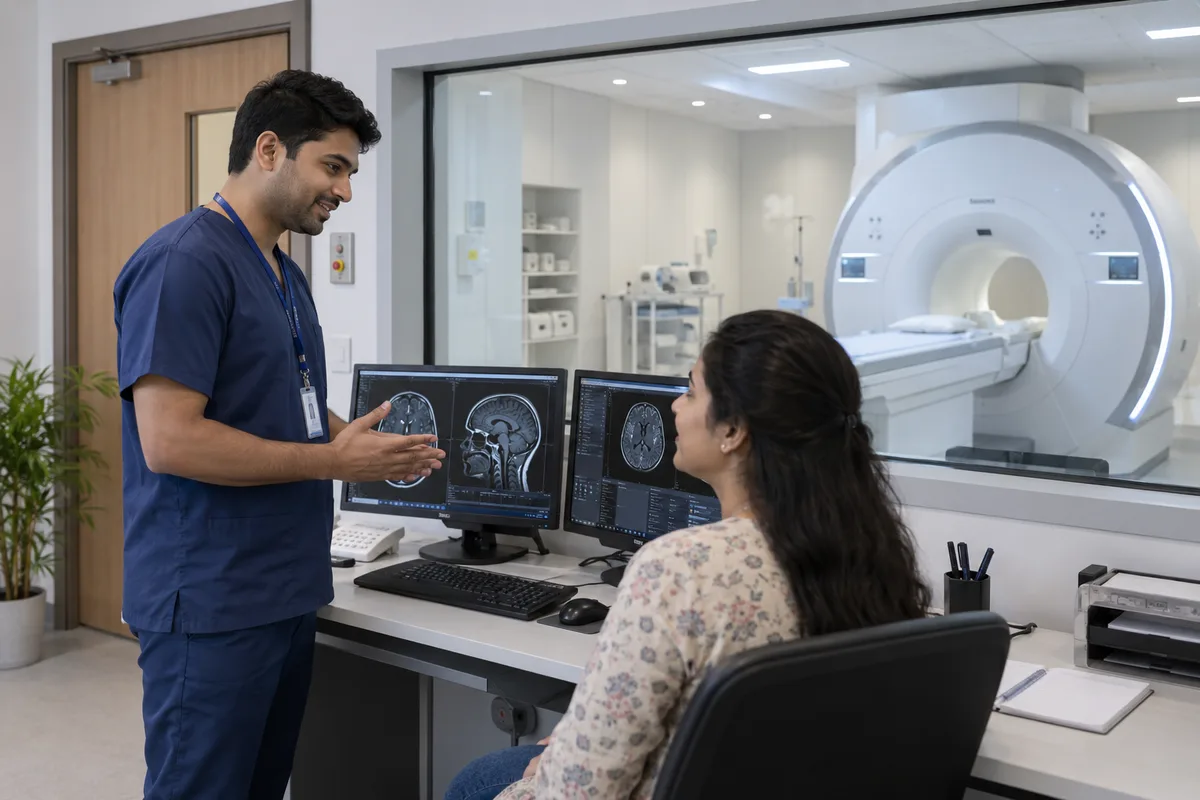
What digital marketing means
Digital marketing is the combined work of search, social media, advertising and website channels running together rather than as separate projects with separate people. GullySales runs these as one connected system so a change in one channel, such as a new offer, is reflected everywhere at once.
Last updated 14 Nov 2026. Rules for this trade differ by state and professional body, and they change. We describe restrictions in general terms, so check the current position with your own council or adviser before you publish anything.
For MRI scan centres
Where it usually goes wrong, and what we would do.
“The channels differ for each reader”
A patient finds a centre through search and maps. A referring clinic finds it through a colleague, a visit or a message. Spending on one channel for both readers wastes effort on whichever it does not reach.
“Spend belongs where the schedule is thin”
Marketing that fills the already crowded morning only lengthens the queue. Look at the booking calendar, find the hours and the scans that sit idle and point effort at those first.
“Paid search for health has special rules”
Platforms limit how health services may advertise, and professional councils add their own limits that differ by state. Check the platform's current rules and your own adviser before running any paid campaign.
“A channel with no tracking is a guess”
If calls, messages and walk-ins are not recorded against a source, the centre cannot say which channel booked a scan. Counting comes before spending.
What we do
What we deliver for MRI scan centres.
The work available for this need. We agree the deliverables and responsibilities for your engagement in writing.
A channel plan from your booking data
A short document naming each channel, the reader it serves and the reason it earns a place.
Result: Each channel has a stated job.
Source tracking at the desk
A simple question and record for how each patient or clinic found you.
Result: Bookings are tied to a source.
A search and maps foundation
Scan pages and a complete Google Business Profile, covered in the SEO and local pages.
Result: Patients searching near you find an accurate listing.
A referrer outreach routine
A plan for reaching orthopaedic, neuro and sports clinics with slot and capability news, without payments for referrals.
Result: Clinics have a current reason to think of the centre.
A paid test, only where permitted
A small, bounded test of search ads for scans with idle slots, once your adviser and the platform's rules allow it.
Result: You learn whether paid search books slots before committing more.
A single report
Enquiries, bookings and refilled slots by channel, against the baseline taken first.
Result: One page shows which channels filled the machine.
How the result is measured
- Enquiries across channels
- Cost per enquiry overall
- Channel mix by contribution
Recorded as a baseline before work starts, so every later report has an honest comparison.
Searches your buyers type
Where each reader searches, and the channel that meets them.
- MRI scan price near me
- A price and cover page, supported by a search ad only on days when the schedule has idle slots.
- MRI centre empanelled for cashless
- A page listing confirmed panels, and the map profile that repeats them.
- MRI spine scan preparation
- A preparation page that serves the patient and gives the referring clinic a link to hand over.
- MRI scan open now
- Profile hours, accurate for the day, with a call button on the listing for the late searcher.
- MRI centre for sports injuries
- A referrer-facing page for sports and orthopaedic clinics with the studies, the radiologists who report them and how to send.
- open MRI for claustrophobia
- A page about what the centre offers for anxious patients, only if the centre has the equipment or sedation arrangements to match.
Who it is for
This is written for these MRI scan centres.
- Standalone MRI centres
- MRI units inside multi-speciality diagnostic centres
- MRI units in nursing homes
- Sports injury and orthopaedic imaging centres
- Neuro and spine imaging centres
- Mobile and camp-based MRI services
Before you decide
When this may not be the right fit.
- Your schedule is full and a paid campaign would only send callers away.
- You have no tracking on the phone, and spend could not be linked to a booking.
- The centre plans to advertise discounts, which health advertising rules may not permit in your state.
Before you decide
Agree the work. Know how to judge it.
Digital marketing for MRI scan centres: use these checks to prepare, choose the scope, and review what changes.
Bring the right evidence
Bring a recent won order and an enquiry that went nowhere. Trace how each buyer found you, what they asked, and who handled the next step. A channel list alone will not explain the difference.
Make the scope clear
Choose one offer and one buyer group first. Agree which part needs attention: being found, getting a useful enquiry, or turning an enquiry into an order. Separate recommendations from the work required to carry them out.
Check the work in use
A useful plan names the first change, its owner, the evidence behind it, and the number that will show whether it worked. Ask what has deliberately been left out and why.
Know when to change course
If your team cannot answer the enquiries it already receives, improve that handover before buying more traffic. If the offer itself is unclear, test it with buyers before adding channels.
These are discussion points, not a fixed package. GullySales confirms the deliverables, responsibilities, fee, and term in writing after reading your brief and speaking with you.
Before we start
What to have ready before the work starts.
The records, access and decisions this work needs from MRI scan centres. Anything missing is noted in the written scope, with who will supply it.
- Bookings with the source column filled
- Bring the appointment list for a recent stretch, with how each patient found you where it was asked. The plan rests on it. If the column is empty, the desk starts asking, and the first plan is a cautious one. Mark bookings from hospital contracts and panels separately, since those are not won by any channel and would confuse the picture.
- Access to every account you hold
- Provide logins for the website, map profile, social pages and any ad account, or tell us none exists. We read what is there before adding anything. Logins held by people who have left must be recovered first. Include the profile that lists the centre in any directory, even an old one, because a wrong listing sends callers to the wrong number.
- The list of studies you want to grow
- Say which studies you want more of and which you are full on. Channel effort follows. Without it we cannot tell where an extra booking is worth the greatest return to the centre. Add the studies for which a referrer is the only source, because for those the work is outreach and not advertising.
- A rule on discounts and offers
- Decide with your adviser whether any price offer may be advertised at all. Rules on healthcare advertising are strict, and offers can breach them. Without a settled rule, we advertise none.
- A named person for every new enquiry
- Choose who answers each enquiry and who covers. Channels that bring calls to a desk that does not answer waste the effort. We hold new channels until this is settled. Tell us the hours the desk answers so that the phone number on every channel states them truthfully.
How it works
How the digital marketing work runs
The work itself, in order. How an engagement starts, from your brief to a written scope, is set out on our method page.
- 1
Read the booking records for where patients come from
We take a stretch of bookings with the desk and mark how each patient found you: a referring clinic, a search, a map listing, a hospital or an insurer panel. You tell us which sources you trust. What exists afterwards is a picture of the channels that already work, with the unsourced bookings counted as unknown rather than guessed. We also mark bookings that came through a hospital contract or an insurer panel, since those do not respond to any channel work and should not be credited to one.
- 2
Find the thin parts of the schedule
With the technologist we mark the studies and hours that go empty and those that are always full. You say which you want more of. The outcome is a short list of where marketing effort belongs, so spend is not wasted on hours that are already booked. The technologist also tells us which hours are held for urgent referrals, so those are not counted as empty.
- 3
Choose the channels and write one fact sheet
We choose among search, maps, social, messaging and email by what the records show, and write one sheet of facts, covering studies, hours, access and preparation. Your radiologist reads it, and your adviser decides advertising wording. Every channel then draws from the same sheet. The sheet also lists what the centre will not say, such as a comparison with another centre, and every channel keeps to it.
- 4
Put source tracking at the desk
We add a question on how the patient found you, a tracked number on the website and a tagged form. The desk is shown the routine. The recorded start is set here, before any new channel is switched on. The desk's question is asked in the same words every time and the answers are typed into a fixed list, so a patient who found you twice is recorded once.
- 5
Test a paid route only where permitted
Where the platform's current rules and your adviser allow, we run one small paid test for a study with empty hours, and hold it if the rules forbid it. You approve every line. Nothing mentions price offers or outcomes.
- 6
Read bookings by source against the baseline
We compare enquiries, booked scans and filled hours by source with the starting figures. You decide where effort goes next. A referrer's slow build is counted fairly, and a source with no tracking is called unknown.
Where this fits
Three pieces of sales work, in this order.
This work sits inside sales process design, at stage 0, foundation. The audit comes before it, and sales management keeps it running.
Step 1
Sales audit
Find where deals are being lost and what to fix first.
Start here if you cannot say where orders are lost.
Step 2 · you are here
Sales process design
One written way to sell, from first enquiry to repeat order.
Start here if every salesperson sells differently.
Step 3
Sales management
A target, a review routine and someone who owns the number.
Start here if the team has targets and no routine.
FAQ
Questions owners ask before they call.
Not here? More answers, or ask on WhatsApp.
Where should an MRI centre start?
Is paid advertising worth it for a single scanner?
Can we promote discounts on scans?
Can we run ads for a discounted MRI?
Does a single scanner need all these channels?
Can we promote a discount on a scan to fill empty hours?
How much does it cost?
How long is the contract?
How soon will we see results?
Who will actually do the work?
More for MRI scan centres
Related work to consider.
Closest to this: strategy and research
Also for MRI scan centres
Or start from the overview: sales and marketing for MRI scan centres.
Your next practical step
Tell us what you are trying to grow, and we will read it before we call.
Eight short steps, mostly taps. Skip anything you would rather answer on the call.